What to Do When the Heat Goes Out in Whatcom
What to Do When Your Heat Stops Working in Whatcom, BC
Emergency heating repair in Whatcom, BC is something no homeowner wants to deal with — but when temperatures drop and your system fails, you need answers fast.
If your heat just went out, here's what to do right now:
1. Check your thermostat — make sure it's set to heat and the temperature is above room temperature
2. Check your circuit breaker — reset any tripped breakers connected to your heating system
3. Inspect the power switch on your furnace or air handler — make sure it's in the ON position
4. Check your air filter — a clogged filter can shut a system down
5. Call a licensed emergency heating technician if the system still won't start
For full heating support in Whatcom, BC, visit our Heating Services page or book an emergency repair now.
Whatcom winters can be wet, cold, and unforgiving. When your furnace, boiler, or heat pump stops working — whether it's a sudden cold snap, a coastal storm, or a system that's simply had enough — the consequences can go beyond discomfort. Frozen pipes, health risks for vulnerable family members, and unsafe indoor conditions can all follow quickly. Knowing what to do in the first few minutes matters.
This guide walks you through exactly what to do when the heat goes out, what causes most winter heating failures in Whatcom, BC, and how to protect your home while help is on the way.
Identifying an Emergency Heating Repair in Whatcom, BC
Not every HVAC hiccup is a crisis, but in the middle of a British Columbia winter, the line between an "inconvenience" and an "emergency" thins out quickly. We define a heating emergency as any situation where the loss of heat poses a direct threat to the safety of the occupants or the structural integrity of the home.
Total heat loss during freezing temperatures is the most obvious reason to seek Heating Service in Whatcom, BC. If the outdoor mercury is dipping toward zero and your indoor temperature is plummeting, you don't have the luxury of waiting until Monday morning. Beyond the cold, safety hazards like gas leaks or electrical malfunctions turn a standard repair into an urgent matter.
Carbon monoxide (CO) is a major concern with failing gas furnaces or boilers. Because it is odorless and colorless, it is often called the "silent killer." If your CO detector goes off, or if family members experience unexplained headaches, dizziness, or nausea, treat it as a life-threatening emergency.
Signs You Need Emergency Heating Repair in Whatcom, BC
Your heating system often tries to "talk" to you before it gives up entirely. Recognizing these red flags can help you call for Furnace Repair in Whatcom, BC before the unit dies in the middle of the night:
• A Yellow or Orange Pilot Flame: In a gas furnace, the pilot light should always be a crisp, steady blue. A yellow or flickering orange flame suggests incomplete combustion, which is a primary sign that carbon monoxide may be leaking into your home.
• Loud Banging or Screeching Noises: While no furnace is silent, sudden "kettling" (banging in boilers), metal-on-metal screeching, or loud pops can indicate a cracked heat exchanger or a failing blower motor.
• Electrical Burning Smells: If you smell ozone or burning plastic, a wire may be melting or a motor may be seizing. This is a significant fire risk.
• Frequent Cycling: If your system turns on and off every few minutes without reaching the set temperature, it is likely overheating or suffering from a major sensor failure.
When to Call for Emergency Heating Repair in Whatcom, BC
Sometimes the "emergency" isn't just about the machine; it's about who lives in the house. We always prioritize Heating in Whatcom, BC when the following factors are present:
• Health Vulnerabilities: Residents with respiratory issues or compromised immune systems cannot withstand prolonged exposure to cold, damp air.
• Infant and Elderly Safety: Very young children and seniors struggle to regulate their body temperature. In a cold house, hypothermia can set in much faster than you might think.
• Pipe Burst Prevention: If your home's internal temperature drops below 10°C (50°F), your plumbing is at risk. A burst pipe can cause thousands of dollars in water damage in a matter of hours.
Immediate Steps for Homeowners During a Heating Failure
When the vents go cold, don't panic. There are a few "low-hanging fruit" checks you can perform that might save you a service call. First, check your thermostat. It sounds simple, but sometimes a bumped setting or dead batteries are the only culprits. Ensure it is set to "Heat" and "Auto," and try raising the temperature five degrees above the current room reading to see if the system kicks in.
Next, look for the power switch. Most furnaces have a switch nearby that looks like a standard light switch; if it was accidentally flipped off, the system won't run. Finally, check your circuit breaker panel. If the breaker for the HVAC system has tripped, flip it back once. If it trips again immediately, stop and call us—this indicates an electrical fault that needs professional attention.
Troubleshooting Your Heating System Safely
If the basic checks don't work, you can dig a little deeper, provided you stay safe.
1. Check the Fuel Supply: If you have a gas system, ensure your gas valve is open. If you use propane or oil, check your tank levels.
2. Inspect the Pilot Light: For older furnaces, the pilot light may have simply blown out due to a draft. If you are comfortable following the manufacturer's instructions to relight it, you may restore heat instantly.
3. Clear Vent Obstructions: In Whatcom, BC, heavy snow or debris can block the intake and exhaust pipes located on the exterior of your home. If these pipes are blocked, your furnace will shut down for safety.
4. Air Filter Inspection: A filthy filter restricts airflow, causing the heat exchanger to overheat. The system's limit switch will then shut the furnace down to prevent a fire. Replacing a clogged filter is a standard part of Furnace Service in Whatcom, BC.
Protecting Your Home from Frozen Pipes
While waiting for a technician, you must protect your plumbing. Water expands when it freezes, and in the tight confines of copper or PEX piping, that expansion leads to bursts.
• Drip the Faucets: Open your faucets (both hot and cold) to a very slow drip. Moving water is harder to freeze, and the open valve relieves pressure within the pipe.
• Open Cabinet Doors: Let the residual warmth of the house reach the pipes under your kitchen and bathroom sinks.
• Temporary Heating: If you have safe, electric space heaters, use them in rooms with exterior-facing plumbing. Never leave space heaters unattended or use charcoal grills or gas ovens for heat, as these create deadly fumes.
• Sump Pump Check: If a pipe does leak or if the weather is particularly wet, ensure your Sump Pump in Whatcom, BC is powered and ready to handle any excess water.
Common Causes of Winter Heating Emergencies
Understanding why systems fail can help you spot trouble early. In the Lower Mainland, we see a variety of systems, each with its own "Achilles' heel" during a cold snap.
• Furnace — Common Emergency Failure: Ignition Failure — Primary Cause: Dirty sensors or faulty hot surface igniter
• Boiler — Common Emergency Failure: Low Pressure — Primary Cause: Leaks in the system or faulty expansion tank
• Heat Pump — Common Emergency Failure: Iced Over Coil — Primary Cause: Defrost board failure or restricted airflow
• All Systems — Common Emergency Failure: Thermostat Malfunction — Primary Cause: Wiring corrosion or dead batteries
Many of these issues stem from the mechanical strain of a system working 24/7 during a Whatcom winter. When the "Big Freeze" hits, any small weakness in your Heat Pump in Whatcom, BC or furnace will be exposed.
Furnace and Boiler Issues in Cold Snaps
Boilers are common in many older Whatcom homes and are prized for their steady, radiant heat. However, they are complex machines. A common emergency call involves "pump failure," where the circulator pump stops moving hot water through the radiators. You might also encounter low pressure; if the system doesn't have enough water, it won't fire up to protect the heat exchanger from cracking.
For those with high-efficiency systems, the condensate line can freeze. These systems produce water as they run; if the exit pipe freezes outside, the water backs up into the furnace, triggering a safety shut-off. This is often solved during a Tankless Water Heater Service in Whatcom, BC or a standard boiler check.
Heat Pump Challenges in BC Winters
Heat pumps are incredibly efficient, but they face unique challenges in our damp, chilly climate. Because they extract heat from the outside air, the outdoor coils naturally frost over. The system is designed to enter a "defrost cycle" to melt this ice. If the defrost sensor or board fails, the unit becomes a block of ice, losing all ability to heat your home.
Refrigerant leaks are another common issue. If your heat pump is struggling to keep up even when it isn't that cold outside, it may be low on "juice." Proper Heat Pump Maintenance in Whatcom, BC ensures these levels are checked before the emergency happens.
Specialized Care for Whatcom's Coastal Climate
Living in the Whatcom area means dealing with more than just cold; we have to account for salt air, high humidity, and seasonal air quality issues. Coastal corrosion is a real threat to outdoor condensers. The salt-laden air can eat away at aluminum fins and copper coils, leading to premature refrigerant leaks.
High humidity also means that when the heat goes out, your home can quickly become a breeding ground for mold. A cold, damp house is the perfect environment for spores to settle. We often recommend Indoor Air Testing in Whatcom, BC for homeowners who have suffered a prolonged heating failure to ensure their air remains healthy.
Managing Air Quality and Wildfire Smoke
In recent years, wildfire smoke has become a seasonal reality in British Columbia. This smoke leaves fine particulate matter inside your HVAC ductwork. When winter arrives and you turn the heat on high, those particles are recirculated.
To combat this, we recommend:
• MERV 11 or 13 Filters: These are dense enough to trap smoke particles without suffocating your furnace.
• UV Lights: Installed inside the air handler, these kill bacteria and mold spores that thrive in our damp climate.
• Regular Tune-Ups: A Heat Pump Tune Up in Whatcom, BC includes cleaning the blower and sensors that can be coated in fine ash or dust.
Combating Dampness and System Efficiency
Efficiency isn't just about saving money; it's about comfort. A system struggling with dampness has to work harder to "feel" warm. We focus on dehumidification and coil cleaning to ensure your system can strip the moisture from the air effectively. By keeping up with Heating Maintenance in Whatcom, BC, you ensure the drainage lines are clear of the algae and "sludge" that common coastal humidity can produce.
Preventing Future Breakdowns with Proactive Maintenance
The best way to handle an emergency is to prevent it from ever happening. Most of the emergency heating repair in Whatcom, BC calls we receive could have been avoided with a simple seasonal check-up. Think of it like an oil change for your car—you wouldn't drive across the Coquihalla in winter without checking your fluids and tires; your furnace deserves the same respect.
If your system is reaching the end of its 15-to-20-year lifespan, it might be time to consider a Heat Pump Installation in Whatcom, BC. Modern systems are significantly more reliable and can handle the "swing" seasons of the Lower Mainland with much better efficiency.
Benefits of Regular Heating Inspections
When we perform an inspection, we aren't just looking for what's broken; we're looking for what's about to break.
• Safety Verification: We check for cracked heat exchangers and gas leaks that you can't see or smell.
• Minor Repair Detection: Replacing a $50 sensor today is much better than replacing a $1,000 motor on Christmas Eve.
• Lower Utility Bills: A clean system runs shorter cycles to achieve the same warmth, putting money back in your pocket.
• Warranty Protection: Most manufacturers require proof of annual professional maintenance to honor equipment warranties. This applies to everything from your furnace to Pool Heaters in Whatcom, BC.
Essential Maintenance for Every Season
There are a few things you can do yourself to keep the "emergency" away:
1. Filter Replacement: Change them every 1-3 months. If you have pets or smokers in the home, lean toward every month.
2. Debris Clearance: Keep the area around your outdoor unit clear of leaves, snow, and shrubs. The unit needs to "breathe" to transfer heat.
3. Electrical Tightening: While this is usually for pros, ensuring your Toilets in Whatcom, BC and other water-based appliances aren't leaking near electrical HVAC components is a good habit.
Frequently Asked Questions about Emergency Heating
How quickly can a technician respond to a heating failure?
We understand that a cold house is a ticking clock. We offer same-day service for total heating failures and safety-related calls. During extreme weather events, we use a triage protocol to ensure that the most vulnerable residents—like those with infants or medical needs—are reached first. If you have a secondary issue, like a plumbing leak or a problem with Hot Tubs in Whatcom, BC, let us know so we can coordinate the right experts.
What brands of heating systems are typically repaired?
Our technicians are trained to work on all major makes and models. This includes industry leaders like Carrier, Trane, Lennox, Rheem, Daikin, and Mitsubishi Electric. Whether you have a traditional natural gas furnace or a high-tech ductless mini-split, we have the tools and parts to get it running.
What should I do if I smell gas near my furnace?
This is a "stop everything" moment. If you smell the "rotten egg" odor of natural gas:
1. Evacuate immediately. Do not stop to open windows or grab belongings.
2. Do not use electronics. Do not flip light switches, use a landline, or even use your cell phone inside the house, as a tiny spark could ignite the gas.
3. Shut off the gas at the main meter if you know how and it is safe to do so.
4. Call the gas company and emergency services from a neighbor's house or from safely across the street.
Conclusion
At Rep-Air Heating And Cooling, we treat every customer like family. We know how stressful it is when the house goes cold, and our goal is to provide the Lower Mainland with unmatched service and peace of mind. From the initial diagnostic to the final safety check, we provide comprehensive HVAC solutions tailored to the unique challenges of our BC climate.
Don't wait for the frost to move inside. Whether you need an immediate emergency heating repair in Whatcom, BC, or you want to schedule a preventative tune-up, our team is ready to help. Keep your home warm, your air clean, and your family safe.
For all your comfort needs, contact Rep-Air Heating And Cooling today.
hear what our satisfied clients have to say
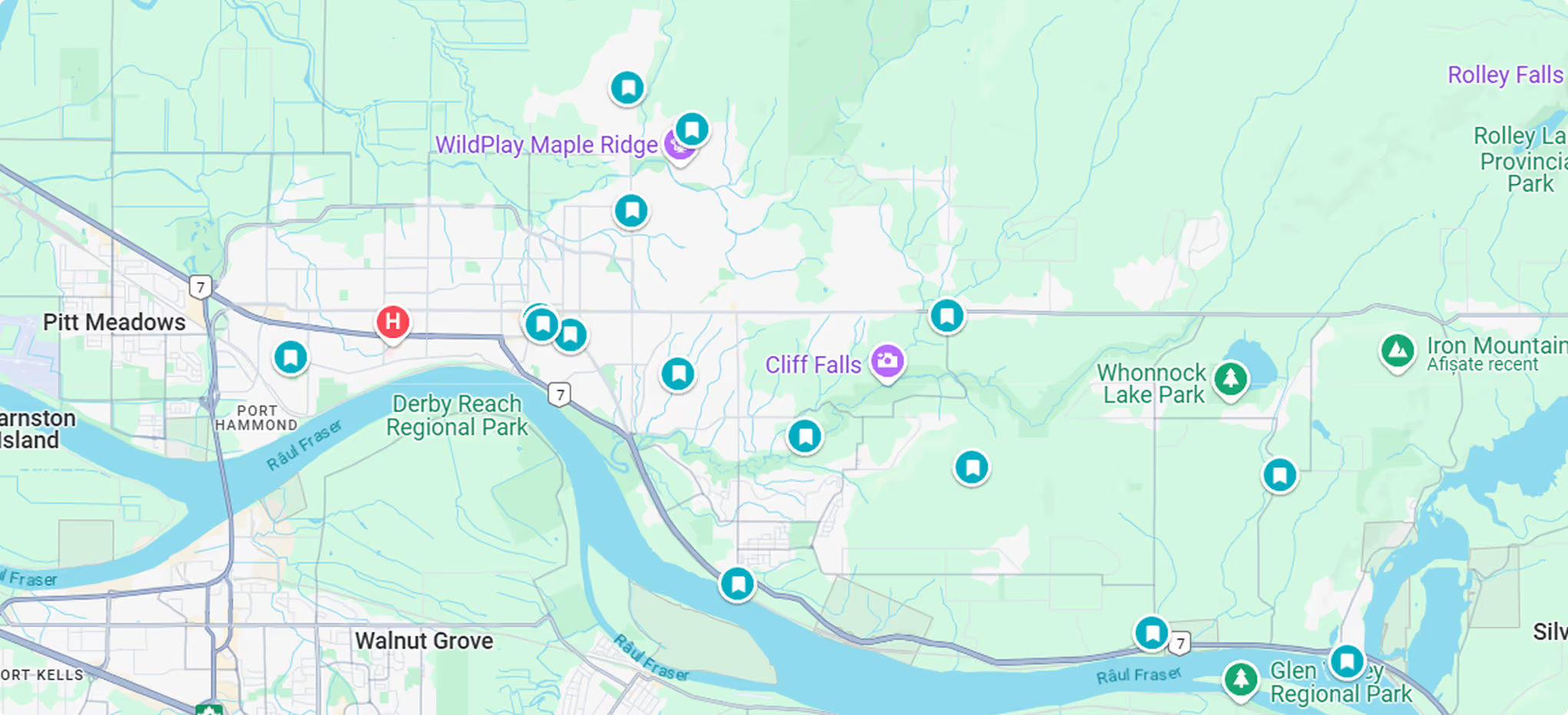
Neighbourhoods in the Fraser Valley