Why Auxiliary Heat Kicks On (And How Much It Costs You on Your BC Hydro Bill)
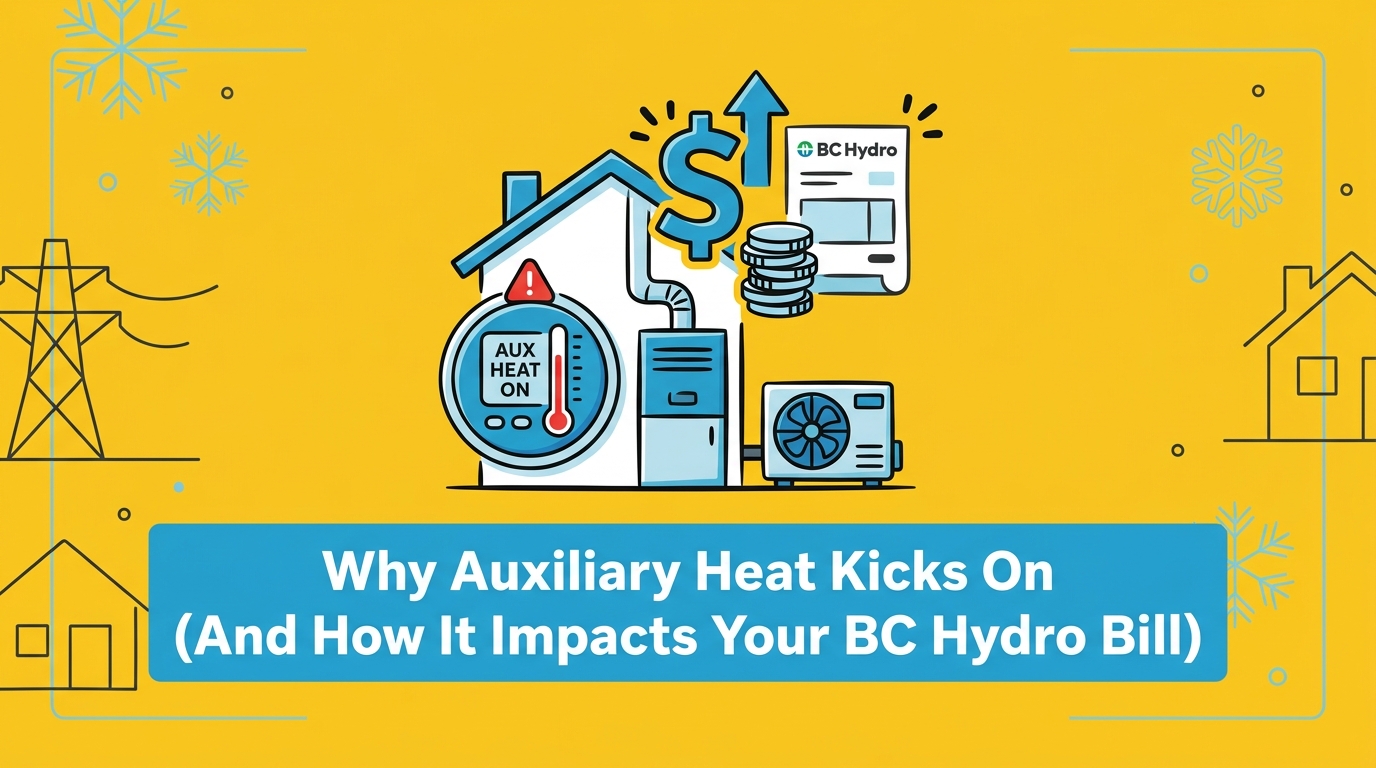
Why Is My Thermostat Suddenly Displaying 'AUX Heat'?
Are you wondering exactly why auxiliary heat kicks on (and how much it costs you on your BC Hydro bill) when the temperature drops outside? You are certainly not alone. Is your system actually broken, or is it just struggling to keep up with the weather? Waking up on a freezing morning, walking past your hallway control panel, and seeing the thermostat AUX heat indicator glowing can immediately trigger anxiety about upcoming utility costs. For many homeowners, that little indicator feels like an error code warning of an impending massive expense.
The short answer is that while seeing this indicator can sometimes signal a mechanical issue, it is very often a completely normal, automated function of modern heating systems. When your primary equipment faces extreme outdoor conditions, it requires a backup method to ensure your indoor temperature remains safe and comfortable. Before you panic and assume your equipment has failed, it helps to understand exactly what that indicator means, why your system relies on it, and how it directly affects your household energy consumption during the coldest weeks of the year.
The Mechanics of Auxiliary Heat: What Is Actually Happening?
To understand why the thermostat AUX heat indicator turns on, we first need to look at how your heat pump operates under normal conditions. Standard compressor operation is incredibly efficient because it does not generate heat from scratch; instead, it absorbs ambient thermal energy from the outside air, compresses it to raise the temperature, and moves it inside your home. Even when it feels cold outside, there is still extractable heat in the air.
However, when the outdoor temperature drops too low for the compressor to extract enough heat to meet your indoor thermostat setting, the system automatically engages its auxiliary (AUX) heat function. This secondary heating stage utilizes electric resistance heat strips built directly into the indoor air handler. Think of these strips like the glowing coils inside a giant toaster or a massive hairdryer.
The Efficiency Difference:
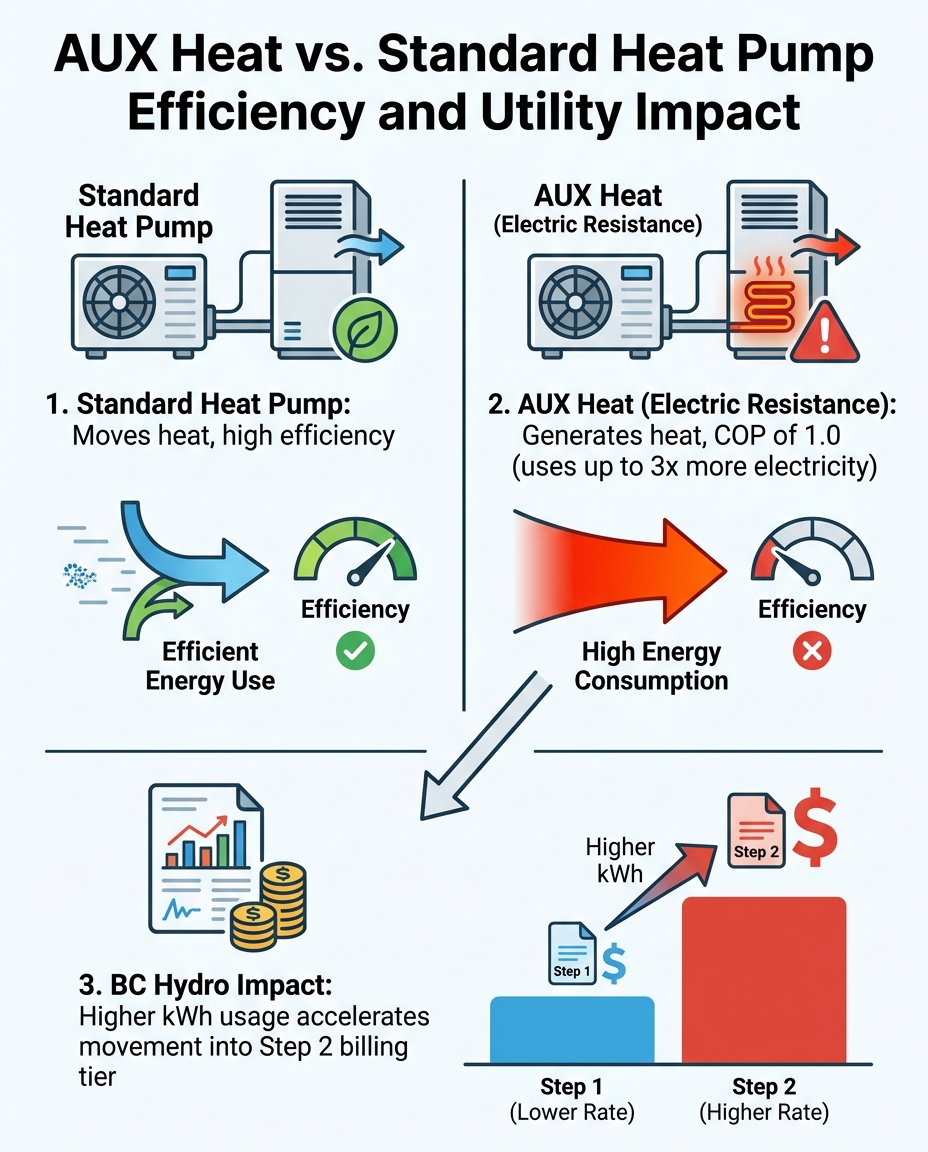
• Standard Compressor Operation: Operates with a high Coefficient of Performance (COP), meaning it can produce two to three units of heat for every one unit of electricity consumed.
• Electric Resistance Strips (AUX Heat): Operates with a COP of exactly 1.0. For every unit of electricity consumed, it produces exactly one unit of heat.
Because the resistance strips have a COP of 1.0, generating heat this way requires up to three times more electricity than simply moving heat with the compressor. The system is programmed to use this energy-intensive backup only when absolutely necessary, stepping in to bridge the gap when the outdoor air simply cannot provide enough thermal energy to keep your living space warm.
The Thermal Balance Point: When AUX Heat is Perfectly Normal
During Fraser Valley winter cold snaps, it is completely natural for your system to need a little extra help. Every home has a specific "thermal balance point." This is the exact outdoor temperature at which your heat pump's maximum heating capacity perfectly matches the amount of heat your home is losing through its walls, windows, and roof. When the outdoor temperature dips below this balance point, the compressor alone can no longer keep up with the heat loss, and the auxiliary heat must engage to make up the difference.
Depending on your specific equipment model and how well your home is insulated, this balance point usually falls somewhere between 2°C and -2°C. When Fraser Valley winter cold snaps push temperatures below this threshold, seeing the AUX indicator is a sign that your system is functioning exactly as designed.
Understanding the Defrost Cycle
Another completely normal reason for your system to use auxiliary heat is the defrost cycle. In near-freezing, highly humid weather, condensation naturally forms on the outdoor unit's coils and quickly freezes into a layer of frost or solid ice. If left unchecked, this ice would block airflow and eventually damage the compressor.
To protect itself, the system periodically goes into a defrost cycle:
1. Reversing the Flow: The system temporarily switches into cooling mode, sending hot refrigerant back outside to melt the ice off the coils.
2. Preventing Cold Drafts: Because the system is technically in cooling mode, it would normally blow freezing air directly into your living room.
3. Engaging the Backup: To prevent this cold blast, the system automatically turns on the electric resistance strips (AUX heat) to warm the air before it reaches your vents.
This cycle typically lasts between 10 and 15 minutes. Once the outdoor sensor detects that the ice has melted, the compressor switches back to normal heating mode, and the AUX heat turns off.
How AUX Heat Impacts Your BC Hydro Energy Consumption
The primary reason homeowners worry about auxiliary heat is the immediate impact on their utility bills. Because electric resistance strips use up to three times more electricity than the compressor, prolonged use drastically increases your household's kilowatt-hour (kWh) consumption. If your system relies on these strips for days at a time, the energy draw is substantial.
This increased consumption becomes particularly important when you factor in BC Hydro's two-step residential conservation rate structure. Under this tiered billing system, residential customers are charged a lower rate for electricity up to a certain threshold (Step 1). Once your household exceeds that specific kilowatt-hour limit during a billing period, all subsequent electricity usage is billed at a higher rate (Step 2).
When a severe cold front hits Mission BC and the surrounding Fraser Valley, a heat pump running continuously on auxiliary heat can consume enough electricity to rapidly push a household out of Step 1 and into the more expensive Step 2 tier much earlier in the billing cycle than usual. Furthermore, the massive power draw required to heat those resistance coils places a significantly larger load on your home's electrical system, which is why proper breaker sizing and dedicated circuits are required for the air handler.

Accidental Triggers: How Thermostat Habits Force AUX Heat
Most homeowners don't realize that their own daily habits can accidentally force the system to bypass the efficient compressor and rely entirely on the expensive heat strips. The most common culprit is extreme thermostat setbacks.
If you treat your heat pump like a traditional gas furnace, you might drop the temperature by 5 to 10 degrees before going to bed, and then crank it back up when you wake up. Here is why that strategy backfires with modern heat pumps:
1. The Demand Gap: When you raise the thermostat by more than two degrees at once, the system's logic board interprets this as a demand for rapid, immediate heating.
2. Bypassing Efficiency: Knowing the compressor takes time to gradually raise the indoor temperature, the thermostat automatically triggers the AUX heat strips for a fast recovery.
3. The Energy Penalty: You end up spending significantly more electricity forcing the resistance strips to reheat the house than you saved by turning the temperature down overnight.
The set-it-and-forget-it strategy: To maximize compressor efficiency and keep the thermostat AUX heat indicator off, pick a comfortable temperature and leave it there. If you must adjust it, do so in increments of one degree at a time. Alternatively, upgrading to a smart thermostat can help. Modern smart thermostats learn your home's unique recovery curve and will start the efficient compressor much earlier in the morning, gradually bringing the house up to temperature without ever needing to trigger the backup resistance heat.
Normal Operation vs. Malfunction: When to Call a Professional
At Rep-Air Heating and Cooling, our commitment to customer education means we want you to feel confident evaluating your own equipment before panicking or booking an unnecessary service call. Understanding the difference between a system that is working hard and a system that is failing can save you significant stress.
During Fraser Valley winter cold snaps, it is normal to see the AUX indicator occasionally. However, mechanical failures—like a stuck sequencer relay or a failing outdoor compressor—can force the system into perpetual auxiliary mode. We frequently see this dynamic play out; for example, one customer reached out in the spring needing maintenance advice because their system wasn't working correctly and seemed stuck in a backup mode. A technician was able to explain exactly what the system was doing, answer all their questions about proper maintenance, and resolve the underlying issue.
If you are unsure whether your system is functioning properly, use this diagnostic checklist:
• AUX heat runs for 10-15 minutes, outdoor unit is steaming — Likely Cause: Normal defrost cycle melting ice off coils — Action Required: None. Wait 15 minutes for it to switch back.
• AUX heat turns on when you raise the thermostat by 3+ degrees — Likely Cause: System logic forcing a rapid temperature recovery — Action Required: Stop extreme setbacks; adjust by 1 degree at a time.
• AUX heat is running constantly when it is 10°C outside — Likely Cause: Compressor failure, refrigerant leak, or stuck relay — Action Required: Call a professional for an immediate diagnostic.
• Outdoor unit is completely encased in a solid block of thick ice — Likely Cause: Failing defrost control board or bad reversing valve — Action Required: Turn system to Emergency Heat and call for service.
Never attempt to diagnose high-voltage electrical components or open the air handler cabinet yourself. If your system is exhibiting abnormal symptoms, or if you are dealing with older heat pumps blowing cold air during transition phases, it is time to have a licensed technician inspect the equipment. Whether you live in Mission or need assistance in Chilliwack, addressing a stuck relay early prevents massive utility bills at the end of the month.
Frequently Asked Questions About Auxiliary Heat
Is it bad if my heat pump says AUX heat?
Not necessarily; it is a built-in safety feature designed to keep you warm when the primary compressor needs help. During extreme weather or a brief defrost cycle, seeing this indicator simply means your system is functioning exactly as it was engineered to perform. It only becomes a problem if the indicator stays on constantly during mild weather, which points to a mechanical failure.
At what temperature should AUX heat come on?
This typically happens when outdoor temperatures drop below the system's thermal balance point, which is often around 2°C to -2°C depending on the specific model and your home's insulation levels. Every house loses heat at a different rate, so your neighbor's backup heat might engage at a slightly different temperature than yours.
Does AUX heat use a lot of electricity?
Yes, it utilizes electric resistance strips which are significantly less efficient than the primary compressor, leading to much higher kilowatt-hour usage. Because these strips generate heat directly rather than moving it, they operate at a 1.0 COP, pulling up to three times the electrical current of normal heating mode.
Why is my heat pump stuck in AUX heat?
It could be due to extreme ongoing cold pushing the system past its limits, a malfunctioning outdoor unit, a stuck electrical relay, or low refrigerant levels forcing the backup system to take over completely. If the outdoor temperature is well above freezing and the indicator remains on for hours, you likely have a mechanical issue that requires a professional diagnostic.
What is the difference between AUX heat and Emergency heat?
AUX heat turns on automatically to assist the heat pump when it needs a temporary boost, whereas Emergency heat is a manual setting you select on the thermostat to lock out the outdoor unit entirely. You should only switch to Emergency heat if the outdoor compressor is physically damaged, encased in solid ice, or completely non-functional.
How do I stop my heat pump from using auxiliary heat?
Avoid making large temperature adjustments on your thermostat, ensure your outdoor unit is clear of debris and snow so it can breathe, and schedule regular preventative maintenance. Keeping a steady indoor temperature and replacing your air filters regularly ensures the compressor operates efficiently without needing to call on the backup strips.
Get Expert Heat Pump Help Before Your Next Utility Bill
While the thermostat AUX heat indicator is often just a sign that your system is working hard to protect your home during a freeze, a unit that stays stuck in backup mode will quietly drive up your energy consumption. If you have noticed your system relying entirely on its electric resistance strips during mild weather, or if the outdoor unit is struggling to clear ice during its defrost cycles, it is time to get a professional set of eyes on the equipment.
Don't wait for a shockingly high utility bill to confirm that your system has a stuck relay or a struggling compressor. Reach out to a local expert to have your equipment thoroughly inspected, ensuring it runs at peak efficiency to keep your home comfortable and your energy usage exactly where it should be.
hear what our satisfied clients have to say
Neighbourhoods in the Fraser Valley