Heat Pump Defrost Cycle Issues: Why Your Unit is Icing Up in the BC Rain
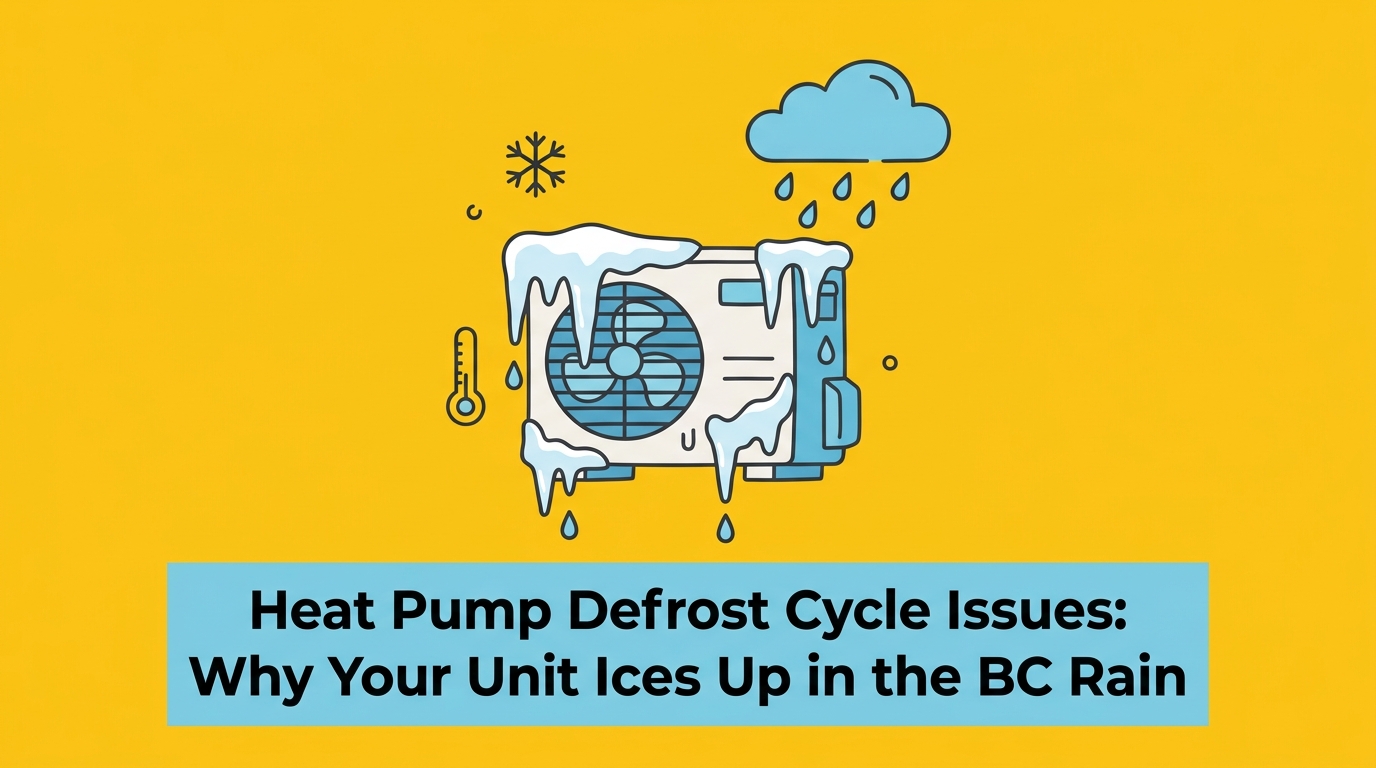
Winter Weather Alert: Why Your Heat Pump is Suddenly Covered in Ice
As winter approaches in the Fraser Valley, the combination of heavy precipitation and dropping temperatures often triggers heat pump defrost cycle issues: why your unit is icing up in the BC rain is a common question that leaves many local homeowners worried about their primary heat source. At Rep-Air Heating and Cooling, we receive countless calls from Mission BC residents who walk outside during a chilly November downpour, only to find the metal cabinet of their outdoor unit completely encased in a layer of white frost. Your immediate reaction is likely a mix of confusion and panic. After all, this equipment is supposed to be heating your home, not turning into a block of ice.
If you are exploring your options for reliable winter comfort, learning how your system manages frost is just as important as scheduling your annual heating services with our team.
The reality of a typical Fraser Valley rainy winter (2°C to 5°C) is that it creates the absolute perfect environment for rapid ice accumulation on outdoor mechanical equipment. This specific weather pattern forces a critical decision point for homeowners: you need to determine whether the frost you see is part of a routine, automatic function or a glaring sign of a failing defrost board that requires immediate attention. Understanding the basic mechanics behind your system's natural defense against freezing will provide you with peace of mind and help you protect your investment throughout the wettest months of the year.
The Physics of Freezing: Why 3°C Rain is Harder on Heat Pumps Than Sub-Zero Cold
In our experience serving Mission BC and the surrounding Fraser Valley, most homeowners assume that extreme, sub-zero temperatures are the hardest test for outdoor heating equipment. Our technicians know firsthand that moderate cold combined with high moisture is actually far more demanding. To understand why your system struggles more at 3°C than it does at -10°C, you have to look at the relationship between relative humidity, dew point, and the phase changes of water.
When you invest in professional heat pump services with Rep-Air Heating and Cooling, our technicians size the equipment to handle the specific moisture loads of our region. In the Fraser Valley, winter rainstorms frequently push the relative humidity above 80%. The outdoor air is heavily saturated with liquid moisture. As your system operates in heating mode, it absorbs ambient heat from the outside air. To do this, the refrigerant running through the outdoor coil must be significantly colder than the surrounding air—often dropping below the freezing point.
Here is what happens when that wet, 3°C air hits a sub-freezing coil:
• Rapid Condensation: The heavy moisture in the air immediately condenses onto the cold aluminum fins.
• Instant Freezing: Because the coil itself is below freezing, that liquid condensation instantly turns into frost.
• Compounding Accumulation: As frost builds up, it acts as an insulator, making it harder for the system to pull heat from the air, which makes the coil even colder and accelerates further freezing.
In contrast, a dry, sub-zero climate like you might find deep in the interior provinces lacks this heavy ambient moisture. There is simply less water in the air to freeze onto the equipment. This is why rapid ice buildup during a typical Fraser Valley rainy winter (2°C to 5°C) is actually a highly expected environmental reaction. Your system is doing exactly what it was designed to do: extracting heat from heavily saturated air. The frost is a byproduct of that successful heat transfer, not necessarily a breakdown.
Behind the Grille: How the Defrost Board Operates
To combat the inevitable buildup of ice, manufacturers equip these units with a sophisticated internal control system designed to melt frost before it can choke off the airflow. The brain of this operation is the defrost board, a specialized circuit board that monitors outdoor conditions and triggers a temporary reversal of the system's standard heating process.
The process begins with the defrost sensor, also known as a thermistor. This small temperature-reading device is clamped directly to the lowest point of the outdoor coil, where ice typically forms first. When the sensor detects that the coil temperature has dropped into the freezing zone and remained there for a set period of time (usually 30, 60, or 90 minutes of active runtime), it sends a 24-volt signal to the defrost board. The board then takes over, initiating a carefully timed sequence to clear the ice.
The Role of the Reversing Valve
The most critical component in this melting process is the reversing valve. This heavy-duty brass valve acts as the traffic director for the pressurized refrigerant flowing through the copper lines. During normal winter operation, the valve directs hot, compressed refrigerant indoors to warm your house. When the board triggers a defrost cycle, it energizes a solenoid coil on the valve, physically shifting an internal slider. This action temporarily switches the system into air conditioning mode.
By reversing the flow, the system takes the heat from inside your home and pumps it directly into the frozen outdoor unit. The hot refrigerant floods the outdoor coil, rapidly melting the accumulated ice from the inside out. Understanding this mechanism is vital, which is why the Rep-Air Heating and Cooling team often educates homeowners on the common heat pump reversing valve failures that can interrupt this process.
While this is happening, the outdoor fan motor shuts off completely. This prevents cold winter air from blowing across the coils and slowing down the melting process. Because the system is temporarily pulling heat from your home to melt the outdoor ice, the defrost board also sends a signal to your indoor air handler to activate the backup electric heat strips (if your system is equipped with them). This ensures that cold air doesn't blow through your vents and chill your living space while the outdoor unit is busy thawing itself out.
The Defrost Timeline: Sights and Sounds of a Healthy Cycle
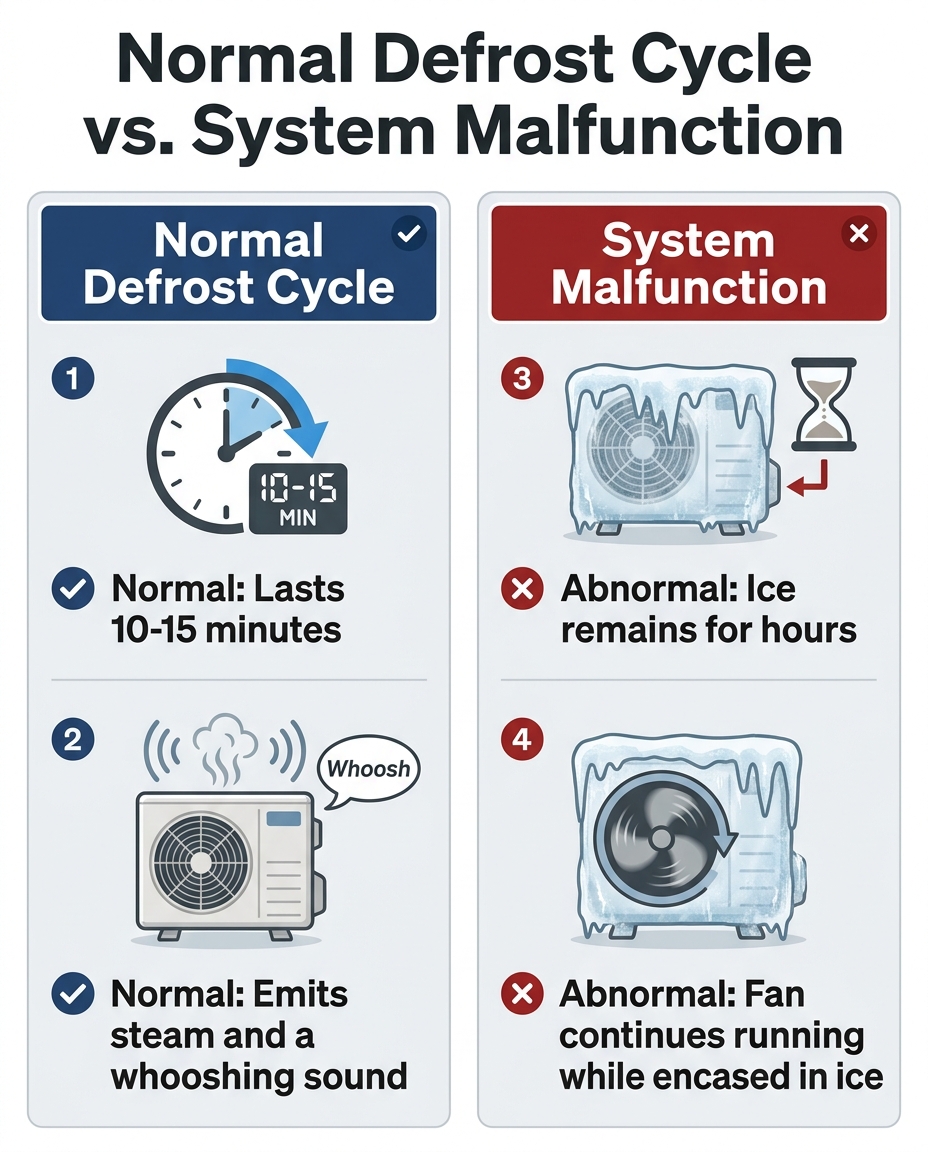
On our winter service calls across Mission BC, one thing our technicians see often is homeowners panicking when their outdoor unit starts behaving strangely during a rainstorm. Knowing what a healthy, functioning cycle looks and sounds like can save you from an unnecessary emergency service call. A typical 10-15 minute defrost cycle duration follows a very predictable, multi-step timeline.
1. The Fan Stops: The first sign that a cycle has begun is the sudden silence of the outdoor fan. The compressor will continue to hum, but the large fan blades on top or in front of the unit will coast to a halt.
2. The Reversing Whoosh: Within seconds of the fan stopping, you will likely hear a loud "whoosh" or a sudden hissing sound. This is the reversing valve shifting under high pressure. It can sound startling, like a sudden release of compressed air, but it is a completely normal mechanical noise.
3. The Steam Rises: As the hot refrigerant floods the freezing outdoor coil, the ice begins to melt rapidly. When the melting ice water hits the hot copper tubes in the cold winter air, it instantly vaporizes. You will see plumes of white steam rising from the top of the unit. Many homeowners mistake this steam for electrical smoke. If it dissipates quickly in the air and lacks a burning electrical smell, it is just water vapor.
4. The Return to Heating: After the sensor detects that the coil temperature has risen enough to confirm all ice is gone (usually around 13°C), the board ends the cycle. You will hear another whoosh as the valve shifts back to heating mode, and the outdoor fan will spin back up to full speed.
This entire process is highly efficient. The typical 10-15 minute defrost cycle duration is usually all it takes to clear even heavy frost accumulation. Once the cycle concludes, the system immediately resumes pulling ambient heat from the outside air to warm your home.
Red Flags: When Ice Buildup Means You Need a Professional
While steam, strange noises, and brief periods of frost are completely normal, there is a clear line between a healthy cycle and a mechanical failure. When the internal controls fail to trigger or execute the melting process, the ice will continue to build until it forms a solid, impenetrable block around the entire cabinet. This chokes off all airflow, forces the compressor to work at dangerously high pressures, and will eventually cause the system to shut down on a safety fault.
The primary red flag to watch for: If your unit is encased in a thick layer of solid ice that remains for several hours without melting, you have a mechanical problem that requires intervention. This rule applies across all modern equipment, including high-efficiency ductless mini-split systems.
Common Culprits of Defrost Failure
• Dead Sensors: If the thermistor fails, the board never receives the signal that the coil is freezing, so the cycle never starts.
• Stuck Reversing Valves: If the valve gets physically jammed or the solenoid coil burns out, the system cannot switch the refrigerant flow to melt the ice.
• Low Refrigerant Charge: If the system has a leak, there won't be enough hot refrigerant available to effectively melt the ice, even if the cycle triggers correctly.
• Failing Fan Motors: If the outdoor fan fails to turn back on after a cycle, the moisture cannot be blown away, leading to rapid refreezing.
Working with local technicians who understand the specific demands of the Fraser Valley climate is critical. Factory default settings are often calibrated for average national climates. At Rep-Air Heating and Cooling, our experts know exactly how to adjust the time-temperature pins on the board to clear frost more frequently in our hyper-local, high-humidity environment. One spring, a Mission BC customer reached out to us regarding a persistent system issue that required a thorough service. Our lead technician took the time to meticulously evaluate the unit and ensure it was properly calibrated for our specific BC rain, resulting in a very happy customer. That level of thorough, knowledgeable service is exactly what our team provides to prevent long-term compressor damage.

Hands Off: The Danger of Manually Defrosting Your Unit
When a homeowner sees their expensive heating equipment turning into an ice cube, the natural instinct is to go outside and help it along. This is the most dangerous thing you can do for the lifespan of your system. Our technicians strongly advise that you must resist the urge to break out the ice picks, shovels, or garden hoses.
The outdoor coil is constructed from hundreds of paper-thin aluminum fins surrounding delicate copper tubing. These fins are often less than 0.004 inches thick. If you attempt to chip the ice away with a scraper or a screwdriver, you are almost guaranteed to crush the fins, which permanently destroys the unit's ability to transfer heat. Worse, one slip of a tool can puncture the pressurized copper lines. A punctured coil results in a massive loss of refrigerant, creating an environmental hazard and usually requiring a complete, expensive replacement of the entire outdoor unit.
Pouring hot water over the unit is equally problematic. In freezing weather, that hot water will quickly cool and turn into a secondary layer of solid, clear ice deep inside the electrical compartment, potentially shorting out the contactor or the control board.
If your system cannot clear the ice itself within the normal timeframe, it is a mechanical issue, not a manual chore. Your safest course of action is to go to your thermostat, switch the system to "Emergency Heat" (which locks out the outdoor unit and relies solely on the indoor backup strips), and wait for a licensed technician to arrive. During a recent Mission BC winter, a customer called our team at Rep-Air Heating and Cooling when their heating system stopped working entirely. Our technician didn't just fix it; they explained exactly what had failed, showed the customer why it happened, and provided clear maintenance guidance to prevent a recurrence. We take the exact same educational approach with frost issues: we want you to understand the mechanics so you know what is safe to handle and what requires our professionals.
Frequently Asked Questions About Heat Pump Icing
Why is my heat pump freezing up in the rain?
Your system freezes in the rain because the outdoor coil operates at temperatures below freezing to absorb heat from the air. When the heavy liquid moisture from the rain hits that sub-freezing metal, it rapidly condenses and turns into frost. This is a normal physical reaction to high humidity and moderate cold, and the system is designed to handle it automatically.
How long should a heat pump defrost cycle take?
In our experience, a healthy cycle typically lasts between 10 and 15 minutes from start to finish. The exact duration depends on the severity of the ice buildup and the outdoor temperature. Once the internal sensor detects that the coil has warmed up enough to clear the frost, it will automatically shift the unit back into its standard heating mode.
Is it normal for a heat pump to steam in winter?
Yes, it is completely normal to see steam rising from your outdoor unit during a winter cycle. When the system floods the frozen coil with hot refrigerant, the rapid melting causes the ice water to vaporize into the cold ambient air. As long as the vapor dissipates quickly and doesn't smell like burning plastic or electrical components, it is just harmless steam.
How do I know if my heat pump defrost board is bad?
The most obvious sign of a bad board is a unit that remains encased in solid ice for hours without ever attempting to clear itself. You might also notice the outdoor fan continuing to run while the coil is completely blocked by frost. If the system fails to initiate the melting sequence or gets stuck in the cooling mode without returning to heat, one of our technicians will need to test the board's voltage outputs.
Can high humidity cause a heat pump to freeze at temperatures above zero?
Absolutely. In fact, temperatures between 2°C and 5°C with high relative humidity cause much faster frost accumulation than dry air at -10°C. The heavy moisture content in the air provides a constant supply of water droplets that instantly freeze upon contact with the colder internal components of the outdoor unit.
Restore Your Heating Efficiency with Rep-Air Heating and Cooling
Dealing with winter weather is stressful enough without constantly worrying if your primary heat source is functioning properly. While occasional steam, sudden whooshing noises, and brief periods of frost are perfectly normal signs of a healthy system doing its job, persistent, solid ice is a clear signal that the internal controls need professional attention. Ignoring a malfunctioning defrost board will eventually lead to severe compressor strain, higher energy bills, and total system failure.
If your outdoor unit is struggling to clear itself of frost, or if you suspect the cycle is running too frequently or lasting too long, it is time to have the system evaluated. Relying on local expertise ensures your equipment is properly calibrated to handle the unique, wet winter climate of our region. Schedule an inspection with our team today to ensure you never have to worry about heat pump defrost cycle issues: why your unit is icing up in the BC rain again, and enjoy the peace of mind that comes with clear visual and auditory cues from a perfectly functioning system.
hear what our satisfied clients have to say
Neighbourhoods in the Fraser Valley