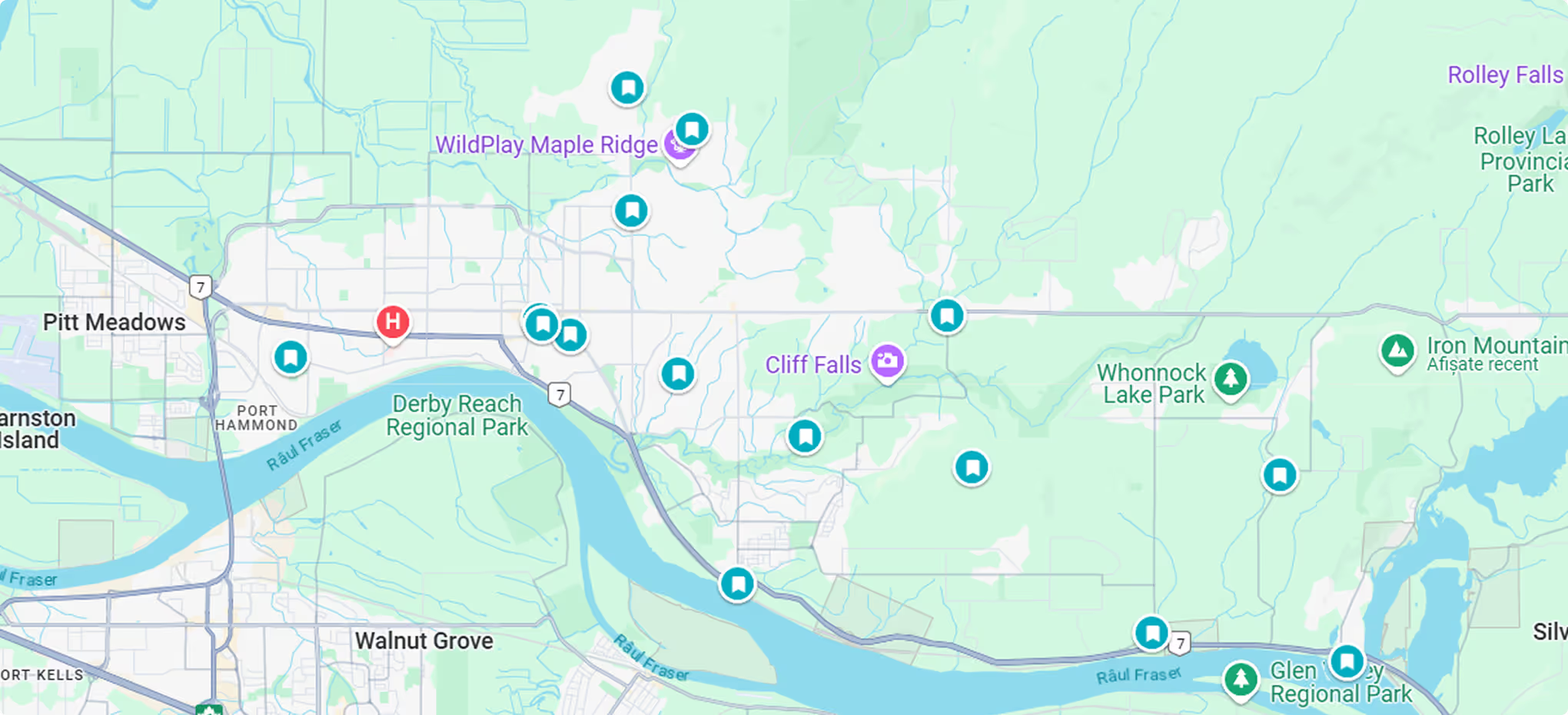
Load Shedding Devices vs Panel Upgrades: The Smart Way to Add an EV Charger
Are You Maxing Out Your Home's Electrical Capacity?
Is your home's electrical system secretly maxed out, standing between you and your new electric vehicle? When exploring your options, understanding Load Shedding Devices vs Panel Upgrades: The Smart Way to Add an EV Charger is the most critical step you will take as a homeowner. Bringing a new EV home is an exciting milestone, but that excitement often hits a wall when you realize your existing electrical infrastructure simply does not have the capacity to support a high-draw Level 2 charger. For many homeowners, discovering that their property is bound by a strict 100-amp service limit is a frustrating surprise that halts their installation plans in their tracks.
When you reach this crossroads, you are faced with a significant decision point: do you commit to a major, disruptive electrical overhaul, or do you opt for a smart load-management alternative? The right choice depends heavily on your home's current energy footprint and your long-term goals. Before making a decision that impacts your property's safety and functionality, it is essential to explore practical, code-compliant solutions that protect your investment. If you are looking to upgrade your system or need comprehensive home electrical and HVAC services, understanding the fundamental differences between these two paths is your best defense against overspending and unnecessary frustration.
Why Older Fraser Valley Homes Struggle with Modern Electrical Demands
If you live in a property built a few decades ago, you are likely dealing with infrastructure designed for a very different era of energy consumption. In our years of providing electrical services across Mission BC and the Fraser Valley, our team at Rep-Air Heating and Cooling frequently encounters older homes standard-equipped with electrical capacities that easily max out today. Back in the 1970s, 1980s, and even the 1990s, the average household did not have multiple heavy-draw appliances running simultaneously. Today, modernizing a home rapidly consumes every bit of available capacity on a standard 100-amp service limit.
The Impact of Modern Appliances
Think about the appliances that define a modern, comfortable home. Induction stoves, on-demand electric water heaters, hot tubs, and heavy-duty dryers all draw substantial amounts of power. When you add an electric vehicle charger to this mix, you are introducing one of the largest sustained electrical loads a residential property can handle. An EV charger does not just spike and turn off; it draws a continuous, heavy current for hours at a time.
The Climate Connection: Heat Pumps and Winter Loads
The unique climate of our region plays a massive role in this electrical balancing act. A pattern we see often during the damp, cold winters in Mission BC and the Fraser Valley is concurrent heat pump usage drastically altering the load calculation when an EV is charging at night. When temperatures drop and your heat pump kicks into high gear to keep your family warm, it demands a significant portion of your panel's capacity. If your EV charger attempts to pull maximum power at the exact same time, you create a peak load scenario that will trip breakers or, worse, violate safety codes and create a severe fire hazard.
It is important to emphasize that this is a widespread, systemic issue. If your panel is struggling to keep up, it is not a unique defect of your home. It is simply the reality of applying 21st-century energy demands to 20th-century infrastructure. Acknowledging this limitation is the first step toward finding a safe, effective solution.
How an EV Energy Management System (EVEMS) Works
For homeowners restricted by a 100-amp service limit, an Electric Vehicle Energy Management System (EVEMS)—commonly known as a load shedding device—offers a brilliant, technology-driven workaround. Instead of physically expanding the pipe that brings power into your home, this smart alternative acts as a traffic controller, ensuring that your existing capacity is never exceeded.
The Mechanics of Smart Energy Management
A load shedding device is a specialized control box installed between your main electrical panel and your EV charger. Its sole purpose is to monitor and manage the total electrical draw of your home in real-time, preventing overloads without requiring human intervention. When we install these systems for our local clients, here is exactly how we explain the process:
1. Continuous Monitoring: The EVEMS uses current transformers (sensors) clamped onto your main incoming power lines. These sensors read the home's total energy consumption in real-time, tracking every amp being used by your lights, appliances, and HVAC system.
2. Threshold Detection: The device is programmed with a strict safety threshold—typically around 80% of your panel's total capacity. It constantly compares your current usage against this hard limit.
3. The Automatic Pause Function: If a major appliance turns on—such as your heat pump during a cold winter night or your electric oven while cooking dinner—and pushes the total home load dangerously close to the threshold, the device takes immediate action. It temporarily pauses the power supply to the EV charger.
4. Seamless Resumption: Once the heavy-draw appliance turns off and the total home load drops back down to a safe level, the EVEMS automatically restores power to the EV charger. Your car continues charging while you sleep, completely uninterrupted by tripped breakers.
Code-Compliant Safety
The most crucial aspect of a load shedding device is that it is entirely automatic, fail-safe, and strictly complies with the Canadian Electrical Code (CEC). Because the system physically prevents the home from exceeding its maximum capacity, electrical inspectors recognize it as a valid, safe alternative to a full service upgrade. It provides peace of mind, knowing that your vehicle will be charged by morning without ever putting your home's electrical system at risk.
When is a Full Electrical Panel Upgrade Actually Necessary?
While smart load management is an incredible tool, our technicians will be the first to tell you it is not a universal cure-all. There are specific scenarios where a physical service upgrade is absolutely unavoidable. A full upgrade involves replacing your existing panel, upgrading the wiring connecting your home to the utility grid, and coordinating with BC Hydro to increase the total amperage supplied to the property—usually moving from a 100-amp service limit to a 200-amp service.
Signs Your Panel Needs Complete Replacement
In our experience, a physical upgrade becomes necessary when your existing equipment is fundamentally compromised or when your future plans far exceed what smart management can handle. When our Red Seal Certified electricians inspect older properties, we often point out that if your current panel shows signs of severe physical degradation—such as rust, scorch marks, or buzzing sounds—it must be replaced for safety reasons, regardless of whether you are adding an EV. Additionally, if you are planning major property expansions, such as adding a secondary rental suite, a laneway house, or converting to a fully electric home with multiple high-draw appliances, a load shedding device will simply pause your charger too often to be practical. In these cases, understanding why older homes often require a panel upgrade before adding an EV charger is essential for long-term planning.
The Reality of a Major Overhaul
It is vital to recognize the significant differences between these two options. A full physical upgrade represents a major investment and a substantial logistical undertaking. It requires extensive utility coordination, municipal permits, and significant downtime where your home will be without power. There is often a noticeable level of property disruption, as upgrading the main service lines may require exterior trenching or drilling through foundation walls. Keep in mind that generic provincial or federal energy rebates and utility incentive programs may apply to qualifying electrical upgrades, so we always advise readers to verify current programs with their utility provider or a tax professional to help offset these investments.
While a 200-amp service provides the highest possible capacity and ultimate future-proofing, it is often pushed unnecessarily by contractors who prefer larger, more extensive projects. If your only goal is to safely charge a single electric vehicle overnight, a full upgrade might be overkill for your needs.
Side-by-Side Comparison: Load Shedding vs. Panel Upgrades
To make an informed decision, it helps to view these two solutions side-by-side. Both options will successfully get your EV charged, but they take vastly different paths to achieve that goal. Whether you choose a smart device or commit to a full electrical panel upgrade, understanding the trade-offs is key.
Breaking Down the Key Differences
The most immediate difference is the overall financial investment. A load shedding device is a smart alternative that requires a fraction of the budget compared to the major investment of a complete service overhaul. Because it utilizes your existing infrastructure, the labor and material requirements are significantly lower.
Installation timelines also vary drastically. Adding an EVEMS is typically completed in a single afternoon, whereas a full panel replacement can span several days or even weeks when factoring in utility approvals, inspections, and physical labor. Furthermore, the physical footprint of adding a smart box next to your existing panel is minimal, whereas replacing the entire main breaker setup is highly disruptive.
• Overall Investment — Load Shedding Device (EVEMS): Smart, cost-effective alternative — Full Panel Upgrade: Major financial investment
• Installation Timeline — Load Shedding Device (EVEMS): Typically completed in a few hours — Full Panel Upgrade: Requires days/weeks of coordination
• Property Disruption — Load Shedding Device (EVEMS): Minimal; installs next to current panel — Full Panel Upgrade: High; involves utility shutoffs and permits
• Future Scalability — Load Shedding Device (EVEMS): Limited to existing 100-amp capacity — Full Panel Upgrade: Maximum capacity for suites or additions
• Code Compliance — Load Shedding Device (EVEMS): Fully recognized by the CEC — Full Panel Upgrade: Fully recognized by the CEC
Load Shedding Device vs. Panel Upgrade Comparison
• Relative Investment Scale: Smart Alternative vs. Major Investment
• Installation Timeline: Hours (EVEMS) vs. Days (Panel Upgrade)
• Property Disruption Level: Minimal impact vs. High disruption with utility coordination
• Compliance: Both solutions are 100% compliant with the Canadian Electrical Code (CEC)
The Essential First Step: Objective Load Calculations
Before you purchase any equipment or commit to a specific path, there is one non-negotiable first step: a formal electrical load calculation. This is not a rough estimate or a quick glance at your breaker box; it is a strict, mathematical formula dictated by the Canadian Electrical Code to determine exactly how much spare capacity your home possesses.
Why Guesswork Leads to Danger
Attempting a DIY assessment or skipping the formal load calculation entirely is incredibly dangerous. Guessing your electrical capacity can lead to overloaded circuits, frequent breaker trips, melted wires, and severe fire hazards. The CEC requires a precise accounting of your home's square footage, major appliances, heating systems, and specific lifestyle factors to generate an accurate number. Only a proper calculation reveals whether load shedding is a viable option for your specific property, or if your 100-amp service limit is already too saturated to safely accommodate even a managed EV charger.
The Red Seal Difference
This is why it is critical to have this calculation performed by certified professionals who prioritize objective data over aggressive sales tactics. At Rep-Air Heating and Cooling, we emphasize a commitment to objective, Red Seal Certified load calculations. Because our team has spent years evaluating homes throughout the region, our goal is to provide you with code-compliant, cost-effective solutions rather than automatically pushing a major panel upgrade just to increase the size of the job. By relying on hard data, our technicians can walk you through exactly what your home can handle. If you are looking for reliable electrical services in Langley and the surrounding areas, starting with a certified load calculation ensures your project is built on a foundation of safety and transparency.
FAQ
Can I add an EV charger to a 100-amp panel?
Yes, you can often add an EV charger to a 100-amp panel by utilizing an Electric Vehicle Energy Management System (EVEMS). This smart device acts as a load shedder, monitoring your home's total energy usage and pausing the charger when other heavy appliances are running. However, a formal load calculation must be performed first to ensure this setup is safe for your specific property.
How does an EV energy management system work?
An EV energy management system works by continuously reading the total electrical current being drawn by your home. If the total load approaches your panel's maximum safe capacity—such as when a heat pump or electric oven turns on—the system automatically pauses power to the EV charger. Once the heavy appliances turn off and the load drops, the system seamlessly resumes charging your vehicle.
Is a panel upgrade required for a Level 2 charger?
A full panel upgrade is not strictly required for a Level 2 charger if your home qualifies for a load shedding device. If an objective load calculation determines that an EVEMS can safely manage your power draw, you can avoid a major physical upgrade. Upgrades are typically only mandatory if your panel is physically degraded, heavily overloaded, or if you plan to add secondary suites.
Do load shedding devices comply with the Canadian Electrical Code?
Yes, load shedding devices are fully recognized and compliant with the Canadian Electrical Code (CEC). Because these systems physically prevent a home from drawing more power than the panel is rated for, electrical inspectors accept them as a safe, legitimate alternative to a complete service upgrade.
Will a load shedding device damage my EV battery?
No, a load shedding device will not damage your EV battery. Electric vehicles are designed to handle interruptions in charging, similar to how they manage power fluctuations when plugged into public charging stations. The temporary pauses initiated by the management system are perfectly safe and will not impact the lifespan or performance of your vehicle's battery.
Secure Your Home's EV Charging Solution Today
Discovering that your Mission BC and Fraser Valley older home is maxed out does not mean you have to abandon your plans for an electric vehicle. Whether the right path is a smart load shedding device or a comprehensive panel upgrade, there is always a safe, code-compliant way forward. The most important step you can take is to stop guessing and start measuring. We encourage you to schedule a professional, Red Seal Certified assessment to understand your home's exact electrical needs. Reach out today to book your objective load calculation, and let us help you find the smartest, safest way to power your new EV.
hear what our satisfied clients have to say
Neighbourhoods in the Fraser Valley