Why Is My Furnace Blowing Cold Air? Defrost Cycles and Diagnostics Explained
Is It Normal for a Heating System to Blow Cold Air?
When you are looking for home maintenance tips and troubleshooting, figuring out why your heating system is suddenly blowing cold air is usually at the top of the list. At Rep-Air Heating and Cooling, we often hear the panic in our customers' voices when they feel a chilly breeze from their vents instead of the warmth they desperately need. It is a stressful moment for any homeowner. You rely on your system to keep your family comfortable, and feeling a sudden blast of unheated air immediately raises concerns about expensive repairs or a total system breakdown.
However, before you panic, it is important to understand that cold air coming from your vents does not always mean your equipment is broken. While it can certainly signal a mechanical issue—like a tripped safety switch or an ignition failure—it can also be a perfectly normal function of modern heat pumps. Understanding how modern heat pumps handle freezing winter temperatures without relying entirely on emergency auxiliary heat is crucial for your peace of mind.
The goal of this guide is to help you navigate that exact decision point: determining whether your heat pump's defrost cycle and cold-weather operation are functioning normally, or if a system failure requires a professional diagnostic. By learning the basic mechanics of your system, you can save yourself unnecessary worry and know exactly when it is time to call for professional HVAC services to safely restore your home's comfort.
The Simplest Culprit: Thermostat Settings and Fan Operation
Before diving into complex mechanical issues, our technicians always start any diagnostic process by eliminating user error. Often, the reason a heating system is circulating unheated air has nothing to do with the furnace or heat pump itself, but rather how the thermostat is communicating with the blower motor.
Understanding "ON" vs. "AUTO" Settings
Your thermostat controls two main functions: the heating cycle (when the burners ignite or the heat pump compressor runs) and the blower fan (which circulates the air through your ductwork). Most thermostats have a fan switch with two primary settings: "ON" and "AUTO."
• The "ON" Setting: When your fan is set to "ON," the blower motor runs continuously, 24 hours a day, 7 days a week. It will circulate air regardless of whether the heating cycle is actively warming that air. As a result, when the heating cycle finishes, the fan keeps blowing room-temperature (or slightly cooler) air out of your vents.
• The "AUTO" Setting: When set to "AUTO," the blower motor only runs when the heating system is actively producing heat. Once the target temperature is reached and the burners or compressor shut off, the fan shuts off as well.
The quick fix: Walk over to your thermostat right now and check the fan setting. If it is switched to "ON," simply flip it back to "AUTO." Give the system a few minutes to reset and start a new heating cycle. If the air coming from the vents is now warm, you have solved the problem.
• AUTO — System Behavior: Fan only runs during active heating cycles — Air Temperature from Vents: Consistently warm when blowing
• ON — System Behavior: Fan runs continuously between heating cycles — Air Temperature from Vents: Alternates between warm and cool/room-temperature
If you have verified that your thermostat is set correctly to "AUTO" and the system is still blowing cold air during a heating cycle, a deeper mechanical or airflow issue is likely. At this stage, it may be time to look into furnace repair and heating services.
How Restricted Airflow Triggers High-Limit Switch Lockouts
If your thermostat settings are correct, the next most common cause our team sees in the field is a dirty or clogged air filter. This might sound too simple to cause a major system shutdown, but restricted airflow is one of the leading causes of heating failures, especially during periods of heavy use.
The Role of the High-Limit Switch
Your gas furnace is equipped with a crucial safety mechanism called a high-limit switch. This sensor monitors the internal temperature of the heat exchanger—the component responsible for safely transferring heat to the air circulating through your home. The heat exchanger requires a constant, steady flow of cool return air to keep it from overheating.
When an air filter becomes clogged with dust, pet dander, and debris, it acts like a wall, choking off that vital return airflow. Without enough air moving over the heat exchanger to absorb its heat, the internal temperature of the furnace rapidly spikes. This is incredibly dangerous and can lead to a cracked heat exchanger or even a fire hazard.
The Lockout Process
To prevent catastrophic damage, the high-limit switch detects this extreme temperature and immediately trips. When it trips, it shuts off the gas supply to the burners, instantly stopping the production of heat. However, the system's logic board knows the unit is still dangerously hot. To cool the internal components down, it commands the blower fan to continue running.
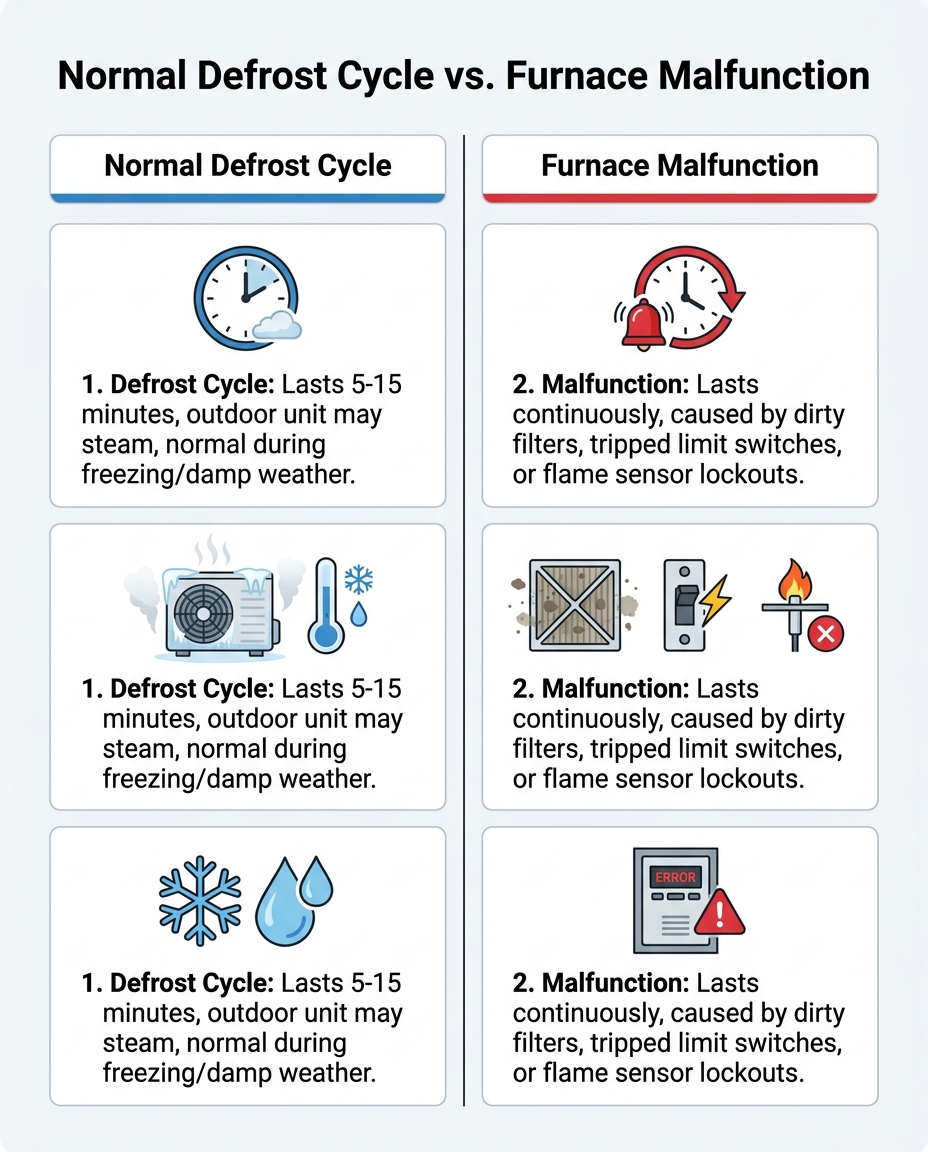
Because the burners are off but the fan is on, your vents will start blowing unheated, cold air into your home. This protective sequence is known as a "hard lockout." Proper airflow is especially critical during sub-zero temperature operation, when systems run for longer, more demanding cycles and are highly susceptible to overheating if restricted. Keeping up with regular filter changes is a core part of routine preventative maintenance that prevents these lockouts from occurring.
Gas Furnace vs. Heat Pump: Understanding the Defrost Cycle
Many homeowners use the term "furnace" interchangeably with "heat pump," but mechanically, these two systems operate completely differently. If your home is heated by a heat pump rather than a natural gas furnace, blowing cold air might not be a malfunction at all—it could be a built-in, necessary feature of the system's winter operation.
The Mechanics of a Heat Pump in Winter
Unlike a gas furnace that burns fuel to create heat, a heat pump extracts ambient thermal energy from the outside air and transfers it inside. Yes, even when it is freezing outside, there is still heat energy in the air. However, during winter cold snaps, the outdoor coil of the heat pump naturally accumulates frost and ice as it pulls moisture out of the freezing air.
Our team at Rep-Air Heating and Cooling sees this constantly in Mission BC's damp coastal and valley winter climate. The high moisture levels in the regional air lead to rapid outdoor coil freezing. Because wet, freezing air passes over the super-cooled refrigerant coils, frost builds up much faster here than it would in a dry, arid climate. If this ice were allowed to build up unchecked, it would eventually encase the entire unit, block all airflow, and destroy the compressor.
What Happens During a Defrost Cycle?
To protect itself and melt the accumulated ice, the heat pump periodically enters a "defrost cycle." During this cycle, the system temporarily reverses its operation. It essentially switches into air conditioning mode for a brief period, taking heat from inside your home and sending it to the outdoor coil to melt the ice. You may even see steam rising from the outdoor unit as the ice rapidly melts.
Because the system is temporarily acting as an air conditioner, the air blowing out of your indoor vents will feel noticeably cooler. This cycle typically lasts anywhere from 5 to 15 minutes. Once the outdoor coil is clear of ice, the reversing valve shifts back, and the system resumes blowing warm air. If you notice cold air for just a few minutes during damp, freezing weather, it is highly likely your system is just defrosting and operating exactly as designed.

Ignition Failures and Flame Sensor Issues
If you have a gas furnace (not a heat pump), and you have ruled out the thermostat and the air filter, the system may be experiencing an ignition failure. A gas furnace relies on a precise sequence of events to safely ignite its burners and produce heat. If any step in this sequence fails, the system will abort the heating cycle for safety reasons.
The Role of the Ignition System and Flame Sensor
When your thermostat calls for heat, the furnace's draft inducer motor starts, followed by the igniter (either a pilot light or a modern electronic hot surface igniter). Once the igniter is glowing hot, the gas valve opens, and the burners ignite. Immediately after ignition, a small, thin metal rod called a flame sensor must detect the presence of a steady flame.
If the flame sensor is dirty, coated in carbon buildup, or faulty, it will fail to "see" the flame. The furnace's control board will assume the gas is flowing without burning—a highly dangerous situation that could lead to a gas buildup. Within seconds, the system will slam the gas valve shut. However, just like with an overheating lockout, the blower fan may continue to run to clear any residual gases, resulting in cold air blowing from your vents.
During a recent winter service call here in Mission, one of our Rep-Air technicians helped a homeowner who was dealing with a furnace that simply wouldn't heat up correctly. We discovered an ignition issue, clearly explained the necessary fix, and provided helpful maintenance tips so the homeowner understood exactly what went wrong and how the system was safely resolved. Because ignition components handle explosive natural gas, they require precise, professional cleaning or replacement. Tampering with gas valves or sensors without proper licensing and training is dangerous. If you suspect an ignition issue, you can learn more about identifying cracked flame sensors, but always leave the actual repair to a certified professional.
When to Call a Professional for Diagnostic Assessment
Understanding how your heating system works empowers you to handle the basics, but it is equally important to know your DIY limits. As a homeowner, your safe troubleshooting steps are limited to checking the thermostat settings, ensuring all vents are open and unblocked, and replacing a dirty air filter. If you have completed these steps and your system continues to blow cold air, it is time to call in an expert.
The Value of Professional Diagnostics
Ignoring a system that repeatedly blows cold air can lead to much larger, more expensive problems down the line. A furnace constantly tripping its high-limit switch is putting immense stress on the heat exchanger. A heat pump stuck in defrost mode could indicate a failing reversing valve or low refrigerant charge. A professional diagnostic provides a thorough, objective assessment of the entire system.
In another recent scenario, our Rep-Air team assisted a customer who needed a furnace repair and an explanation of how their system worked. Our visiting technician took the time to walk through the entire repair process and explain the furnace's operation, ensuring the customer fully understood their system's needs before any tools were lifted. This level of diagnostic transparency is vital. You deserve to be shown exactly why the system isn't working, without aggressive sales pitches, so you can make an informed decision.
Furthermore, a true professional respects your home. When you schedule an assessment, you should expect property protection—like the strict use of drop-cloths and shoe booties—to keep your floors pristine while the technician works. If you are experiencing persistent cold air issues and need reliable heating services in Chilliwack or the surrounding areas, scheduling a transparent, professional diagnostic is the safest and most effective way to restore your comfort.
Frequently Asked Questions About Furnaces Blowing Cold Air
Why is my heater blowing cold air in my house?
This is usually caused by simple thermostat settings, specifically if the fan switch is set to "ON" instead of "AUTO," which forces the blower to run even when the system isn't actively heating. It can also result from a dirty filter causing the system to overheat and shut down the burners while the fan continues to run. If you have a heat pump, it may simply be in a normal, temporary defrost cycle.
How do you fix a furnace that is blowing cold air?
First, check your thermostat and ensure the fan is set to "AUTO." Second, locate your HVAC air filter and replace it if it is dirty or clogged, as restricted airflow is a primary cause of system lockouts. If neither of these basic troubleshooting steps works, you must contact a licensed professional to diagnose internal components like flame sensors, limit switches, or ignition modules.
Will a dirty filter cause a furnace to blow cold air?
Yes. A restricted, dirty filter prevents cool return air from flowing over the heat exchanger, causing the internal temperature of the furnace to spike rapidly. When this happens, the high-limit safety switch trips and turns off the gas burners to prevent a fire hazard. The blower fan continues running to cool the overheated unit down, which results in unheated air blowing into your home.
Why does my heat pump blow cold air during winter?
Heat pumps periodically enter a defrost mode to melt frost and ice off the outdoor unit, which naturally accumulates during damp, freezing weather. During this brief cycle, the system temporarily reverses operation, pulling heat from inside the home to melt the outdoor ice. This results in cooler air coming from your indoor vents, which is a normal protective function, not a malfunction.
How long does a heat pump defrost cycle last?
A normal heat pump defrost cycle typically lasts between 5 and 15 minutes. The frequency of these cycles depends heavily on the outdoor temperature and ambient moisture levels; damp, freezing climates will trigger them more often. However, if your system blows cold air continuously for more than an hour, it is no longer in defrost mode and requires professional attention.
Restore Your Home's Heating Comfort Today: Home Maintenance Tips and Troubleshooting
Understanding the difference between a normal heat pump defrost cycle and a true mechanical malfunction brings tremendous peace of mind during the harsh winter months. While some cold air issues can be resolved with a simple thermostat adjustment or a fresh filter, you should never ignore persistent unheated air coming from your vents.
If your system is struggling to keep you warm, do not wait for a complete breakdown. Applying these home maintenance tips and troubleshooting steps is a great start, but scheduling an expert diagnostic with the Rep-Air Heating and Cooling team is the best way to get your heating system safely back on track. Protect your equipment, ensure your family's comfort, and let a licensed professional provide the clear, grounded resolution you deserve.
hear what our satisfied clients have to say
Neighbourhoods in the Fraser Valley