Why Is My Furnace Blowing Cold Air? Defrost Cycles and Diagnostics Explained

Facing Cold Drafts During Damp Winter Cold Snaps
Before the first major freeze sets in, leaning on local service expertise and area tips is the best way to prepare your home for unexpected heating challenges. At Rep-Air Heating and Cooling, our team has spent years helping families navigate the unique kind of chill our region brings, and we know there is nothing quite as alarming as waking up in the middle of the night to a cold house. When you are enduring damp, near-freezing winter nights in Mission BC, your heating system is your only line of defense against the elements. But what happens when that system suddenly starts blowing cold air through the vents instead of the comforting warmth you expect?
For many homeowners, this sudden blast of unheated air triggers immediate panic. You might rush to the thermostat, turn the system off and on again, or assume the entire heating unit has suffered a catastrophic mechanical failure. However, the core decision point you face in this moment is determining whether this is a normal, temporary system cycle or a genuine malfunction that requires expert intervention. Modern heating systems are highly sophisticated, and they often feature built-in self-preservation modes that temporarily alter airflow temperatures to protect the outdoor equipment from freezing over.
If you find yourself shivering and wondering what to do next, the first step is to observe the system's behavior over a short window of time. If the issue resolves itself quickly, your system is likely just doing its job. If the cold air persists, it is time to reach out for professional heating services to diagnose the underlying cause and restore your home's comfort.
Why Your 'Furnace' Might Actually Be a Heat Pump
To properly diagnose why your heating system is behaving a certain way, it is essential to know exactly what type of equipment is operating in your home. In our experience servicing homes throughout Mission BC and the Fraser Valley, we find that many homeowners refer to their central heating system generically as a "furnace." This term has become a catch-all phrase for whatever machine pushes warm air through the ductwork. However, the reality of modern home comfort is that many of these systems are actually electric heat pumps, which operate on entirely different principles than traditional gas combustion furnaces.
The Shift from Combustion to Heat Transfer
A traditional gas furnace generates heat by burning fuel. It ignites natural gas or propane, heats up a metal heat exchanger, and blows air across that hot metal before distributing it into your living spaces. Because it creates heat through fire, a gas furnace should never intentionally blow cold air while the burners are supposed to be running.
Heat pumps, on the other hand, do not generate heat—they move it. Even when it feels bitterly cold outside, there is still ambient thermal energy in the outdoor air. A heat pump extracts this latent heat, compresses the refrigerant to raise its temperature, and transfers that warmth inside. Because these systems rely on extracting heat from the outdoor environment, they are directly exposed to the elements. Experiencing temporary unheated air is actually a specific behavioral trait of heat pump systems during specific weather events, designed entirely to protect the outdoor unit from turning into a block of solid ice.
The Anatomy of a System Defrost Cycle
To understand why you might feel a temporary cold draft during those damp, near-freezing winter nights, you have to look at the anatomy of a heat pump's defrost cycle. When the outdoor temperature drops and the air is full of moisture, condensation forms on the outdoor unit's coils. Because the refrigerant running through those coils is extremely cold, that condensation quickly freezes into frost. If left unchecked, this frost would build up into thick ice, suffocating the unit and preventing it from absorbing any heat at all. To prevent this, the system initiates a self-cleaning process called the defrost cycle.
The Reversing Valve Operation
When the system's sensors detect too much frost accumulation, a component called the reversing valve shifts position. This physically reverses the flow of refrigerant. For a brief period, your heat pump actually switches into air conditioning mode. It takes the heat from inside your home and sends it to the outdoor unit to rapidly melt the accumulated frost. During this time, the outdoor fan will temporarily shut off to accelerate the melting process by keeping the heat concentrated around the coils.
Auxiliary Heat Engagement
Because the system is technically acting as an air conditioner during the defrost cycle, it is pushing cold air into your ductwork. To prevent you from feeling this chill, the system is designed to trigger secondary, auxiliary heat strips (usually electric resistance coils located in the indoor air handler). These heat strips are supposed to engage automatically to warm the cold air before it reaches your vents.
A normal defrost cycle typically lasts between 5 and 15 minutes before the reversing valve shifts back and the system returns to standard heating mode. If you are feeling a blast of cold air during this time, it often means the auxiliary heat sequencing has failed to engage, or the heat strips are malfunctioning. The system is doing what it needs to do outside, but failing to mask the process inside.
How Fraser Valley Weather Accelerates Frost Accumulation
The frequency of these defrost cycles is entirely dependent on the specific climate you live in. If you live in a region with dry, freezing winters, your system might rarely need to defrost. However, the atmospheric conditions in Mission BC and the Fraser Valley create the perfect storm for rapid frost buildup on outdoor heating equipment.
Our technicians at Rep-Air Heating and Cooling see this pattern constantly: in our region, winter temperatures frequently hover between 0°C and 5°C. While this might not seem as extreme as sub-zero temperatures, our team knows it is actually the most challenging temperature range for a heat pump. This is because the air still holds a massive amount of moisture, resulting in very high relative humidity. When this heavy, damp air comes into contact with the freezing coils of your outdoor unit, frost forms almost instantly.
During these specific weather events, it is entirely normal for a system to enter defrost mode every 30 to 90 minutes. Many homeowners assume that frequent cycling under these exact atmospheric conditions is a sign the system is failing. In reality, it is a sign that the system is successfully protecting itself. If you are looking for heating repair in Mission, it is crucial to first monitor the weather outside. If it is a damp, foggy, near-freezing night, your system is simply working overtime to keep its outdoor coils clear of ice.
Visual Diagnostics: Assessing Your Outdoor Unit
Before you panic and shut your system down, a quick visual inspection of your outdoor unit can tell you exactly what is happening. Knowing the difference between light frost vs. solid ice encasement can save you from unnecessary worry and help you provide accurate information if you do need to call our professionals. Always perform visual checks safely, without touching the electrical components or attempting to chip away ice.
Normal Frost Characteristics
It is perfectly normal to see some white buildup on your unit during the winter. Normal frost has a distinct appearance and behavior that lets you know the system is functioning as designed.
• Appearance: Thin, white, and powdery, much like the frost on a car windshield in the morning.
• Coverage: An even, light coating across the delicate metal fins of the coil.
• Duration: Melts away entirely within 5 to 15 minutes once the defrost cycle initiates.
• Steam: You may see a plume of steam rising from the unit as the frost melts—this is normal vapor, not smoke.
Warning Signs of Solid Ice Encasement
Abnormal buildup requires immediate attention. If the defrost cycle is failing, or if there is a deeper mechanical issue, the unit will quickly become overwhelmed by ice.
• Appearance: Thick, clear, or milky solid ice that looks like a glacier forming on your equipment.
• Coverage: Ice that completely blocks the coil fins, extends down the refrigerant lines, or builds up on the top grille and fan blades.
• Duration: Ice that persists for hours and does not melt away.
• Sound: Loud grinding or clanking noises, which occur when the fan blades hit the encroaching ice.
Solid ice encasement indicates a severe malfunction, such as restricted airflow, low refrigerant levels, or a failing defrost control board. This level of freezing requires professional intervention to resolve safely.


When It's Not the Defrost Cycle: Other Mechanical Issues
While the defrost cycle perfectly explains temporary cool drafts in heat pumps, persistent cold air that lasts for hours points to other mechanical issues. If you have a traditional gas furnace, or if your heat pump is blowing cold air constantly without entering defrost mode, you may be dealing with one of several common system failures.
1. Severe Airflow Restrictions: The most common culprit for heating failures is a severely clogged air filter. When airflow is blocked, the heat exchanger inside the unit gets too hot. As a safety measure, the system's high-limit switch will trip, shutting off the burners or heating elements while the blower fan continues to run. This results in room-temperature or cold air circulating through your home until the system cools down.
2. Ignition Failures and Dirty Sensors: In gas furnaces or dual-fuel systems, safety sensors monitor the combustion process. If a flame sensor becomes coated in carbon buildup, it cannot detect the flame. The system will shut off the gas supply for safety, but the fan may keep running, blowing unheated air. Cleaning and calibrating these sensors requires a professional touch.
3. Leaky Ductwork in Unconditioned Spaces: If your ductwork runs through an unheated attic or crawlspace, significant leaks can pull in freezing outdoor air. This icy air mixes with your heated air, diluting the temperature drastically before it ever reaches your living room vents.
4. Refrigerant Cycle Interruptions: Just as low refrigerant can cause your indoor coils to freeze in the summer, it severely limits your system's ability to absorb heat in the winter. The physics are identical to troubleshooting an AC blowing warm air during July—if the refrigerant charge is incorrect, the heat transfer process breaks down entirely.
What to Expect During a Professional Diagnostic Visit
When you encounter solid ice encasement or persistent cold drafts that do not resolve after 15 minutes, it is time to bring in an expert. Diagnosing auxiliary heat failures, testing defrost control boards, and measuring high-pressure refrigerants are not DIY tasks. These systems operate on high voltage and require specialized tools to evaluate safely and accurately.
When you call Rep-Air Heating and Cooling, working with our Red Seal Certified technicians ensures that you receive complete transparency throughout the entire diagnostic process. We will not just guess at the problem; our team systematically isolates the issue. First, we inspect the outdoor unit's defrost control board to ensure the sensors are accurately reading the coil temperatures. Next, we test the electrical sequencing to verify whether the reversing valve is shifting properly and whether the indoor auxiliary heat strips are receiving power.
If the issue is related to solid ice buildup, our technicians will safely thaw the unit using specialized methods before attaching gauges to measure the refrigerant pressures. Once the root cause is identified, we walk you through the findings step-by-step, explaining exactly what failed and why, before beginning any repair work. If you are experiencing ongoing issues, it is highly recommended to schedule a furnace diagnostic visit to protect your equipment from further damage.
Restoring Reliable Warmth to Your Home
Understanding how your heating equipment operates is the first step in maintaining a comfortable, stress-free home during the winter months. By combining visual observations with trusted local service expertise and area tips, you can make informed decisions about your home heating and avoid unnecessary panic during routine system operations.
Remember that while temporary cold air during a 15-minute defrost cycle is a normal part of your system protecting itself, persistent cold drafts or thick, solid ice buildup are clear signs of trouble. Monitor your outdoor unit visually during the next damp cold snap. If you observe solid ice encasement, or if your system consistently fails to return to its normal heating mode, do not hesitate to reach out to the Rep-Air Heating and Cooling team for a professional evaluation to restore reliable warmth to your home.
Frequently Asked Questions
Why is my heater blowing cold air?
The short answer is that your system may be in a temporary defrost cycle, or it may have tripped a safety switch. If you have a heat pump, it will periodically blow unheated air for 5 to 15 minutes to melt frost off the outdoor unit. If you have a gas furnace, a clogged air filter may have caused the system to overheat, tripping the limit switch and shutting off the burners while the fan continues to run.
Does a heat pump blow cold air when in defrost mode?
Yes, a heat pump temporarily acts as an air conditioner during the defrost cycle. It reverses the flow of refrigerant to send heat to the outdoor unit, rapidly melting accumulated frost. To prevent you from feeling this cold air, your system's auxiliary heat strips are supposed to turn on. If you feel a cold draft, those backup heat strips may be malfunctioning.
How do I fix a furnace that blows cold air?
The first and safest step you can take is to check and replace your air filter. Severely restricted airflow is a leading cause of heating systems blowing cold air because it triggers safety shutdowns. If a new filter does not solve the problem, the issue likely involves ignition failure, a dirty flame sensor, or a refrigerant problem, all of which require a licensed technician to diagnose and repair safely.
How long does a heat pump defrost cycle last?
A normal defrost cycle typically lasts between 5 and 15 minutes. Once the sensors detect that the outdoor coil has warmed up enough to melt the frost, the reversing valve shifts back, and the system resumes normal heating. If your system stays in defrost mode for longer than 20 minutes, or if it is blowing cold air continuously, there is likely a mechanical issue that needs professional attention.
Why is my heat pump freezing up in the winter?
Frost accumulation is a natural result of extracting heat from damp, near-freezing air. When the outdoor temperature is between 0°C and 5°C with high humidity, condensation forms on the cold coils and instantly turns to frost. While a light coating of frost is normal, thick, solid ice encasement means the defrost cycle is failing, airflow is restricted, or the system is low on refrigerant.
How can I tell the difference between normal frost and dangerous ice on my outdoor unit?
Normal frost looks like a thin, powdery white layer of snow that melts away quickly. It should completely disappear during the system's brief defrost cycle. Dangerous ice buildup appears as thick, clear, or milky solid ice that encases the metal fins, covers the fan blades, and persists for hours without melting. Solid ice requires immediate professional service to prevent severe equipment damage.
hear what our satisfied clients have to say
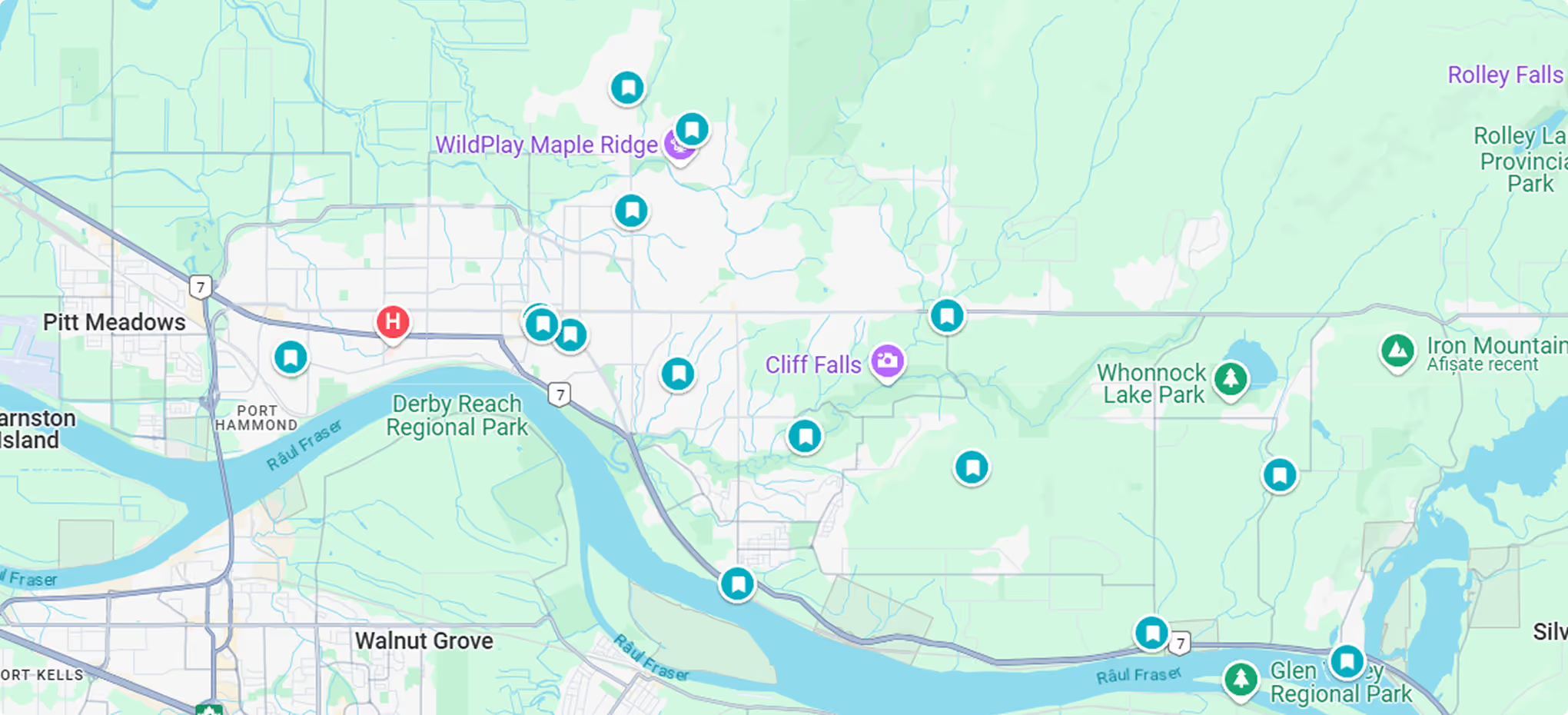
Neighbourhoods in the Fraser Valley