Protecting Your Home During Dirty HVAC Swaps: Drop Cloths and Boot Covers
The Hidden Mess of HVAC Upgrades: Why Property Protection Matters
Your heating system is failing, but the thought of replacing it brings up a completely different worry: the mess. Upgrading an old unit means heavy boots, dismantled metal, and dirty equipment moving through the center of your living space. Using drop cloths and boot covers to protect your home during dirty HVAC swaps is how our technicians reduce this worry. It is a stressful thought for anyone with clean carpets, finished hardwood, or light-colored rugs. When you schedule a major mechanical upgrade, you expect technical expertise, but you also need absolute certainty that your property will remain pristine from the moment the crew arrives until the final test run.
When exploring your options for heating services, choosing a team that takes property protection seriously helps keep your home clean during the work.
Across many Mission BC residential properties, mechanical rooms are often located past finished hallways, down carpeted stairs, or tucked away inside pristine laundry rooms. This means the path to remove a massive, soot-filled furnace runs directly through the most heavily trafficked and visible areas of your house. Homeowners frequently express concern about contractors walking into these finished spaces to perform heavy mechanical work. The reality is that dismantling a 15-to-20-year-old heating system inevitably releases trapped debris, dust, and rust that has been accumulating for decades.
Professional teams view property protection as a mandatory part of the job, not an optional courtesy or an afterthought. The moment technicians step out of their service vehicles, the focus must immediately shift to securing the environment. Setting the stage for these specific protocols gives you the confidence to authorize a major system swap without fearing for your floors, walls, or indoor air quality. By understanding exactly how a professional crew isolates the workspace and guards your home, you can focus on the benefits of your new system rather than the messy logistics of the removal.
What Makes Removing an Old Furnace So Dirty?
To understand why strict property protection is necessary, it helps to look inside an aging heating system. Over a lifespan of 15 to 20 years, a furnace acts as a massive filter and collection point for the air circulating through your home. Even with regular filter changes, microscopic dust, pet dander, and airborne particulate settle inside the blower compartment, along the heat exchanger, and within the return air drops. When this equipment is running, that debris is largely contained. However, the moment a technician begins dismantling the unit, that trapped debris is disturbed and ready to become airborne.
During the furnace diagnosis process, technicians often identify significant internal wear that complicates the removal. Cutting refrigerant lines, sawing through old PVC venting, and dismantling rigid sheet metal ductwork releases metal shavings, fiberglass insulation fibers, and fine soot. Furthermore, older high-efficiency units frequently suffer from hidden condensation leaks, resulting in stagnant water, rust slurry, or residual sludge trapped in the base pan. If a unit is tilted during the haul-away process, this dirty water can easily spill out onto the floor.
Contrast this messy physical reality with the absolute necessity of maintaining a clean living space during the assessment and removal. The contrast highlights exactly why specialized protocols are required. Below is a breakdown of the specific hazards encountered during a removal and how professional teams neutralize them:
• Airborne Soot & Dust — The Mechanical Cause: 15+ years of particulate buildup disturbed during dismantling. — The Professional Solution: Sealing ductwork and isolating the mechanical room before cutting metal.
• Metal Shavings & Screws — The Mechanical Cause: Sawing through old venting and disconnecting custom sheet metal plenums. — The Professional Solution: Deploying localized drop zones and performing magnetic sweeps of the area.
• Sludge & Condensation — The Mechanical Cause: Residual water and rust trapped in the base pan of older condensing units. — The Professional Solution: Draining the system completely and hauling it out over impermeable neoprene runners.
By anticipating these exact hazards in Mission BC residential properties, technicians can deploy the right protective materials before a single tool is unpacked, ensuring that the dirty reality of the old furnace never touches your clean floors.
Battling the Elements: Mud, Moisture, and Indoor Carpets
The physical mess hidden inside the furnace is only half of the challenge; the other half comes from the outside environment. HVAC emergencies rarely happen on mild, sunny days. They typically occur during severe weather events when the system is pushed to its limits. During rainy Pacific Northwest winters, heavy rainfall and muddy conditions severely compound the mess of an installation. Technicians cannot simply teleport a 150-pound piece of equipment into your basement; the job requires constant, heavy-footed traffic between the service truck and the mechanical room.
The hazard of wet boots: Bringing wet, muddy boots onto hardwood floors introduces immediate risks. Moisture can seep into the seams of hardwood planks, leading to cupping or warping over time. Furthermore, wet floors create a severe slipping hazard for technicians carrying heavy, awkward loads. On white carpets or light-colored rugs, even a single muddy footprint can cause permanent stains that require professional cleaning to remove.
Because hauling away the old unit and bringing in the new equipment requires dozens of trips in and out of the front door, the pathway becomes a high-risk zone for property damage. Technicians must navigate front steps, entryways, hallways, and stairs while balancing tools, sheet metal, and heavy machinery. Weather-proofing the indoor workspace is a critical step that must happen before any wrenches are turned. Establishing a dry, secure perimeter ensures that the harsh winter elements stay outside where they belong, protecting the integrity of your interior finishes regardless of how severe the storm is outside.
How Our Technicians Use Drop Cloths and Boot Covers
To combat both the internal debris of the furnace and the external mud of the season, our technicians use drop cloths and boot covers as part of how they work. It is more than a casual reassurance to "be careful" or "clean up later"; it is a set of steps our technicians follow on a furnace swap. Technical skill goes hand in hand with respect for the homeowner's property.
Following these steps keeps the work professional from start to finish and helps keep your home clean. This level of care is a core part of any professional HVAC installation.
Step 1: Entryway Staging and Shoe Covers
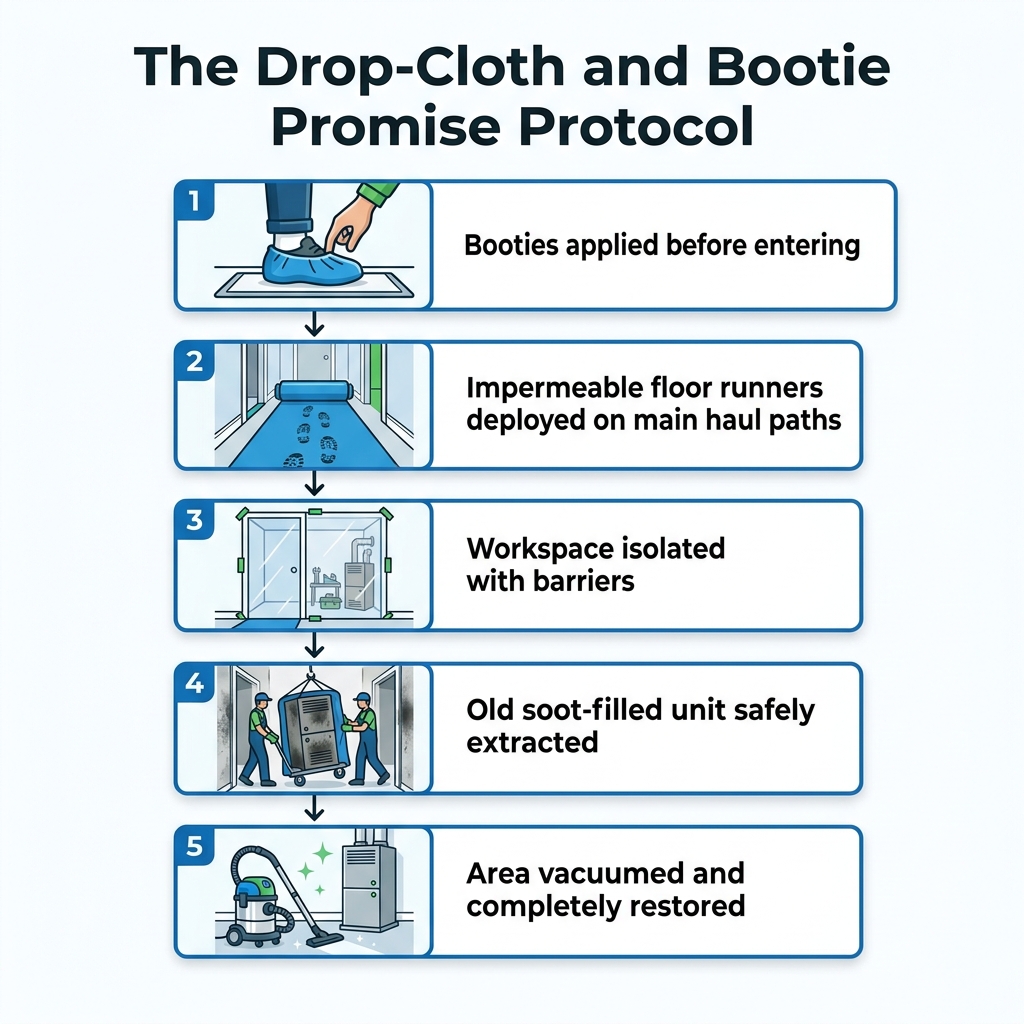
1. Immediate shoe protection: Booties (disposable shoe covers) are applied over work boots before the technician ever crosses the threshold. This instantly neutralizes the threat of mud, oil, and gravel being tracked inside.
2. Tool staging zones: A designated staging area is created near the entryway using heavy-duty mats. This ensures that heavy metal tool bags and diagnostic equipment are never placed directly on bare hardwood or delicate tile, preventing accidental scratches.
3. Weather monitoring: If the weather is particularly severe, a secondary transition zone may be established on the covered porch to allow technicians to dry off materials before bringing them indoors.
Step 2: Securing the Haul Path
1. Route identification: Before moving any equipment, the lead technician walks the property to identify the safest, most direct route from the exterior door to the mechanical room. They look for tight corners, low-hanging fixtures, and delicate flooring transitions.
2. Continuous floor defense: Once the route is mapped, continuous floor protection is laid down along the entire specific path. This creates a safe "highway" for technicians to walk on, ensuring that no bare floor is exposed to work boots or heavy machinery.
3. Obstacle clearing: Homeowners are gently guided on moving small, fragile items (like hall tables or floor lamps) away from the haul path to eliminate the risk of accidental bumps while technicians maneuver bulky equipment.

Advanced Floor Defense: Why Standard Drop Sheets Aren't Enough
When most people think of floor protection, they picture the thin, canvas drop-sheets used by painters. While those might stop a stray splatter of latex paint, they are entirely inadequate for heavy mechanical work. The fatal flaw in standard canvas or cloth drop-sheets is that they are highly porous. They act like a wick, allowing moisture, residual machine oil, and fine soot to seep directly through the fabric and into the carpet beneath.
During rainy Pacific Northwest winters, impermeable floor barriers are specifically necessary to stop rainwater and mud from soaking through cloth sheets. Professional-grade property protection relies on advanced materials designed for high-traffic, heavy-duty zones. Instead of canvas, technicians deploy impermeable neoprene runners, heavy-duty corrugated plastic films, or rubberized mats. These materials provide a waterproof barrier that traps spills on the surface, allowing them to be wiped up before they ever reach the subfloor.
Beyond the floor: Protecting the home also means looking at the walls and doorways. Maneuvering a bulky, rectangular steel cabinet through a narrow residential hallway requires immense physical effort. To prevent accidental property damage during heavy lifting, professional teams utilize corner guards and wall protection shields. These temporary barriers are taped around high-risk drywall corners and door frames. If a technician's grip slips or a piece of equipment shifts unexpectedly, the heavy-duty guard absorbs the impact, leaving the drywall completely untouched. Using the proper materials demonstrates the vast difference between a cheap, DIY-style removal and a meticulously planned professional operation.
Isolating the Workspace to Protect Indoor Air Quality
Protecting the floors is highly visible, but protecting the air you breathe is just as critical. Managing airborne particulate during the dismantling phase is a complex challenge. According to EPA guidelines regarding home renovations, isolating the workspace is one of the most effective ways to maintain indoor air quality when hazardous dust is present. When a furnace is cut open, years of microscopic debris can easily become suspended in the air.
If the mechanical room is not properly isolated, the natural airflow of the house will pull that suspended soot and dust directly into your living areas, settling on furniture, countertops, and electronics. To prevent this, professional technicians employ strict containment strategies across Mission BC residential properties.
The containment process:
• Zip-wall barriers: If the furnace is located in an open basement, technicians may erect temporary plastic zip-wall barriers to create a sealed room around the equipment. This contains the dust to a highly localized area.
• Sealing the ductwork: Before the old unit is fully disconnected, the return and supply air drops are carefully taped and sealed with heavy plastic. This prevents loose debris from falling into the duct system, which would otherwise be blown forcefully through your vents the moment the new system starts up.
• Negative pressure management: By controlling the airflow in the immediate workspace, technicians ensure that any disturbed particulate settles onto the drop cloths rather than migrating upstairs.
Meticulous workspace isolation is a hallmark of a professional installation. It proves that the team is thinking about the long-term health of your home, not just the immediate mechanics of the pipe fittings and electrical connections.
The Final Walkthrough: Leaving Your Home Spotless
The true test of any property protection protocol happens at the very end of the job. The final cleanup process provides the ultimate assurance of property respect. Once the new system is installed, calibrated, and running smoothly, the systematic removal of all protective materials begins. This process is handled just as carefully as the initial setup.
Technicians do not simply rip up the floor runners and carry them out. Instead, drop cloths and neoprene mats are carefully folded and rolled inward. This technique traps any accumulated dirt, metal shavings, or dried mud inside the roll, ensuring that nothing falls off onto the pristine floor as the materials are carried out the front door. Following this, the immediate installation area undergoes a final vacuuming and wiping down. Any smudges on the exterior of the new unit are polished away, and the floor around the system is swept clean.
You can read what homeowners say about our work in our customer reviews. The goal is simple: the main sign a crew was in your home should be a new, working heating system.
Experience a Stress-Free, Clean System Upgrade
Upgrading your home's heating and cooling infrastructure is a major investment, and the process should never add unnecessary stress to your life. A transparent, meticulous protocol takes the mess and anxiety out of the equation. By relying on impermeable floor runners, strict bootie policies, and advanced workspace isolation, you can rest easy knowing your property is being treated with the utmost respect.
Homeowners in Mission BC should expect care for their home on every service visit, whether it is a full system replacement or a routine seasonal tune-up. Protecting your home is just as important as optimizing your comfort.
If you are considering an upgrade and want your home treated with care, or if you want to maintain your current equipment with the same level of care, exploring an HVAC maintenance plan is a good next step. Ask us how we protect your home before your next HVAC swap.
Frequently Asked Questions
How messy is replacing a furnace?
Replacing a furnace can be highly messy if proper precautions are not taken. Over 15 to 20 years, systems accumulate significant amounts of soot, rust, and fine dust that get disturbed during dismantling. Additionally, cutting metal ductwork creates sharp shavings, and older units may leak rusty condensation. Professional teams use strict isolation protocols to ensure this mess never reaches your living spaces.
Do HVAC installers clean up after themselves?
Professional HVAC installers consider cleanup a mandatory part of the installation process. Standard operating procedures dictate that the work area must be vacuumed, wiped down, and completely cleared of debris before the team leaves. The goal is to leave the mechanical room looking cleaner than it did before the new equipment was installed.
Do I need to cover my own furniture during HVAC installation?
You generally do not need to cover your own furniture if you hire a professional team. Expert technicians will deploy their own heavy-duty drop cloths, zip-wall barriers, and impermeable runners to protect your belongings and floors. However, it is always helpful to move small, fragile items out of the main walking path before the crew arrives.
Should contractors wear shoe covers in my house?
Yes, contractors should absolutely wear shoe covers (booties) when entering your finished living spaces. This is a baseline standard for property protection, especially during harsh weather conditions when mud and moisture are easily tracked inside. A reputable company will enforce this rule strictly to protect your carpets and hardwood floors.
What happens to the old, dirty furnace after it is removed?
The old furnace is safely hauled out of your home along a protected pathway and loaded onto the service truck. From there, professional HVAC companies transport the unit to a certified recycling facility. The metal components, circuit boards, and safe refrigerants are properly processed according to environmental regulations.
How do HVAC teams protect floors from rain and mud during winter installs?
During winter installations, teams protect floors by laying down impermeable neoprene runners or heavy-duty plastic films instead of standard canvas drop-sheets. These waterproof barriers prevent rain, snow, and mud from soaking through to the subfloor. Combined with immediate shoe covers at the entryway, this ensures your floors remain completely dry despite the weather outside.
hear what our satisfied clients have to say
Neighbourhoods in the Fraser Valley