Diagnosing Main Sewer Line Blockages Versus Localized Slow Drains
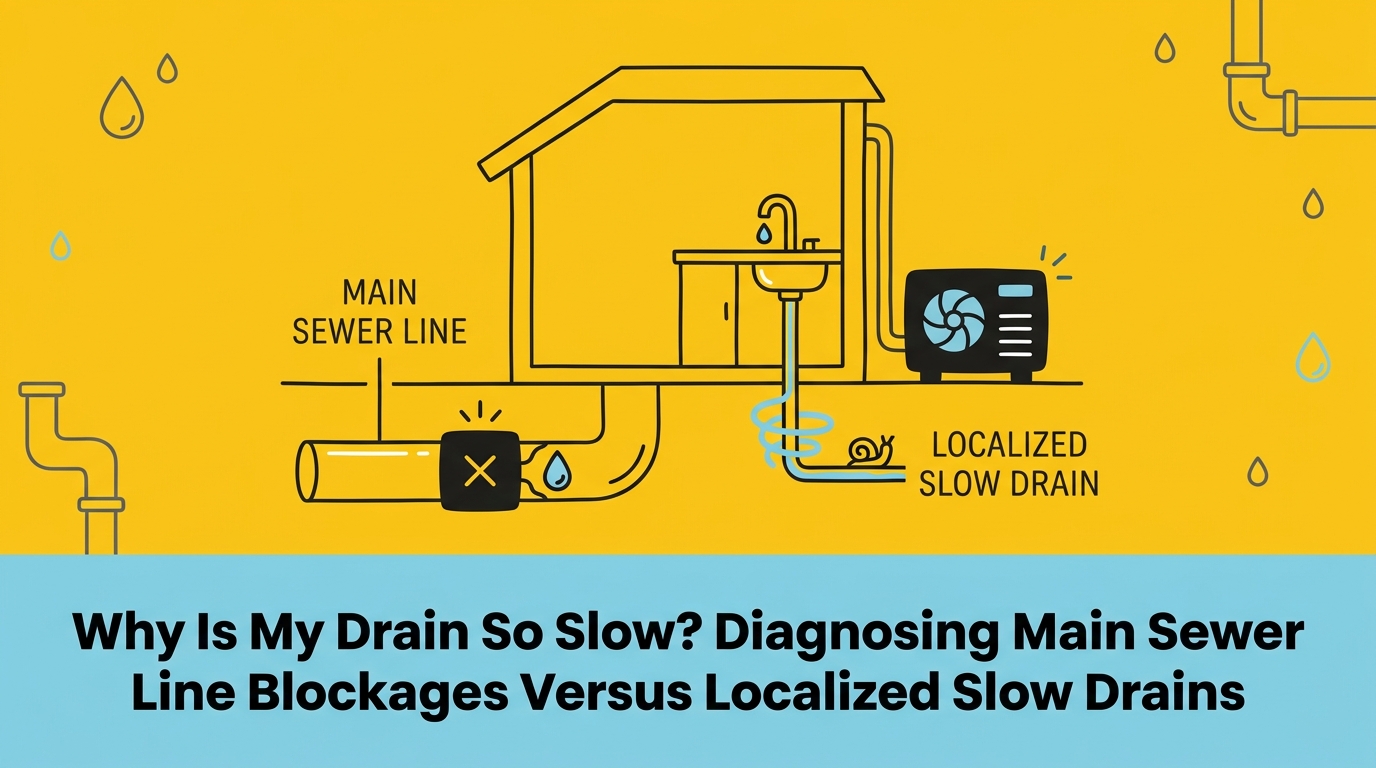
The Critical Difference Between a Simple Clog and a Major Plumbing Emergency
Your downstairs toilet is gurgling, and the shower is taking forever to empty. When you are facing these frustrating symptoms, Diagnosing Main Sewer Line Blockages Versus Localized Slow Drains becomes your immediate priority. That strange bubbling noise isn't going to fix itself, and ignoring a sluggish sink can quickly lead to raw sewage backing up into your living space. The critical decision point for any homeowner is knowing whether you are dealing with a minor hair clog in a single pipe or a catastrophic failure underground. Before you reach for a plunger or pour harsh chemicals down the sink, you need to understand exactly what you are up against.
For comprehensive support, explore our Professional Home Services, or reach out directly for Expert Plumbing Diagnosis and Repair.
A slow drain on the lowest level of the home is often the first warning sign of a compromised main line. In our years of servicing older residential neighborhoods in Mission BC, the Rep-Air Heating and Cooling team has seen how aging infrastructure and mature landscapes create the perfect storm for underground pipe damage. Many homeowners mistakenly assume that a sluggish drain is always a minor inconvenience that can be solved with a quick trip to the hardware store. However, treating a symptom without understanding the root cause can turn a manageable issue into a massive property disaster.
Attempting to plunge or chemically treat a main line blockage can worsen the issue and cause sewage backups. When the primary exit route for your home's wastewater is blocked, adding pressure or corrosive liquids only stresses the weakest points of your plumbing system. Recognizing the observable symptoms early prevents catastrophic property damage and saves you from unnecessary stress. You must decide when to stop DIY methods and request a professional diagnostic camera inspection to protect your home.
Identifying a Localized Slow Drain in Your Home
Before you panic about a whole-house plumbing failure, it is important to rule out the most common and easily fixable culprits. Localized clogs typically affect only a single fixture, meaning the problem is isolated to the immediate piping connected to that specific sink, tub, or toilet. If your bathroom sink is draining sluggishly but the shower right next to it empties perfectly, you are likely dealing with a localized restriction rather than a systemic failure.
Water draining slowly without causing gurgling in nearby toilets or tubs indicates an isolated issue. When you run the tap, the water should flow smoothly down the drain and through the P-trap—the curved section of pipe directly beneath the fixture. The P-trap is designed to hold a small amount of water to block sewer gases from entering your home, but its shape also makes it a prime location for debris to accumulate. Common culprits include hair, soap scum, and grease trapped in the P-trap directly beneath the fixture.
Symptoms of a P-Trap Blockage
Understanding the specific signs of a localized blockage helps you avoid overreacting or applying the wrong solution. In older residential neighborhoods in Mission BC, our plumbers frequently encounter these common, isolated issues that mimic more severe problems if misinterpreted. If you are also noticing strange smells or slow drainage across multiple sinks without backups, you might want to read more about Diagnosing Venting Issues in Older BC Plumbing. However, standard P-trap blockages usually present with very specific, localized symptoms:
• Isolated to one specific fixture: The problem does not spread to other rooms or affect the performance of your other plumbing fixtures.
• No unusual gurgling sounds: When water drains from the affected sink, you do not hear bubbling or gasping sounds coming from the toilet or the bathtub in the same room.
• Temporary relief from plunging: Plunging the specific fixture temporarily improves the flow, indicating the blockage is soft and located near the surface.
• Visible debris at the stopper: You can often see or pull out hair and soap scum directly from the pop-up assembly or drain grate.
These issues rarely cause water to back up into other areas of the house. Because the blockage is located above the main branch lines, the wastewater simply backs up into the basin of the affected fixture. While annoying, a localized slow drain is generally safe to troubleshoot with basic tools like a sink plunger or a small, hand-cranked drain snake.
Red Flags of a Main Sewer Line Blockage
When the main sewer line—the primary pipe connecting your home's plumbing to the municipal sewer or septic tank—becomes restricted, the symptoms are drastically different and much more severe. A main line blockage is a catastrophic failure that affects the entire wastewater system. Because all the secondary drains in your house feed into this single exit pipe, a blockage here means the water has nowhere to go but backward.
The most definitive red flag is multiple plumbing fixtures backing up simultaneously. For example, if flushing the toilet causes water to rise in the shower, or running the kitchen sink makes the downstairs bathroom gurgle, you are witnessing a systemic failure. Persistent gurgling sounds coming from drains when water is running elsewhere in the house indicate that trapped air is being forced up through the water seals in your P-traps because the main vent and drain paths are choked off.
The Multi-Fixture Backup Phenomenon
Water always seeks the lowest point. When the main line is blocked, wastewater cannot exit the house. As you continue to use water upstairs, it fills the main vertical pipe (the stack) and eventually forces its way out of the lowest available openings. This is why symptoms predominantly appear on the lowest floor of the home first. A classic pattern our team sees often on emergency calls is a homeowner running the washing machine upstairs and watching the downstairs toilet overflow or the basement shower pan fill with murky water.
During heavy fall and winter rain seasons, you should also inspect the exterior of your home. If the sewer cleanout pipe outside the home is overflowing, leaking, or holding standing water, the blockage is definitively in the main underground line. This observable evidence confirms that the issue is beyond the walls of your house and requires immediate professional intervention.
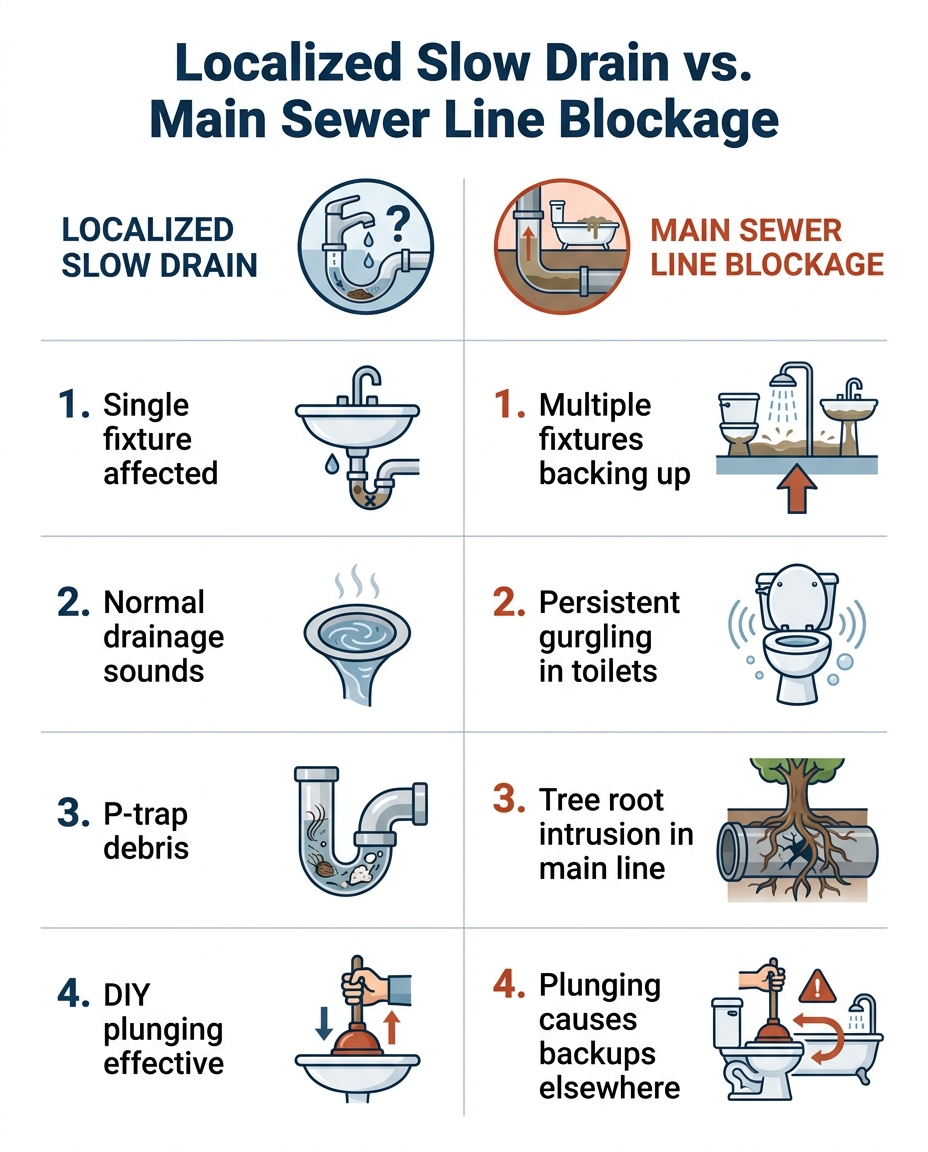
• Fixtures Affected — Localized Slow Drain: Only one specific sink, tub, or toilet. — Main Sewer Line Blockage: Multiple fixtures, especially on the lowest floor.
• Drainage Sounds — Localized Slow Drain: Normal, quiet draining or a slight final gulp. — Main Sewer Line Blockage: Persistent gurgling and bubbling from nearby drains.
• Cross-Fixture Reactions — Localized Slow Drain: None. Using the sink does not affect the toilet. — Main Sewer Line Blockage: Flushing a toilet causes water to rise in the tub.
• Exterior Cleanout — Localized Slow Drain: Dry and clear. — Main Sewer Line Blockage: Holding standing water or actively overflowing.

How Severe Weather and Tree Roots Destroy Main Lines
The underground environment is constantly changing, and your main sewer line is highly vulnerable to these shifts. Mature tree roots naturally seek out moisture and nutrients, frequently infiltrating microscopic cracks in older sewer pipes. Once a tiny root hair breaches the pipe wall, it thrives in the nutrient-rich environment of the sewer line. As roots grow inside the pipe, they create a dense, web-like net that catches toilet paper, grease, and other solid waste, eventually leading to a complete and catastrophic blockage.
The Impact of Saturated Soil on Pipe Integrity
Heavy rainfall saturates the ground, causing the soil to become heavy and unstable. Our technicians know firsthand how the Fraser Valley's heavy seasonal rains saturate the soil in local neighborhoods, accelerating the shifting of older pipes and subsequent root intrusion. This shifting earth puts immense pressure on aging underground pipes. During the heavy fall and winter rain seasons, we frequently see this ground shifting break the seals on older pipe materials like clay, cast iron, or Orangeburg piping.
Moisture escaping from compromised pipes attracts nearby tree roots rapidly. The moment a pipe shifts and cracks, it begins leaking warm, nutrient-dense water into the surrounding soil. This acts as a beacon for aggressive root systems. This shifting can break seals and create new entry points, turning a minor structural flaw into a massive root intrusion that completely chokes off your home's wastewater exit.
The Danger of Plunging: When to Stop DIY Drain Clearing
Knowing when to step back is just as important as knowing how to diagnose the problem. Aggressive plunging on a severely blocked main line can increase pressure and rupture older, compromised pipes. When a main line is choked with dense tree roots or compacted waste, pushing down with a plunger does not move the blockage out to the city sewer. Instead, that hydraulic pressure forces the water backward, stressing the weakest joints in your plumbing system. In our experience working in older residential neighborhoods in Mission BC, we've seen this excess pressure easily crack aging pipes behind walls or under foundations.
Chemical drain cleaners are entirely ineffective against tree roots and can severely corrode pipe walls. Pouring liquid drain opener into a completely blocked main line simply creates a pool of toxic, corrosive acid sitting stagnant against your pipes. If clearing a localized P-trap does not resolve the slow drain, further DIY attempts risk causing raw sewage to back up into the living space. Once raw sewage breaches your floors or bathtubs, you are dealing with a hazardous bio-waste cleanup on top of a plumbing repair.
Homeowners should never attempt to operate heavy, rented augers without professional licensing. Motorized drain snakes and heavy-duty augers are powerful machines that can easily cut through the side of a degraded pipe if used incorrectly. A misdirected auger can destroy the main line, wrap around itself inside the pipe, or even cause severe physical injury to the operator. When symptoms point to a main line blockage, putting away the DIY tools is the safest choice you can make for your home.
Why Camera Inspections Prevent Unnecessary Excavations
Guesswork in plumbing is expensive and destructive. A professional camera inspection takes the guesswork out of plumbing diagnostics by showing exactly what is blocking the pipe. Instead of blindly running an auger and hoping for the best, a high-definition, waterproof camera is fed down the line to broadcast real-time video to a monitor. This transparent approach ensures homeowners only pay for the exact repair required, protecting you from paying for catastrophic main line excavations when only a localized fix is needed.
Seeing the Real Problem Underground
Visual proof changes everything. It proves whether a homeowner needs a simple localized fix or a major main line repair, preventing unnecessary catastrophic excavations. High-definition cameras can pinpoint the exact location of broken drains or root intrusions, measuring the precise depth and distance from the house. One customer called our Rep-Air team this past spring after noticing sluggish drainage across their lower floor. By using a camera inspection, our technicians quickly identified a leak and a broken pipe underground. We expertly explained the issue with visual evidence, and fixed the broken drains and pipes with targeted precision, completely avoiding a full yard tear-up.
Accurate mapping of underground pipe damage before any digging begins is the hallmark of professional service. If you are dealing with persistent drainage issues, connecting with Plumbing Services in Langley and surrounding areas ensures you get eyes on the actual problem. Whether you are dealing with older residential neighborhoods in Mission BC or newer developments, seeing the real problem underground is the only way to formulate a permanent, cost-effective solution.
Frequently Asked Questions About Slow Drains and Sewer Lines
How do I know if my main sewer line is clogged?
You will notice multiple plumbing fixtures backing up simultaneously, usually starting on the lowest floor of your home. Flushing a toilet might cause water to bubble up in the shower, or running the washing machine might make the kitchen sink gurgle. Additionally, you may see standing water or raw sewage around the exterior sewer cleanout pipe during heavy fall and winter rain seasons. These cross-fixture reactions are the definitive signs of a main line restriction rather than a localized clog.
Will a clogged main line clear itself?
No, a clogged main line will never clear itself and will only worsen over time. Main line blockages are typically caused by dense tree root intrusions, collapsed pipes, or severe accumulation of non-flushable materials that cannot dissolve in water. Ignoring the problem will simply cause the wastewater to build up until it forcefully backs up into your home's living spaces, causing significant water damage and health hazards.
What is the difference between a clogged drain and a clogged sewer line?
A clogged drain is an isolated issue affecting only one fixture, like a bathroom sink full of hair, while a clogged sewer line affects the entire home's wastewater exit route. With a localized clogged drain, plunging usually provides temporary relief and other fixtures in the room work perfectly fine. A clogged sewer line forces wastewater backward, causing multiple drains to gurgle, bubble, or overflow simultaneously when water is used anywhere in the house.
Why is my lower floor drain always a slow drain?
Lower floor drains are the first to show symptoms of a main line blockage because water naturally seeks the lowest exit point when the primary underground pipe is restricted. If the main line is partially blocked by tree roots, the wastewater stacks up in the vertical pipes and backs up into the lowest fixtures, like basement floor drains or downstairs showers. If the issue persists despite cleaning the local P-trap, it is a strong indicator of a deeper systemic problem.
What causes tree roots to block sewer lines?
Tree roots naturally seek out moisture, oxygen, and nutrients, all of which are abundant inside a sewer line. They infiltrate microscopic cracks or loose joints in aging underground pipes, especially during dry spells or after ground shifting. Once inside, the roots grow rapidly, creating a dense net that traps toilet paper and solid waste until the pipe is completely choked off.
Can heavy rainfall cause my drains to back up?
Yes, heavy rainfall can cause drains to back up, particularly if your municipal sewer system becomes overwhelmed or if your property's soil shifts. Heavy fall and winter rain seasons saturate the ground, putting immense pressure on older, fragile underground pipes, which can break seals and allow soil or roots to enter. If your home's sewer line is already partially restricted by roots, the added volume of saturated ground shifting can trigger a complete collapse or backup.
Get Expert Answers for Your Persistent Slow Drain
Identifying the observable differences early saves you time, money, and significant property damage. When you know how to spot the warning signs of a main line blockage—like multi-fixture backups and persistent gurgling—you can make an informed decision before a minor inconvenience turns into a messy sewage emergency. During heavy fall and winter rain seasons, the risk to your underground pipes increases significantly.
If you suspect a main line issue or if a lower-floor drain refuses to clear, do not risk further damage with aggressive DIY plunging or chemical cleaners. At Rep-Air Heating and Cooling, we strongly recommend scheduling a professional diagnostic inspection to see exactly what is happening underground. Reach out to our team today to connect with local experts who will provide clear, reassuring answers and the precise repairs your home needs.
hear what our satisfied clients have to say
Neighbourhoods in the Fraser Valley