Clearing Gutter Debris From Your Perimeter Drains Before the BC Storm Season
The Hidden Threat of Autumn Rainfalls on Your Home's Plumbing
Autumn in the Fraser Valley is right around the corner, bringing the rapid onset of atmospheric rivers typical in our region. Our team at Rep-Air Heating and Cooling has helped countless homeowners navigate these torrential downpours, and we know from experience that clearing gutter debris from your perimeter drains before the BC storm season becomes a top priority for protecting your property. If you notice a "slow drain" in your ground-floor bathroom or basement, you might brush it off as a minor indoor plumbing annoyance. However, this subtle symptom is often your first warning sign of a failing exterior drainage system. Treating a sluggish sink as an early indicator allows you to address the root cause before heavy rains cause a basement flood. When it comes to protecting your property, investing in comprehensive home services ensures every part of your plumbing ecosystem is ready for the deluge.
During the long, dry summer months, it is easy to forget about your exterior drainage. The ground hardens, the skies stay clear, and your home's water management system sits idle. Meanwhile, leaves, twigs, pine needles, and roof grit quietly accumulate in your gutters. Because there is no heavy rainfall to wash this material away or expose blockages, the system appears perfectly fine. Homeowners often ignore a slightly sluggish basement sink or a slow-draining shower during this period, assuming it is just a routine buildup of soap scum or hair. This complacency is exactly what makes the transition into the BC storm season (autumn/winter heavy rains) so dangerous.
The sheer volume of water delivered by a regional atmospheric river is staggering. These concentrated bands of moisture can dump weeks' worth of rain in a matter of hours, instantly testing the limits of your home's exterior plumbing. Your indoor plumbing symptoms are frequently tied directly to the health of this exterior system. When underground pipes are compromised, the water has nowhere to go but back toward your foundation, creating a hidden threat that escalates rapidly. Proactive care is the only reliable way to ensure your home can handle the sudden influx of water without sustaining severe structural or interior damage.
How Gutter Debris Chokes Subterranean Perimeter Tiles
The problem: Many homeowners view their roof gutters and their underground weeping tiles as two completely separate entities. Our plumbing experts frequently get calls from homeowners who clean the gutters to protect the roofline and assume the underground drains will handle whatever ground moisture seeps into the soil. In reality, these components function together as one continuous water management network. A failure at the top of the house directly impacts the performance of the system at the foundation level.
The cause: As autumn winds pick up across Mission BC and the surrounding Fraser Valley, a massive amount of organic material lands on your roof. Leaves, pine needles, and abrasive asphalt roof grit wash into the gutters. While large clumps of leaves might cause an obvious overflow at the roofline, smaller debris easily bypasses the downspout opening. This material travels down the vertical pipes and empties directly into the subterranean perimeter tiles. Over time, this organic sludge accumulates in the perforated pipes surrounding your foundation, creating dense, impenetrable blockages deep underground.
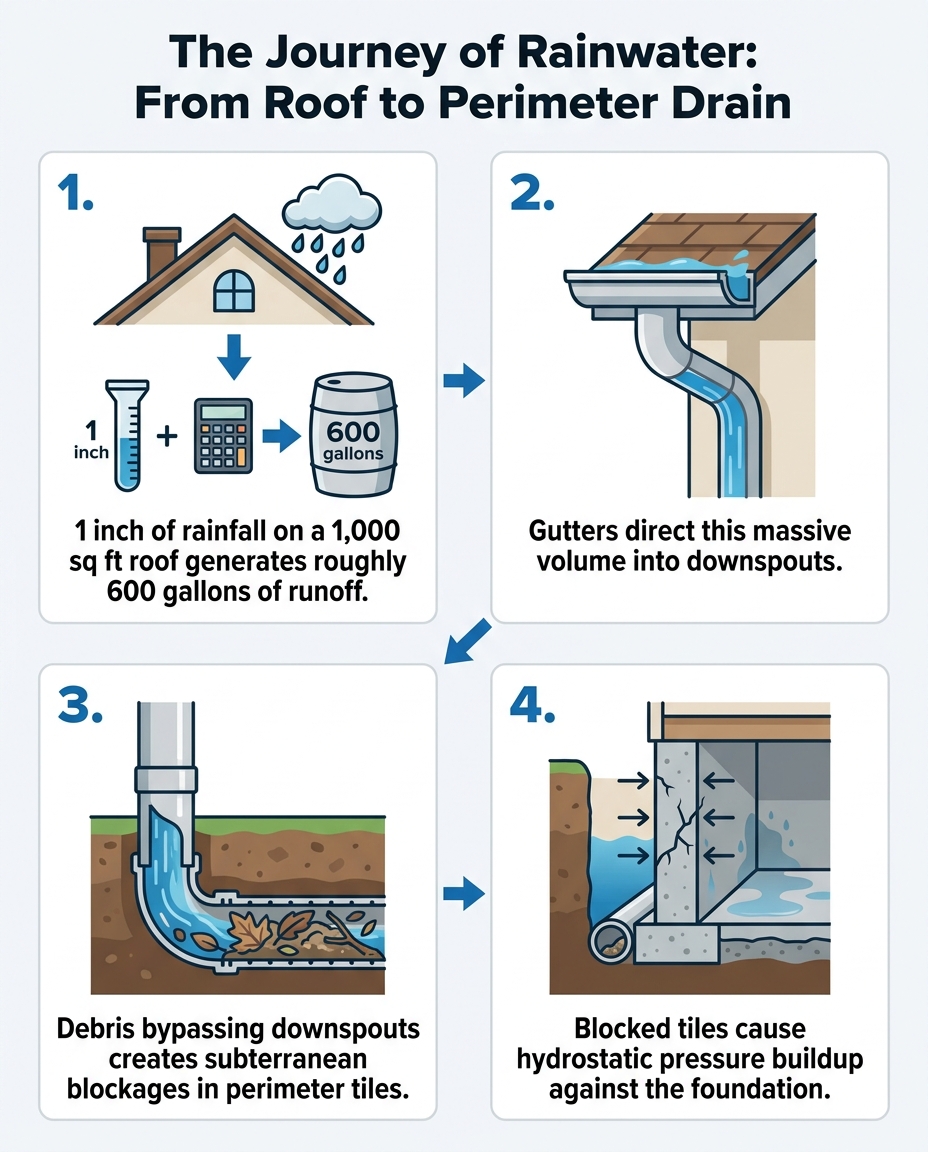
The solution: Understanding the mechanics of this system highlights why proactive clearing is necessary. According to Environmental Protection Agency (EPA) data, just one inch of rainfall on a 1,000-square-foot roof yields approximately 600 gallons of runoff. During a heavy storm, thousands of gallons of water are channeled off your roof and into your perimeter drains. When those subterranean tiles are choked with decaying gutter debris, this immense volume of water hits a literal wall. Recognizing this connection is the first step in shifting from reactive repairs to proactive whole-home defense.
The Journey of Rainwater from Roof to Foundation
To fully grasp the danger of subterranean blockages, you have to trace the path of rainwater from the moment it hits your shingles. The journey follows a specific route, and vulnerabilities at any stage compound the risk for the entire system:
• The collection zone: Rainwater washes over the roof, gathering loose grit, moss, and small organic debris before dropping into the horizontal gutter troughs.
• The vertical transit: Water and suspended debris flow into the downspouts. Without proper filtration, heavy sediment is carried downward by gravity.
• The subterranean transition: The downspouts empty into the underground perimeter drain (weeping tile) system, which is designed to carry water away from the foundation to a municipal storm sewer or designated drainage area.
• The compounding blockage: Because perimeter tiles are perforated to allow groundwater to enter, they are highly susceptible to clogging from the inside. Silt and decaying leaves form a thick mud that solidifies in the pipe, reducing its capacity to zero.
When blockages occur at the top level, they eventually migrate downward, compounding into severe blockages at the foundation level where they are much harder to access and clear.

When Indoor Plumbing Warns of Exterior Trouble
Bridging the gap between an indoor plumbing symptom and an exterior root cause requires understanding how water behaves under pressure. When your perimeter drain system is choked with gutter debris, the thousands of gallons of rainwater cascading off your roof have nowhere to escape. Instead of flowing away from the house, the water backs up inside the underground tiles and saturates the soil immediately surrounding your foundation. This creates a powerful force known as hydrostatic pressure.
Hydrostatic pressure pushes heavily against your basement walls and under your concrete slab. Because water always seeks the path of least resistance, this intense backpressure restricts the normal downward flow of your indoor wastewater. If the ground beneath your home is completely waterlogged and the main sewer lines are experiencing external pressure or infiltration, your indoor fixtures will struggle to drain. This is why a "slow drain" in a basement bathroom or a sluggish floor drain is often a glaring red flag that your exterior weeping tiles are failing.
It is important to differentiate between an isolated indoor clog and a systemic backup caused by exterior groundwater. An isolated clog—like a buildup of hair in a shower trap or grease in a kitchen sink—typically affects only one fixture and happens regardless of the weather. A systemic backup, however, usually presents across multiple lower-level fixtures simultaneously and worsens noticeably during heavy rainfall. When our technicians are out diagnosing main sewer line blockages versus localized slow drains, we find that paying attention to the weather outside is a massive diagnostic clue.
Ignoring this early warning sign often leads directly to water breaching the basement. Once hydrostatic pressure exceeds the structural limits of your foundation's waterproofing, water will force its way through microscopic cracks in the concrete, up through floor drains, or around window wells. What started as a sluggish sink can quickly escalate into extensive and costly water damage.
The Impact of Atmospheric Rivers on Partially Clogged Systems
A partially clogged perimeter drain might easily survive a light spring drizzle. If the pipe is only fifty percent blocked by old leaves and silt, a slow, steady rain can still trickle through the remaining open space. Your foundation stays dry, and you remain unaware of the growing blockage underground. However, the BC storm season (autumn/winter heavy rains) operates on a completely different scale. The region's unique rainfall patterns mean that partial clogs are a ticking time bomb.
During an atmospheric river event, the Fraser Valley experiences an extreme, rapid influx of moisture. The local soil saturation levels spike within hours. Because the ground is already waterlogged, 100% of the roof runoff must be managed by the perimeter drainage system. A pipe that is half-full of debris simply cannot process 600 gallons of water per hour. The system is instantly overwhelmed, causing a rapid escalation of hydrostatic pressure. In our years of responding to storm-related emergencies, we've seen that for many Chilliwack homes, this sudden failure is the primary cause of unexpected basement flooding during the late autumn months.
Signs of impending exterior drainage failure:
• Pooling water at the surface: Large puddles forming around the base of your downspouts indicate the underground tiles are refusing to accept more water.
• Damp spots on basement walls: Unexplained moisture, efflorescence (white, chalky powder), or peeling paint on lower walls point to hydrostatic pressure pushing moisture through the concrete.
• Gurgling floor drains: If your basement floor drain makes bubbling sounds during a rainstorm, exterior water is fighting against your interior plumbing lines.
• Overflowing gutters despite being clean: If you recently scooped the gutters but water still spills over the edges, the downspouts or underground tiles are heavily blocked.
Ensuring the entire system is operating at peak capacity before November is the only way to safeguard your home against these intense weather events. A partially functioning drain is no match for a fully formed atmospheric river.
Why Surface Cleaning Leaves Your Foundation Vulnerable
Scooping leaves out of your horizontal gutters is a good first step, but it is insufficient on its own. Many homeowners in Mission BC and the surrounding Fraser Valley spend a Saturday afternoon clearing the roofline and assume their property is ready for winter. The reality is that debris already washed down into the perimeter tiles cannot be removed by surface cleaning. Once the organic material enters the subterranean system, it requires specialized intervention to remove.
DIY methods are severely limited when dealing with subterranean blockages. You cannot simply run a standard garden hose down a weeping tile and expect to clear compacted mud, pine needles, and roof grit. Over-the-counter chemical drain cleaners are completely useless for exterior soil blockages and can damage older pipes. Furthermore, blindly shoving a rented mechanical snake down a downspout can puncture the perforated plastic of your weeping tile, destroying the system from the inside and requiring a massive excavation to fix.
Our crews have cleared countless underground blockages that standard garden hoses couldn't touch. This firsthand experience is exactly why Rep-Air's whole-home ecosystem approach makes a critical difference. True preventative maintenance requires looking at the roof, gutters, drains, and interior plumbing as one connected system rather than isolated parts. A professional approach assesses the entire water management ecosystem, identifying how a vulnerability at the roofline is impacting the foundation, and resolving the issue comprehensively.
• Focus Area — Surface Gutter Cleaning (DIY): Roofline and horizontal troughs only — Comprehensive Ecosystem Drainage Assessment: Entire system: roofline, downspouts, and subterranean tiles
• Debris Removal — Surface Gutter Cleaning (DIY): Scoops out large, visible leaves — Comprehensive Ecosystem Drainage Assessment: Clears compacted silt, grit, and mud deep underground
• Diagnostic Ability — Surface Gutter Cleaning (DIY): None (cannot see inside pipes) — Comprehensive Ecosystem Drainage Assessment: Uses specialized camera technology to inspect pipe health
• Flood Prevention — Surface Gutter Cleaning (DIY): Prevents roof rot and siding stains — Comprehensive Ecosystem Drainage Assessment: Prevents hydrostatic pressure and basement water breaches
• System Approach — Surface Gutter Cleaning (DIY): Treats the symptom — Comprehensive Ecosystem Drainage Assessment: Treats the entire home plumbing ecosystem
Proactive Maintenance for Whole-Home Protection
Transitioning from a reactive mindset to a proactive one is the smartest move a homeowner can make before the heavy rains arrive. Having a professional evaluate your exterior drainage system while the weather is still relatively dry allows you to identify and resolve subterranean blockages without the stress of an active flood. A "slow drain" is your house asking for help; answering that call early saves significant time, money, and property damage.
A comprehensive professional drainage assessment goes far beyond a visual inspection. Technicians utilize advanced, waterproof camera inspection equipment, feeding high-resolution fiber-optic lines directly into the perimeter tiles to identify the exact location and composition of blockages. Flow testing is then conducted to measure how efficiently the system moves water away from the foundation. If blockages are found, professional-grade equipment is used to safely flush the debris from the system without damaging the delicate perforated pipes. This level of thoroughness simply cannot be achieved with basic household tools.
Addressing these issues proactively prevents the immense stress and structural damage of an emergency basement flood. Establishing a structured maintenance routine ensures that vulnerabilities are caught early, year after year. By enrolling in a preventative maintenance plan, you ensure your entire plumbing ecosystem is regularly monitored, keeping your foundation secure, your indoor drains flowing freely, and your property fully protected against whatever the storm season brings.
Frequently Asked Questions
Can clogged gutters cause plumbing problems?
Yes, clogged gutters frequently lead to significant plumbing problems. When gutters overflow, the excess water and debris bypass the intended drainage routes and saturate the ground around your foundation. This excess groundwater creates pressure that can infiltrate main sewer lines and cause indoor fixtures to drain slowly or back up completely.
Why are my basement drains running slow after heavy rain?
Basement drains run slow after heavy rain because the soil surrounding your home is completely saturated, creating hydrostatic pressure. This pressure pushes against your foundation and restricts the outward flow of your interior wastewater. If your exterior perimeter drains are clogged, they cannot relieve this pressure, causing your indoor lower-level fixtures to become sluggish.
How do I know if my perimeter drain is clogged?
You can identify a clogged perimeter drain by watching for specific exterior and interior warning signs. Outside, look for water pooling near downspouts, overflowing gutters during rain, or unusually soggy patches of lawn near the foundation. Inside, watch for damp basement walls, a musty odor, or multiple slow drains on the ground floor.
What happens when perimeter drains fail during a storm?
When perimeter drains fail during a storm, thousands of gallons of roof runoff have nowhere to escape. The water quickly backs up against the foundation walls, building immense hydrostatic pressure. Eventually, this water forces its way through microscopic cracks in the concrete or up through floor drains, resulting in a flooded basement.
How often should weeping tiles be inspected in the Fraser Valley?
Weeping tiles in the Fraser Valley should be professionally inspected at least once a year, ideally in the late summer or early autumn before the heavy storm season begins. Because the region experiences significant rainfall and high organic debris loads from local trees, annual camera inspections ensure the system remains free of compacted silt and pine needles.
Is a slow indoor drain always a sign of a main sewer line issue?
No, a slow indoor drain is not always a sign of a main sewer line issue. While it can indicate a blockage in the main sanitary sewer, it is frequently caused by external hydrostatic pressure from a failing perimeter drain system during rainy weather. Differentiating between the two usually requires a professional camera inspection to pinpoint the exact source of the restriction.
hear what our satisfied clients have to say
Neighbourhoods in the Fraser Valley