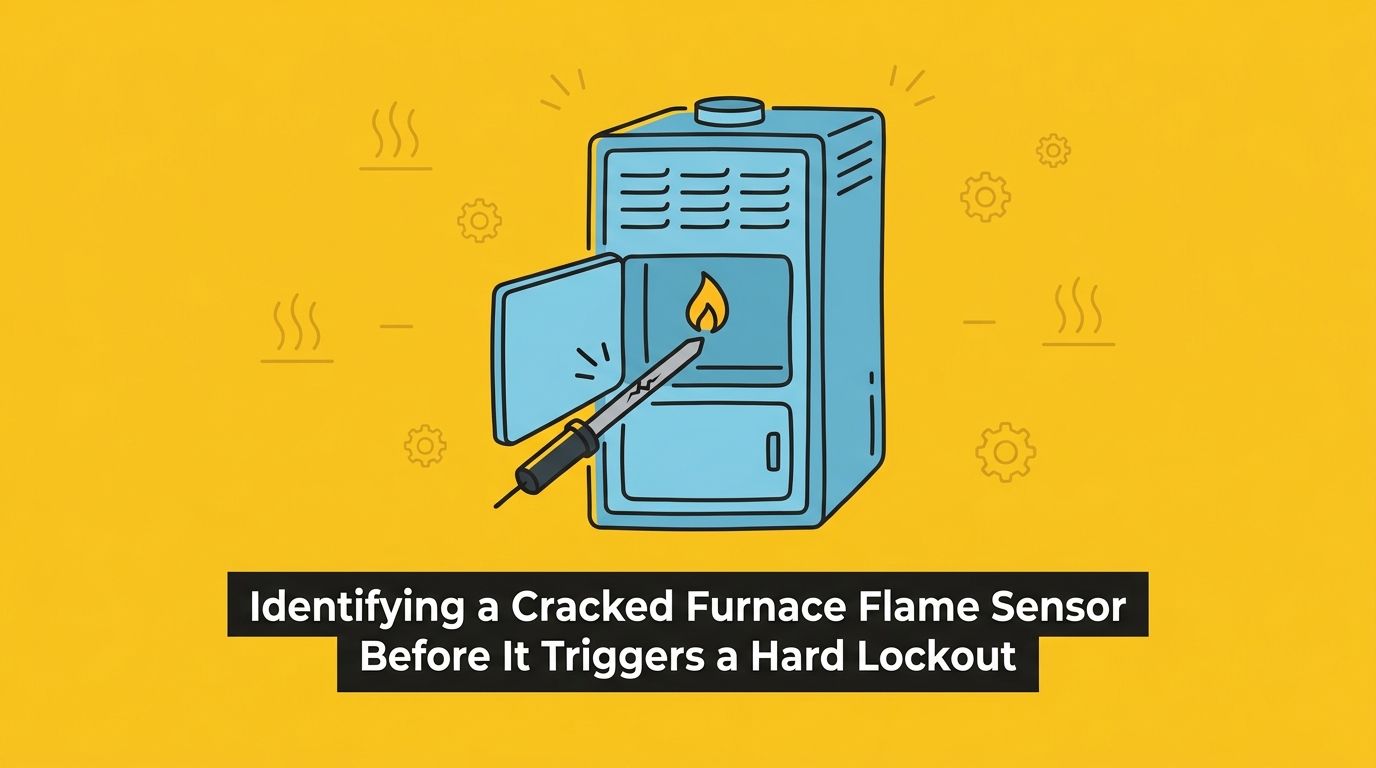
Identifying Cracked Flame Sensors Before They Leave You Without Heat
Don't Let a Failing Flame Sensor Leave You in the Cold
Before the first freeze hits Mission, BC, Identifying Cracked Flame Sensors Before They Leave You Without Heat is a priority every homeowner should take seriously. At Rep-Air Heating and Cooling, there is nothing we see more often—and nothing more frustrating for our customers—than waking up to a freezing house, hearing the furnace ignite with a promising roar, and then listening to it shut down just a few seconds later. This repetitive cycle is not just annoying; it is a clear warning sign that your heating system is struggling to verify a safe burn.
If you are dealing with a furnace that refuses to stay running, you need professional HVAC services to accurately diagnose the root cause. Often, this short-cycling points directly to a failing flame sensor that is triggering an automatic safety shutdown. In freezing winter temperatures, a furnace that goes into a hard lockout can rapidly drop indoor temperatures, turning a minor mechanical nuisance into a severe home safety hazard.
During the peak winter heating season, your furnace works overtime to keep your living space comfortable. This constant operation accelerates wear and tear on internal components. Addressing a struggling sensor early on is the best way to prevent a total loss of heat. Instead of guessing what might be wrong or hoping the system corrects itself, seeking professional diagnostics from our experienced technicians ensures your home stays warm and safe when the temperatures drop.
Understanding the Furnace Flame Rectification Process
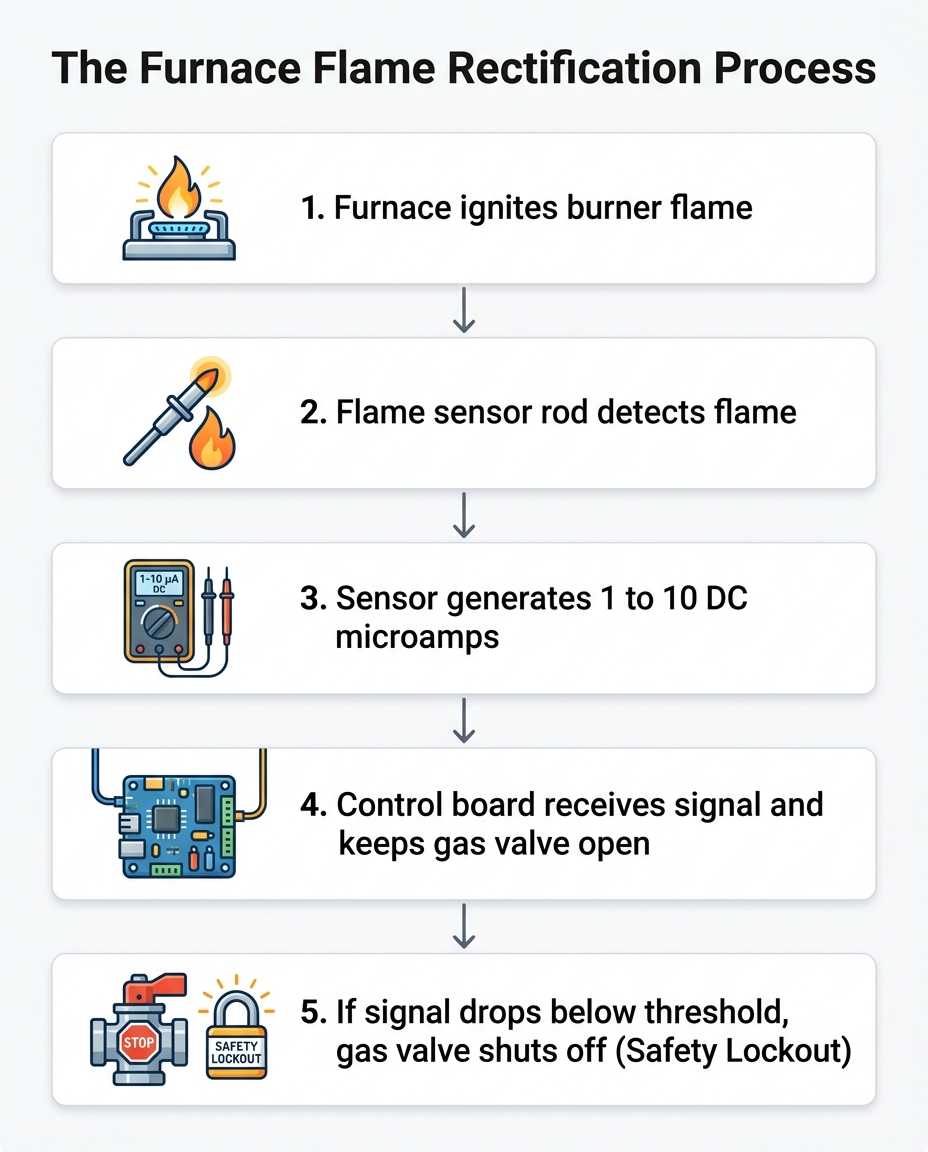
To understand why your furnace keeps shutting off, it helps to know how the system monitors its own safety. This involves a scientific process known as flame rectification. In simple terms, flame rectification is the method your furnace uses to prove that a fire is actually burning inside the combustion chamber.
Here is how the process works during a standard furnace sequence of operations:
• The ignition phase: The gas valve opens, and the igniter lights the burner.
• The electrical current: The flame sensor, which is a small metal rod sitting directly in the path of the fire, receives an alternating current (AC) from the control board.
• The rectification: Because fire is ionized gas, it conducts electricity. The flame itself acts as a switch, converting the AC voltage into a tiny direct current (DC).
• The microamp reading: This tiny current, typically measuring between 1 to 10 DC microamps, travels back to the control board.
The control board constantly monitors this return signal. As long as the board receives the correct microamp reading, it knows a flame is present and keeps the gas valve open. However, if there is a microamp signal dropout—meaning the signal falls below the manufacturer's safe threshold (often around 0.5 microamps)—the control board assumes the fire has gone out. To prevent raw, unburned gas from flooding your home, the board immediately shuts the gas valve off. This entire safety check happens in just a matter of seconds.

Warning Signs: Short-Cycling and the Dreaded Hard Lockout
When a flame sensor begins to fail, it rarely stops working all at once. Instead, it exhibits specific, repeatable symptoms that homeowners can easily recognize. The most common warning sign is a behavior known as short-cycling. During the peak winter heating season in Mission, our team notices that back-to-back heating cycles accelerate carbon buildup on sensors, making these mid-winter failures highly common.
If you stand near your furnace and listen, you will notice a distinct pattern when the sensor is failing. The system follows a strict "3-strike" rule before completely shutting down to protect your home.
1. The Initial Ignition: The thermostat calls for heat. The draft inducer motor turns on, the igniter glows, and the burners light successfully. You hear the rush of flames.
2. The Short-Cycle: Within three to seven seconds, the flames suddenly extinguish. The blower fan may run for a moment to clear the heat, and then the system goes quiet. This happens because the control board experienced a microamp signal dropout and shut the gas valve for safety.
3. The Three-Strike Rule: Modern furnaces are programmed to retry the ignition sequence. After a brief pause, the system will attempt to light the burners a second time, and then a third time. If the sensor fails to verify the flame on all three attempts, the furnace stops trying.
4. The Hard Lockout: After three consecutive failures, the control board enters a "hard lockout" state. The furnace will not attempt to turn on again, no matter how low the temperature drops in your home. This lockout requires a manual reset and typically indicates a persistent sensor failure rather than a temporary glitch.
Why continuous operation matters: Ignoring early short-cycling forces your furnace to start and stop dozens of times a day. We frequently see how this rapid cycling puts immense strain on the igniter, the inducer motor, and the gas valve, turning a simple sensor issue into a costly multi-component failure.
Carbon Fouling vs. Microscopic Ceramic Cracks
While the symptom—a furnace that won't stay lit—is usually the same, the underlying physical cause of a flame sensor failure typically falls into one of two categories: carbon fouling or microscopic ceramic cracks. Understanding the difference highlights why professional diagnostics are so important.
Carbon buildup is a natural byproduct of combustion. Over time, soot and carbon coat the metal sensor rod. Because carbon is an insulator, this coating physically blocks the electrical current from passing through the flame, leading to a microamp signal dropout. However, an entirely different and lesser-known issue involves the ceramic base of the sensor.
The metal rod of the flame sensor is housed in a white ceramic insulator. This ceramic prevents the electrical current from grounding out against the metal body of the furnace. If this ceramic develops microscopic cracks due to extreme temperature fluctuations, the electrical signal escapes through the crack and grounds out to the furnace chassis before it ever reaches the control board.
• Carbon Fouling — Physical Cause: Soot buildup from natural gas combustion coats the metal rod. — Effect on Electrical Signal: Insulates the rod, preventing the current from entering the flame. — Professional Solution: Professional cleaning with specialized abrasive materials.
• Ceramic Cracking — Physical Cause: Thermal stress causes hairline fractures in the white porcelain base. — Effect on Electrical Signal: Allows the signal to ground out to the furnace body prematurely. — Professional Solution: Complete replacement of the flame sensor assembly.
The visual inspection trap: You cannot detect a microscopic ceramic crack just by looking at the sensor. A cracked sensor might look perfectly clean and brand new, yet it will still cause the furnace to fail. This is why guessing the cause based on visual inspection alone often leads to frustration, and why our technicians rely on precise testing tools.
Diagnostic Transparency: Why Microamp Testing Matters
When a heating system breaks down, homeowners deserve to know exactly what is wrong and why a specific repair is being recommended. Professional technicians do not rely on guesswork or simple visual inspections; they use specialized tools to measure the exact microamp output of the flame sensor.
To perform this test, a technician connects a digital multimeter in series with the flame sensor wire. As the furnace ignites, the multimeter reads the precise direct current (DC) microamps being generated. If the manufacturer's threshold is 0.5 microamps, and the multimeter reads 0.1, the technician has definitive proof that a microamp signal dropout is causing the shutdown.
This level of diagnostic transparency is a cornerstone of our professional service at Rep-Air Heating and Cooling. Our technicians will often walk you through these multimeter readings, explaining exactly how the furnace operates and why the sensor requires cleaning or replacement. For example, during a recent winter service call in Mission, we responded to a homeowner who wanted a clear explanation of their furnace's workings. Our technician walked them through the entire microamp testing process, explaining the exact electrical readings. By the end of the visit, the customer had gained a complete understanding of their furnace and exactly why our recommended repair was necessary.
Contrast this precise testing with the trial-and-error approach of amateur repairs. Replacing parts on a hunch not only wastes time and money but leaves the root cause unaddressed. Microamp testing proves whether the sensor is the culprit or if the control board itself is failing to read a healthy signal.
The Hidden Dangers of DIY Flame Sensor Cleaning
If you search online for solutions to a short-cycling furnace, you will inevitably find videos and articles suggesting that cleaning a flame sensor is a quick, easy DIY job. These tutorials often recommend using sandpaper, emery cloth, or steel wool to scrub the soot off the metal rod. At Rep-Air Heating and Cooling, we strongly advise against this; following this advice is highly dangerous and can permanently damage your heating system.
The problem with improper abrasives: Flame sensors are made of specialized alloys. When you use rough materials like standard sandpaper or steel wool, you create microscopic scratches deep in the metal. These scratches act like tiny grooves that catch and hold soot at a highly accelerated rate. While a DIY cleaning might get the furnace running for a few weeks, the heavy carbon buildup will return much faster, leading to another microamp signal dropout in the middle of a cold night. Furthermore, steel wool leaves behind tiny, highly conductive metal shavings that can cause the sensor to ground out immediately.
The risk to the ceramic base: Handling the sensor improperly often puts pressure on the delicate ceramic insulator. A slight twist or drop can cause an invisible hairline crack. Once that ceramic is compromised, the sensor is permanently destroyed and must be replaced.
Most importantly, the flame sensor is a critical safety device directly linked to your furnace's gas valve. Tampering with components designed to prevent raw gas accumulation poses a severe safety risk to your home and family. Professional handling by our licensed technicians ensures that the safety lockout mechanism remains entirely intact, functional, and calibrated to the manufacturer's exact specifications.
Frequently Asked Questions About Furnace Flame Sensors
Why does my furnace ignite and then shut off after a few seconds?
This is the primary symptom of a flame sensor failing to detect the burner flame. When the sensor cannot verify that a fire is burning, the control board automatically shuts the system down to prevent unburned gas from accumulating in your home. This safety feature is non-negotiable; if the microamp signal drops, the gas valve closes instantly. Repeated cycles of this behavior are known as short-cycling.
How do professionals test a furnace flame sensor?
Technicians use a digital multimeter set to read direct current (DC) microamps. They measure the electrical current passing through the sensor wire while the flame is actively lit. By comparing this live reading against the furnace manufacturer's required threshold, professionals can definitively prove whether the sensor is functioning, failing, or if the control board is at fault.
What causes a furnace to go into hard lockout?
A hard lockout occurs after the furnace repeatedly fails its ignition sequence, usually after three consecutive attempts. It requires a manual reset by cutting the power to the unit and typically indicates a persistent, unresolved issue like a faulty flame sensor. The system locks down entirely because repeated failed ignitions increase the risk of gas pooling in the combustion chamber.
Can a cracked flame sensor be fixed?
No, a flame sensor with a cracked ceramic insulator cannot be repaired; it must be completely replaced. The crack allows the tiny electrical signal to ground out to the metal chassis of the furnace, permanently disrupting the flame rectification process. No amount of cleaning or taping will restore a compromised ceramic base.
How often should a flame sensor be inspected?
Flame sensors should be inspected and professionally cleaned annually during routine heating maintenance. Regular care prevents heavy carbon buildup from forming and allows technicians to identify micro-cracks before they cause a sudden system failure. For instance, last winter, our Rep-Air technicians responded to a customer whose furnace was not working correctly; our technician clearly explained the issue, performed the fix, and outlined how a routine heating maintenance plan prevents these mid-season surprises. Keeping up with annual service is the best way to ensure reliability during the peak winter heating season.
Restore Your Heat with Professional Diagnostics
A furnace that constantly short-cycles can make the peak winter heating season incredibly stressful, but this issue can be accurately diagnosed and swiftly resolved. You do not have to endure cold nights or resort to dangerous DIY troubleshooting. Precise microamp testing eliminates all the guesswork, ensuring that your system's safety mechanisms are functioning exactly as designed.
If your heating system is struggling to stay lit, do not wait for a hard lockout to leave you completely in the cold. Reach out to our local experts at Rep-Air Heating and Cooling for professional heating repair services to safely restore your heat, protect your equipment, and ensure your home remains comfortable all winter long.
hear what our satisfied clients have to say
Neighbourhoods in the Fraser Valley