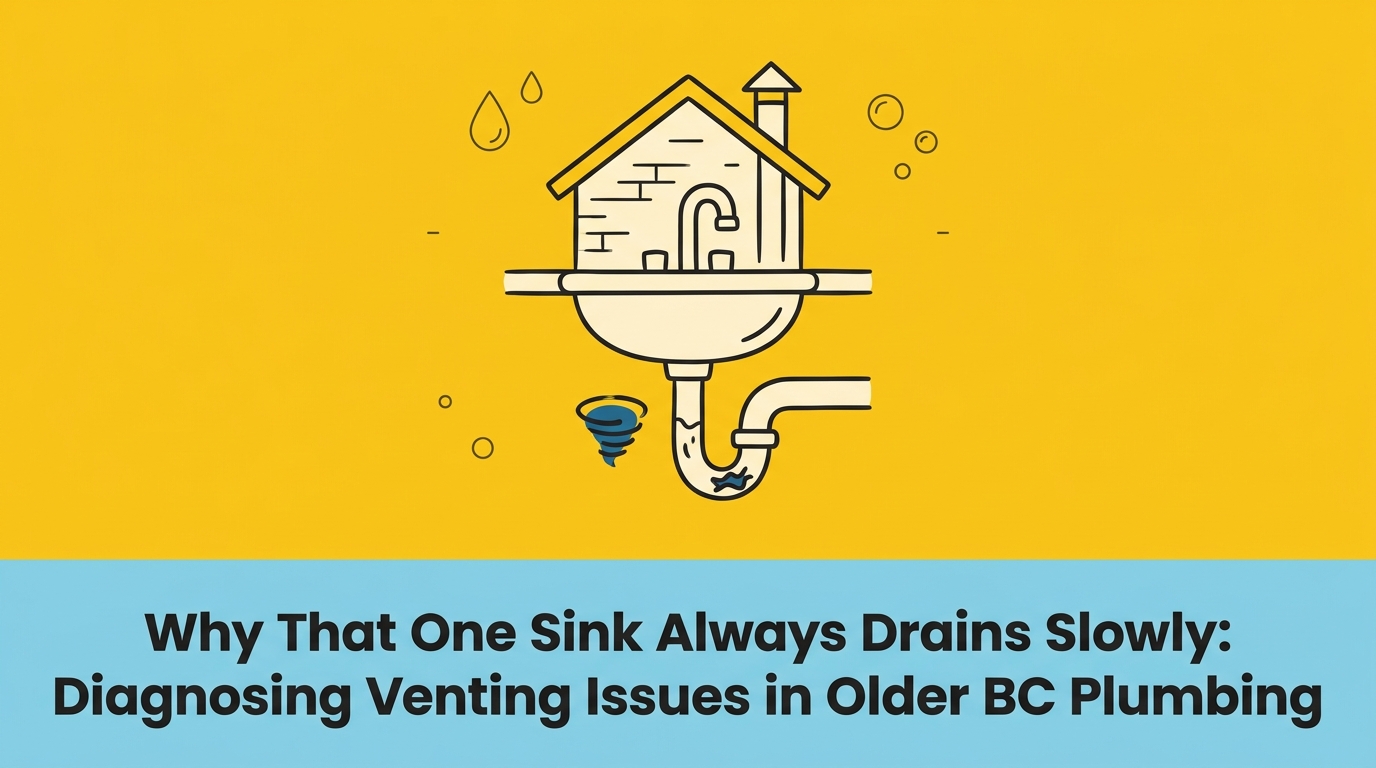
Why That One Sink Always Drains Slowly: Diagnosing Venting Issues in Older BC Plumbing
Is Your Persistent Slow Drain Hiding a Bigger Systemic Problem?
If you are asking yourself, "Why That One Sink Always Drains Slowly: Diagnosing Venting Issues in Older BC Plumbing," you are taking the first step toward a permanent solution for your home. You wash your hands or brush your teeth, and within seconds, the water starts pooling in the basin. At Rep-Air Heating and Cooling, our team often sees homeowners immediately assume the culprit is a localized pipe clog caused by hair, soap scum, or grease. You might reach for a plunger, snake the line, or pour store-bought liquids down the drain, hoping for a quick fix. But when the issue is isolated to a single fixture and completely resists all conventional clearing methods, you are likely facing a much different challenge.
The hidden culprit behind a stubbornly slow drain is often an improper or blocked roof vent that disrupts your plumbing system's airflow. When a single sink repeatedly backs up despite your best troubleshooting efforts, it is time to stop pouring harsh chemical treatments down the drain and start investigating the home's venting infrastructure. Addressing a slow drain properly means looking at the entire system rather than just the immediate symptom. When you need comprehensive home services, understanding the root cause is the first step toward a permanent solution.
The "Finger Over a Straw" Rule: How Plumbing Vents Work
To understand why a blocked vent causes a slow drain, you have to look at the basic physics of how water moves through your home. Plumbing systems require atmospheric air pressure to push wastewater down the pipes and out to the municipal sewer line. It is a delicate balance of water flow and airflow working together in your standard 1.5-inch to 3-inch drainage pipes.
Think of the classic "finger over a straw" analogy. If you place a straw into a glass of water, cap the top with your finger, and lift it out, the water stays trapped inside the straw. The liquid cannot flow out because air cannot flow in to replace it. Your home's plumbing operates on this exact same physical principle. The vent stacks protruding from your roof allow atmospheric air pressure to enter the drainage pipes. This air follows the water down, preventing a vacuum from forming.
If a plumbing vent becomes blocked, a vacuum forms inside the pipe. The water is forced to fight against negative pressure, causing it to drain sluggishly or stall completely. This physical reality explains why that one specific sink might be the only one struggling—its dedicated branch vent is starved for air, creating a localized vacuum effect. Recognizing this difference is crucial. For homeowners seeking professional plumbing services, diagnosing this airflow vacuum in your 1.5-inch or 2-inch branch lines is the key to finally getting that stubborn sink to drain freely.
Why Chemical Cleaners Fail Against Airflow Failures
When faced with a slow drain, the most common DIY mistake is reaching for a bottle of liquid drain cleaner. It feels like an easy, inexpensive fix. However, if your drainage issue stems from an airflow failure, pouring chemicals down the sink is not just ineffective—it is actively harmful to your home's infrastructure.
Caustic chemical drain cleaners, which often contain harsh ingredients like sodium hydroxide, are designed to generate intense heat and dissolve organic matter like hair or grease. They rely on direct physical contact with a biological clog. But these liquids cannot dissolve an air-pressure lock. If the root cause of your slow drain is a physical blockage on the roof vent, the chemicals will simply sit in the pipe, completely failing to improve the water flow.
The Hidden Costs of Corrosive Chemicals on Legacy Pipes
The danger of using these products is especially high in older Mission BC homes, particularly those built between 1950 and 1980 in neighborhoods like Hatzic or Silverdale, which often feature legacy plumbing materials like cast iron or older copper piping. These older metals are highly vulnerable to the intense heat and corrosive nature of liquid drain cleaners.
The damage happens in stages:
• Immediate heat stress: The chemical reaction creates rapid temperature changes that can crack older, brittle pipes.
• Corrosion of pipe walls: Acidic and caustic liquids eat away at the interior lining of cast iron, accelerating rust and degradation.
• Weakened joints: The chemicals can deteriorate the seals and joints connecting legacy plumbing sections, leading to hidden leaks behind your walls.
Repeatedly pouring chemicals down a slow drain degrades your pipe integrity over time while doing absolutely nothing to solve the actual venting issue. Once a drain proves persistently slow, you must stop the cycle of chemical pouring and look toward a mechanical diagnosis.
Key Signs Your Sink Issues Stem from Blocked Vents
How can you tell the difference between a standard hair clog and a systemic venting failure? While both cause a slow drain, airflow issues present a unique set of symptoms. When our technicians at Rep-Air Heating and Cooling evaluate a stubborn sink, we look for these specific warning signs.
Look for these specific warning signs:
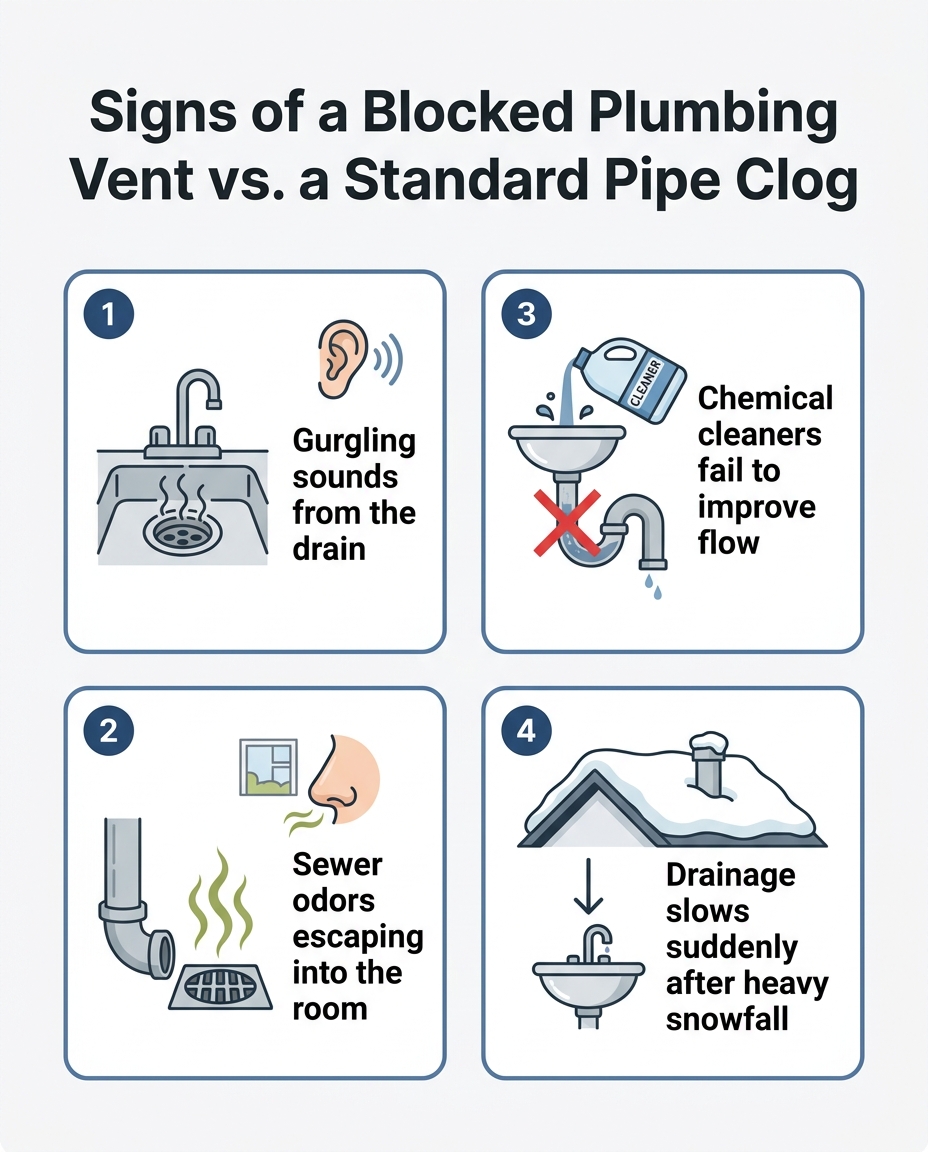
• Gurgling sounds: If you hear a "glug-glug" noise coming from the drain during or immediately after water flows, that is the sound of air being forcefully pulled through the water in the P-trap because the system is starved for atmospheric pressure.
• Persistent slowness: If the drain speed returns to a crawl immediately after you plunge or snake the line, the issue is likely a vacuum lock, not a physical blockage in the P-trap.
• Sewer gases or unpleasant odors: When a vent is blocked, the resulting vacuum can actually siphon the water right out of your P-trap. Without that water barrier, raw sewer gases escape into your living space. Mission BC's naturally damp conditions, especially during the rainy October to March season, can make these trapped sewer odors feel much more heavy and noticeable indoors.
• Isolated resistance: The drainage issue is isolated to a single fixture but completely resists all conventional clearing methods.
Standard Clog vs. Venting Failure:
• Drain Speed — Standard Pipe Clog: Slows gradually over weeks or months — Blocked Plumbing Vent: Slows suddenly or remains persistently sluggish
• Sounds — Standard Pipe Clog: Silent pooling of water — Blocked Plumbing Vent: Gurgling or bubbling noises from the drain
• Odors — Standard Pipe Clog: Mild, localized mildew smell — Blocked Plumbing Vent: Strong sewer gas smells in the room
• Response to Plunging — Standard Pipe Clog: Often clears temporarily — Blocked Plumbing Vent: No improvement or immediate return of slowness
If your sink exhibits the signs of a venting failure, it is time to look into proper indoor air quality solutions to address the escaping sewer gases and fix the underlying airflow problem.

How BC Weather Impacts Your Roof Venting Systems
Your home's plumbing vents do not exist in a vacuum—they terminate on your roof, completely exposed to the elements. Because of this, local climate plays a massive role in how well your plumbing breathes. In our region, heavy seasonal weather is a primary driver of sudden venting failures.
During the heavy January and February snowfalls typical of the Fraser Valley, winter snowfall blocking roof vents is a common occurrence that catches many homeowners off guard. Older homes built before 1990 often have shorter 3-inch vent stacks that were installed decades ago. When heavy winter snowfall accumulates on the roof, it can physically bury these shorter stacks, instantly cutting off the atmospheric air supply to your plumbing system.
Even if the snow does not completely cover the pipe, freezing temperatures can cause "ice capping." Warm, moist air from your home's plumbing system travels up the vent stack. When this warm moisture hits the freezing outdoor air at the top of the pipe, it condenses and freezes. Over several cold days, this frost builds inward until it completely caps the vent with solid ice. If you notice a sudden, severe slow drain immediately following a major winter storm or a deep freeze, it is a very strong indicator of a weather-related venting blockage.
Why Roof Vent Inspections Require Professional Expertise
When you suspect a blocked roof vent, the temptation is often to grab a ladder and investigate it yourself. However, diagnosing and clearing roof vents is strictly a job for licensed professionals. The boundary between safe DIY troubleshooting and necessary professional intervention is clear when it comes to your home's venting infrastructure.
First and foremost are the severe safety hazards. Climbing slippery, steep, or snow-covered roofs to peer into a vent stack is incredibly dangerous. Beyond the physical risks, clearing a vent requires specialized diagnostic equipment. Our professional technicians use 1080p high-definition inspection cameras with 100-foot fiber optic lines to see exactly where the blockage is located—whether it is an ice cap, a bird's nest, or a buildup of leaves—and use specialized augers to safely clear the vent stack without damaging the pipe walls.
Furthermore, any modifications to your venting must adhere to strict local regulations. The BC Building Code Part 7 (Plumbing Services) outlines highly specific requirements for proper vent sizing, sloping, and termination clearances. If an older vent stack needs to be extended or retrofitted to prevent future snow blockages, that work must be performed by an expert who understands the code requirements to ensure your entire system remains compliant and safe.
Comprehensive Diagnostics: Solving the Root Cause
Positioning a professional diagnosis as your first line of defense is the only way to permanently solve recurring drainage issues. When you rely on a team that understands the complexities of older Mission BC homes, you get a solution that addresses the root cause rather than just applying a temporary patch.
Tracing a persistent drainage issue back to its source requires looking at the big picture. One local homeowner reached out to us last spring when persistent, stubborn drainage issues in their 1970s split-level home eventually led to a localized leak and broken pipe. When our Rep-Air Heating and Cooling technician arrived, they didn't just look at the puddle—they expertly explained the underlying systemic issue, traced the airflow failure, and successfully fixed the broken drains and pipes to restore full functionality. That is the difference a proper evaluation makes.
Our technicians look beyond the sink to diagnose systemic airflow failures, ensuring a permanent fix. We evaluate the pitch of your pipes, the integrity of your P-traps, and the clear airflow of your roof vents. This comprehensive approach eliminates the guesswork. Instead of wondering when the sink will back up again, you gain the peace of mind that comes from knowing your home's plumbing infrastructure is sound and flowing freely. If you are dealing with recurring issues, it helps to understand the common plumbing problems in Mission BC and how systemic diagnostics provide the ultimate cure.
Frequently Asked Questions About Slow Drains and Venting
Can a blocked vent cause a slow drain?
Yes, a blocked plumbing vent prevents atmospheric pressure from entering your drainage system, which directly causes a slow drain. Without incoming air, a vacuum forms inside the pipes. This negative pressure holds the water back, causing it to drain sluggishly or stall entirely, much like holding your finger over the top of a liquid-filled straw.
Why is only one sink in my house draining slowly?
Individual fixtures often have dedicated branch vents that connect to the main vent stack. If a specific branch vent becomes blocked by debris, or if it was improperly installed in an older home, only that specific fixture will experience the vacuum effect. The rest of the house will drain normally, making the issue seem like a local pipe clog when it is actually an isolated airflow failure.
How do you know if your plumbing vent is clogged?
You can identify a clogged plumbing vent by looking for gurgling noises, slow drainage that completely resists plunging, and the presence of sewer odors in the room. Empty P-traps caused by the vacuum siphoning the water away are a primary indicator. If you clear the drain mechanically but the slow flow returns immediately, the vent is likely blocked.
Why does my sink gurgle when it drains?
Gurgling is the sound of air being forcefully pulled through the standing water in your sink's P-trap. This happens because the plumbing system is starved for air due to a blocked vent. The draining water creates a vacuum, and the system desperately sucks air from the nearest opening—your sink drain—creating that distinct bubbling or "glug-glug" noise.
Are chemical drain cleaners safe for older plumbing?
No, caustic chemical drain cleaners can severely degrade older cast iron and legacy copper pipes commonly found in older homes. The intense heat generated by the chemical reaction causes heat stress, corrosion, and weakened joints. Furthermore, these chemicals are entirely ineffective if the root cause of the slow drain is a blocked vent on the roof.
Get Expert Help for Your Stubborn Plumbing Issues
Understanding the physics of how your plumbing vents operate is the first step to finding a real, lasting solution. When you realize that airflow is just as important as water flow, it becomes clear why temporary fixes fail. If you are dealing with a persistent slow drain that resists plunging, it is a clear sign to stop using damaging chemical cleaners and look at the bigger picture.
Do not let a hidden airflow failure damage your home's legacy plumbing or allow unpleasant sewer gases to disrupt your comfort. We encourage you to schedule a professional inspection with Rep-Air Heating and Cooling to safely diagnose your venting systems. By relying on our licensed experts to evaluate the root cause, you ensure your home's infrastructure is protected and your drains flow freely once again.
hear what our satisfied clients have to say
Neighbourhoods in the Fraser Valley