Step-by-Step Guide to Diagnosing AC Noise Issues
What Your AC's Strange Noises Are Trying to Tell You
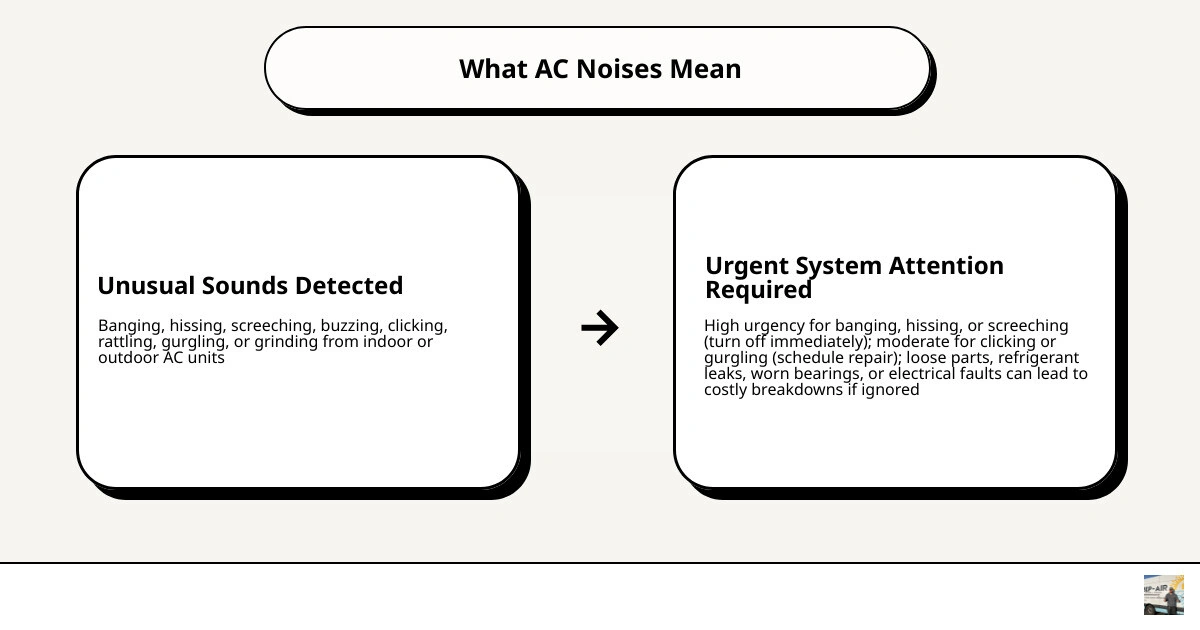
AC making strange noises is your system's way of sending an early warning — and knowing what each sound means can save you from a costly breakdown. Here's a quick reference:
• Banging / Clanking — Most Likely Cause: Loose or broken part in compressor or blower — Urgency: High — turn off immediately
• Hissing / Whistling — Most Likely Cause: Refrigerant leak or clogged air filter — Urgency: High — call a pro
• Screeching / Squealing — Most Likely Cause: Worn fan motor bearings or slipping belt — Urgency: High — shut down soon
• Buzzing / Humming — Most Likely Cause: Failing capacitor, electrical issue, or frozen coils — Urgency: Moderate to high
• Clicking — Most Likely Cause: Normal at startup; repeated clicking = electrical fault — Urgency: Moderate
• Rattling — Most Likely Cause: Loose panels, debris, or worn fan mounts — Urgency: Low to moderate
• Gurgling / Bubbling — Most Likely Cause: Clogged condensate drain or refrigerant leak — Urgency: Moderate
• Grinding — Most Likely Cause: Worn motor bearings — Urgency: High — causes rapid damage
A healthy AC should only produce a soft hum, a gentle whoosh of air through the vents, and a single click when it starts up. Anything beyond that deserves attention.
When your air conditioner starts sounding off in Burnaby, Surrey, Abbotsford, or anywhere else across the Lower Mainland, it can be easy to hope the noise just goes away on its own. It rarely does. In fact, ignoring unusual sounds is one of the most common ways a simple, inexpensive fix turns into a major repair — or even a full system replacement.
Modern AC units are engineered to run quietly, with some high-efficiency models operating as low as 19 decibels — softer than a whisper. So when your system suddenly starts banging, hissing, or grinding, something has clearly changed inside the unit. The good news is that the type of sound your AC makes is actually one of the most reliable diagnostic tools available to you.
This guide walks you through exactly what those sounds mean, where they're coming from, and what steps to take next.
Decoding AC making strange noises what they mean
When we talk about an ac making strange noises what they mean, we are essentially translating the "language" of your HVAC system. In May 2026, as temperatures start to rise across British Columbia, your AC is under more stress, which is when these mechanical groans and shrieks tend to appear.
• Banging and Clanking: These are rarely good signs. In most cases, a banging sound indicates that a part has come loose or broken inside the compressor. It could be a connecting rod, a piston pin, or a crankshaft. If the sound is coming from the indoor unit, it might be a loose blower wheel hitting the housing.
• Hissing: This usually points to one of two things: a refrigerant leak or high internal pressure. Refrigerant is kept under high pressure in a closed loop; when a leak occurs, it creates a persistent hissing or whistling sound.
• Screeching and Squealing: If you hear a sound like metal-on-metal, it's often the fan motor bearings in the indoor or outdoor unit. In older systems found in some Langley or Mission homes, this could also be a slipping fan belt.
• Buzzing: A buzzing sound can be caused by loose wiring, an aging contactor relay, or even a failing capacitor. It can also happen if the outdoor fan motor is stuck or if the evaporator coils are frozen.
• Rattling: Often the least "scary" of the bunch, rattling usually means a panel screw has vibrated loose or a twig has fallen into the outdoor condenser. However, if left alone, these vibrations can eventually damage more sensitive components.
• Clicking: You should hear one click when the system starts and one when it stops. If you hear a rapid-fire clicking sound while the unit is trying to start, it's a sign of an electrical communication failure between the thermostat and the unit.
• Grinding: This is the sound of a motor struggling to turn because the bearings are completely shot. It's a "shut it down now" kind of noise.
• Gurgling or Bubbling: This often sounds like someone finishing a soda with a straw. It typically indicates air bubbles in the refrigerant lines or a clogged condensate drain line.
Understanding these sounds is the first step toward Signs Your AC Needs Professional Repair Services.
Identifying Sounds by Location: Indoor vs. Outdoor Units
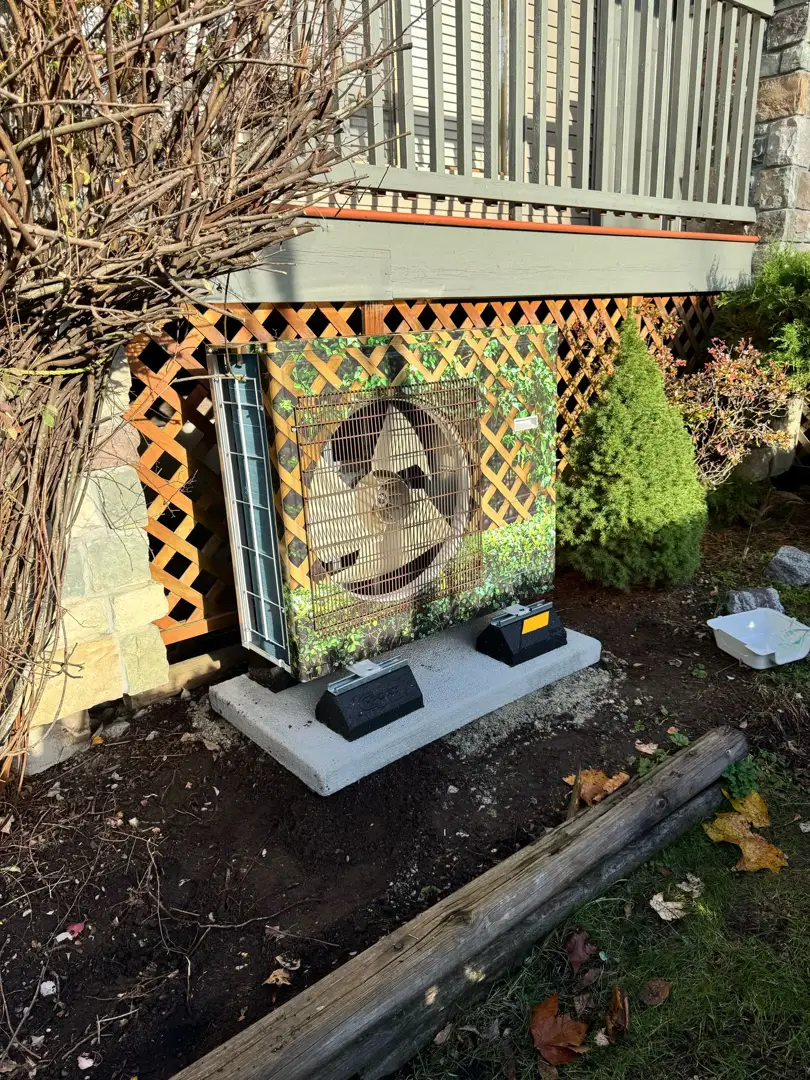
To properly diagnose your system, you first need to identify where the sound is originating. Your air conditioner is a split system, meaning it has components both inside and outside your home.
• Indoor Unit (Air Handler) — Likely Components Involved: Blower motor, evaporator coil, air filter, expansion valve — Common Causes: Dirty filters, loose blower wheel, frozen coils, clogged drain
• Outdoor Unit (Condenser) — Likely Components Involved: Compressor, condenser fan, capacitor, contactor — Common Causes: Debris in fan, failing compressor, loose panels, electrical faults
• Ductwork/Vents — Likely Components Involved: Air ducts, registers, dampers — Common Causes: Loose duct joints, blocked vents, high-pressure airflow
If you are looking for AC Repair Town Centre BC, knowing whether the noise is inside your basement or outside in your yard helps us bring the right tools for the job.
Why is my indoor AC making strange noises what they mean?
Inside your home, the most common culprit for noise is airflow. If you hear a high-pitched whistling, start by checking your air filter. A clogged filter restricts the air, forcing it through tiny gaps at high speed, which creates that whistling effect.
Another common indoor issue is buzzing or thumping. This often happens when the evaporator coils freeze over due to poor airflow or low refrigerant. When ice builds up, the blower motor has to work harder, often leading to an AC Blowing Warm Air: 5 Essential Fixes. If you hear a dripping or gurgling sound inside, your condensate drain line might be backed up, which can lead to water damage if not cleared promptly.
Outdoor condenser AC making strange noises what they mean
The outdoor unit houses the compressor—the heart and most expensive part of your system. If you hear banging from the outdoor unit, shut the power off immediately. The compressor is a sealed unit, and internal banging usually means a mechanical failure that requires a professional eye.
Screaming or high-pitched hissing from the outdoor unit is also an emergency. This often indicates dangerous pressure buildup. Most modern units have safety switches to shut the system down, but if you hear this, don't wait for the switch to kick in. If you're in the neighborhood and need AC Repair Mount Lehman BC, we recommend turning the system off at the thermostat and the breaker before calling for help.
Safe Troubleshooting Steps for Homeowners
While many AC noises require professional tools and licensing (especially anything involving refrigerant or high-voltage electricity), there are several safe steps you can take to troubleshoot the issue yourself.
1. Check the Air Filter: This is the "have you tried turning it off and on again" of the HVAC world. A dirty filter causes whistling, buzzing, and frozen coils. Replace it every 1 to 3 months.
2. Clear Debris: Turn off the power at the outdoor disconnect switch and check the fan area. Remove any leaves, sticks, or pebbles that might be causing a rattling or "thwapping" sound.
3. Tighten Loose Screws: If you hear a persistent rattle, it might just be the metal cabinet panels vibrating. Use a screwdriver to ensure all exterior screws are snug.
4. Inspect Your Vents: Ensure at least 80% of your supply vents are open and unblocked by furniture or curtains. Blocked vents increase pressure and cause whistling.
5. Listen to the Startup: Stand by the outdoor unit while someone else turns on the AC. Note if the clicking is repeated or if there is a loud hum without the fan spinning. This information is incredibly helpful for our technicians.
Taking these steps can often resolve minor issues before you need to book an AC Service Willoughby BC.
When to Seek Professional HVAC Support in the Lower Mainland
There comes a point where DIY troubleshooting ends and professional expertise begins. Because air conditioners use high-voltage electricity and pressurized chemicals, attempting certain repairs yourself can be dangerous and may void your manufacturer's warranty.
You should call us immediately if you experience:
• The Smell of Burning: If a noise is accompanied by a metallic or electrical burning smell, shut the system down at the breaker.
• Refrigerant Hissing: Handling refrigerant requires an EPA-certified technician. If you suspect a leak, do not attempt to patch it yourself.
• Persistent Banging: This usually involves internal compressor components that cannot be serviced without specialized equipment.
• Electrical Buzzing: If your unit is buzzing but won't start, it's likely a capacitor or contactor issue that requires professional replacement.
Whether you need a quick fix or a full AC Installation Mission BC, our team is ready to help. If your system is older and the repair is significant, we can also discuss an AC Replacement Abbotsford BC. We pride ourselves on offering honest advice to homeowners from AC Installation Maple Ridge BC to AC Installation Babich BC, ensuring you get the most efficient solution for your home.
Frequently Asked Questions about AC Noises
Is it safe to run my AC if it is making a loud banging noise?
Generally, no. A loud banging or clanking noise usually means a metal part has come loose or broken inside the compressor or the blower motor. Continuing to run the system can cause that loose part to fly around and destroy other components, turning a repair into a full replacement. Turn the system off and call for a professional inspection.
Can a dirty air filter cause my AC to make whistling sounds?
Yes, absolutely. A clogged filter restricts the volume of air that can pass through. This creates a high-pressure environment where the air is forced through small gaps or around the edges of the filter at high velocity, creating a whistling or "screaming" sound. Changing your filter is the first thing you should do if you hear this.
Why does my air conditioner click repeatedly when it tries to turn on?
Repeated clicking is usually an electrical communication issue. The thermostat is sending a signal to start, but the contactor (the switch that pulls in the power) or the capacitor (which gives the motor the "kick" it needs to start) is failing. It's like a car with a dead battery clicking when you turn the key. This requires an electrical diagnostic by a technician.
Conclusion
At Rep-Air Heating And Cooling, we know that your home is your sanctuary. When your ac making strange noises what they mean becomes a source of stress, we are here to provide clarity and expert service. We treat every customer in the Lower Mainland like family, prioritizing your comfort, safety, and energy efficiency.
Don't let a small rattle turn into a major headache. Whether you need a simple tune-up to lubricate those squealing bearings or a comprehensive maintenance plan to prevent noises before they start, our team is just a call away. We serve homeowners across the region, from the quiet streets of Pitt Meadows to the bustling neighborhoods of Abbotsford, ensuring your indoor climate remains perfectly controlled all year long.
If your AC is trying to tell you something, listen. Then, give us a call to restore the peace and quiet your home deserves.
For more information on keeping your home cool, visit our Air Conditioning Services page today.
hear what our satisfied clients have to say
Neighbourhoods in the Fraser Valley