HVAC Company in Port Moody, BC
Unpredictable Temperatures Inside Your Home Require Immediate Attention
When your HVAC system fails, the comfort of your home is compromised, turning your living space from a sanctuary into a source of stress. Don’t let a broken air conditioner or malfunctioning heater disrupt your day or threaten your family's safety during extreme weather. Contact Rep-Air Heating And Cooling for immediate diagnostic services or financing information today.
Residents in Port Moody and the surrounding areas know that reliable climate control is essential to handle the damp, chilly winters and increasingly hot summers. We provide the technical expertise required to restore balance to your indoor environment quickly.
- Rapid repair services with same-day appointments available for urgent breakdowns.
- Transparent pricing and no hidden fees, get a clear, upfront estimate before work begins.
- Energy-efficient solutions that save money on utilities and enhance long-term comfort.
All services are backed by comprehensive warranties and quality guarantees, with flexible financing options available to suit your budget.
Comprehensive HVAC Services for Year-Round Comfort
Modern climate control is about more than just blowing hot or cold air; it requires a holistic approach to air quality, humidity control, and energy efficiency. When you engage Rep-Air Heating And Cooling for service, you receive a thorough evaluation of your entire system. Our technicians arrive fully equipped to handle a wide spectrum of HVAC needs, ensuring that whether you have a gas furnace, a central air conditioner, or a ductless heat pump, the issue is identified and resolved efficiently. The priority is always to stabilize the home environment throughout:
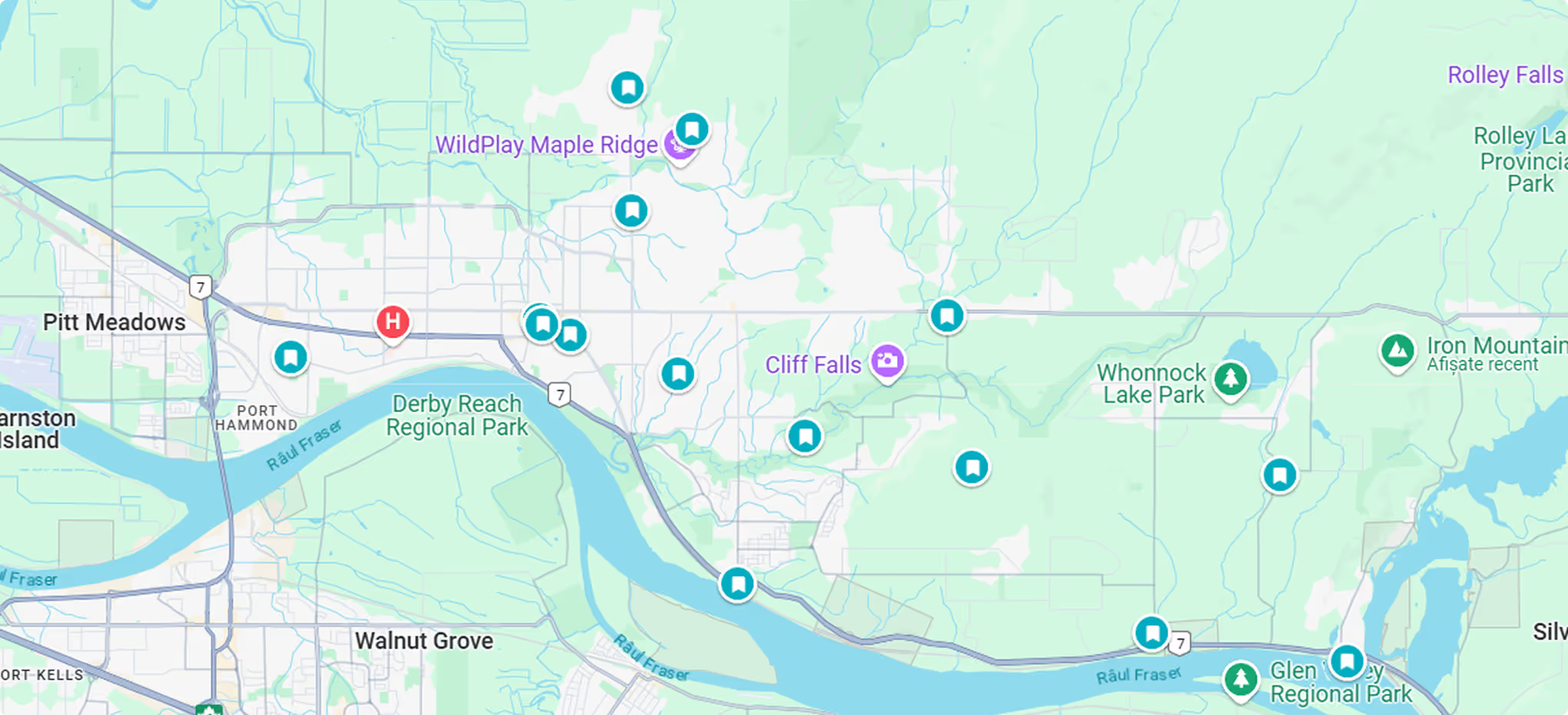
- Moody Centre
- Newport Village
- Heritage Mountain
- Heritage Woods
- College Park
- Anmore (often grouped with Port Moody)
Diagnostic and Repair Protocols
The immediate priority during a service call is accurate fault isolation. HVAC systems in the coastal BC region often face specific wear and tear due to moisture and salt air, which can corrode electrical contacts or degrade outdoor units faster than in drier climates. A professional diagnostic involves a point-by-point inspection of the ignition systems, refrigerant levels, blower motors, and thermostat calibration.
Once the root cause is identified, the repair process focuses on restoring the unit to manufacturer specifications. This includes sourcing OEM (Original Equipment Manufacturer) parts to ensure longevity and maintaining the validity of your existing warranties. Technicians focus on safety checks, particularly for gas-fired appliances, ensuring there are no carbon monoxide leaks or combustion issues that could pose a risk to the household.
Maintenance and Efficiency Optimization
Reactive repairs solve immediate problems, but proactive maintenance prevents them. In Port Moody, where the heating season is long and damp, neglecting maintenance can lead to mold growth in ductwork or inefficient heat exchange. A comprehensive tune-up service includes cleaning blower wheels, clearing condensate drains to prevent water damage, and checking refrigerant pressure.
Regular optimization ensures that the system runs at its rated SEER (Seasonal Energy Efficiency Ratio) or AFUE (Annual Fuel Utilization Efficiency). This directly translates to lower monthly utility bills from providers like BC Hydro or FortisBC. Systems that are not maintained struggle to reach the set temperature, running longer and harder, which accelerates component failure.
Heat Pump Specialization
Given the moderate climate of the Lower Mainland, heat pumps are an increasingly popular choice for both heating and cooling. These systems require specialized knowledge regarding reversing valves and defrost boards. Unlike traditional furnaces, heat pumps work year-round. Technicians must verify that the auxiliary heat strips are functioning correctly for those rare days when temperatures drop significantly below freezing, ensuring your home remains warm even during a cold snap.
The Installation and Replacement Process
When a system reaches the end of its lifecycle, a correct installation is the single most important factor in determining the future efficiency and reliability of the new unit. A poor installation can reduce a unit's efficiency by up to 30%, negating the benefits of buying high-end equipment.
Assessment and Sizing
The process begins with a Manual J load calculation. This engineering calculation considers the square footage of the home, insulation levels, window types, and orientation. In Port Moody, older homes may have different insulation values than new developments, making this step critical. Guessing the size of a unit leads to "short cycling" (if too big) or the inability to keep up with demand (if too small).
System Selection
Based on the load calculation, the next step is selecting the appropriate technology. Options generally include:
- High-efficiency gas furnaces suitable for robust winter heating.
- Central air conditioning systems paired with existing ductwork.
- Ductless mini-split systems for homes without existing ductwork or for zoning specific rooms.
- Dual-fuel systems that combine an electric heat pump with a gas furnace for optimal efficiency in varying temperatures.
Removal and Site Preparation
Before the new unit is brought in, the old system must be decommissioned safely. This involves recovering any remaining refrigerant according to environmental regulations to prevent atmospheric venting. The installation site is then prepped, which may include leveling the ground for an outdoor condenser or modifying the plenum in the mechanical room to fit the new air handler.
Installation and Commissioning
Technicians physically install the new equipment, brazing copper refrigerant lines with nitrogen to prevent oxidation, connecting high-voltage electrical lines, and integrating low-voltage control wiring. Once connected, the system is not merely turned on; it is commissioned. This involves a vacuum decay test to ensure the lines are sealed and dry, followed by a precise refrigerant charge by weight and subcooling/superheat measurements.
Final Walkthrough
The final step is educating the homeowner. This covers how to operate the new thermostat, how to change filters, and what sounds or behaviors to expect from the new system. It also involves registering the equipment for parts warranties to ensure full coverage.
Deciding Between Repair and System Replacement
Homeowners often face the difficult decision of whether to invest in another repair or bite the bullet and replace the entire system. While every situation is unique, there are clear technical and financial indicators that help streamline this decision.
The 50% Rule
A common industry standard is the 50% rule: if the cost of the repair approaches 50% of the value of a new system, replacement is generally the wiser financial move. Investing heavy capital into an aging asset often yields diminishing returns, as other components are likely to fail shortly after the initial repair.
Age of the Equipment
HVAC systems have average life expectancies. Air conditioners and heat pumps typically last 10 to 15 years, while gas furnaces can last 15 to 20 years. If your equipment in Port Moody is approaching or has exceeded these milestones, parts may be discontinued or prohibitively expensive to source. Furthermore, older units run on outdated refrigerants (like R-22) which are phased out and extremely costly to replenish.
Frequency of Breakdowns
If you find yourself calling for service multiple times a year, the system has likely become unreliable. Frequent breakdowns indicate that the internal components are fatigued. At this stage, you are essentially paying for a new system on the installment plan via repair bills, without receiving the benefits of a new warranty or improved efficiency.
Energy Bills and Comfort Levels
Rising energy bills without a corresponding increase in usage rates or severe weather changes indicate the system is losing efficiency. Additionally, if the system can no longer maintain a consistent temperature, or if some rooms are significantly hotter or colder than others, the equipment may no longer be capable of effectively distributing air. This is often due to compressor wear or heat exchanger degradation.
Navigating Local Requirements and Climate Challenges
Operating an HVAC company in British Columbia requires specific attention to local codes, environmental incentives, and unique climate patterns. Understanding these elements ensures that your installation is legal, safe, and financially advantageous.
Permitting and Safety Codes
In municipalities like Port Moody, HVAC installations often require permits, particularly when gas lines or electrical circuits are altered. Professional installers manage this administrative burden, submitting the necessary drawings and scheduling inspections with the city. This ensures that the installation meets current building codes and protects your home insurance validity. Unpermitted work can lead to significant fines and issues when selling the home in the future.
Rebates and Incentives
British Columbia offers some of the most aggressive green energy rebates in North America. Programs through CleanBC, BC Hydro, and FortisBC incentivize the switch from fossil fuels to electric heat pumps. There are also federal initiatives like the Greener Homes Grant (when active) that can offset a significant portion of the installation cost; check our current promotions for deals. Navigating the eligibility criteria, such as minimum HSPF2 ratings or specific equipment matching, can be complex. Rep-Air Heating And Cooling assists homeowners in identifying which equipment qualifies for these substantial financial returns.
Climate-Specific Considerations
The coastal climate poses specific challenges. High humidity in the winter makes 5 degrees feel much colder, which taxes heat pumps that lack proper defrost controls. Conversely, summers are becoming hotter and smokier due to wildfires. This shifts the focus to Indoor Air Quality (IAQ). Modern HVAC solutions now frequently integrate high-MERV filtration or electronic air cleaners to handle wildfire smoke, as well as dehumidifiers to manage the wet winter air, preventing mold growth within the home structure.
Technical Expertise and Service Standards
The difference between a functioning system and an optimized system often comes down to the skill level of the technician. HVAC is a trade that combines electrical, plumbing, gas fitting, and thermodynamics.
Certification and Training
Top-tier service requires technicians who hold valid Red Seal certifications and Gas B tickets. This ensures they are legally proficient in handling hazardous materials like natural gas and high-pressure refrigerants. Continuous training is vital as manufacturers introduce inverter-driven compressors and communicating thermostats that require software updates and digital diagnostics rather than just mechanical tools.
Safety and Environmental Responsibility
Handling refrigerants requires EPA or equivalent certification to ensure no ozone-depleting substances are released. Professional providers adhere to strict recovery protocols. Furthermore, checking heat exchangers for cracks is a critical safety protocol to prevent carbon monoxide poisoning. A proper service includes a combustion analysis to verify that the fuel is burning cleanly and safely.
The Value of Warranties
Professional installation comes with labor warranties in addition to the manufacturer’s parts warranty. This protects the homeowner from defects in workmanship. When a system is installed by a certified contractor, it validates the manufacturer's warranty; DIY or handyman installations often void these protections immediately.
Securing Your Home Comfort
Your home’s heating and cooling system is the engine that drives your daily comfort. whether you are facing an emergency breakdown in the middle of a winter storm or planning a strategic upgrade to take advantage of rebates, the goal is always consistent, reliable performance. By addressing issues early, understanding the repair-versus-replace dynamic, and leveraging local incentives, you ensure your home remains a safe haven regardless of the weather outside.
For residents in Port Moody seeking a partner in home climate control, the choice is clear. We deliver technical precision, adherence to safety codes, and a commitment to restoring your comfort without delay.
Contact Rep-Air Heating And Cooling today to schedule your service or request a free estimate on a new system.
hear what our satisfied clients have to say
Neighbourhoods in the Fraser Valley