Boiler Installation & Replacement in Mission, BC
Need a New Boiler for Your Mission Home?
Is your old boiler costing you more in repairs and energy bills than it is worth? A modern, high-efficiency boiler is the best way to ensure reliable heat through our long Fraser Valley winters while significantly lowering your monthly energy costs. Rep-Air Heating and Cooling specializes in professional boiler installation and replacement so your home stays comfortably warm all season long.
.avif)
Signs It Is Time to Replace Your Boiler
Your Repair Bills Are Piling Up
You find yourself calling for service every year, or even multiple times in one heating season. The problems seem to cascade, meaning once one part is fixed, another component fails shortly after. From a technician's standpoint, this indicates systemic failure across the entire heating system.
When a boiler reaches a certain age, major components like the circulator pump, gas valve, and heat exchanger all reach the end of their service life simultaneously. Pouring money into constant fixes on an older unit is rarely a wise investment. Those funds are much better put towards a new, warrantied system that you can actually rely on.
Your Heating Costs Are Steadily Increasing
You notice your utility bills are climbing steadily higher each winter, even though your thermostat settings have not changed. This is a classic sign of lost efficiency due to internal scale buildup and general mechanical wear. An older unit might only be operating at partial efficiency, meaning a massive chunk of your energy dollar is completely wasted.
A new high-efficiency condensing boiler operates much differently and can reach efficiency levels over ninety-five percent. Upgrading your system offers immediate and noticeable savings that you will see on your very first utility bill.
The Boiler is Leaking or Showing Corrosion
You see water pooling around the base of the unit, active drips from pipe fittings, or significant rust spots on the jacket or vent pipes. Water and metal do not mix well, and leaks signal that the integrity of the tank or its connections is permanently compromised. This is not a simple fix, but rather a critical failure warning.
A leaking boiler is a serious risk for water damage to your property and can lead to a complete, sudden system failure. It is one of the clearest and most urgent signs that a total replacement is immediately necessary.
Your Home Has Cold Spots or Loud Noises
Some radiators are scorching hot while others are lukewarm, or you hear loud banging, rumbling, or whistling noises coming from the mechanical room. Technicians call this sound kettling, and it is almost always caused by a heavy buildup of limescale and sediment inside the heat exchanger. This dense sludge restricts water flow, causing the trapped water to boil and steam inside the unit.
This violent process puts immense thermal stress on the metal components, leading to irreparable damage over time. It also severely restricts the system's ability to circulate hot water, preventing your home from heating evenly and efficiently.
Why Boilers Need Replacing in the Fraser Valley
Reaching the End of Its Natural Service Life
Most conventional boilers have a realistic lifespan of about fifteen to twenty years before they start to rapidly decline. After thousands of heating cycles, critical components simply wear out beyond the point of cost-effective repair. In Mission, boilers work incredibly hard for over half the year to combat the damp, persistent chill.
This consistent operational demand means that heating units in our area often reach their replacement age without question. A planned replacement allows you to choose a modern system on your terms, rather than scrambling to find a contractor during an emergency shutdown.
Outdated and Inefficient Technology
A boiler installed in the early two-thousands or before is generations behind in heating technology. These conventional, non-condensing units waste a massive amount of thermal energy by sending hot exhaust gases directly out of the chimney. With the sustained heating demand in our damp climate, running an inefficient boiler is exactly like driving a gas-guzzler on a long daily commute.
The modern fix is to install a high-efficiency condensing boiler that captures those exhaust gases and reuses the waste heat. This dramatically cuts your fuel consumption, lowers your carbon footprint, and provides far more consistent comfort throughout the house.
Internal Corrosion and Scale Buildup
Over many years, minerals in the municipal water supply build up as a hard scale on the inside of the heat exchanger. This rock-like layer acts as an insulator and forces the equipment to burn significantly more fuel to produce the same amount of heat. At the same time, oxygen in the water causes internal rust and corrosion to eat away at the metal structure.
While this happens everywhere, the long running hours required in our specific region can accelerate the impact of these internal issues. Once the heat exchanger is heavily corroded or clogged with scale, replacement is the only path forward to restore safe and reliable heating.
What to Expect During the Installation Process
When you choose Rep-Air Heating and Cooling for your boiler replacement in Mission, you receive a seamless and professional experience from start to finish. First, we begin with a thorough in-home consultation to assess your current setup. Our technician will perform a detailed heat-loss calculation to determine the exact size of boiler your home needs, as an improperly sized unit will never run efficiently.
On installation day, our licensed and certified team will arrive on time and take care to protect your home's floors and surrounding areas. We safely disconnect and remove your old, heavy unit before expertly maneuvering your new boiler into place. We then make all the critical gas, water, and electrical connections to meet or exceed all current building and safety codes.
Final Commissioning and Walkthrough
Finally, we commission the system by firing it up, testing all safety controls, and calibrating the gas pressure for optimal performance. We carefully check flow rates, bleed air from the radiators, and ensure the system is perfectly balanced. We will not leave until we have walked you through the new system and thermostat, ensuring you are completely comfortable with its operation.
Protecting Your New Boiler for the Long Term
A new heating system is a significant investment in your home's long-term comfort and property value. If you are currently facing frequent breakdowns on an older unit, remember that the cost of repeated boiler repairs can quickly add up, making a full replacement the far smarter financial choice. You want to spend your money on guaranteed reliability, not patching a sinking ship.
Once your new system is installed, the absolute best thing you can do to protect it is to schedule annual boiler maintenance. A yearly professional tune-up keeps the internal components clean, ensures safe combustion, maintains high efficiency, and is often required to keep the manufacturer warranty valid. Regular professional servicing prevents the vast majority of common repair calls down the road.
The Risk of Running a Failing Boiler
An old, poorly maintained boiler can pose a significant safety risk to your household. The primary concern is the potential for a carbon monoxide leak resulting from a cracked heat exchanger or a deteriorating exhaust vent. A new, professionally installed unit eliminates these hazards and provides total peace of mind that your family is safe all winter.
Every day you operate an outdated boiler is a day you are overpaying for basic comfort. In a climate where the heating season stretches for months on end, the wasted money from a highly inefficient unit can easily amount to hundreds of dollars a year. Those wasted funds could easily be put toward financing a brand-new, highly efficient system.
Furthermore, an aging boiler rarely fails on a mild afternoon in the spring. It will inevitably break down during the coldest, wettest week of the year when it is under the maximum amount of strain. This forces you into a stressful emergency replacement scenario, which is always more disruptive than a carefully planned installation.
Your Trusted Boiler Installation Team in Mission, BC
Choosing the right boiler is only half the battle, as ensuring it is installed correctly is absolutely critical for its efficiency and overall lifespan. The expert technicians at Rep-Air Heating and Cooling have the deep local knowledge and technical skill to get the job done right the very first time. If you are ready to upgrade to a reliable, high-efficiency heating system, contact us today to schedule your in-home consultation.
hear what our satisfied clients have to say
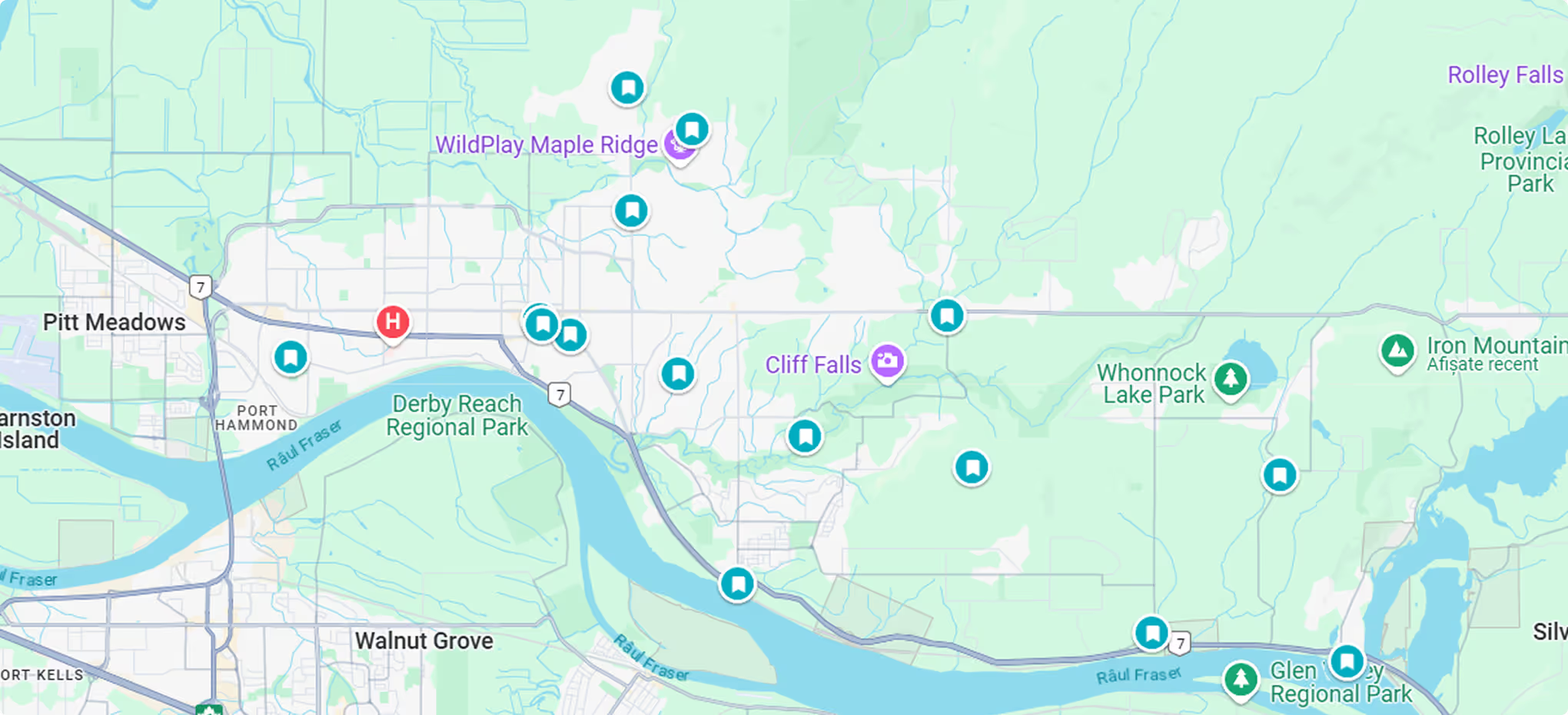
Neighbourhoods in the Fraser Valley