HVAC Company in Surrey, BC
Is Your Heating or Cooling System Not Keeping Up With the Weather?
Struggling with an HVAC system that just can't handle Surrey's changing seasons? Whether it's a chilly winter evening or a surprise summer heatwave, you need a reliable solution fast, so contact us today to schedule your diagnostic or discuss financing options. Inconsistent temperatures, strange noises, and rising energy bills are clear indicators that your equipment is failing to meet the demands of your home. You do not have to settle for discomfort when professional help is immediately available.
- Ensure your comfort with our rapid response team available 24/7.
- Boost your energy efficiency and reduce monthly bills with the latest HVAC technology.
- Get back to your routine with guaranteed same-day repairs and installations.
All services come with full licensing, a robust warranty, and flexible financing options to fit your budget. Call Rep-Air Heating And Cooling now.
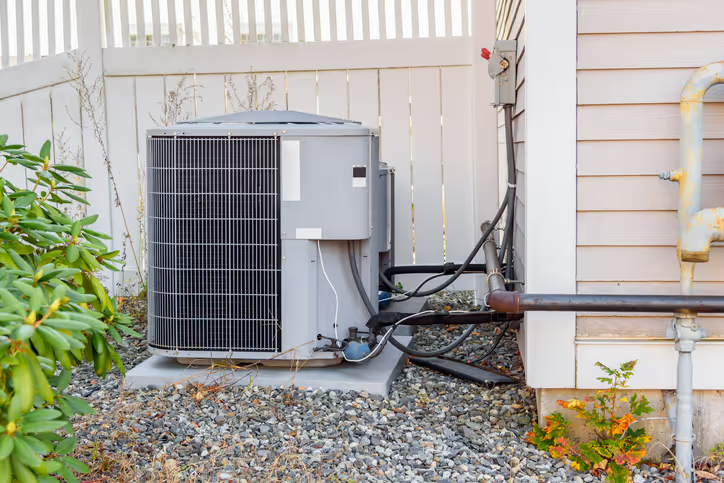
Why Suffer Through Another Season? HVAC Solutions That Work
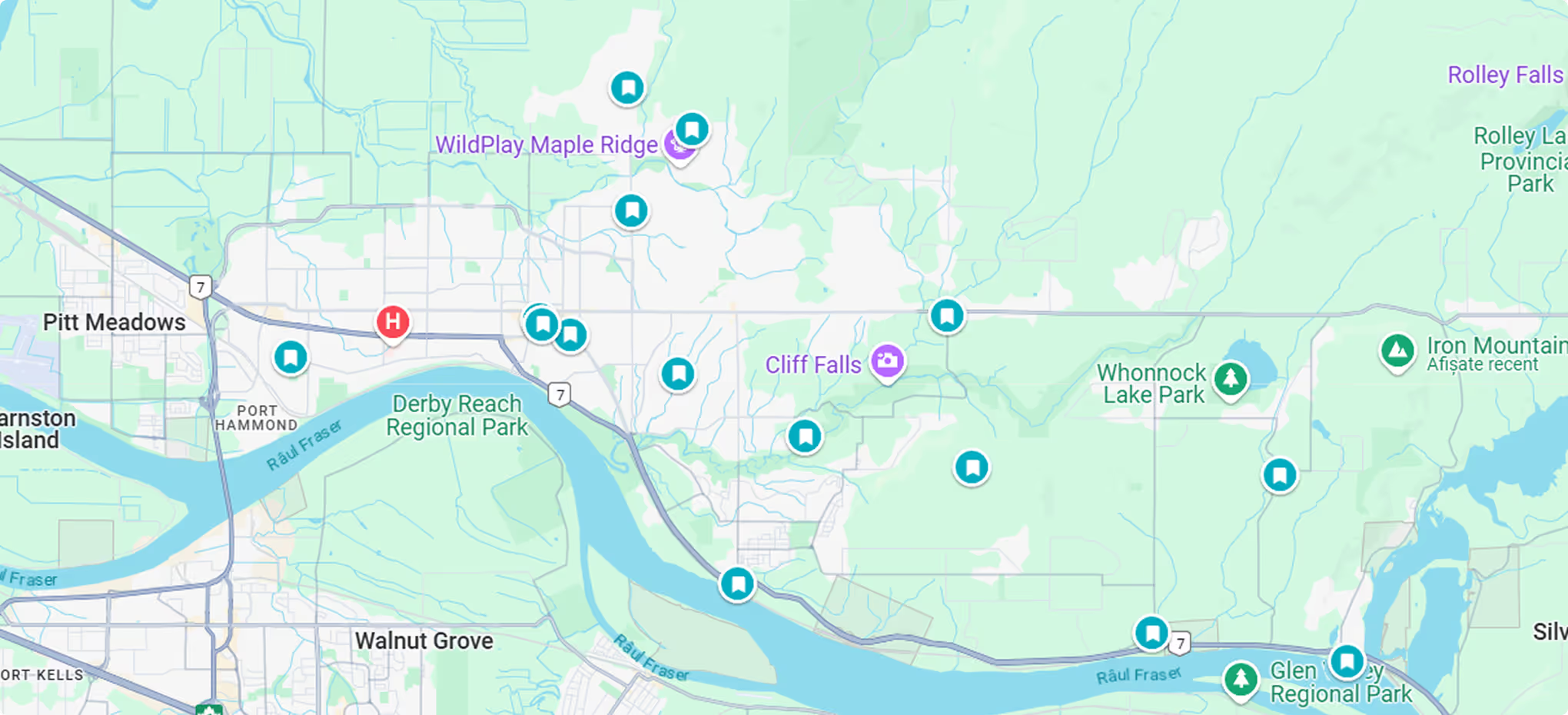
Ignoring minor irregularities in your heating or cooling system often leads to major mechanical failures at the most inconvenient times. A furnace that cycles frequently in January or an air conditioner that freezes up in July disrupts your life and compromises safety. Homeowners in Surrey and the surrounding areas often face specific climate challenges, including high humidity and sharp temperature drops, which put immense strain on aging infrastructure. We proudly serve:
- Guildford
- Fleetwood
- Newton
- Cloverdale
- South Surrey
- Whalley / City Centre
- Fraser Heights
- Panorama Ridge
- Morgan Creek
- Crescent Beach
Rep-Air Heating And Cooling addresses these failures by identifying the root cause of the inefficiency rather than applying a temporary patch. A comprehensive approach ensures that airflow is restored, refrigerants are balanced, and mechanical components function in harmony. When your system operates correctly, humidity levels decrease, indoor air quality improves, and the constant adjustment of the thermostat becomes a thing of the past. The goal is to transform a source of frustration into a reliable utility that operates quietly in the background.
Today's Services: Quick, Efficient, and Tailored to Your Needs
When you request service, the objective is to restore functionality immediately. Modern HVAC service calls are designed to be minimally invasive while providing maximum technical insight into the health of your unit. Technicians arrive equipped with fully stocked vehicles, ready to address common failure points such as blown capacitors, faulty igniters, or clogged condensate lines on the spot.
Diagnostic and Repair Capabilities
The immediate focus is on troubleshooting. High-tech diagnostic tools are used to measure static pressure, refrigerant levels, and electrical voltage. This data eliminates guesswork. If a furnace is blowing cold air, technicians check the pilot light, the thermocouple, and the gas supply. If an AC unit is blowing warm air, the focus shifts to the compressor, the evaporator coils, and the thermostat calibration.
- Air Conditioning Repair: Addressing refrigerant leaks, frozen coils, sensor problems, and drainage issues that cause water damage.
- Furnace and Heating Repair: Fixing ignition control issues, cracked heat exchangers, worn-out ball bearings, and limit switch malfunctions.
- Heat Pump Services: managing the unique needs of heat pumps, including reversing valve failures and defrost cycle issues common in British Columbia’s maritime climate.
- Ductwork Inspection: Identifying leaks or blockages in the duct system that force your HVAC unit to work harder than necessary.
Comprehensive Maintenance
Beyond immediate repairs, service often includes optimizing the system for the season ahead. This involves cleaning burner assemblies, tightening electrical connections, and lubricating moving parts. These adjustments reduce friction and electrical resistance, directly translating to lower energy consumption. The service provided today is designed to prevent the emergency call you would otherwise make next month.
Our Installation Process: What to Expect from Start to Finish
Installing a new HVAC system is a significant construction project that requires precise planning and execution. A proper installation determines the efficiency and lifespan of the unit far more than the brand name stamped on the casing. The process follows a strict protocol to ensure safety and code compliance.
Load Calculation and Sizing:
The process begins with a manual load calculation. This engineering calculation considers the square footage of the home, insulation levels, window orientation, and local climate data. Oversized units cycle too frequently, leading to premature wear, while undersized units run constantly without reaching the desired temperature. Correct sizing is non-negotiable.
Site Preparation and Removal:
Technicians protect flooring and surrounding areas before disconnecting the old unit. Refrigerant is recovered safely according to environmental regulations, and old equipment is hauled away for proper recycling. The installation site is inspected for structural integrity to ensure it can support the new equipment.
System Installation:
The new furnace, AC, or heat pump is positioned and leveled. For split systems, the indoor and outdoor units are connected via copper refrigerant lines. These lines are brazed (welded) and pressure-tested with nitrogen to guarantee there are no leaks. Electrical wiring is updated to meet current safety codes, and a new thermostat is often installed to communicate effectively with the modern equipment.
Ductwork and Airflow Adjustment:
The existing plenum is modified to fit the new unit. All connections are sealed with mastic or metal tape to prevent air loss. The technicians verify that the static pressure, the resistance to airflow is within the manufacturer's specified range.
Final Testing and Commissioning:
The system is powered on and run through a full operational cycle. Technicians measure temperature rise (for heating) or temperature drop (for cooling) to verify performance. The system is then balanced to ensure even air distribution throughout the rooms.
Repair or Replace? Making the Right Choice for Your HVAC System
Deciding between sinking money into a repair or investing in a new system is a financial calculation based on age, condition, and efficiency. Emotional attachment to an old system or fear of replacement costs often clouds this judgment, but looking at the data provides a clear path forward.
The 50% Rule
A standard industry benchmark is the 50% rule. If the cost of the repair approaches 50% of the value of a new system, replacement is generally the smarter financial move. This is particularly true if the current unit is out of warranty, as future repairs will also be out-of-pocket expenses.
Age and Refrigerant Availability
Furnaces typically last 15-20 years, while air conditioners and heat pumps last 10-15 years. If your AC unit utilizes R-22 (Freon), a refrigerant that has been phased out due to environmental regulations, a refrigerant leak is a fatal blow to the system. The cost to locate R-22 is exorbitant, making replacement the only logical option. Newer systems use R-410A or other eco-friendly alternatives that are cheaper to service.
Efficiency Ratings (SEER and AFUE)
Older units often operate at significantly lower efficiency levels. A furnace from 15 years ago may operate at 70% AFUE, meaning 30 cents of every dollar spent on gas goes up the flue. Modern condensing furnaces reach efficiencies of 98%. Similarly, upgrading from a 10 SEER air conditioner to a 16+ SEER unit can reduce cooling costs by over 40%.
Rep-Air Heating And Cooling technicians provide a transparent breakdown of these costs, calculating the return on investment (ROI) for a new installation versus the sunk cost of keeping a dying unit alive. If your energy bills have been creeping up year over year despite regular maintenance, the equipment has likely reached the end of its useful service life.
Local Guidelines and Seasonal Tips for Surrey Residents
Operating HVAC equipment in the Lower Mainland requires specific attention to regional factors. The moderate maritime climate, characterized by damp winters and increasingly warm summers, dictates how systems should be set up and maintained.
Navigating Permits and Codes
HVAC work in this region is subject to the British Columbia Building Code and local municipal bylaws. Replacing a gas furnace or installing a new heat pump requires a permit to ensure the work meets safety standards regarding gas piping, venting, and electrical connections. Professional installers manage this administrative burden, submitting the necessary diagrams and scheduling inspections with the city. Unauthorized work can lead to fines and complications when selling the property.
BC Hydro and Provincial Rebates
British Columbia offers some of the most aggressive rebate programs in Canada for switching to energy-efficient heat pumps. Homeowners can often offset a significant portion of the installation cost through provincial and federal grants. Eligibility usually requires the equipment to be installed by a licensed contractor and meet specific efficiency ratings (HSPF and SEER). Documentation of the installation is critical for these claims.
Seasonality and Heat Pump Defrost Cycles
In local winters, high humidity and near-freezing temperatures create the perfect conditions for frost to form on the outdoor coils of heat pumps. Residents often mistake the "defrost cycle" where the unit temporarily reverses to melt the ice; as a malfunction because the fan stops and steam rises from the unit. This is normal operation. However, ensuring the outdoor unit is elevated above anticipated snowfall levels and kept clear of drifting leaves is essential for maintaining airflow during these damp months.
Summer Dehumidification
As summers become hotter, air conditioning is no longer a luxury but a necessity. Beyond cooling, the AC unit serves as a critical dehumidifier. If an AC unit is oversized for the home, it will cool the air too quickly and shut off before it has removed the humidity, leading to a cold, clammy indoor environment. Proper sizing ensures long run times that effectively pull moisture from the air, crucial for comfort in this coastal region.
Why Choose Us: Trusted Expertise and Proven Results
Selecting a service provider is about mitigating risk and ensuring longevity for your home’s mechanical systems. You need a partner who understands the technical intricacies of modern variable-speed motors and smart thermostats, not just someone who swaps parts.
- Licensed and Insured: Every technician holds valid trade certifications and the company carries liability insurance to protect your property.
- Transparent Communication: You receive a clear explanation of the issue, the proposed solution, and the associated costs before any work begins. There are no hidden fees or surprise charges on the final invoice.
- Brand Agnostic Expertise: Whether you own a Carrier, Lennox, Trane, or Rheem, the team has the training to service all major makes and models. Recommendations for new equipment are based on your home’s needs, not factory quotas.
- Warranty Protection: Installations are backed by labor warranties that supplement the manufacturer's parts warranty. If an issue arises post-installation, it is addressed promptly without additional cost.
Call Us Now
Your home comfort system is a complex machine that requires precision to operate safely and efficiently. Do not let a small rattle turn into a system failure or let an inefficient unit drain your bank account. Take control of your indoor climate today.
Contact us now to schedule your comprehensive HVAC inspection or to get a quote on a high-efficiency system upgrade.
hear what our satisfied clients have to say
Neighbourhoods in the Fraser Valley