Boiler Repair & Service in Mission, BC
Boiler Not Heating Your Home?
Is your boiler struggling to keep up with the damp, chilly winters, leaving you with an unreliable heating system? When your primary source of heat is failing, you need more than a temporary fix—you need a lasting solution to prevent a complete breakdown. Rep-Air Heating and Cooling provides expert boiler diagnostics and repair to get your heat working reliably again.
.avif)
Signs Your Boiler Needs Professional Service
When a hydronic heating system begins to fail, it rarely stops working completely overnight. The equipment will usually give you several distinct warning signs before it leaves you completely in the cold. Recognizing these operational symptoms early allows a professional technician to step in and resolve the issue before it causes secondary damage.
No Heat or Lukewarm Radiators
You turn up the thermostat and hear the boiler running, but your radiators never get fully hot or remain completely cold to the touch. This uneven heating creates uncomfortable cold zones throughout your house and forces the system to run constantly without ever reaching your desired room temperature. In many older properties, you might notice the pipes nearest to the main unit are warm while the farthest rooms remain freezing.
From a technician's viewpoint, this lack of heat transfer points to a serious circulation or communication failure within the equipment. We often find that a failed circulator pump is completely unable to push heated water through the complex pipework. This is the most critical operational symptom to watch for because it means the fundamental purpose of your heating system has been entirely compromised.
Gurgling or Banging Noises
Your boiler or the surrounding pipes might start making loud clanking, whistling, or deep gurgling sounds while the burner is running. Technicians call this phenomenon kettling because the noise sounds exactly like a heavy metal tea kettle starting to boil on a hot stove. These disruptive noises often echo through the walls of your home every time the heating cycle kicks on.
This severe symptom is usually caused by hard water minerals creating a thick layer of limescale buildup directly inside the heat exchanger. The mineral scale restricts natural water flow, causing the trapped water to rapidly boil, turn into steam, and collapse back into liquid. Kettling reduces your operational efficiency dramatically and puts immense physical stress on the heat exchanger, eventually leading to catastrophic internal cracks if ignored.
Leaking Water From the Unit
You notice unexpected puddles of water accumulating on the floor around the base of the tank or actively dripping from the connecting pipes. Even a tiny, slow drip is a serious concern that indicates a watertight seal has been broken somewhere inside the metal casing. Because hydronic systems operate under continuous pressure, a minor leak will only grow larger and more destructive as time goes on.
This external weeping is almost always due to a broken internal component, such as a degraded pressure relief valve or a worn-out pump seal. Given the persistent damp climate in Mission, long-term environmental moisture can also accelerate external corrosion and weaken threaded pipe connections over the years. Ignoring this symptom guarantees significant water damage to your flooring and signals that a critical internal safety component has failed entirely.
Low Boiler Pressure
The analog or digital pressure gauge on the front of your equipment consistently drops into the red warning zone, often falling below one bar. Modern systems are designed to monitor their own internal pressure and will automatically lock out the ignition sequence if the water pressure drops too low. This safety feature protects the system from firing without enough water, but it leaves your home without any source of heat.
Low system pressure is almost always caused by a slow water leak somewhere in the heating loop or a completely faulty pressure relief valve. Some homeowners attempt to resolve this by constantly using the filling loop to add more water back into the system every few days. However, your equipment cannot function properly without stable pressure, and constantly refilling it is merely a temporary patch for an underlying defect that requires professional repair.
Pilot Light Goes Out
The small blue flame that should be constantly lit inside the combustion chamber is either burning a weak yellow color or keeps extinguishing itself entirely. When the pilot light dies, the main gas burners cannot ignite to warm the water circulating through your home. You might find yourself having to manually relight the pilot assembly multiple times a week just to get a single cycle of heat.
This frustrating issue usually points directly to a failing thermocouple, which is a vital safety device designed to shut off the gas supply if it cannot detect a flame. It could also indicate a physical blockage of carbon soot in the pilot assembly itself, starving the small flame of necessary oxygen. A faulty pilot sequence is a direct safety issue that prevents your equipment from firing up at all until a technician replaces the damaged parts.
What's Causing Your Boiler Problems?
Understanding what is happening inside the metal cabinet helps you make informed decisions about your property. When we arrive to diagnose an uncooperative heating system, we rely on years of hands-on experience to trace these frustrating symptoms back to their mechanical roots. Here are the most common mechanical failures we uncover during our diagnostic visits.
Failed Circulator Pump
The circulator pump is the mechanical heart of your hydronic setup, entirely responsible for pushing hot water out to all your radiators and baseboards. After years of running continuously through long heating seasons, the internal electric motor can simply burn out from heavy operational fatigue. When this motor seizes, the burner successfully heats the water in the tank, but that thermal energy goes absolutely nowhere.
We frequently see this specific mechanical failure in systems that are well over ten years old and lacking regular upkeep. Replacing a dead pump assembly is a highly standard procedure for an experienced technician who understands fluid dynamics. We drain the immediate pipework, swap out the seized motor for a high-efficiency replacement, and restore the vital flow of warmth to your rooms.
Worn-Out or Faulty Thermocouple
A thermocouple is a relatively small but highly critical temperature sensor that sits directly inside the pilot flame path. If this metallic probe cannot detect the intense heat of a pilot flame, it mechanically shuts off the main gas valve as a strict safety precaution. These sensitive components endure extreme heat cycling and naturally degrade or accumulate heavy carbon deposits over time.
This specific sensor failure is one of the most common reasons a gas heating system absolutely refuses to stay lit. While it is a physically small part, it performs a massive job in preventing raw gas from filling your mechanical room. Replacing a degraded thermocouple is a straightforward and highly effective repair that immediately restores the equipment's ability to run safely and reliably.
Leaks and Pressure Loss
Over time, heavy rubber seals, brass valves, and copper fittings can degrade, causing slow internal drips that lead to a total loss of system pressure. The constant thermal expansion and contraction of metal parts during a long heating season puts tremendous physical stress on every single joint. When a homeowner has to keep topping up their water pressure manually, there is almost always a hidden pinhole leak that needs to be found.
Locating these invisible leaks requires a trained eye and specialized diagnostic testing to pinpoint the exact source of the pressure drop. A technician will systematically isolate different heating zones and perform a strict pressure test to reveal the faulty valve, degraded seal, or compromised pipework. Once the compromised section is identified, we cut out the damaged material and solder in fresh components to restore the watertight integrity of the loop.
Blocked or Corroded Heat Exchanger
The heat exchanger is the heavy metal core where the raw heat from the gas combustion is safely transferred to the circulating water. Heavy mineral deposits from the water supply can gradually build up inside the pathways, while damp ambient air can contribute to severe rust on the exterior fins. This thick layer of buildup acts as an unwanted thermal insulator, forcing the burner to run twice as long to achieve the same water temperature.
When a heat exchanger becomes heavily restricted, you will notice a sharp spike in your monthly utility bills alongside loud kettling noises. Depending on the severity of the mineral scale, a technician may be able to perform a chemical flush to clear out the blocked passages. In highly severe cases where the metal has actually cracked, the entire heat exchanger must be professionally replaced to prevent dangerous exhaust gases from escaping.
Your Boiler Service Call: What to Expect
When you schedule service with Rep-Air Heating and Cooling, our technician will arrive at your property fully prepared to perform a comprehensive mechanical diagnosis. First, we will take the time to speak with you directly to understand the specific symptoms, noises, or operational failures you have recently noticed. From there, we systematically inspect your equipment, checking the pressure gauge, testing the thermostat signals, examining the pilot assembly, and assessing the circulator pump.
Once the exact root cause is identified, we will explain the mechanical failure to you in clear, simple language without relying on confusing industry jargon. We will outline the necessary repair process, explain exactly what replacement parts are needed, and provide you with straightforward, transparent pricing options. With your full approval, we immediately proceed with the repair work, aiming to restore your home's heat as efficiently as possible for you and your family.
When Repair Isn't Enough: Maintenance and Replacement
While we can successfully repair the vast majority of mechanical issues, sometimes a different approach makes more financial sense for the long term. Scheduling annual boiler maintenance allows a technician to clean critical internal components, test for failing parts, and ensure your system is running safely before a breakdown occurs. This preventative care eliminates many of the most common repair issues like seized pumps and clogged ignition assemblies.
If your equipment is over fifteen years old, completely out of warranty, and requires frequent repairs, it may be time to discuss a full system upgrade. A high-efficiency boiler installation can significantly reduce your monthly energy bills and provide vastly more reliable heating performance. Upgrading removes the constant anxiety of sudden winter breakdowns and offers a level of complete peace of mind that an aging, patched-up system simply cannot provide.
The Risks of Delaying Boiler Repair in Your Mission Home
Ignoring a heating system problem never makes it go away; it only allows a minor mechanical issue to escalate into a costly disaster. A small, seemingly manageable issue like a minor pipe leak can quickly escalate, causing significant structural water damage to your finished floors and drywall. Furthermore, forcing your equipment to run with faulty components drastically decreases its operational efficiency, which silently drives up your winter energy bills month after month.
Beyond the immediate financial costs, ignoring failing heating equipment poses serious health and safety risks to everyone living in the home. A heavily malfunctioning gas system or a cracked heat exchanger can leak carbon monoxide directly into your living spaces. Getting a professional mechanical inspection at the very first sign of trouble protects your physical property, preserves your budget, and ensures your family remains completely safe.
Your Go-To Boiler Experts in Mission
Don't let a faulty heating system leave your family shivering in the cold when professional help is just a phone call away. Our experienced technicians have the hands-on expertise required to diagnose and resolve any mechanical issue, ensuring your equipment runs safely and effectively all season long. For reliable service you can trust, Rep-Air Heating and Cooling is ready to restore your comfort today.
hear what our satisfied clients have to say
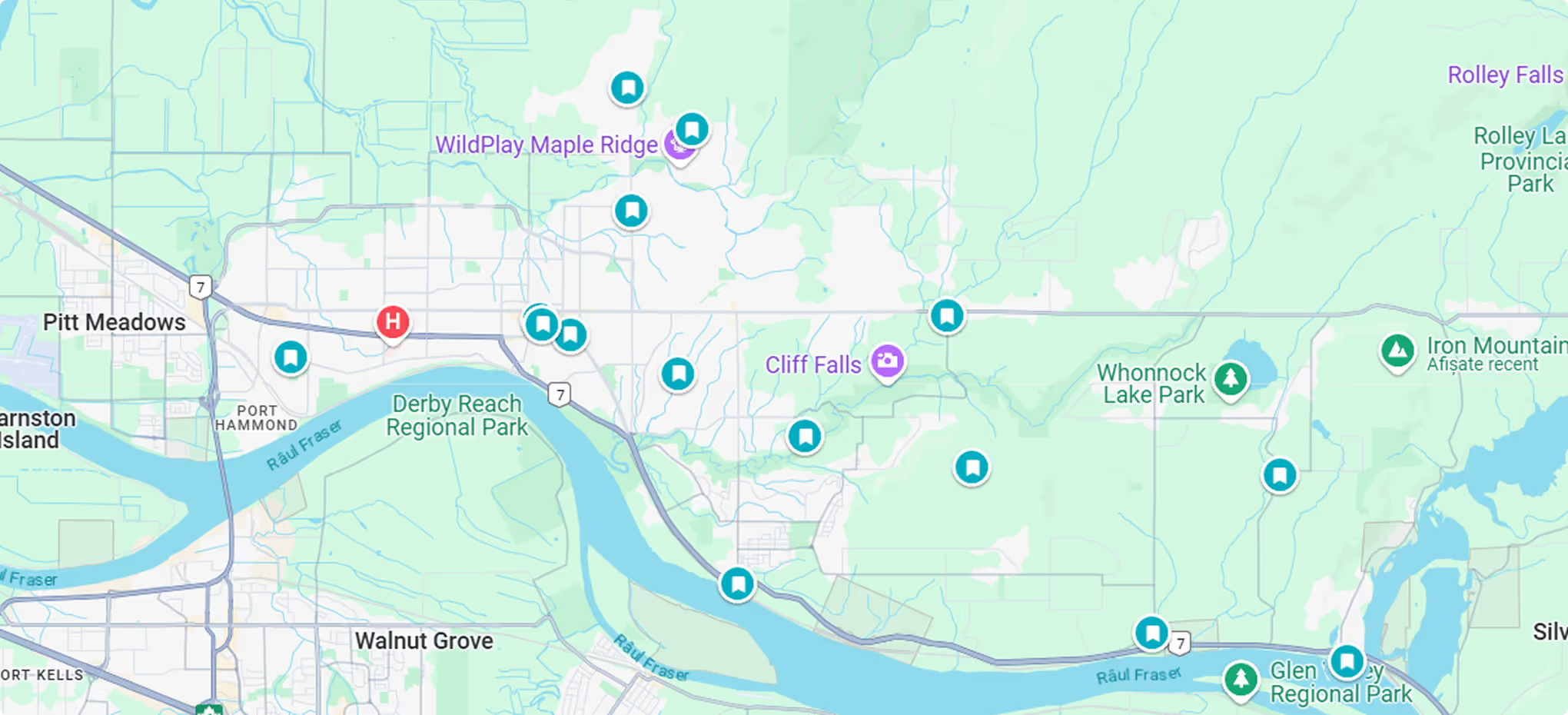
Neighbourhoods in the Fraser Valley