Correcting Improper PVC Exhaust Venting on High-Efficiency Furnaces
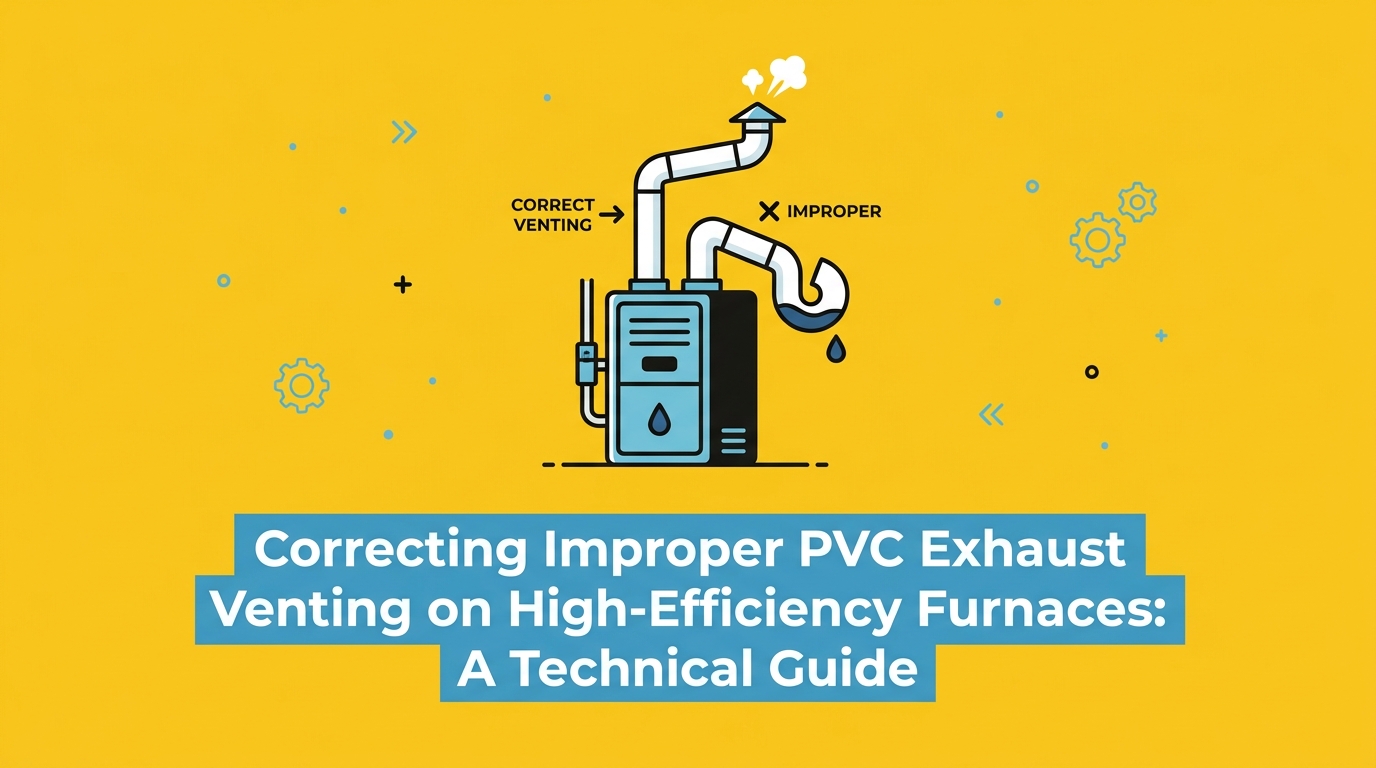
The Hidden Dangers of Cramped and Improper Furnace Venting
Your high-efficiency furnace is built to keep your home comfortable, but a sudden system lockout or strange gurgling noises from the pipes can quickly leave you shivering in the cold. Correcting improper PVC exhaust venting on high-efficiency furnaces is a critical step in restoring your system's reliability and protecting your home. In our years serving Mission BC neighborhoods like Silverdale and Heritage Park, the team at Rep-Air Heating and Cooling frequently sees exhaust pipes that are cramped, sagging, or poorly routed. When this happens, the moisture your system produces has nowhere to go, creating an immediate operational hazard. When these heating systems fail because of drainage issues, the right next step is calling in a professional to assess the layout. If you need help right away, exploring professional HVAC services is the safest path forward.
High-efficiency furnaces, also known as condensing furnaces, operate differently than older, standard-efficiency models. Instead of sending hot exhaust gases straight up a metal chimney, these advanced systems extract almost all the heat from the combustion process. This high level of heat extraction causes the exhaust gases to cool down rapidly before they leave your home. Because the gases are so cool, they can be safely vented outside using standard PVC piping rather than expensive metal flues.
However, this cooling process creates a significant byproduct: liquid condensation. During periods of heavy winter heating usage—especially during a classic Fraser Valley cold snap in January—a high-efficiency furnace can generate 5 to 6 gallons of water every single day. This water must flow continuously and smoothly out of the system through the PVC exhaust piping and dedicated drain lines.
The problem with cramped layouts: Rushed installations or tight utility rooms often result in PVC pipes that are squeezed together, routed with too many sharp turns, or installed without the necessary downward angle. When pipes are cramped or improperly routed, the condensation cannot drain away from the furnace. Instead, it pools inside the pipes, restricting the flow of exhaust gases and eventually backing up into the unit itself.
Correcting these flawed layouts is never a simple do-it-yourself adjustment. The routing of furnace exhaust is governed by strict safety codes designed to prevent lethal carbon monoxide from leaking into your living space. Ensuring that acidic condensation drains properly while safely expelling combustion gases requires precise measurements, correct pipe sizing, and a thorough understanding of venting physics.
The Chemistry of Condensation in High-Efficiency Systems
The Problem: Acidic Water Accumulation
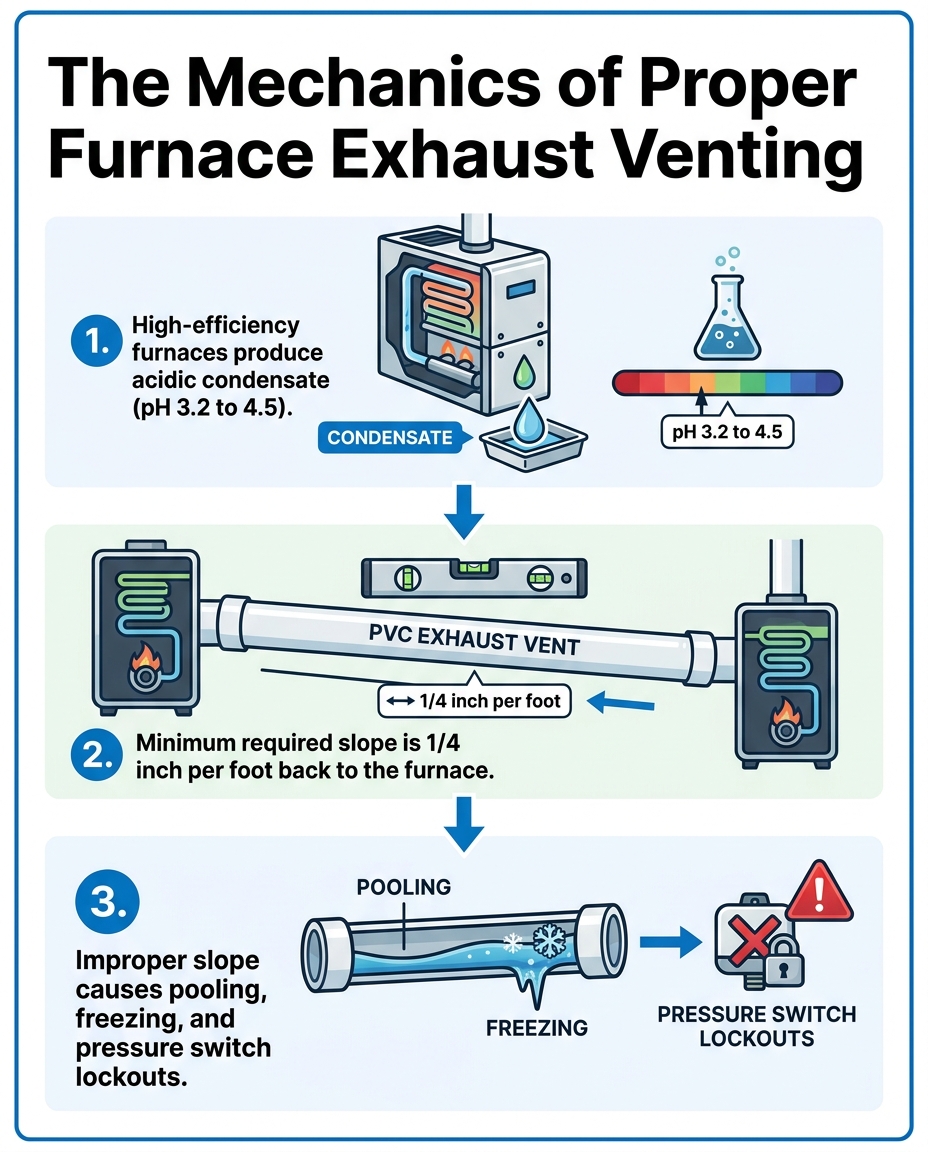
Most homeowners don't realize that the water dripping from their furnace exhaust isn't just pure, harmless condensation. The condensing process extracts heat until the combustion gases cool and turn into a liquid. This liquid byproduct is highly acidic, typically measuring between 3.2 and 4.5 on the pH scale. For context, this is roughly the same acidity level as a carbonated soft drink or grapefruit juice.
During heavy winter heating usage, the sheer volume of this acidic liquid is substantial. A furnace running continuously to combat freezing temperatures is constantly producing this condensate. If the PVC exhaust piping lacks the proper drainage angle, this corrosive water begins to pool inside the venting system instead of flowing safely to a floor drain or condensate pump.
The Cause: Backed-Up Corrosive Liquid
When improper venting prevents drainage, the acidic water has nowhere to go but backward. It flows down the PVC pipe and re-enters the internal components of the furnace. The primary and secondary heat exchangers inside your furnace are built to withstand high temperatures, but they are highly vulnerable to prolonged exposure to acidic moisture.
Component degradation: As the acidic water pools inside the furnace cabinet, it begins to corrode metal surfaces, rust out inducer motor housings, and damage sensitive electronic sensors. In our experience replacing older 90% AFUE models from the early 2010s, we frequently find that constant exposure has eaten through the secondary heat exchanger entirely. A compromised heat exchanger is a catastrophic failure that often requires completely replacing the furnace, as it poses a severe risk of carbon monoxide leaking into the home's air supply.
The Solution: Unobstructed Drainage Pathways
The only way to prevent this chemical degradation is to ensure the condensation flows out of the system as quickly as it is created. This requires a perfectly designed exhaust venting layout where gravity does the work of pulling the moisture away from the furnace internals. If you suspect your system is holding water or you notice rust forming around the base of your unit, reaching out for furnace repair and heating services is essential to halt the corrosion before it destroys the equipment.
Why the 1/4-Inch Slope Rule is Non-Negotiable
The core safety code governing high-efficiency furnace venting is straightforward but absolute: all horizontal venting requires a 1/4 inch per foot minimum slope back toward the furnace. This means that for a standard 20-foot horizontal run across your basement or crawlspace ceiling, the PVC pipe must rise by exactly 5 inches.
This rule relies on basic gravity drainage. Because the exhaust gases are being pushed outward by the inducer motor, the condensation forming inside the pipe needs a distinct, continuous downward path to flow back toward the furnace's internal drain trap. Even a slight deviation from this measurement can disrupt the entire drainage process.
The dangers of improper slope:
• Creation of water traps: A pipe that is perfectly level—or worse, sloped slightly downward away from the furnace—will allow acidic water to pool in the middle of the pipe.
• Restricted exhaust flow: As water pools, it reduces the internal diameter of the PVC pipe. This forces the furnace to work harder to push exhaust gases past the blockage, straining the inducer motor.
• Carbon monoxide risks: If the pipe becomes completely blocked by pooled water, the lethal exhaust gases cannot escape the home. While modern furnaces have safety switches to shut the system down in this scenario, relying on a safety switch as your only line of defense against carbon monoxide is incredibly dangerous.
Verifying this slope is not something that can be done simply by eyeballing the pipe. At Rep-Air Heating and Cooling, our technicians use specialized digital torpedo levels to ensure the 1/4 inch per foot minimum slope is maintained across the entire length of the vent run.
The Risks of Sagging and Unsupported Pipes
Even if a pipe was initially installed with the correct slope, it can develop drainage issues over time if it is not properly supported. PVC pipe becomes slightly flexible as it warms up from the exhaust gases. Without adequate pipe hangers spaced at the correct intervals, the weight of the pipe—combined with the weight of any water inside it—will cause it to sag between the supports.
Visual signs of sagging pipes:
• A visible "bow" or dip in the horizontal run of the PVC pipe across the ceiling.
• Water stains or dried white residue around the joints of the PVC pipe.
• Gurgling or splashing sounds coming from the ceiling when the furnace is running.
Attempting to prop up a sagging pipe with wood blocks, string, or wire is a dangerous temporary fix. Adjusting the pipe yourself can stress the glued PVC joints, causing them to crack and leak invisible carbon monoxide into your home. A licensed professional must install code-approved hangers to permanently secure the venting.

Navigating Cramped Pipe Layouts and Clearance Issues
One of the most common issues found in older homes upgraded to high-efficiency systems is a cramped venting layout. During rushed retrofits, installers often try to reuse existing pathways or squeeze the new PVC pipes into the tightest possible spaces in the utility room. This leads to pipes being installed too close together, with sharp elbows and insufficient clearances.
During a recent winter installation in a 1970s retrofitted home, a cramped utility room led to a situation where the intake and exhaust pipes were routed too close together. Our technician quickly identified the cross-contamination risk, corrected the issue with the pipes, and ensured the venting layout met strict clearance codes, fully resolving the installation problems and ensuring the system could breathe properly.
The mechanics of cross-contamination: High-efficiency furnaces typically use a two-pipe system: one pipe pulls fresh air in from outside for combustion, and the other blows the exhaust gases out. If the exterior vent terminations (where the pipes exit the side of the house) are placed too close together, the intake pipe will suck the exhaust gases right back into the furnace. This suffocates the combustion process, causing the furnace to burn inefficiently, produce excess soot, and eventually lock out.
Clearance codes dictate exactly how far apart these two pipes must be, how far they must protrude from the exterior wall, and how high they must be above the anticipated snow line. When a system suffers from these clearance violations, correcting the layout often involves rerouting the entire exhaust path to meet the 1/4 inch per foot minimum slope and establish safe exterior spacing. If you are dealing with a poorly designed utility room, fixing cramped pipe layouts from previous furnace installations requires careful planning and a thorough understanding of local building codes.
The Chain Reaction: Freezing Condensation and System Lockouts
The Problem: Vulnerability to the Cold
When acidic condensation pools inside an improperly sloped exhaust pipe, it creates a severe vulnerability during the coldest months of the year. With Mission BC's cool, damp winters and sudden cold snaps—where temperatures can plunge well below freezing in February—furnaces are forced to run continuously to maintain indoor temperatures. Because of this heavy winter heating usage, any pooled water sitting in the exterior vent terminations is highly susceptible to freezing overnight.
The Cause: Ice Blockages and Pressure Switches
As the pooled water freezes, it forms an ice plug inside the PVC pipe, completely blocking the exit pathway for the exhaust gases. Your furnace is equipped with a vital safety component called a pressure switch. The pressure switch constantly monitors the flow of air through the exhaust venting. It is calibrated to detect the exact amount of negative pressure created by the inducer motor pushing gases outside.
The lockout sequence:
1. The thermostat calls for heat, and the inducer motor turns on to clear the exhaust pipe.
2. The motor attempts to push air outward, but the ice plug blocks the flow.
3. The pressure switch detects the lack of airflow and immediately trips.
4. The furnace control board registers the tripped switch and halts the ignition sequence, preventing the gas valve from opening.
The Solution: Professional Assessment and Correction
This chain reaction is a built-in safety mechanism designed to prevent carbon monoxide from backing up into your home when the vent is blocked. However, it leaves your household completely without heat during critical cold snaps. Thawing the ice with a hairdryer is only a temporary band-aid; the water will simply pool and freeze again the next night. The only permanent solution is to have a professional correct the slope of the pipe so the water drains before it can freeze. Ensuring your system is ready for winter requires reliable heating services in Chilliwack and the surrounding areas to verify your venting is up to code.
Why Venting Corrections Demand Licensed Expertise
It cannot be overstated: the exhaust venting on your furnace carries lethal, odorless carbon monoxide gas. Any leak resulting from a botched DIY repair or an improperly glued PVC joint is a severe hazard to your family's safety. This is why adjusting, cutting, or rerouting furnace venting should never be attempted by a homeowner.
Professional venting corrections involve complex calculations that go far beyond simply looking at a level. Licensed technicians must calculate the "equivalent length" of the venting system. Every elbow, bend, and fitting in the PVC pipe adds resistance to the exhaust flow. For instance, our team knows that every 90-degree long-sweep elbow in a 2-inch PVC pipe adds 5 feet of equivalent length to the exhaust run. A technician must calculate the total equivalent length to ensure it does not exceed the maximum distance allowed by the furnace manufacturer's specifications, all while maintaining the 1/4 inch per foot minimum slope.
These strict venting principles apply not just to furnaces, but to other high-efficiency condensing equipment as well, such as tankless water heaters and boiler systems. Improper installation on any of these units carries the same risks of acidic degradation and hazardous exhaust leaks.
Rep-Air Heating and Cooling's strict adherence to safety codes and meticulous installation standards serves as the ultimate protection against acidic damage and carbon monoxide risks. A professional correction ensures that the right materials are used, the slope is perfectly calibrated, and the system operates safely, protecting both your household and the manufacturer's warranty on your equipment.
Next Steps for Suspected Venting Issues
If you suspect your high-efficiency furnace is suffering from improper venting, the best course of action is visual observation from a safe distance. Look for the common visual signs: cramped pipes squeezed tightly together, sagging horizontal lines across your ceiling, dried water stains around PVC joints, or water pooling around the base of the furnace cabinet.
If you notice any of these symptoms, or if your furnace is repeatedly locking out during cold weather, do not attempt to adjust the pipes or clear blockages yourself. A licensed assessment is the only way to ensure the system meets the critical 1/4 inch per foot minimum slope requirement and operates safely. Reach out to a local HVAC expert to evaluate your venting layout, correct any clearance issues, and restore your system to safe, code-compliant operation.
Frequently Asked Questions
What is the proper slope for furnace exhaust?
The proper slope for horizontal furnace exhaust venting is a minimum of 1/4 inch per foot back toward the furnace. This precise downward angle ensures that the acidic condensation produced during the heating process drains away via gravity. Without this slope, water will pool in the pipes and eventually cause the system to lock out.
Why is water leaking from my furnace exhaust pipe?
Water leaking from the exhaust pipe usually indicates that the PVC joints were improperly glued, the pipe has suffered physical damage, or the line lacks the proper slope, causing water to pool and seek an exit. Because this water is highly acidic, it can cause significant damage to the surrounding area and the furnace itself. A licensed technician must repair the leak and correct the underlying drainage issue.
Can you use regular PVC for high efficiency furnace venting?
While standard Schedule 40 PVC is commonly used and permitted by many local codes for high-efficiency furnace venting, specific requirements can vary based on the manufacturer and regional safety regulations. In some jurisdictions or for certain furnace models, specialized venting materials like System 636 CPVC are required to handle specific exhaust temperatures. Always rely on a licensed professional to select the code-compliant material for your specific installation.
How do you fix a sagging PVC vent pipe?
Fixing a sagging PVC vent pipe requires installing proper pipe hangers at specific intervals to support the weight of the pipe and maintain the required 1/4 inch per foot slope. Homeowners should never attempt to prop up the pipe with temporary supports, as moving the pipe can stress and crack the joints, leading to carbon monoxide leaks. A professional must assess the entire run and install permanent, code-approved supports.
Why does my high-efficiency furnace lock out during a cold snap?
During a cold snap, a high-efficiency furnace runs continuously, producing large amounts of condensation that can pool inside improperly sloped exterior vent pipes. When temperatures drop below freezing, this pooled water turns to ice, blocking the exhaust flow. The furnace's internal pressure switch detects this blockage and triggers a safety lockout to prevent carbon monoxide from backing up into the home.
Ready to ensure your furnace is venting safely? Understanding exactly why acidic condensation must drain properly and what correct slope and clearance look like is the first step in protecting your home. When you recognize the signs of cramped or sagging pipes, the safest choice is relying on a licensed HVAC professional to safely correct the venting. Schedule an assessment today to secure your system's reliability and your family's safety.
hear what our satisfied clients have to say
Neighbourhoods in the Fraser Valley