Future-Proofing Your Newly Built Mission Home with a 400 Amp Electrical Service
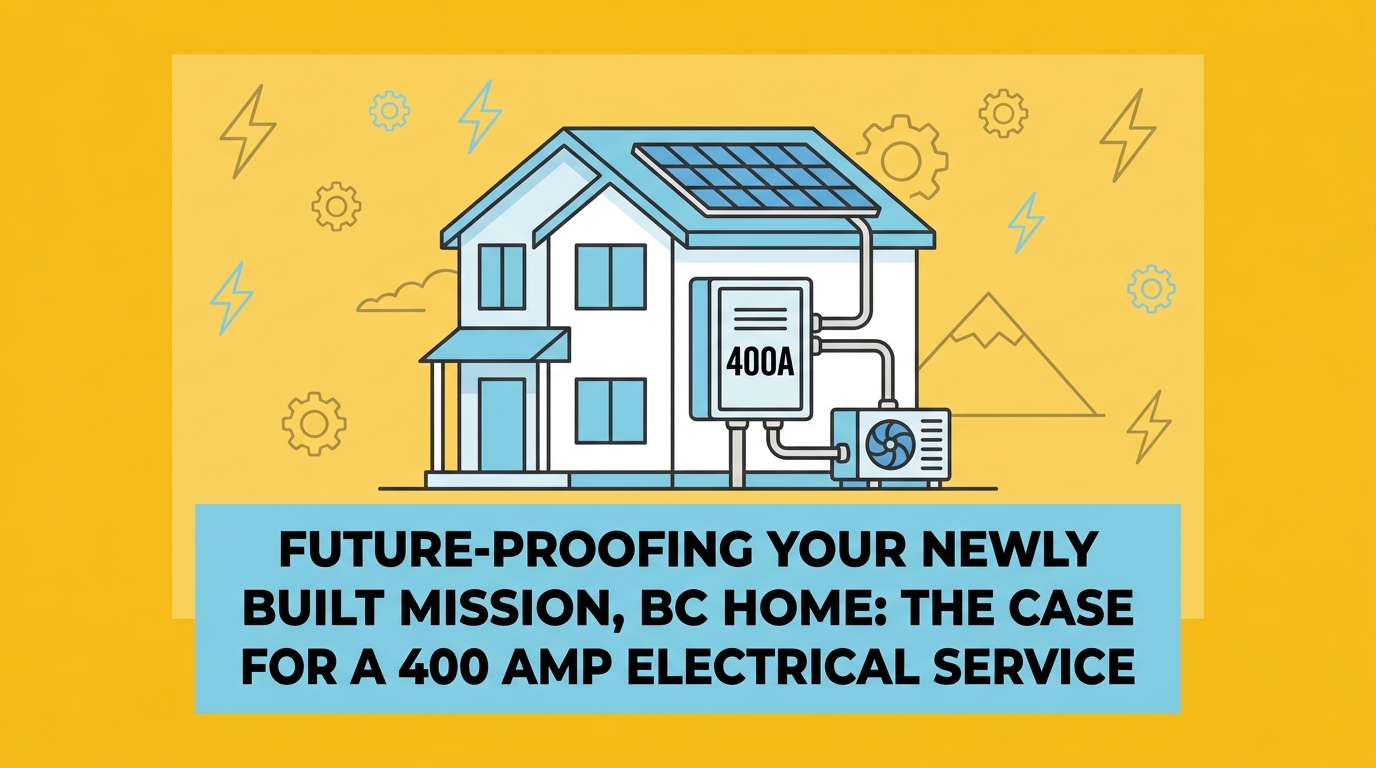
The Hidden Bottleneck in Modern Custom Home Design
You are finalizing the blueprints for your dream property, but a critical utility decision is quietly looming behind the drywall. Future-Proofing Your Newly Built Mission Home with a 400 Amp Electrical Service is a foundational choice you must make before the first sheet of drywall goes up. Most homeowners focus on the exciting aspects of new construction—like selecting granite countertops, finalizing floor plans, and choosing paint colors. However, the invisible infrastructure powering those spaces dictates how you will actually live in the home for decades to come.
In our years of providing expert HVAC and electrical solutions, our team at Rep-Air Heating and Cooling frequently sees a core problem arise when builders default to a standard 200 amp electrical panel. While 200 amps meets the basic minimum requirements of current building codes, it quickly becomes a severe bottleneck for modern electrification. If you are planning to utilize comprehensive home comfort services, a standard panel simply does not leave enough overhead for future additions.
The reality of modern power consumption: We are seeing a massive shift in how homes consume energy. Gas appliances are being phased out in favor of electric alternatives, and transportation is moving rapidly toward the grid. Throughout Mission BC new custom home developments, homeowners who settle for standard 200 amp services frequently call us just a few years after moving in, frustrated that they are unable to add essential upgrades.
Upgrading to a 400 amp service during the initial build is no longer an extravagant luxury; it is a practical necessity. By making this decision early, you ensure your property has the robust electrical backbone required to handle everything from advanced climate control to electric vehicles, without forcing you into complex and disruptive panel upgrades down the road.
The Framing Stage: Your Critical Window of Opportunity
The problem: Upgrading an electrical panel after a house is fully constructed is an incredibly disruptive and messy process. Many homeowners assume they can simply swap out a metal box in the garage later if they need more power, but increasing your total service capacity requires far more than a new panel.
The cause: Once a home is finished, the main service lines, conduits, and heavy-gauge wiring are completely buried. They sit behind finished drywall, beneath exterior siding or brick cladding, and underneath poured concrete driveways and permanent landscaping. To increase the incoming power from the utility grid, crews often have to trench through your finished yard, tear open walls, and coordinate complex utility shutoffs. This causes massive scheduling delays and structural tear-downs that ruin the pristine finish of your property.
The solution: The framing and rough-in stage is your critical window of opportunity. During this phase, the walls are entirely open, the trenches for utilities are already dug, and the exterior cladding has not yet been installed. Upgrading your service size right now is a straightforward material and planning choice. It requires thicker wire, a larger meter base, and a higher-capacity panel, but the labor and installation process is virtually identical to installing a standard system.
Proactive planning avoids these future headaches entirely. By coordinating with your builder and our electrical team early on, you can ensure your infrastructure complies seamlessly with Mission's electrical permitting process and handles future loads. Across Mission BC new custom home developments, we always recommend completing this upgrade while the studs are still bare—it is the single smartest logistical move you can make for your property's long-term viability.
Why 200 Amps is No Longer Enough for Modern HVAC Demands
Our technicians know firsthand that Mission BC experiences distinct seasonal shifts, moving from freezing winter mornings to hot, humid summer afternoons. This climate increasingly drives our customers to adopt high-efficiency, high-draw electric heat pumps for year-round comfort. While these systems are incredibly efficient, we constantly remind homeowners that they require robust electrical infrastructure to operate safely and effectively during extreme weather spikes.
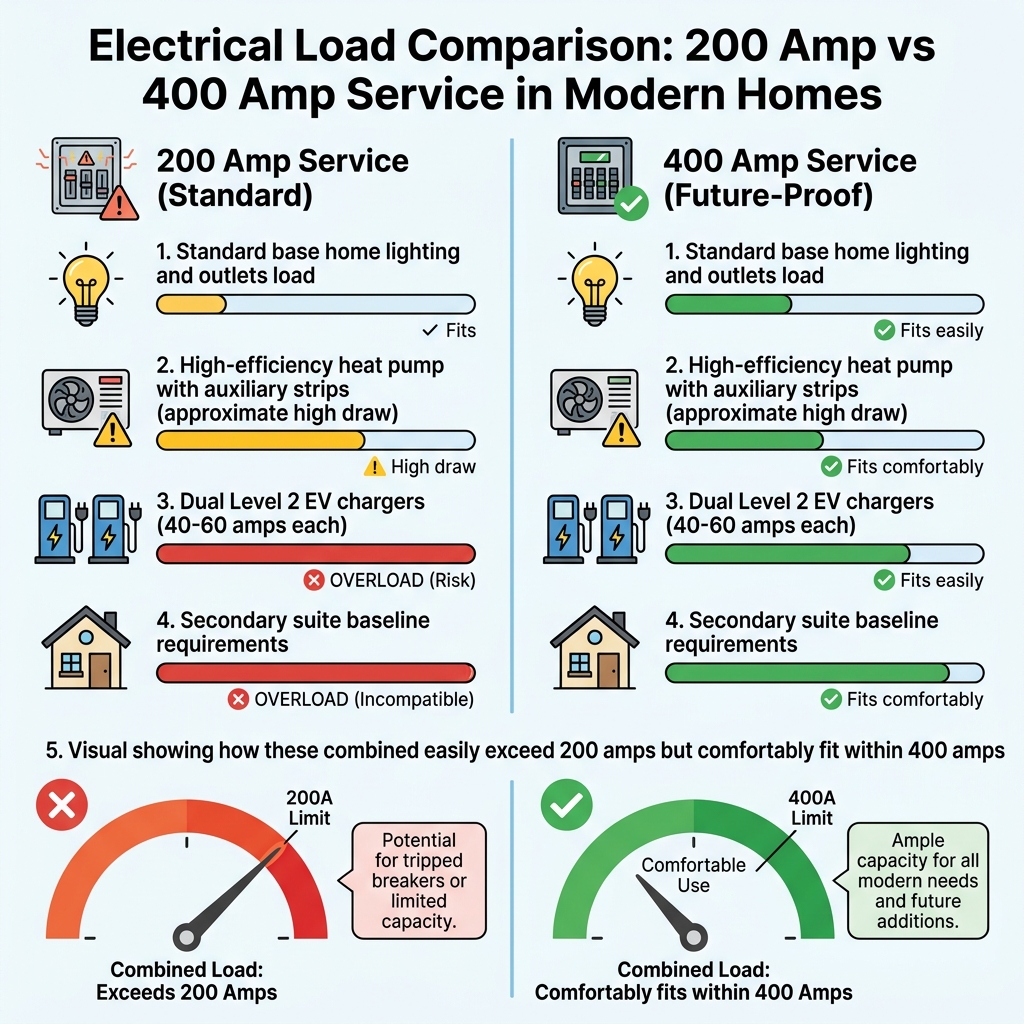
Building codes require strict electrical load calculations for every new property. These calculations add up the amperage of your lighting, standard outlets, and major appliances to ensure the main panel is never overloaded. In our load calculation assessments, high-efficiency heat pump systems and dual EV chargers consume a massive percentage of a standard 200 amp panel's total capacity, leaving very little room for anything else.
When you opt for a comprehensive heat pump installation, the system often requires dedicated circuits for both the outdoor compressor and the indoor air handler. Furthermore, modern units utilize auxiliary electric heating strips to maintain indoor temperatures during severe cold snaps. These backup strips demand significant dedicated amperage to function safely.
Calculating the Draw of High-Efficiency Systems
To understand why a standard panel falls short, you have to look at the numbers. The shift away from fossil fuels toward full home electrification means that core comfort systems are now pulling heavily from your electrical grid.
• High-Efficiency Heat Pump (Outdoor Unit) — Typical Dedicated Circuit Requirement: 30 to 50 Amps — Impact on a 200 Amp Panel: Consumes up to 25% of total capacity
• Air Handler with Auxiliary Heating Strips — Typical Dedicated Circuit Requirement: 60 to 80 Amps — Impact on a 200 Amp Panel: Major draw during winter cold snaps
• Electric Water Heater — Typical Dedicated Circuit Requirement: 30 Amps — Impact on a 200 Amp Panel: Constant baseline draw
• Electric Range / Induction Cooktop — Typical Dedicated Circuit Requirement: 40 to 50 Amps — Impact on a 200 Amp Panel: Heavy draw during meal preparation
As you can see, just powering your core HVAC and daily appliances easily pushes a standard 200 amp panel near its safe operating limits. If you live in one of the many Mission BC new custom home developments, trying to squeeze these essential systems onto a standard service restricts your ability to add any future lifestyle upgrades.
Supporting EV Chargers, Secondary Suites, and Lifestyle Upgrades
Beyond heating and cooling, modern homes in the Fraser Valley are evolving to support new technologies and multi-generational living arrangements. A 400 amp service provides the necessary overhead for all these simultaneous demands.
1. Level 2 Electric Vehicle Charging: The transition to electric vehicles is accelerating rapidly. A standard Level 1 charger (plugging into a regular wall outlet) is too slow for daily commuting. Level 2 EV chargers require dedicated 40 to 60-amp circuits each. If your household plans to run high-efficiency heat pump systems and dual EV chargers simultaneously, a 200 amp panel will immediately overload.
2. Secondary Suites and Coach Houses: Local development guidelines in Mission frequently encourage the construction of secondary suites to increase housing density. A legal suite requires its own kitchen (electric range), its own laundry facilities (electric dryer), and often its own supplemental heating. This inherently demands a higher total property electrical capacity that only a 400 amp service can safely supply.
3. High-Draw Lifestyle Additions: Custom homes often feature luxury amenities that consume significant power. Hot tubs, heated swimming pools, large induction ranges, and dedicated backyard workshops all require heavy dedicated circuits.
4. Future-Proofing for Tomorrow: Technology moves faster than housing infrastructure. By installing a 400 amp service, you are building in a buffer for technologies that may become standard over the next decade. We want to ensure you never have to choose between charging your car and running your air conditioning.

Holistic Planning: Aligning Your HVAC and Electrical Strategy
Electrical service size is a foundational architectural strategy, not just a minor code requirement to be checked off a list. To build a truly resilient home, you must coordinate between your builder, your HVAC installer, and your electrical team early in the design phase. Precision, clear communication, and professional execution from start to finish are vital when mapping out your property's infrastructure.
Coordination and empathy matter deeply to us when navigating a new build. For example, our team recently had a local homeowner reach out during the summer needing an earlier appointment due to a newborn and a wife recovering from a C-section. We immediately expedited the schedule to accommodate their urgent family situation. We apply that exact same level of responsive, proactive care to coordinating your new build's infrastructure. We know that delays in utility planning can derail your entire construction timeline.
This is where expert local guidance makes all the difference. Navigating the intersection of high-demand HVAC electrification and specific new construction electrical requirements in the Fraser Valley requires deep experience. By integrating your residential electrical services with your climate control planning, you eliminate guesswork.
Future-proofing means building for the technologies of the next decade, not just settling for today's minimums. In Mission BC new custom home developments, taking a holistic approach ensures that your home will remain comfortable, safe, and fully capable of supporting your family's evolving lifestyle for years to come.
Frequently Asked Questions About New Build Electrical Capacity
Do I need a 400 amp service for a new custom home?
The short answer is that while it is not legally mandated, our team highly recommends it for modern properties. If you plan to install high-efficiency heat pump systems and dual EV chargers, a standard panel will quickly run out of capacity. Upgrading during the framing stage provides the necessary overhead for future electrification without requiring disruptive renovations later.
Is 200 amps enough for a heat pump and an EV charger?
It depends entirely on the rest of your home's electrical load, but it is usually a very tight squeeze. A high-efficiency heat pump and a single Level 2 EV charger can consume over half of a 200 amp panel's total capacity. Once you add an electric water heater, induction stove, and standard household appliances, you risk overloading the main breaker.
What happens if I outgrow a standard 200 amp panel?
If you outgrow your panel, you will face a complex and labor-intensive retrofit process. This usually involves trenching through your finished landscaping to upgrade the main utility lines, tearing open finished drywall, and replacing the entire meter base and panel. Proactive planning with our team during the framing stage avoids this entirely.
What modern appliances require a 400 amp service to run simultaneously?
Running multiple high-draw systems at once is the primary reason to upgrade. If your family is charging two electric vehicles, running a whole-home heat pump with auxiliary strips, operating an electric oven, and heating a hot tub all at the same time, a 200 amp service will likely trip. A 400 amp service ensures these systems operate simultaneously without issue.
Does adding a secondary suite in Mission BC require an electrical service upgrade?
Adding a secondary suite almost always pushes a property's total electrical load beyond standard limits. Because a legal suite requires its own dedicated kitchen appliances, laundry facilities, and supplemental heating, the combined load of the main house and the suite makes a 400 amp service the most reliable and compliant choice.
Take the Next Step in Planning Your Custom Build
Deciding on your electrical infrastructure is one of the most critical choices you will make during the construction process. A 400 amp upgrade at the framing stage is the smartest logistical choice for long-term comfort and safety. By securing this capacity early, you ensure your home can effortlessly support high-efficiency HVAC systems, electric vehicles, and future lifestyle additions.
Proactive planning prevents incredibly disruptive future retrofits. If you are currently designing a property in any of the Mission BC new custom home developments, now is the time to finalize your utility strategy. We encourage you to reach out to our experts at Rep-Air Heating and Cooling to map out your new build's infrastructure, ensuring your home is fully prepared for whatever the future holds.
hear what our satisfied clients have to say
Neighbourhoods in the Fraser Valley