Flushing Your Hydronic Heating Lines: Why Annual Water Quality Checks Matter
Is Black Sludge Threatening Your Boiler's Efficiency?
Are you hearing strange banging noises from your utility room, or noticing that your radiant floors simply aren't as warm as they used to be? If you are researching Flushing Your Hydronic Heating Lines: Why Annual Water Quality Checks Matter, you likely already suspect that black sludge is quietly threatening your boiler's efficiency from the inside out. Most homeowners assume that the water inside their heating system is just like the water coming out of their kitchen faucet. In reality, the fluid circulating through your baseboards and radiant tubes is a completely different environment.
Hydronic heating relies on a closed-loop system. When operating correctly, the same water cycles through the pipes for years. However, when the water quality degrades, a heavy, black, sludgy substance known as magnetite begins to form. This sludge settles into the lowest points of the piping and aggressively coats the internal components of the boiler. Left unchecked, this sludge acts as an insulator, blocking heat transfer and forcing the entire system to work harder to achieve the same indoor temperatures.
Addressing this concrete problem requires a decisive approach. Diagnosing the issue is the first step, but the long-term solution involves understanding the necessity of a professional line flush and the installation of a magnetic dirt separator. By prioritizing comprehensive heating services that focus on internal water quality rather than just external hardware, you protect the heart of your home's climate control system. Modern high-efficiency boilers are engineering marvels, but they absolutely require pristine water conditions to deliver the comfort and longevity they were designed to provide.
Understanding Magnetite: The Invisible Enemy of Modern High-Efficiency Boilers
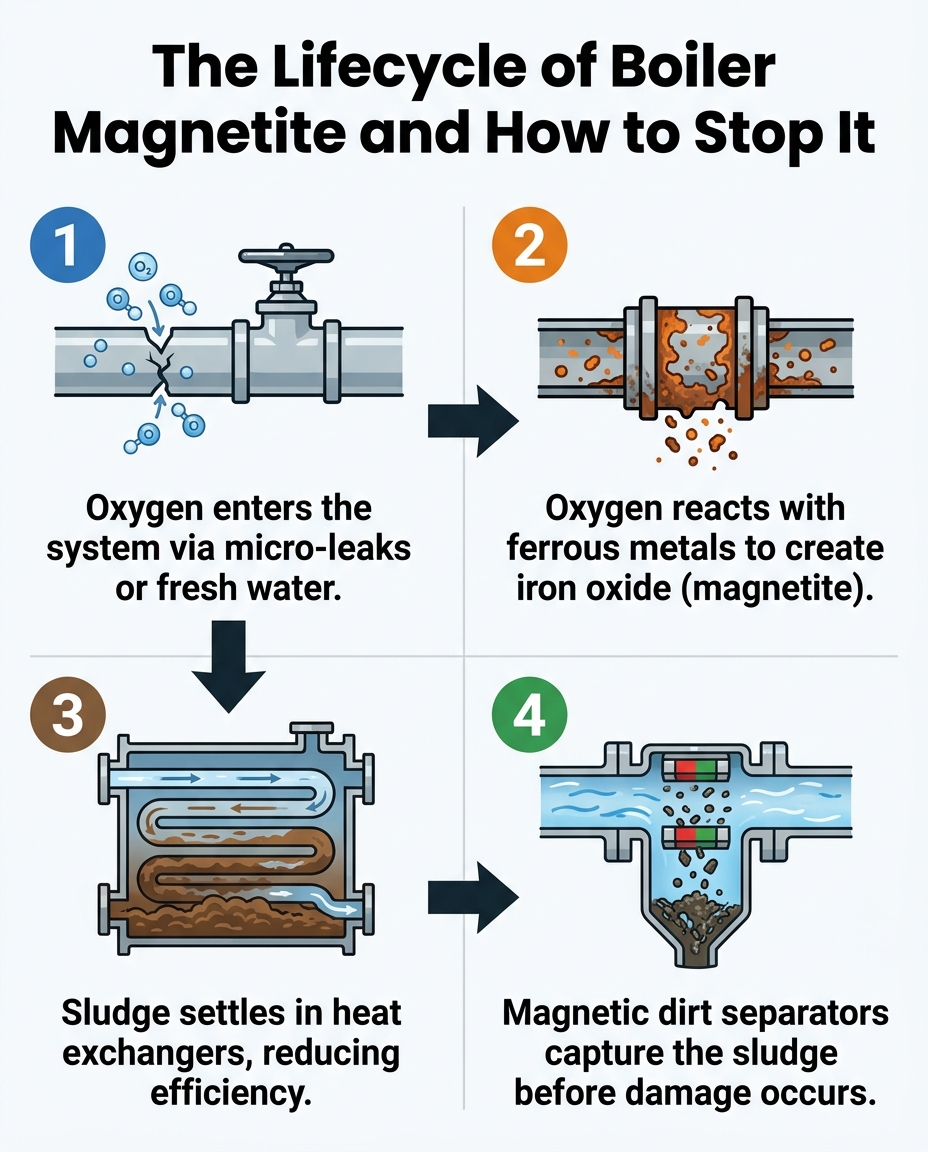
To protect your investment, you must first understand the science behind the sludge. Magnetite is a specific form of black iron oxide. It is not dirt from the outside municipal water supply; rather, it is a byproduct created inside your plumbing when oxygen reacts with the ferrous (iron-bearing) metal components of the closed-loop system. While older, cast-iron boilers had massive water passageways that could tolerate a fair amount of sludge buildup, modern high-efficiency boilers are built very differently.
Today's advanced systems achieve their impressive energy ratings by using heat exchangers with incredibly narrow, intricate pathways. These tight channels maximize the surface area for heat transfer, but they also make the system highly vulnerable to blockages. When magnetite circulates through these narrow passages, it acts like liquid sandpaper before eventually settling and baking onto the heat exchanger walls. Even a single millimeter of scale or sludge can drastically reduce heat transfer efficiency, forcing the burner to run longer and hotter to compensate. This is a fundamental chemical reality of hydronic systems, not a sign of a defective unit. Protecting against it requires dedicated boiler maintenance and service.
How Iron Oxide Forms in Closed Loops
Microscopic air bubbles: Oxygen is the catalyst for magnetite. It typically enters the system through microscopic air bubbles introduced during the initial filling of the boiler, or slowly over time through micro-leaks around valves and fittings.
The chemical reaction: Once dissolved oxygen is present in the water, it reacts continuously with the steel and iron components of the system. This oxidation process breaks down the metal, creating microscopic rust particles that eventually turn into dense, black iron oxide sludge.
The Impact on Heat Exchangers
Sludge settling: Because magnetite is heavier than water, it naturally settles in the lowest points of the system, such as basement baseboards, radiant floor loops, and the bottom of the boiler itself.
Blockages and premature failure: As the sludge accumulates inside the heat exchanger, it restricts water flow. This causes localized overheating, which can lead to structural stress fractures, kettling noises, and ultimately, premature failure of the boiler's most expensive component.

Warning Signs Your Hydronic Heating System Needs a Flush
Because hydronic piping is hidden behind walls and under floors, you cannot visually inspect the water quality on a daily basis. Instead, the system will exhibit specific operational symptoms as magnetite builds up. Recognizing these early warning signs allows you to address the water quality before the heat exchanger suffers permanent damage. If you notice any of the following behaviors, it usually means the system is struggling with internal sludge:
• System noise (Kettling): If your boiler sounds like a boiling tea kettle, popping, banging, or bubbling, this is known as kettling. It happens when sludge restricts water flow, causing the trapped water to boil locally inside the heat exchanger.
• Cold spots on radiators: Magnetite settles at the bottom of baseboard heaters and radiant panels. If the top of the radiator is hot but the bottom remains cold, sludge is blocking the lower channels.
• Frequent pressure drops: If you find yourself constantly bleeding air from the radiators or wondering why your hydronic heating system is losing pressure, the system may be venting gas created by internal corrosion.
• Unusually high energy bills: Because sludge acts as a thermal insulator, the boiler must burn significantly more fuel to push heat through the magnetite layer and into your home.
• Discolored bleed water: When bleeding a radiator, the water should ideally run clear. If the water comes out dark brown or pitch black, the system is heavily contaminated with iron oxide.
Objective Diagnostics: Moving Beyond the Basic Boiler Wipe-Down
Not all boiler maintenance is created equal. A standard, generic tune-up often consists of little more than cleaning the burner assembly, checking the ignition sequence, and wiping down the exterior cabinet. While these steps are necessary, they completely ignore the most critical factor in a hydronic system's longevity: the internal water quality. True objective diagnostics require moving beyond the surface to scientifically evaluate what is circulating inside the pipes.
A comprehensive water quality check entails extracting a sample of the system fluid and running specific chemical tests. Technicians measure the pH levels to ensure the water is neither too acidic nor too alkaline, both of which accelerate corrosion. They check the concentration of chemical inhibitors to verify the system still has active protection against oxidation. Finally, they inspect the sample for suspended solids and total dissolved solids (TDS) to quantify the amount of magnetite present. Taking the time to explain these maintenance steps empowers the homeowner to make informed decisions based on data, rather than guesswork.
This commitment to thorough, objective diagnostics is a core differentiator for our team at Rep-Air Heating and Cooling. Recently, we demonstrated this exact standard of transparency with a local homeowner during a spring gas line installation and stove hook up. When the project proved significantly more complicated than initially anticipated, our technician completed the job honoring the initial estimate, ensuring everything was done safely and correctly without unexpected fees. That same dedication to doing the job right applies to our hydronic heating diagnostics—we rely on hard testing data to catch magnetite before it causes a catastrophic boiler failure.
• Visual inspection of exterior cabinet — Objective Water Quality Diagnostic: Extraction and chemical testing of system fluid
• Cleaning burner and ignition sensors — Objective Water Quality Diagnostic: Measuring pH levels and inhibitor concentration
• Checking basic system pressure — Objective Water Quality Diagnostic: Testing for suspended solids (magnetite)
• Provides no insight into internal pipe health — Objective Water Quality Diagnostic: Identifies sludge before heat exchanger fails
How Magnetic Dirt Separators Provide Permanent Protection
While a professional power flush is highly effective at removing existing sludge from your piping, it is ultimately a reactive measure. To truly protect modern high-efficiency boilers, you need a proactive, permanent solution. This is where magnetic dirt separators come into play. Instead of waiting years for sludge to build up to dangerous levels, a magnetic separator actively filters the water 24 hours a day, 7 days a week.
The mechanics of magnetic filtration: A magnetic dirt separator is installed directly onto the return line of the boiler, meaning all water must pass through it before re-entering the sensitive heat exchanger. Inside the brass or composite housing sits a highly powerful neodymium magnet. As the water flows past, the magnet aggressively pulls microscopic iron oxide particles out of suspension, trapping them safely against the core. This prevents the abrasive sludge from ever reaching the boiler's narrow internal pathways.
Effortless ongoing maintenance: Relying on a one-time flush leaves the system vulnerable as new oxygen slowly enters over the years. A magnetic separator provides continuous defense. Furthermore, cleaning the separator is remarkably simple for our professional technicians. During your annual maintenance visit, we simply remove the external magnetic sleeve, allowing the trapped sludge to fall to the bottom of the housing, where it is drained out via a quick-release valve. The entire system does not need to be shut down or drained. Positioning a magnetic separator on your system is an investment that drastically extends the life of the boiler's heat exchanger.
Why the Pre-Winter Heating Season is the Critical Testing Window
Timing matters when it comes to boiler maintenance. The pre-winter heating season is the absolute most critical window to test your hydronic water quality and flush the lines if necessary. Throughout the summer, when the heating system sits idle, suspended particles of iron oxide have months to settle and compact at the bottom of pipes and radiators. When the system fires up for the first time in autumn, it pushes against these newly solidified blockages.
Continuous winter operation accelerates sludge buildup. As the boiler runs constantly to combat freezing outdoor temperatures, the rapid heating and cooling cycles stress the system. If magnetite is already coating the heat exchanger, the metal will overheat, expanding and contracting unevenly until it cracks. Identifying and flushing magnetite before the deep cold sets in prevents catastrophic mid-winter breakdowns when you need your heat the most.
This urgency is especially true given our local climate. In our years of keeping homes warm through the damp, cold winters experienced in Mission BC, our team at Rep-Air Heating and Cooling knows that a reliable, continuous hydronic heating system is non-negotiable for indoor comfort and managing home humidity. A mid-January boiler failure due to a clogged heat exchanger leaves the home dangerously cold and risks freezing the very pipes that distribute the heat. Connecting seasonal testing to long-term system reliability is why enrolling in an annual maintenance plan is the smartest move a homeowner can make before the frost arrives.
The Risks of DIY Flushing and Why Professional Expertise is Required
With countless online videos showing homeowners how to bleed a radiator, it can be tempting to view a full system flush as a weekend DIY project. However, flushing a hydronic line is entirely different from draining a standard hot water tank, and attempting it without professional expertise can easily destroy your boiler. This is strictly a job for licensed professionals.
First, professional power flushing requires specialized, heavy-duty equipment. When our technicians perform a power flush, we connect a high-velocity pumping station to the system, which pushes water and cleaning chemicals through the lines at a flow rate far higher than the boiler's internal circulator pump could ever achieve. This high-velocity flow is the only way to dislodge compacted sludge from the narrow heat exchanger pathways and complex radiant floor loops. A simple gravity drain from a spigot will leave the vast majority of the heavy magnetite sitting right where it is.
Furthermore, flushing the system is only half the job. Once the lines are clean, the system must be refilled and treated with the correct chemical corrosion inhibitors. This requires precise measurement based on the total water volume of the specific system. If the inhibitor concentration is too low, the system will immediately begin rusting again. Even worse, improper DIY flushing often introduces massive amounts of fresh, oxygen-rich municipal water into the loop without properly purging the air. This sudden influx of oxygen acts like gasoline on a fire, rapidly accelerating magnetite formation and causing more damage than if the system had been left alone entirely.
Frequently Asked Questions About Hydronic Line Flushing and Water Quality
What is the black sludge in my boiler?
The black sludge in your boiler is magnetite, a highly abrasive form of iron oxide. It is caused by dissolved oxygen reacting chemically with the ferrous metal components inside your closed-loop heating system. Over time, this microscopic rust aggregates into a dense, heavy sludge that settles in radiators and heat exchangers, severely restricting water flow and reducing the system's heating efficiency.
Are magnetic dirt separators necessary?
Yes, magnetic dirt separators are highly recommended, especially for modern high-efficiency boilers. These devices use powerful magnets to continuously pull microscopic iron particles out of the circulating water before they can reach the boiler. By capturing this abrasive sludge 24/7, a magnetic separator permanently protects the narrow pathways of the heat exchanger from blockages and premature failure.
How often should hydronic heating lines be flushed?
The frequency of a full system flush depends entirely on the water quality test results gathered during your annual maintenance visit. While a full power flush is typically only required every few years, the water quality itself must be checked annually. If the pH levels are balanced and chemical inhibitors are strong, a flush may not be needed; if magnetite is present, a flush should be scheduled immediately.
Why is my boiler kettling?
Your boiler is kettling because scale and sludge buildup has restricted the water flow inside the heat exchanger. When the water cannot move quickly enough through the heated pathways, it boils locally, expanding into steam bubbles that collapse and cause loud banging, popping, or bubbling noises. Kettling is a severe warning sign that the heat exchanger is overheating and requires immediate professional diagnostics.
Can I just add fresh water to my hydronic system?
No, adding fresh water to a hydronic system introduces new, dissolved oxygen into the closed loop. More oxygen leads directly to more internal corrosion and accelerated magnetite formation. While a system automatically tops itself off slightly via a pressure reducing valve if pressure drops, manually adding fresh water is never a solution for sludge and will actively harm the boiler.
Will a system flush fix a broken heat exchanger?
No, a system flush is strictly a preventative measure designed to remove sludge before damage occurs. If a heat exchanger has already cracked, warped, or failed due to severe magnetite blockages and localized overheating, flushing the lines will not repair the structural damage. In these cases, the heat exchanger—or the entire boiler—must be replaced.
Protect Your Hydronic Heating System Before Winter Arrives
Ultimately, understanding hydronic water quality is the single most important key to ensuring a long-lasting, efficient boiler. The black sludge known as magnetite is an invisible enemy, but it is entirely preventable. By moving away from the mindset that boilers are maintenance-free, you can take control of your home's comfort and energy efficiency.
A professional power flush combined with the installation of a magnetic dirt separator permanently solves magnetite issues, protecting the delicate internal components of modern high-efficiency systems. Do not wait for kettling noises or cold radiators to tell you there is a problem. Schedule an objective water quality diagnostic before the heavy heating season begins, and enjoy the peace of mind that comes with a clean, fully optimized heating system.
hear what our satisfied clients have to say
Neighbourhoods in the Fraser Valley