Do I Need a 400 Amp Panel? Understanding Heat Pumps, EVs, and Home Electrification

That Hissing Sound and Lukewarm Air: A Winter Electrification Mystery
Your heat pump is running nonstop, but the house still feels chilly, and there is a loud hissing sound coming from the yard—a scenario that often prompts frantic searches for home maintenance tips and troubleshooting. You step outside and see a cloud of steam rising from the outdoor unit. At Rep-Air Heating and Cooling, we regularly field panicked calls from homeowners facing their first Pacific Northwest damp winter with a new heating system, because to them, this looks exactly like a mechanical emergency. You might wonder if a refrigerant line just burst or if the compressor has completely failed.
The short answer is that your equipment is likely functioning exactly as designed. However, this perfectly normal mechanical behavior is heavily tied to your home's overall electrical system and power demand. What looks like a simple heating quirk is actually the hidden trigger for massive electrical spikes. As you modernize your home with high-efficiency heating and electric vehicles, these sudden power demands drastically change your residential electrical requirements. Understanding why this happens is the first step in determining if your current electrical infrastructure can handle the load, or if you need professional home heating and electrical services to safely upgrade your capacity.
The Mechanical Reality: Why Your Heat Pump Needs a Defrost Cycle
Before we look at your electrical panel, we have to look at the physics of outdoor air. A heat pump works by extracting ambient heat from the outside air and moving it indoors. To do this, the refrigerant inside the outdoor unit's coils must be colder than the outside air. When the outside air is already chilly, those coils drop well below freezing.
Here is where regional climate becomes the deciding factor. Our technicians know firsthand that in Mission BC and the surrounding areas, we experience high-humidity winters. When you combine heavy airborne moisture with a 0°C to 5°C ambient temperature, you create the perfect environment for rapid frost accumulation. The moisture in the air hits the freezing coils and instantly turns to ice. If left unchecked, this ice would build up until it crushed the delicate aluminum fins and destroyed the compressor.
To protect itself, the system initiates a defrost cycle. The unit temporarily reverses operation, essentially becoming an air conditioner. It takes the heat from inside your home and sends it outdoors to rapidly melt the ice on the coils.
• Normal Heating — Outdoor Unit Behavior: Fan running, extracting heat from cold air — Indoor Unit Behavior: Blowing warm air (typically 30°C - 35°C) — Primary Purpose: Warming the living space efficiently
• Defrost Cycle — Outdoor Unit Behavior: Fan stops, loud hissing, visible steam rising — Indoor Unit Behavior: Blowing lukewarm or cool air temporarily — Primary Purpose: Melting accumulated ice to prevent damage
That loud hissing sound you hear is the reversing valve shifting pressure. The steam is simply the frost melting and evaporating off the warm coils. During this brief period, your indoor vents may blow cooler air because the system is temporarily redirecting thermal energy outside. This is a normal, necessary function to prevent permanent ice damage to the equipment, and it is a core reason why our professional heat pump installation focuses heavily on proper system sizing and placement.
The Hidden Electrical Demand of Auxiliary Heat Strips
The comfort problem: No one wants freezing air blowing into their living room during a cold snap. When the system reverses itself to melt outdoor ice, it still needs a way to keep your family warm indoors.
The mechanical solution: To prevent that uncomfortable draft, the system activates auxiliary backup heat strips located inside your indoor air handler. These strips are essentially giant electric resistance heaters, functioning much like the glowing coils inside a toaster or a hairdryer, but on a massive scale. They turn on just long enough to temper the air while the outdoor unit finishes its defrost cycle.
The electrical reality: While a heat pump is famous for its low, highly efficient power draw during standard operation, electric resistance heating is entirely different. These backup heat strips require a massive electrical power draw, often pulling 60 to 80 amps or more the moment they activate.
In our years servicing the Fraser Valley, we've seen how our exact mix of near-freezing temperatures and heavy rainfall causes outdoor units to frost over much faster here than in dry, freezing climates like the Prairies. Faster frost accumulation means more frequent defrost cycles. Frequent defrost cycles mean those high-amperage heat strips are activating repeatedly throughout a damp winter day. You suddenly have a massive electrical load spiking on and off all day long. If your home's electrical panel is already nearing its capacity, these repetitive spikes are exactly what push the system over the edge, often signaling the need for dedicated electrical panel upgrades.
The Tipping Point: Combining High-Amperage Heating with EV Charging
Our electrical team frequently encounters older homes built with 100 amp or 200 amp electrical panels. For decades, a 200 amp panel was considered the gold standard, providing more than enough capacity for a typical household. The baseline electrical load of a standard modern home—covering lighting, a refrigerator, an induction stove, a dishwasher, and an electric dryer—usually hovers around 60 to 80 amps of simultaneous use.
However, the push toward total home electrification has introduced massive new loads that older panels were never designed to handle simultaneously. The biggest game-changer is the electric vehicle. A standard Level 2 EV charger typically requires a dedicated 40 to 50 amp circuit to charge a vehicle efficiently overnight.
Now, let us look at the overlapping demand during a Pacific Northwest damp winter. It is 2:00 AM. Your EV is plugged in and drawing 48 amps. Your heat pump, fighting off the heavy frost of a 2°C night, enters a defrost cycle. The auxiliary heat strips kick on, drawing another 80 amps. Just between your car and your heating system, you are pulling nearly 130 amps. If your water heater kicks on, or if a family member is running the dryer, you will instantly exceed the safe operating capacity of a standard 200 amp panel. This cumulative, overlapping demand is the primary reason why standard panels are no longer sufficient for fully electrified homes, driving the need for residential 400 amp panel requirements.
Understanding Continuous vs. Non-Continuous Loads
To truly understand why panels get overloaded, you have to look at how electrical codes classify power draw. There is a strict difference between continuous and non-continuous loads.
• Non-Continuous Loads: Devices that run for short bursts, like a microwave or a toaster. They draw power briefly and turn off, allowing the electrical wiring and breakers to cool down.
• Continuous Loads: Any device that operates at maximum current for three hours or more. EV chargers are the ultimate continuous load. Because continuous loads generate sustained heat in the wiring, safety standards require panels and circuits to be sized at 125% of the continuous load to prevent overheating and fire risks.
When you combine the sustained heat of a continuous EV charging session with the massive intermittent spikes of auxiliary heat strips, the physical components inside a 200 amp panel can overheat, leading to tripped main breakers or even melted bus bars.


What is a 400 Amp Panel Residential Upgrade?
When our electricians recommend upgrading to a 400 amp service, they are talking about fundamentally increasing the amount of electricity your utility provider delivers to your home. This is not just a matter of swapping out a metal box in your garage; it is a structural upgrade to your home's infrastructure.
Defining the 400 amp setup: In residential applications, a 400 amp service is often installed as a 320 amp continuous meter base. Because a single 400 amp breaker panel is massive and expensive, the service is typically split right after the meter into two separate 200 amp panels. One panel might handle the traditional baseline loads of the house (lighting, kitchen appliances, outlets), while the second panel is dedicated entirely to the heavy hitters: the EV chargers, the HVAC system, the electric water heater, and the hot tub.
Physical requirements: Upgrading to this level of service safely distributes massive electrical loads across the home without risking overloaded circuits. However, it requires physical changes outside the home as well. The utility lines running from the street transformer to your meter may need to be upgraded to thicker gauge wire to handle the increased current. The meter base itself must be replaced with a larger unit capable of handling the flow.
Future-proofing your investment: While the upgrade requires coordination with your local utility, it completely future-proofs the home. If you plan to add solar panels, build a secondary basement suite, or purchase a second electric vehicle in the future, a 400 amp service ensures you will never have to worry about tripping the main breaker on a freezing morning when the ambient temperature sits at that problematic 0°C to 5°C ambient temperature mark.
How to Know When You Need 400 Amp Service
You do not have to guess whether your current electrical panel is struggling. Based on our extensive experience upgrading homes across Mission and Langley, the system will usually give you clear physical warning signs, and local regulatory requirements will dictate exactly when an upgrade is mandatory. Here is how to know when it is time to evaluate your service capacity:
1. Watch for physical warning signs: If your lights dim or flicker noticeably every time the heating system kicks on, your panel is struggling with the initial amp draw. Frequently tripped breakers, or a main breaker box that feels warm to the touch or emits a faint buzzing sound during cold snaps, are serious red flags that require immediate professional attention.
2. Review your electrification plans: If you are planning to transition from a gas furnace to an electric heat pump, or if you are purchasing your first electric vehicle, you are adding massive new loads to your home. These additions almost always push older 100A and even 200A panels past their safe limits.
3. Perform mandatory load calculations: The BC Electrical Code requires comprehensive residential service load calculations before adding significant new circuits like EV chargers or auxiliary heat strips. This calculation factors in the square footage of your home, your existing continuous and non-continuous loads, and the specific amp ratings of the new equipment.
4. Hire a licensed professional: Load calculations and panel sizing are not a DIY guessing game. A licensed electrician must perform these calculations to ensure compliance with provincial safety codes. Attempting to bypass this step can result in denied permits, voided warranties, and severe fire hazards.
5. Explore available incentives: Modernizing your home's electrical capacity is a significant investment, but generic energy rebates or utility incentive programs may be available to help offset the costs of electrical and heating upgrades. Always advise with your local utility provider to verify current programs in Mission and the Fraser Valley, as these programs frequently update.
If you are experiencing any of the warning signs above, scheduling an inspection for Langley electrical services and surrounding areas is the safest next step.
Why Electrical Load Calculations Require Dual Expertise
Proper home electrification is no longer just about running a new wire or installing a new thermostat. It requires a deep understanding of both HVAC mechanical realities and strict electrical safety codes. This is exactly why Rep-Air Heating and Cooling houses both HVAC and electrical experts under one roof. When you hire a contractor to modernize your home, you need dual expertise.
The danger of underestimating loads: A contractor who only understands basic wiring might look at the nameplate rating of a heat pump compressor and size the breaker accordingly. But if they do not understand the mechanical reality of a Pacific Northwest damp winter—specifically, how often that unit will enter a defrost cycle—they will completely underestimate the massive, repetitive load of the auxiliary heat strips. Sizing a panel without accounting for heavy, simultaneous auxiliary heating and EV charging is a recipe for a tripped main breaker on the coldest night of the year.
The value of Red Seal Certification: This is why it is critical to work with Red Seal Certified technicians. This credential ensures that the professionals working on your home have passed rigorous, standardized training and understand the strict BC safety codes required for complex installations. They know how to accurately calculate continuous loads, select the correct wire gauges for high-amperage runs, and ensure that your new panel can safely handle everything you throw at it.
A strict warning against DIY: Electrical panel upgrades, main service replacements, and formal load calculations must never be attempted as a DIY project. The voltages involved in a main service panel are lethal, and incorrect wiring can cause catastrophic electrical fires. Always rely on certified professionals to manage the intersection of heavy mechanical heating and high-capacity electrical infrastructure.
Frequently Asked Questions About Heat Pumps and Electrical Upgrades
Why does my heat pump blow cold air during defrost?
When a heat pump enters a defrost cycle, it temporarily reverses its operation to melt ice on the outdoor coils. Instead of pulling heat from outside, it pulls heat from inside your home and sends it to the outdoor unit. This means the indoor vents will blow cooler air for a few minutes until the ice melts and the system returns to normal heating mode. Most systems activate backup heat strips to warm this air, but you may still feel a temporary temperature drop.
Do I need 400 amp service for a heat pump?
A heat pump alone does not automatically require a 400 amp service. If your home has a standard 200 amp panel and no other massive electrical loads, it can usually handle a heat pump and its auxiliary heat strips. However, if you are also adding an EV charger, an electric water heater, or an induction stove, the combined load will often exceed a 200 amp panel's capacity, making an upgrade necessary.
What size electrical panel do I need for an EV and heat pump?
In our experience out in the field, for a home equipped with both a Level 2 EV charger (40-50 amps) and a cold-climate heat pump with auxiliary heat strips (60-80 amps), a 200 amp panel is often stretched to its absolute limit. In most modern electrification scenarios involving a 0°C to 5°C ambient temperature climate where defrost cycles are frequent, upgrading to a 400 amp service (usually split into two 200 amp panels) is the recommended standard to ensure safety and prevent tripped breakers.
How many amps does heat pump auxiliary heat use?
Auxiliary heat strips are electric resistance heaters that draw a significant amount of power. Depending on the size of your home and the capacity of the heating system, these strips typically draw anywhere from 60 to 80 amps, and sometimes more for very large homes. This is a massive spike compared to the compressor itself, which usually draws less than 20 amps during normal operation.
Is hissing and steaming normal for a heat pump in winter?
Yes, loud hissing and visible steam are completely normal during winter operation. The hissing sound occurs when the reversing valve shifts pressure to initiate a defrost cycle. The steam you see is simply the frost and ice melting off the warm outdoor coils and evaporating into the cold air. It is a sign that your system is successfully protecting itself from ice damage.
Can a standard 200 amp panel handle a fully electrified home?
In most cases, a standard 200 amp panel cannot safely handle a fully electrified modern home. When you combine the continuous load of an EV charger with an electric stove, an electric water heater, an electric dryer, and the high-amperage auxiliary heat strips of a heat pump, the simultaneous demand easily exceeds the safe 80% continuous load threshold of a 200 amp system.
Power Your Home Safely for the Future
That sudden hissing sound and the temporary blast of lukewarm air from your vents are not signs of a broken system; they are the normal, necessary functions of a hard-working heat pump protecting itself from the heavy frost of Mission and the Fraser Valley. However, keeping your home warm while that outdoor ice melts requires a massive amount of electricity.
Accommodating these heavy heating loads alongside modern conveniences like EV charging requires robust, properly sized electrical infrastructure. A standard panel simply cannot keep up with the continuous and overlapping demands of a fully electrified home. If you are noticing flickering lights, tripped breakers, or are planning to add new electric appliances, it is time to explore your electrical upgrade options. Ensuring your home operates safely and efficiently starts at the breaker box—reach out to our certified professionals at Rep-Air Heating and Cooling to discuss electrical panel upgrades and secure your home's power for the future.
hear what our satisfied clients have to say
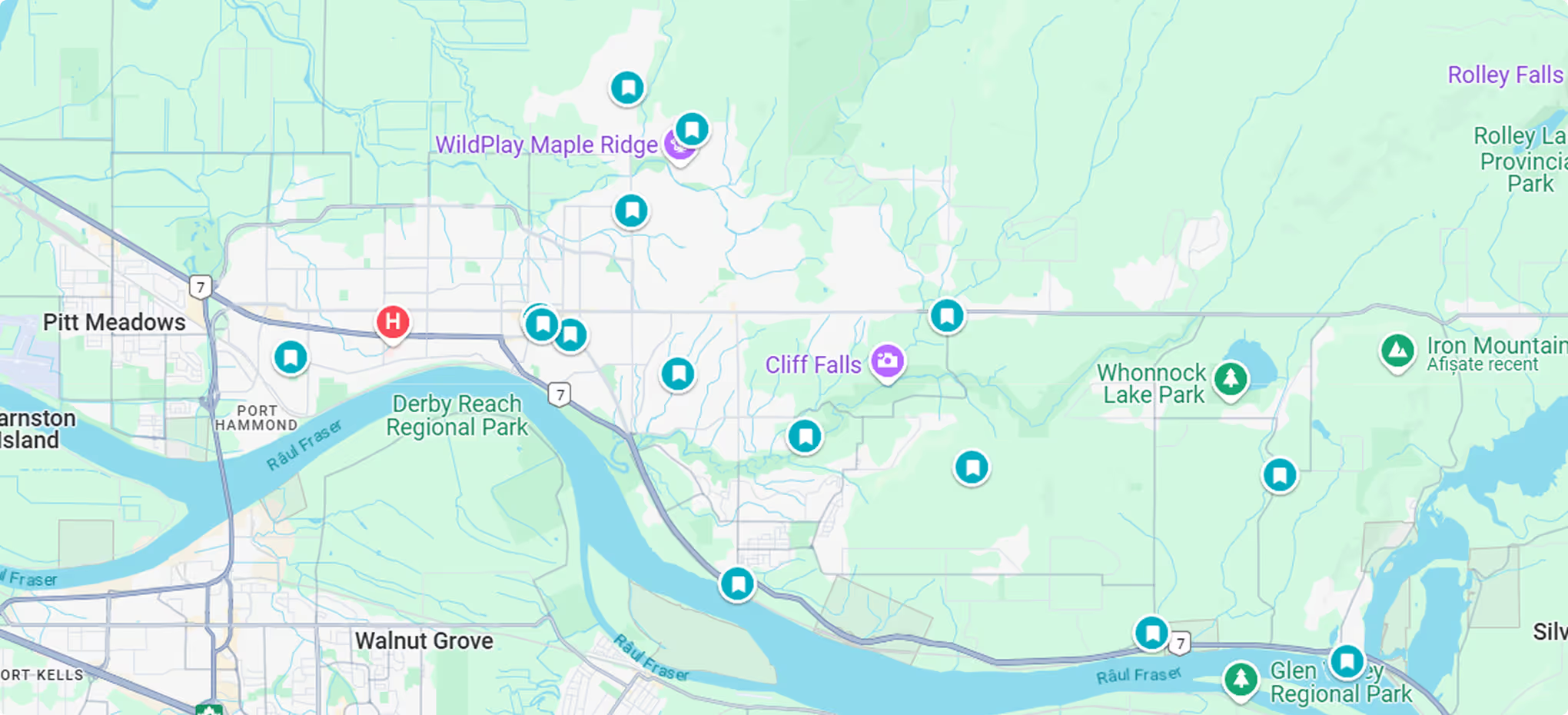
Neighbourhoods in the Fraser Valley