Why Cold-Climate Heat Pumps Demand a 400 Amp Panel Upgrade

The Hidden Electrical Demands of Modern Home Heating
You might be searching for home maintenance tips and troubleshooting because your aging heating system is struggling to keep up with the dropping temperatures, but the real issue often lies hidden behind a gray metal door in your garage or basement. At Rep-Air Heating and Cooling, our team frequently responds to calls from homeowners who are completely surprised by the electrical capacity limits of their current homes when transitioning from older fossil-fuel systems to modern electric heating. Your electrical panel acts as the central nervous system of your house, and it was likely designed for an era when heating loads were handled entirely by natural gas or oil.
Deciding between a fully electric cold-climate heat pump and a dual-fuel system requires a deep understanding of this hidden electrical infrastructure. If you are aiming to upgrade your systems before the harsh weather sets in, evaluating your electrical service is the critical first step. A standard heat pump operates beautifully in mild weather, but surviving a damp Fraser Valley winter requires a system capable of handling extreme, sudden spikes in power. Without the right electrical foundation, you risk overloading circuits, tripping main breakers, and facing a total loss of heat precisely when you need it most. Partnering with our experts in professional home services ensures that your home's infrastructure is fully prepared for the heavy demands of modern, high-efficiency heating.
How Near-Freezing Temperatures Impact Heat Pump Performance
The Problem: Rapid Frost Accumulation
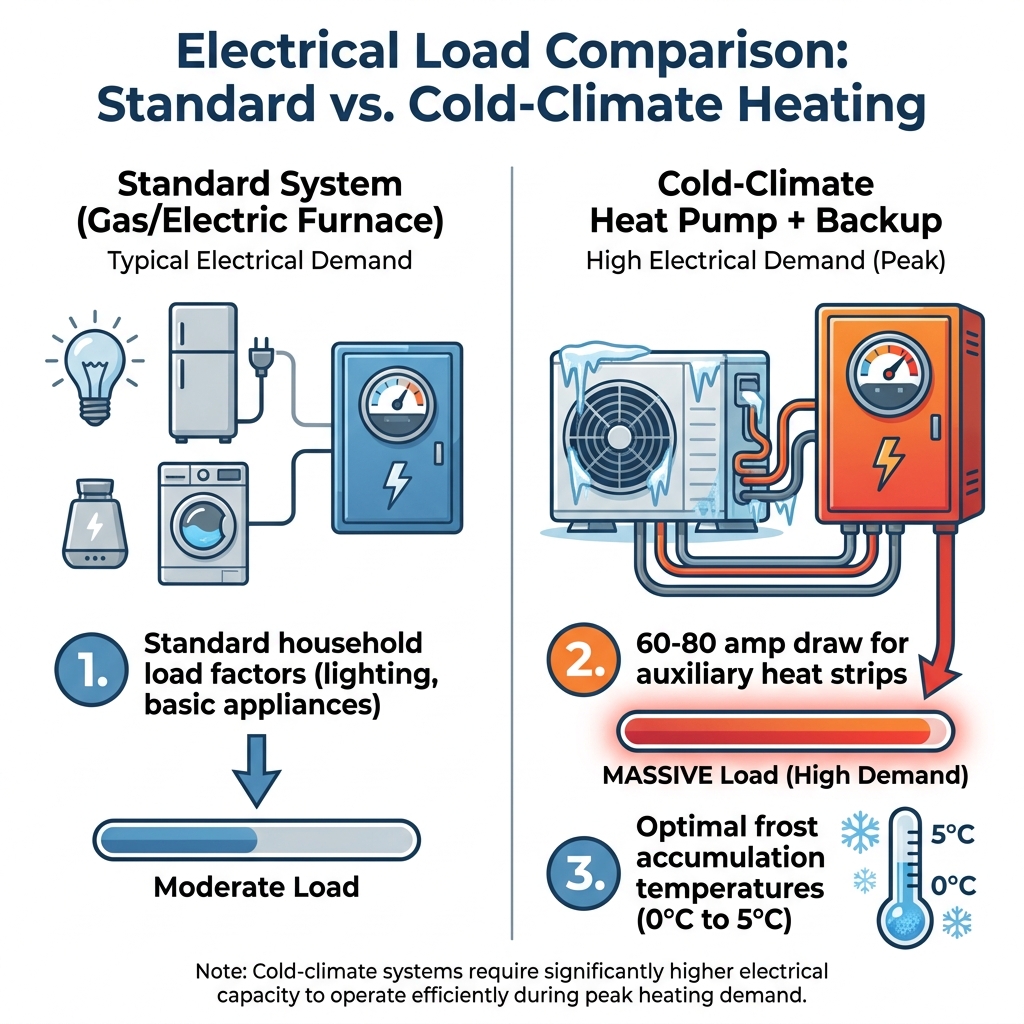
Heat pumps do not create heat; they move it. Even when it feels freezing outside, there is still ambient thermal energy in the air. The outdoor unit extracts this heat and pumps it indoors. However, homeowners in Mission BC face a very specific climate challenge. In our years of servicing the Fraser Valley, we've seen firsthand how high humidity combined with temperatures hovering between 0°C and 5°C creates the absolute optimal conditions for severe heat pump icing. The frequent rain and heavy moisture in the air are drawn across the super-cooled outdoor coils, causing that moisture to freeze on contact. Within hours, a thick layer of frost can suffocate the system, blocking airflow and devastating heating efficiency.
The Cause: Thermodynamics in Damp Climates
As the frost builds up, the heat pump has to work progressively harder to extract the same amount of thermal energy. The system's sensors detect this restricted airflow and drop in efficiency. If left unchecked, the ice would eventually crush the delicate aluminum fins and destroy the compressor. The cause of this rapid freeze isn't just the cold—it is the heavy, wet air characteristic of regional winters. A pattern we see often is that a dry cold at -10°C actually causes less icing than a damp, foggy day at 2°C.
The Solution: The Defrost Cycle
To maintain efficiency and protect the equipment, the system must frequently enter a defrost cycle. During this cycle, the heat pump temporarily reverses its operation. It essentially switches into air conditioning mode, pulling thermal energy from inside your home and sending it back to the outdoor unit to melt the accumulated ice. The outdoor fan stops spinning so the heat can build up quickly, melting the frost in a matter of minutes. Once the ice is cleared, the reversing valve shifts again, and the system resumes heating your home. However, pulling heat out of your house during the winter creates an immediate secondary problem that requires a massive amount of energy to solve.
Auxiliary Heat Strips and Massive Power Draws
When your heat pump enters a defrost cycle to melt outdoor ice, it is actively pumping cold air into your living space. To keep the home warm and comfortable during this process, the system automatically activates auxiliary electric heat strips located inside the indoor air handler. These backup heat strips function much like the glowing coils inside a giant toaster. They use electric resistance to generate heat instantly, warming the cold air before it reaches your vents.
While this process effectively masks the defrost cycle from the homeowner, it requires a staggering amount of electricity. These backup heat strips often require dedicated 60 to 80-amp circuits just to function. To put that into perspective, an entire standard residential home might only have a 100-amp or 200-amp main service panel. When those heat strips kick on during a damp Fraser Valley winter, they demand a sudden, massive influx of electrical current.
This massive power draw is often what pushes an older electrical panel past its safe operating limit. Our electricians frequently encounter situations where a homeowner is running an electric oven, a clothes dryer, and their heating system simultaneously; the sudden activation of an 80-amp heat strip easily overloads a standard panel. Understanding this dynamic is exactly why comparing 200 vs 400 amp residential panels becomes a necessary part of our HVAC replacement conversations. You cannot upgrade to a high-demand electric heating system without first ensuring your home has the capacity to power its backup safety mechanisms.
Evaluating Total Home Load: Why 200 Amps May Fall Short
Determining whether your current electrical panel can support a cold-climate heat pump requires a comprehensive look at how you consume power. When our team conducts electrical load calculations, we determine the total simultaneous draw a home can safely handle under peak conditions. Here is how that evaluation breaks down:
1. Charting base household loads: Every home has a baseline electrical footprint. This includes lighting circuits, refrigerator compressors, microwave ovens, televisions, and general outlet usage. In a standard home, this base load consumes a significant portion of a 200-amp panel's capacity.
2. Factoring in modern high-draw appliances: Modern homes in Mission BC are increasingly electrified. If you have added an electric vehicle (EV) charger, an induction stove, an electric water heater, or a backyard hot tub, your panel is likely already operating near its maximum safe threshold during peak evening hours.
3. Calculating the auxiliary heating multiplier: Adding a 60-80 amp heat pump circuit on top of those existing modern appliances creates a dangerous bottleneck. The Canadian Electrical Code requires panels to operate safely under continuous loads, meaning you cannot simply max out the mathematical limit of the breakers.
4. Applying safety margins: Electrical systems are designed to operate at roughly 80% of their maximum capacity for continuous loads. Pushing a 200-amp panel to 195 amps on a freezing night is a severe fire hazard, which is why our load calculations frequently mandate a service upgrade before a new heat pump can be legally installed.

The Dual-Fuel Alternative to Heavy Electrical Upgrades
If your home's electrical capacity is strictly limited and a major panel upgrade is not feasible right now, you are not entirely out of options. A dual-fuel system pairs a high-efficiency electric heat pump with a traditional natural gas furnace for backup heating. We often recommend this hybrid approach because it offers the best of both worlds and strategically bypasses the heavy electrical limitations of an older home.
Because the gas furnace handles the heavy lifting during freezing temperatures and provides the necessary warmth during the heat pump's defrost cycles, it completely eliminates the need for high-amperage electric heat strips. The heat pump runs efficiently during mild autumn and spring weather, while the gas furnace takes over seamlessly during a damp Fraser Valley winter. This approach can sometimes save homeowners from needing an immediate, extensive electrical overhaul while still vastly improving overall home energy efficiency.
Here is a breakdown of how the two systems compare regarding electrical demand:
• Primary Heating Method — Fully Electric (Heat Pump + Strips): Electric refrigerant cycle — Dual-Fuel (Heat Pump + Gas Furnace): Electric refrigerant cycle
• Backup Heating Method — Fully Electric (Heat Pump + Strips): Electric resistance heat strips — Dual-Fuel (Heat Pump + Gas Furnace): Natural gas combustion
• Backup Electrical Draw — Fully Electric (Heat Pump + Strips): 60 to 80 amps (High) — Dual-Fuel (Heat Pump + Gas Furnace): Under 15 amps for blower motor (Low)
• Panel Upgrade Required? — Fully Electric (Heat Pump + Strips): Often requires 400 Amp service — Dual-Fuel (Heat Pump + Gas Furnace): Usually compatible with 200 Amp service
Consulting with our experienced electricians in Langley and surrounding areas can help you determine if your current panel can support a hybrid system or if you are ready to make the leap to full electrification.
Future-Proofing with a 400 Amp Panel Upgrade
For homeowners committed to entirely eliminating fossil fuels from their property, our electrical team considers upgrading to a 400 amp panel residential service to be the ultimate solution. This upgrade ensures your home can handle all modern electric demands safely, simultaneously, and without compromise. A 400-amp service provides the necessary, robust infrastructure for cold-climate heat pumps, allowing the auxiliary heat strips to run at full capacity without risking overloaded circuits, dimming lights, or tripped main breakers.
This level of electrical service typically involves installing a larger meter base and running thicker service entry cables from the utility grid to your home. Often, the 400-amp service is split into two separate 200-amp panels side-by-side, giving you immense flexibility for future additions like a secondary EV charger, a detached workshop, or an electrified secondary suite.
While the initial investment in upgrading your electrical infrastructure is significant, it permanently future-proofs your property in Mission BC. Furthermore, generic federal and provincial energy rebates may apply to qualifying high-efficiency electric installations and their associated panel upgrades. Homeowners should always verify current programs with their utility provider or a tax professional, as transitioning to a fully electrified, high-capacity home often aligns with regional clean-energy incentives.
Navigating Safety Codes and Permitting Requirements
Increasing a home's service entry is not a simple weekend project; it requires strict adherence to local and provincial electrical codes. The permitting process exists to protect your property from catastrophic electrical fires. When upgrading from a 200-amp to a 400-amp service to support a new heat pump during a damp Fraser Valley winter, precise load calculations must be submitted to the local electrical authority for approval.
Attempting to bypass capacity limits without professional upgrades risks severe electrical hazards. If an unpermitted installer simply adds an 80-amp breaker to an already maxed-out panel, the main breaker will constantly trip under load. Worse, if the main breaker fails to trip, the wiring inside the walls can overheat, melt its insulation, and ignite the surrounding framing.
Because these high-capacity electrical upgrades are complex and deeply integrated with your home's safety, Rep-Air's licensed technicians, led by a Red Seal owner, are required to ensure the work is permitted, inspected, and completely up to code. A certified professional understands how to coordinate with the municipal utility to disconnect the grid power, install the new heavy-duty meter base, and route the upgraded lines safely. If you are planning a major HVAC overhaul, coordinating with our certified electrical panel upgrade services guarantees that your new heating system has the safe, legal, and robust power supply it needs to function flawlessly.
Frequently Asked Questions About High-Demand Electrical Upgrades
Does upgrading to a heat pump require a new electrical panel?
It depends entirely on your current panel's capacity and the type of heat pump you choose. If you are installing a cold-climate heat pump with heavy-duty electric auxiliary heat strips, a standard 100-amp or even 200-amp panel will often require an upgrade. However, if you opt for a dual-fuel system that uses natural gas for backup, your existing panel may be perfectly adequate.
Why do heat pumps ice up in damp winter weather?
Heat pumps ice up because the outdoor coil operates at a temperature lower than the ambient air to extract thermal energy. In Mission BC, when the temperature is between 0°C and 5°C and the humidity is high, the heavy moisture in the air condenses and instantly freezes on the super-cooled coils. This rapid frost buildup forces the system into frequent defrost cycles to clear the ice and maintain airflow.
Should I upgrade to a 400 amp panel residential service?
Our team highly recommends upgrading to a 400 amp service if you plan to fully electrify your home. If you want to run a cold-climate heat pump, an electric vehicle charger, an induction range, and an electric water heater simultaneously, a 200-amp panel will likely fall short. A 400-amp service future-proofs your home for all modern, high-draw electrical demands.
At what temperature does a heat pump need backup heat?
A standard heat pump typically requires backup heat when the outdoor temperature drops below 2°C to 4°C, as its efficiency begins to decline. High-performance cold-climate models can operate efficiently down to -20°C or lower, but they still require backup auxiliary heat to warm the indoor air while the system temporarily reverses itself during mandatory defrost cycles.
What is a dual fuel heating system and how does it affect electrical load?
A dual-fuel heating system combines an electric heat pump with a natural gas furnace. It affects the electrical load positively by using the gas furnace for backup heat instead of high-amperage electric heat strips. Because the furnace only requires a small amount of electricity to run its blower motor, a dual-fuel setup drastically reduces the total electrical demand, often saving homeowners from needing a costly panel upgrade.
Making the Right Heating and Electrical Choice for Your Home
Choosing between a cold-climate heat pump and a dual-fuel system ultimately comes down to understanding your home's current electrical capacity. You cannot separate the HVAC decision from the electrical infrastructure that powers it. Whether you choose to bypass heavy electrical demands with a hybrid gas approach or commit to full electrification with a robust 400-amp service, proper planning is essential.
Taking the time to evaluate your panel now prevents emergency heating failures during severe seasonal storms. A standard system simply cannot survive a damp Fraser Valley winter without the correct backup mechanisms in place. Consulting with our professionals ensures that your home stays warm, efficient, and completely safe all winter long. If you are ready to evaluate your home's capacity, reach out for our professional electrical panel upgrade services to get a clear, region-specific breakdown of exactly what your property needs.
hear what our satisfied clients have to say
Neighbourhoods in the Fraser Valley