Electrical in Mission, BC
Facing Unexpected Electrical Issues?
Caught off-guard by sudden electrical failures at home or work? Ensure your peace of mind with certified professionals ready to tackle your electrical needs. Contact us immediately to secure a diagnostic appointment or discuss financing options for major upgrades:
- Rapid response teams available 24/7 for all emergency services.
- Upfront pricing and no hidden fees, with flexible financing available.
- Comprehensive services from repairs to full system upgrades.
All services are performed adhering to regional codes with full warranty coverage.
Comprehensive Electrical Solutions for Your Property
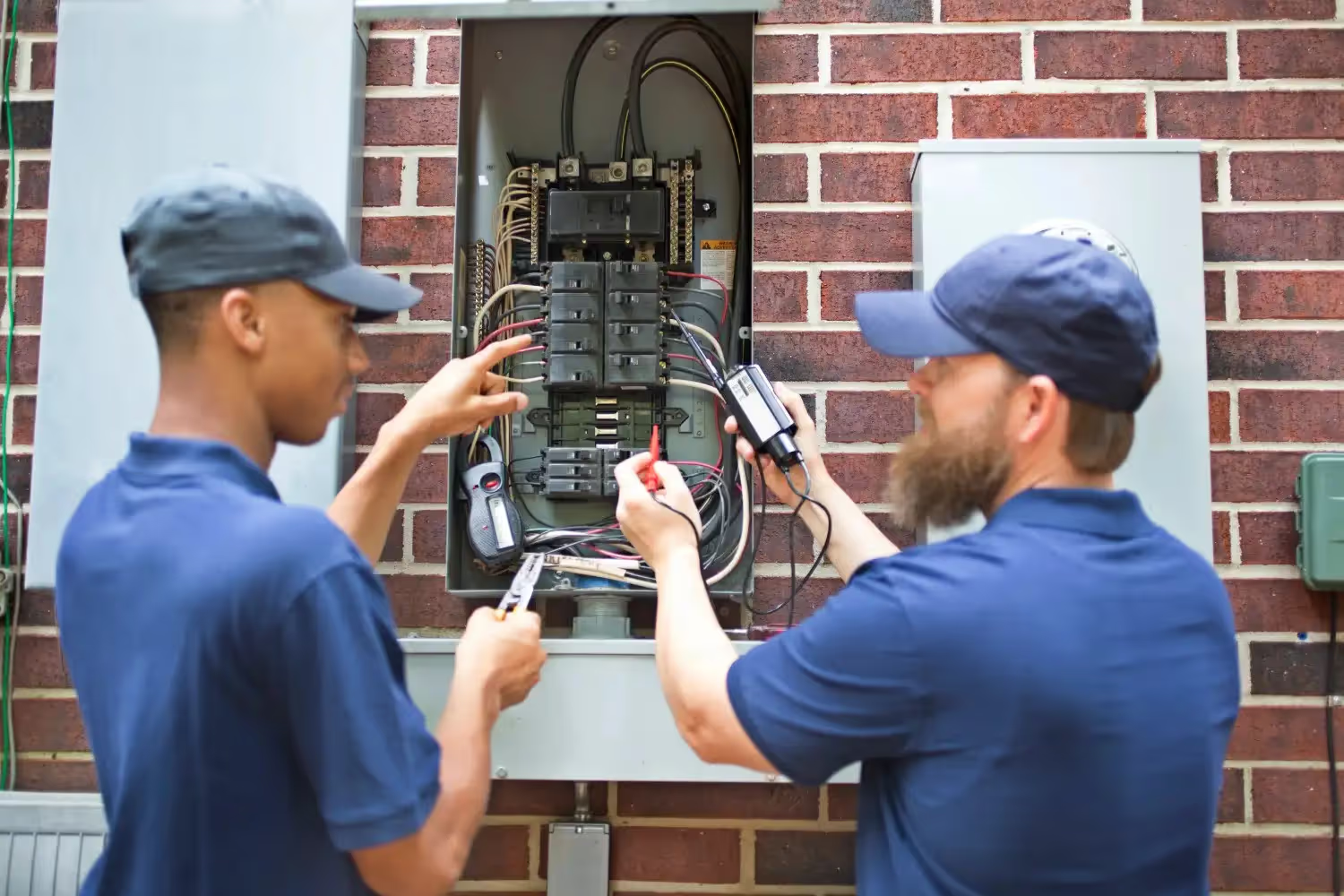
Electrical systems are the backbone of modern functionality, yet they often go unnoticed until a failure occurs. In Mission, where housing stock ranges from heritage properties to modern developments, the electrical infrastructure requires specific attention to detail and adherence to safety standards. Rep-Air Heating and Cooling provides a full spectrum of electrical services designed to restore power, enhance safety, and upgrade capacity for modern appliances.
When you engage a professional electrical contractor, you are not just buying a repair; you are investing in the long-term safety of the building. The scope of work covers everything from high-urgency troubleshooting to planned infrastructure expansion:
Emergency Troubleshooting and Repair
Electrical failures rarely happen at convenient times. A flickering light might signal a loose neutral wire, or a breaker that constantly trips could indicate a dangerous circuit overload. Immediate diagnostic services are essential to identify the root cause before it poses a fire hazard. Licensed electricians utilize advanced multimeters and circuit analyzers to pinpoint faults behind walls or within panels without unnecessary demolition.
Panel Upgrades and Service Changes
Modern homes consume significantly more power than those built twenty or thirty years ago. If your property still relies on a 60-amp or 100-amp fuse box, it likely struggles to support HVAC systems, electric vehicle chargers, and modern appliances simultaneously. Upgrading to a 200-amp breaker panel is a standard solution that improves safety and increases the resale value of the property. This process involves coordinating with local utility providers to disconnect power, replacing the meter base, and installing a new main breaker panel with ample room for future expansion.
Wiring and Rewiring Services
Older properties in the region may still contain knob-and-tube wiring or aluminum wiring installed in the mid-20th century. These materials can degrade over time, leading to loose connections and potential arcing. Comprehensive rewiring involves removing these outdated materials and installing modern copper wiring with proper grounding. This ensures compliance with current insurance requirements and significantly reduces the risk of electrical fires.
Lighting and Fixture Installation
Proper lighting transforms a space. Whether it is recessed pot lights for a kitchen renovation, motion-sensor security lighting for the exterior, or under-cabinet lighting for workspaces, precise installation is key. This service includes load calculation to ensure new fixtures do not overload existing circuits, as well as the installation of dimmers and smart switches for enhanced control — view our gallery today.
How the Electrical Service Process Works
Professional electrical work follows a rigid protocol to ensure safety and code compliance. While the specific technical steps vary based on the project, the workflow remains consistent to ensure transparency and efficiency:
Initial Assessment and Safety Inspection
The process begins with a thorough evaluation of the affected area. Technicians inspect the main panel, verify grounding systems, and test circuits to understand the current electrical load and identify any code violations.
Detailed Proposal and Planning
Once the issue is diagnosed or the project scope is defined, a clear outcome is presented. This includes a breakdown of necessary materials, labor, and any required permits. For larger projects like panel upgrades, this stage includes submitting plans to the municipality.
Permitting and Utility Coordination
Electrical work often requires a permit from the local building authority. If power needs to be disconnected at the pole, coordination with the utility provider is managed entirely by the service team.
Execution and Installation
Work is performed using high-quality components. Wiring is run neatly, connections are torqued to manufacturer specifications, and devices are leveled and secured. Care is taken to protect flooring and furniture during the work.
Testing and Certification
Before the job is considered complete, every circuit is tested for continuity, proper voltage, and grounding. If a permit was pulled, a final inspection is scheduled with a city inspector to close out the permit.
Determining When to Repair vs. Replace Electrical Components
Deciding between a quick repair and a full component replacement is a common dilemma for property owners. While cost is always a factor, safety and longevity should drive the decision. Electrical components have a finite lifespan, and patching a failing system can sometimes be more costly in the long run than a modernization upgrade:
When to Choose Repair
Repair is generally the best route for isolated incidents in relatively modern systems.
- Single Circuit Failures: If only one outlet has stopped working or one breaker has tripped due to a temporary overload, a repair is sufficient.
- Fixture Malfunctions: If a specific light fixture or switch is broken physically but the wiring behind it is sound, simply replacing the device is the correct course of action.
- Recent Installations: If the electrical system is less than 15 years old and meets current codes, troubleshooting and fixing the specific fault is usually all that is required.
When to Opt for Replacement or Upgrades
Replacement becomes necessary when the system is obsolete, dangerous, or insufficient for current needs.
- Obsolete Panels: Fuse boxes or specific brands of panels known for failure (such as Federal Pacific or Zinsco) should be replaced immediately, regardless of whether they are currently working. These panels often fail to trip during a short circuit, posing a massive fire risk.
- Aluminum Wiring: If the home was built between the mid-60s and mid-70s, it may have aluminum branch wiring. While "pigtailing" repairs are possible, a full rewire is the safest long-term solution.
- Insufficient Amperage: If lights flicker when the refrigerator kicks on, or if you cannot run the microwave and the toaster simultaneously, the service capacity is too low. No amount of repair will fix a capacity issue; a service upgrade is required.
- Lack of Grounding: Two-prong outlets indicate a lack of a ground wire. For the safety of modern electronics and users, these circuits should be rewired or protected with GFCI breakers as a minimum standard, though full replacement is preferred.
Regional Considerations for Electrical Work
Operating in Mission, BC presents specific environmental and regulatory factors that influence how electrical work is performed. The local climate and infrastructure dictate specific requirements that generic electrical advice might miss:
Moisture and Rainfall Management
The region experiences significant rainfall, particularly in November and throughout the winter. Outdoor electrical installations, such as hot tub hookups, exterior lighting, and EV chargers, must be heavily weatherproofed. Standard outdoor covers may not suffice; extra-duty "in-use" covers and NEMA-rated enclosures are necessary to prevent moisture ingress that causes nuisance tripping of GFCI breakers.
Heating Loads in Winter
While winters are mild compared to the rest of Canada, temperatures still drop enough to require reliable heating. Many homes rely on electric baseboard heaters or heat pumps. Ensuring the electrical panel has the capacity to handle these continuous loads during a cold snap is vital. Older panels often overheat under the sustained load of winter heating.
Municipal Codes and Permits
Local building departments have specific amendments to the Canadian Electrical Code. Work performed without a permit can lead to fines and complications when selling a property. Professional electricians handle the permit acquisition process, ensuring that all work passes inspection by local authorities.
BC Hydro Rebates and Programs
There are frequently rebates available for energy-efficiency upgrades. This can include incentives for installing EV chargers or upgrading to high-efficiency electric heating systems. Knowledge of these programs helps in planning projects that maximize available financial returns.
Specialized Electrical Services
Beyond standard repairs and panel changes, modern electrical needs have evolved to include specialized installations that require advanced training and certification.
Electric Vehicle (EV) Charger Installation
As electric vehicle adoption grows, the demand for Level 2 home charging stations increases. Plugging a car into a standard 120-volt outlet is often too slow for daily commuters. Installing a Level 2 charger requires a dedicated 240-volt circuit, similar to a stove or dryer. This installation involves load calculations to ensure the existing panel can handle the additional draw. In some cases, energy management devices can be installed to allow charging without an expensive service upgrade.
Surge Protection
Modern homes are filled with sensitive electronics, from smart refrigerators to computers and home theatre systems. External power surges from grid switching or lightning, as well as internal surges from large appliances cycling on and off, can damage these devices. Whole-home surge protection devices (SPDs) are installed directly at the main panel to stop voltage spikes before they enter the home’s branch wiring.
Smoke and Carbon Monoxide Detection
Building codes now require interconnected smoke and carbon monoxide detectors on every level of a home and outside sleeping areas. Hardwired units with battery backups ensure protection even during power outages. Upgrading from battery-only units to a hardwired interconnected system ensures that if a fire is detected in the basement, the alarm in the upstairs bedroom sounds simultaneously.
Why Professional Execution is Non-Negotiable
Electrical work is one of the few home improvement categories where "Do It Yourself" attempts carry life-threatening risks. The danger of electrocution and the long-term risk of electrical fire due to improper connections make professional execution mandatory.
Licensed electricians undergo years of apprenticeship and technical training to understand the physics of electricity and the nuances of the code. They carry liability insurance and Workers' Compensation coverage, protecting the homeowner from financial liability in the event of an accident. Furthermore, Rep-Air Heating and Cooling ensures that every technician is up-to-date on the latest safety protocols and technology.
Professional execution also guarantees the integrity of your home insurance policy. Many insurance providers will deny claims related to electrical fires if the work was performed by an unlicensed individual or without a permit. Hiring a certified contractor provides documentation that validates the safety and legality of the installation — read our reviews today:
The Value of Diagnostic Accuracy
A significant portion of electrical work is investigative. When a breaker trips repeatedly, simply replacing the breaker is rarely the cure and can be dangerous if the fault lies in the wiring. Professionals use distinct diagnostic protocols to separate the symptoms from the disease. This accuracy prevents recurring issues and ensures that money is spent on solving the actual problem rather than applying band-aid fixes.
Future-Proofing Your Investment
Electrical standards evolve. What was code-compliant ten years ago may now be considered minimum standard or outdated. Professional electricians design systems with the future in mind. This means installing panels with extra breaker space, running conduit for future wiring pulls, and sizing cables to handle potential future loads. This foresight saves money on future renovations and ensures the home remains functional for decades.
Secure Your Electrical System Today
Electrical safety is not an area for compromise. Whether you are dealing with an urgent power failure, planning a renovation, or need to upgrade your service to accommodate new appliances, professional intervention is the only path to safety and compliance. The risks associated with faulty wiring—from equipment damage to personal safety hazards—require the attention of skilled tradespeople who understand the local infrastructure and codes.
Do not wait for a small flicker to turn into a major failure. Take proactive steps to assess and upgrade your electrical system. Reach out now to schedule a consultation with a licensed electrician who can provide the solutions you need.
hear what our satisfied clients have to say
Neighbourhoods in the Fraser Valley