Indoor Air Quality in Maple Ridge, BC
Is Your Home’s Air Safe? Discover Our Indoor Air Quality Solutions!
Concerned about the air quality in your home in Maple Ridge? You are not alone—many local residents face consistent issues with trapped pollutants, seasonal allergens, and humidity imbalances that compromise both comfort and long-term health. Whether it is lingering dampness from the rainy season or smoke intrusion during dry summer months, your indoor environment requires a robust defense system. Contact us today to schedule a comprehensive air quality assessment and breathe easier tonight.
We provide a direct path to cleaner, healthier air through:
- Accurate air quality assessments using the latest diagnostic technologies.
- Effective, whole-home solutions for allergens, pollutants, and viral contaminants.
- Regular updates and maintenance plans to ensure sustained air quality year-round.
Our services are fully licensed and insured, with flexible financing options available to ensure your safety never comes second to budget.

Expert Air Quality Solutions Tailored for Local Homes
Indoor air quality (IAQ) is often significantly worse than outdoor air, a fact that surprises many homeowners. In our region, the specific climate challenges create a perfect storm for indoor contaminants. The temperate oceanic climate brings heavy rainfall in the fall and winter, leading to increased moisture levels inside the home. Without proper ventilation, this moisture becomes a breeding ground for mold and mildew. Conversely, the increasingly hot and dry summers often bring wildfire smoke and high pollen counts, which infiltrate homes and aggravate respiratory conditions.
Rep-Air Heating and Cooling addresses these specific challenges by implementing systems designed to manage the unique atmospheric conditions of British Columbia. We do not offer generic, one-size-fits-all products. Instead, we configure whole-home systems that integrate directly with your existing HVAC infrastructure. This approach ensures that every cubic foot of air circulating through your ducts is treated, filtered, and balanced before it reaches your living space.
The primary goal of our solutions is to control three main pillars of air quality: filtration, humidity control, and fresh air exchange. By addressing these three areas simultaneously, we eliminate the stale, contaminant-heavy air that causes headaches, fatigue, and allergy flare-ups. Our solutions are designed to run quietly in the background, providing medical-grade air purification without the noise and intrusion of portable units.
Comprehensive Air Quality Assessments: What We Check and Why It Matters
Before recommending a solution, we must understand the invisible landscape of your home’s atmosphere. You cannot fix what you cannot measure. Our assessment process is rigorous and data-driven, utilizing industrial-grade sensors to detect contaminants that standard carbon monoxide detectors miss. This diagnostic phase is critical for identifying the root cause of your air quality issues, rather than just treating the symptoms.
During an assessment, our technicians focus on several key indicators:
- Volatile Organic Compounds (VOCs): We measure the levels of chemical off-gassing from furniture, carpets, cleaning supplies, and building materials. High VOC levels can cause chronic headaches and dizziness.
- Particulate Matter (PM2.5 and PM10): We analyze the concentration of microscopic particles, including dust, smoke, pollen, and pet dander. These particles are small enough to enter the bloodstream and lungs, posing significant health risks.
- Relative Humidity Levels: We check for excess moisture that encourages mold growth and dust mites, as well as overly dry air that damages wood flooring and irritates sinus passages.
- Carbon Dioxide (CO2) Levels: High CO2 levels indicate poor ventilation and a lack of fresh air exchange, leading to a "stale" feeling and cognitive fatigue.
- Biological Growth: We inspect HVAC coils, drain pans, and ductwork for signs of mold, bacteria, or algae growth that could be circulating spores throughout the house.
Once the data is collected, we provide a detailed report outlining the specific pollutants present in your Maple Ridge home. This allows us to engineer a remediation plan that targets your specific vulnerabilities, whether that requires advanced filtration, UV sterilization, or energy-recovery ventilation.
Our Air Quality Improvement Process: From Assessment to Solution
Improving your indoor environment is a systematic process. We adhere to a strict protocol to ensure that the equipment we install performs at peak efficiency and integrates seamlessly with your current heating and cooling setup. We handle every aspect of the project, from the initial load calculation to the final calibration of controls.
The implementation of your air quality system follows this trajectory:
- Site Evaluation and System Design: First, we review your current HVAC system’s static pressure and ductwork configuration. We determine the optimal location for new equipment, such as High-Efficiency Particulate Air (HEPA) bypass systems or ultraviolet (UV) germicidal lights, to ensure they do not restrict airflow or reduce the efficiency of your furnace.
- Selection of Technology: Next, we select the specific hardware based on your assessment results. This may include Heat Recovery Ventilators (HRVs) for retaining heat while swapping stale air for fresh air, or steam humidifiers for precise moisture control.
- Professional Installation: Our certified technicians cut into the supply and return plenums with precision to install the new components. We hardwire units into your electrical panel and integrate controls into your thermostat, allowing for automated management of your air quality.
- Sealing and Calibration: We seal all connections to prevent air leakage and calibrate the equipment. For humidifiers and ventilators, this involves setting dampers and fan speeds to match the square footage and occupancy of your home.
- Testing and Verification: Finally, we re-test the airflow and monitor the system through a full cycle to ensure the new components are effectively removing contaminants and regulating humidity as designed.
Deciding Between HVAC Upgrades and Quick Fixes for Improved Air Quality
Many homeowners attempt to solve air quality issues with portable air purifiers or single-room dehumidifiers. While these devices can offer temporary relief in a small, confined space, they are rarely sufficient for a whole-house problem. Understanding when to invest in integrated HVAC upgrades versus relying on spot treatments is crucial for long-term health and property protection.
You should consider a permanent, integrated upgrade if you observe the following:
- Persistent Condensation: If you see window condensation during the winter despite running portable dehumidifiers, your home lacks adequate whole-house ventilation. An HRV or ERV (Energy Recovery Ventilator) is necessary to manage moisture at the source.
- Lingering Odors: If cooking smells, pet odors, or musty scents linger for hours or days, it indicates that your home is not exchanging air effectively. Portable filters cannot turn over the air volume of an entire house fast enough to combat this.
- Widespread Allergy Symptoms: When family members experience symptoms in every room, a portable unit in the bedroom will not suffice. You need a central filtration system, such as a media air cleaner with a high MERV rating, to capture allergens throughout the ductwork.
- Visible Dust Accumulation: If you find yourself dusting surfaces daily, your standard furnace filter is failing to capture airborne particulates. Upgrading to an electrostatic or high-capacity media filter significantly reduces dust load.
- Variable Temperatures: Portable units often generate heat or noise and consume valuable floor space. Integrated systems are silent, invisible, and add value to the home’s mechanical systems.
Replacing or upgrading to a built-in solution is an investment in the building’s infrastructure. It protects the structural integrity of the home by controlling moisture that rots wood and provides a uniform blanket of clean air in every room.
Understanding Local Air Quality Standards and Compliance Measures
In British Columbia, and specifically in the Lower Mainland, building codes and environmental standards have evolved to address energy efficiency and occupant health. Modern homes are built "tight" to conserve energy, which unintentionally traps pollutants inside. The BC Building Code now has specific requirements for mechanical ventilation to counteract this effect, ensuring that fresh air is continuously introduced into the living space.
Operating in Maple Ridge requires a deep understanding of these local compliance measures.
- Ventilation Requirements: For new builds and significant renovations, mechanical ventilation is mandatory. We ensure all HRV and ERV installations meet the required airflow rates (measured in CFM) to satisfy inspection criteria and ensure occupant safety.
- Wildfire Smoke Protocols: During fire season, external air quality can drop to hazardous levels. Standard ventilation strategies must be adapted. We install systems with filtration capabilities strong enough to scrub smoke particles (PM2.5) from the intake air, allowing you to run ventilation systems even when outdoor air is poor.
- Permitting and Electrical Safety: Any addition to your HVAC system that requires hardwiring or modification of the gas line (in the case of some humidifiers or heating units) may require permits. We manage the compliance aspect, ensuring all work adheres to the Technical Safety BC standards.
- Rebate Eligibility: Various provincial and utility-backed programs occasionally offer rebates for energy-efficient upgrades, including high-efficiency fans and control systems. We stay updated on these programs to help you maximize potential savings on eligible equipment.
Why Choose Us? Trusted Expertise and Local Commitment
Selecting a contractor for indoor air quality involves trusting someone with the health and safety of your home environment. We move beyond simple equipment sales to provide a holistic service that diagnoses, treats, and maintains the air you breathe. Our technicians are not just installers; they are trained in building science and thermodynamics, ensuring that every recommendation is technically sound and appropriate for your specific home layout.
We differentiate our services through:
- Technical Precision: We use advanced manometers and particle counters to verify our work. We do not guess; we validate that the air quality has improved.
- Product Transparency: We explain exactly what each component does, its maintenance requirements, and its expected lifespan. You will never be sold a "magic box" without understanding the science behind it.
- Customized Integration: We specialize in retrofitting modern air quality systems into older homes as well as integrating them into new construction. We respect your property, using drop cloths and ensuring a clean workspace upon completion.
- Long-Term Reliability: We stand behind our installations with warranties that cover both parts and labour. When you need support, you are dealing with a local team that understands the urgency of heating and air quality issues.
The air in your home should be a source of rejuvenation, not a cause for concern. Whether you are battling seasonal smoke, mold-inducing humidity, or persistent allergens, Rep-Air Heating and Cooling has the expertise to engineer a lasting solution.
Call Us Now!
Take control of your indoor environment today. Contact our team to schedule your professional air quality assessment and experience the difference of truly clean air.
hear what our satisfied clients have to say
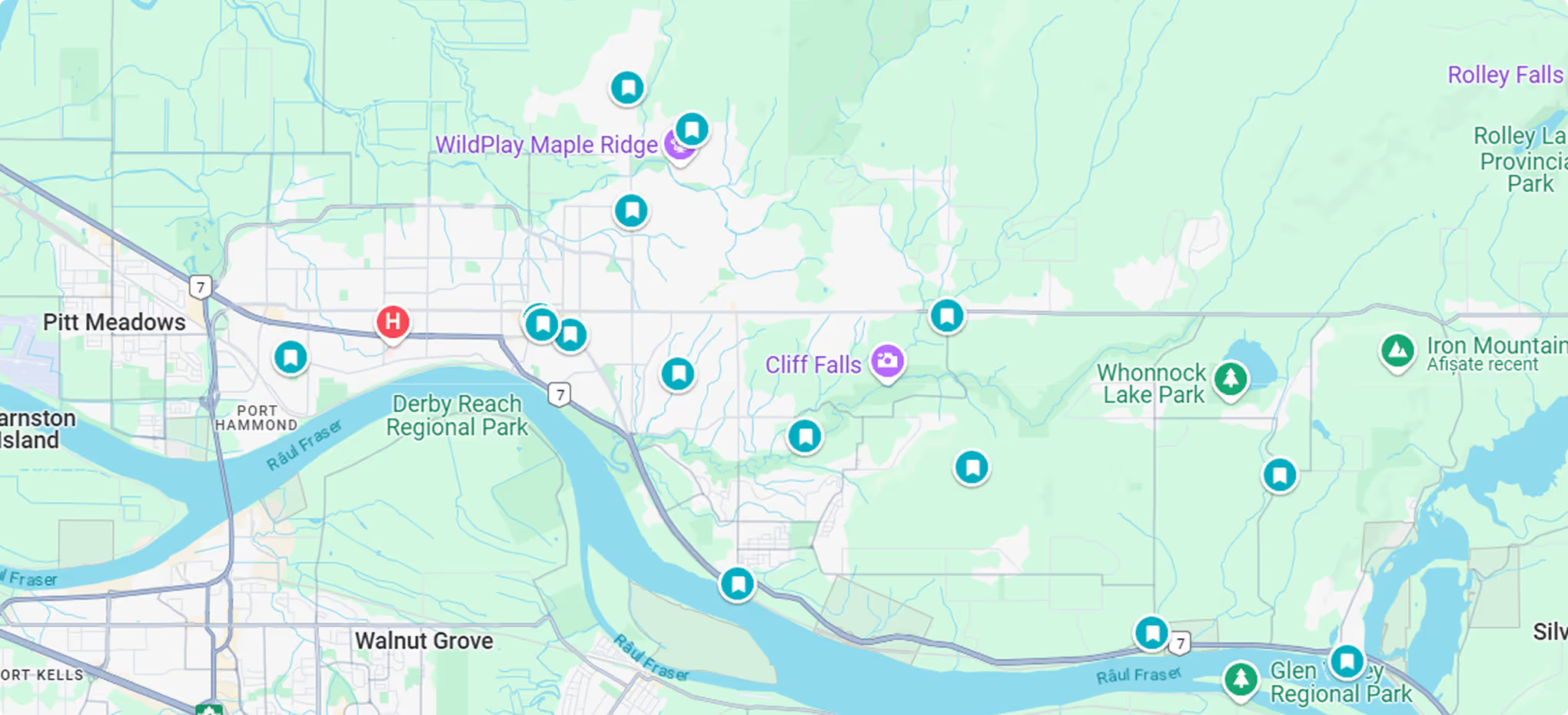
Neighbourhoods in the Fraser Valley