Detailed Guide to AC Circuit Breaker Tripping

What an AC Circuit Breaker Keeps Tripping What It Means for Your Home
ac circuit breaker keeps tripping what it means is straightforward: your home's electrical system is detecting more current than the circuit can safely carry, and it is shutting power off to protect you. This is not a glitch — it is the breaker doing exactly what it was designed to do.
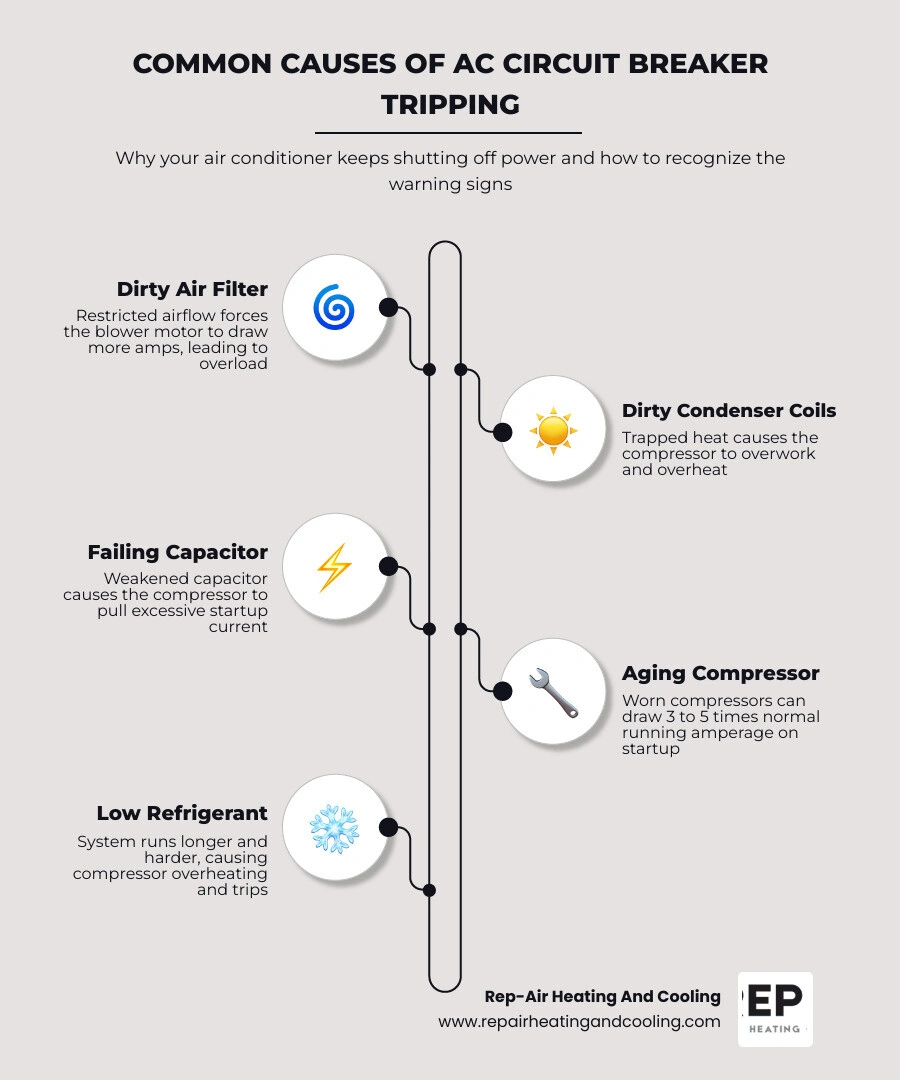
Here is a quick summary of the most common reasons your AC breaker keeps tripping:
• Dirty air filter — restricted airflow forces the blower motor to draw more amps
• Dirty condenser coils — trapped heat causes the compressor to overwork
• Failing capacitor — weakened capacitor causes the compressor to pull excessive startup current
• Aging or hard-starting compressor — worn compressors can draw 3 to 5 times their normal running amperage on startup
• Loose or damaged wiring — loose connections create resistance and heat buildup
• Low refrigerant — makes the system run longer and harder, overheating the compressor
• Worn circuit breaker — an old breaker may trip even under normal load
If your AC trips the breaker once and resets fine, it may be a minor issue. If it trips repeatedly, stop resetting it and call an HVAC professional — continuing to reset can damage wiring, degrade the breaker, and create a fire hazard.
For homeowners in Abbotsford, BC and across the Lower Mainland, summer heat puts real strain on AC systems, and a tripping breaker is one of the most common signs that something needs attention before it becomes a bigger problem. Rep-Air Heating And Cooling's licensed technicians can diagnose the root cause quickly and get your cooling system running safely again.
Understanding the AC Circuit Breaker Keeps Tripping What It Means
To understand why your air conditioner is suddenly shutting down your power, we have to look at the safety systems built into your home. Your central air conditioner is a powerful appliance. Because of the substantial amount of power it requires, modern HVAC standards in British Columbia dictate that your central cooling system must run on its own dedicated 240-volt circuit, protected by a double-pole breaker.
This double-pole breaker acts as a vigilant safety switch. It monitors the flow of electrical current (amperage) passing through the wires to your outdoor condenser and indoor air handler. If the current exceeds the breaker's rated limit, the internal mechanism heats up and trips, instantly cutting off the electricity.
When you find yourself asking about Troubleshooting AC Circuit Breaker Issues, it is helpful to distinguish between the two primary types of electrical events that cause a breaker to trip. Knowing the difference helps explain why your AC Breaker Keeps Tripping and points our technicians toward the correct solution.
• Overload — What It Means: The system is drawing slightly more current than the circuit is rated for over a sustained period. This is often a gradual buildup of heat. — Common AC Culprits: Clogged air filters, dirty outdoor coils, low refrigerant, or a blower motor working against high static pressure.
• Short Circuit / Ground Fault — What It Means: An unintended path of low resistance is created, causing an instantaneous, massive spike in electrical current. — Common AC Culprits: Damaged wire insulation, loose electrical connections, a shorted fan motor, or a grounded compressor.
When an overload occurs, the breaker might trip after the air conditioner has been running for 10, 20, or 30 minutes. When a short circuit or ground fault is present, the breaker will typically trip the absolute millisecond the system tries to turn on.
Airflow Obstructions and Maintenance Issues That Cause Tripping
Many homeowners are surprised to learn that mechanical issues and poor airflow directly cause electrical failures. When your air conditioner cannot breathe, it has to work twice as hard to move air and transfer heat. This mechanical strain translates directly into increased electrical resistance, forcing the motors to draw more electricity until they overload the circuit.
Regular preventative care is the absolute best way to avoid these issues. If you want to keep your system running smoothly, scheduling an AC Service Mission Complete 1st Rate Comfort check is a great step. Investing in regular tune-ups offers clear financial and operational advantages, as outlined in our guide on AC Maintenance Benefits Top 5 Ways to Save.
How a Dirty Air Filter Explains the AC Circuit Breaker Keeps Tripping What It Means
A clogged, dusty air filter is the single most common reason an air conditioner trips its circuit breaker. When the filter is caked in dust, pet dander, and debris, it creates severe static pressure inside your ductwork. The indoor blower motor has to fight incredibly hard to pull air through this thick barrier.
Because the blower motor is working against high resistance, its energy consumption spikes. It draws more and more amperage to keep spinning at its required speed. Eventually, this sustained amp draw exceeds the safety threshold of your breaker, causing it to trip.
Furthermore, restricted airflow causes the temperature of the indoor evaporator coil to drop rapidly. Without enough warm air passing over the coil, the moisture on it freezes solid. A frozen coil blocks airflow completely, compounding the strain on the blower motor and leading to a complete system shutdown. If your home is cooling poorly alongside these electrical issues, you can learn more about managing these symptoms in our guide to AC Not Cooling: Common Problems and Solutions.
Dirty Condenser Coils and Heat Transfer Blockage
While the indoor unit struggles with dirty filters, the outdoor unit faces its own environmental challenges. Your outdoor condenser unit contains a network of coils designed to release the heat extracted from your home into the outside air.
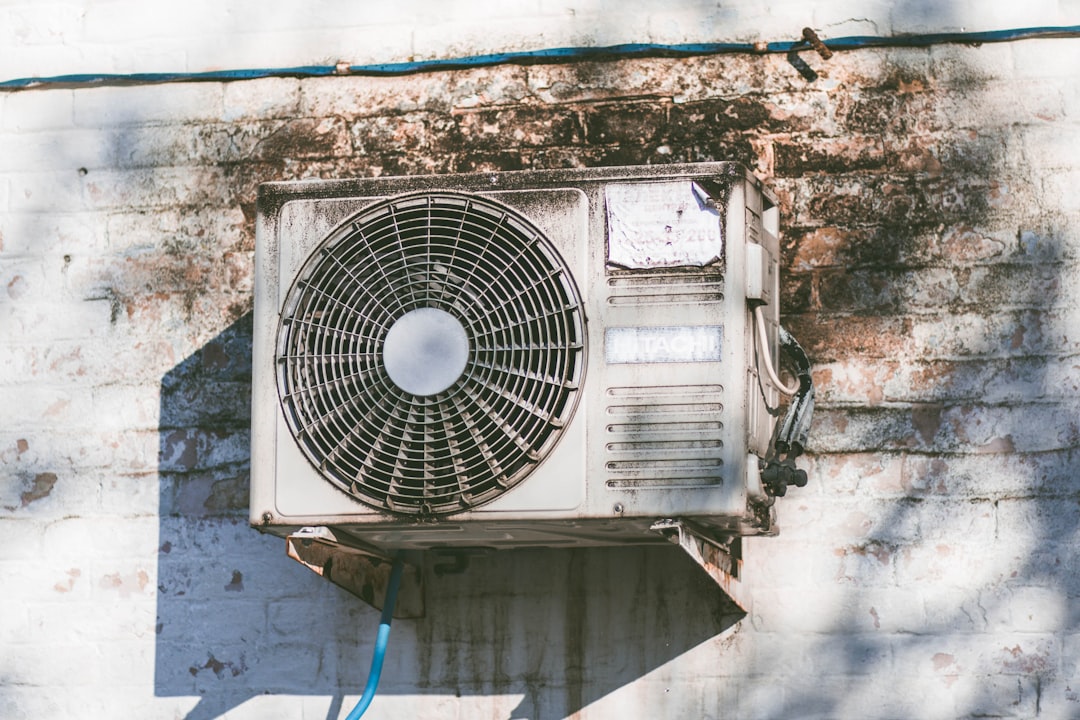
Over time, these coils become covered in dirt, lawn clippings, leaves, and cottonwood seeds. In coastal and river-adjacent areas of the Lower Mainland, salt air and high humidity can accelerate the accumulation of grime on these delicate aluminum fins. This layer of dirt acts like a thick wool sweater wrapped around your air conditioner.
Because the heat cannot escape, the pressure inside the refrigerant lines rises dramatically. To pump refrigerant through these high-pressure lines, the compressor has to work under extreme load. This massive mechanical struggle forces the compressor to draw high levels of electrical current, quickly tripping your double-pole breaker.
Mechanical Failures and Electrical Strain in Your AC
When internal components begin to wear out, they lose their efficiency and require more power to operate. This is especially true during startup, which is the most demanding phase of an air conditioner's operating cycle.
If you notice your system frequently struggling to start, making unusual noises, or tripping the breaker immediately, it may be time to consult our guide on AC Repair Red Flags That Mean You Need a New System to evaluate whether a repair or a replacement is the most practical path forward.
Why an Aging Compressor Triggers the AC Circuit Breaker Keeps Tripping What It Means
The compressor is the heart of your air conditioning system. As it ages, its internal bearings wear down, creating physical resistance to the pumping mechanism.
During startup, a healthy compressor briefly draws a large amount of current, known as Locked Rotor Amps (LRA), before settling down to its normal Running Load Amps (RLA). A normal startup draw can be 3 to 5 times the running amperage, which a healthy breaker is calibrated to handle for a fraction of a second.
However, as we head through June 2026, many older systems installed over a decade ago are showing their age. A worn, "hard-starting" compressor requires an enormous amount of electrical force just to break past the friction of its worn bearings and start spinning. This extended startup draw exceeds the time-delay limits of your breaker, causing it to trip instantly. In some cases, a grounded compressor occurs when the electrical windings inside the motor break down and touch the metal frame of the unit, creating a direct short to ground that violently trips the breaker the moment power is applied.
Failing Capacitors and Electrical Component Wear
Your outdoor unit relies on capacitors to store up electrical energy and release it in a powerful burst to help the fan and compressor start running. Think of a capacitor as a temporary booster battery.
Over time, exposure to summer temperature swings and electrical surges degrades these components. When a run or start capacitor begins to fail, it can no longer provide the necessary electrical assist. Without this boost, the compressor is forced to pull all of its startup energy directly from your electrical panel.
This sudden, unassisted voltage drop causes a massive spike in electrical resistance and amp draw, tripping the breaker. Additionally, worn electrical contactors — the switches that physically close to send power to your outdoor unit — can become pitted or corroded. This wear creates loose connections and arcing, which generates intense heat and electrical noise, triggering standard and arc-fault breakers alike.
Safe Troubleshooting Steps for Homeowners in Abbotsford, BC
Electrical issues should always be treated with caution. However, there are a few basic, safe steps you can take before calling in our professional team.
To understand what our technicians look for during a comprehensive diagnostic visit, you can read about What Does Professional AC Service Include or check out our framework for a complete system review in the AC System Check Ultimate Cooling 2025.
The One-Reset Rule for Homeowner Safety
If your AC breaker trips, we strongly advise following the One-Reset Rule. This protocol is designed to protect your home's wiring and prevent catastrophic damage to your air conditioner.
1. Turn off the system: Go to your thermostat and set it to the "OFF" position. This ensures the AC won't immediately try to start up and draw power the moment you flip the switch.
2. Locate your electrical panel: Find the double-pole breaker labeled "AC" or "HVAC." It will likely be sitting in the middle "tripped" position.
3. Reset the breaker: Push the switch firmly to the "OFF" position until you hear a distinct click, then flip it back to "ON."
4. Wait and rest: Let the system rest for 15 to 30 minutes. This allows any built-up heat in the compressor, fan motors, or wiring to dissipate, and prevents short cycling.
5. Turn the thermostat back on: Set your thermostat back to "COOL" and monitor the system.
If the breaker trips a second time, stop resetting it. Repeatedly forcing a tripped breaker back on can melt wire insulation inside your walls, ruin your compressor, and create a severe fire hazard.
When to Call an HVAC Professional in Langley, BC
If you live in Langley, BC, or surrounding communities like Aldergrove or Walnut Grove, you should leave the tools in the garage and call us immediately if you experience any of the following warning signs:
• The breaker trips the exact millisecond the outdoor unit tries to start.
• You smell a distinct, acrid burning odor coming from your outdoor unit or your indoor electrical panel.
• You hear a loud, physical buzzing or humming sound from the outdoor condenser before the breaker trips.
• You notice visible smoke, scorch marks, or melted plastic around your electrical connections.
These symptoms point to severe electrical issues that require specialized diagnostic equipment. Attempting to resolve these problems yourself carries a high risk of electrical shock. For a broader look at when to seek professional intervention, consult our guide on Signs Your AC Needs Professional Repair Services.
Frequently Asked Questions About Tripping AC Breakers
Can a refrigerant leak cause my circuit breaker to trip?
Yes, a refrigerant leak can absolutely cause your breaker to trip, though it does so indirectly. Your air conditioner relies on a precise charge of refrigerant to absorb heat from your home. When a leak occurs, the system has to run continuously to try and reach your target thermostat temperature.
Because the refrigerant is also responsible for cooling the compressor motor itself, a low refrigerant level causes the compressor to overheat. As it runs hotter and longer, the internal mechanical resistance increases, causing it to draw higher amounts of current until it eventually overloads the circuit. If you suspect your system is low on refrigerant, you can read more about how this affects your home in our detailed article on AC Refrigerant Issues in Homes.
Is it dangerous to keep resetting a tripped AC breaker?
It is highly dangerous. A circuit breaker is a safety device, not a standard on/off switch. When a breaker trips, it is warning you that dangerous levels of electrical current are flowing through your home's electrical lines.
If you bypass this warning by repeatedly resetting the switch, that excessive current continues to generate intense heat. This heat can melt the protective plastic insulation surrounding your home's wiring, exposing bare copper. Once wires are exposed, they can create dangerous arc faults inside your walls, which can easily spark an electrical fire. Furthermore, forcing power into a failing motor can completely destroy expensive components like your compressor.
Why does my AC trip the breaker only when it is very hot outside?
This is a very common issue during peak summer heatwaves in the Lower Mainland. When outdoor temperatures climb to their highest points, your air conditioner faces a double challenge: it has to remove a massive thermal load from your home, and it has to release that heat into an outdoor environment that is already very warm.
This extreme thermal load causes the pressure inside the refrigerant lines to spike. High operating pressure means the compressor must work at its absolute physical limit to pump refrigerant. If you have a slightly weak capacitor, a dirty condenser coil, or a compressor that is starting to wear down, this peak operating pressure is often the tipping point that pushes the system's electrical draw over the safe limit, tripping the breaker.
Conclusion
A tripping AC breaker can be a frustrating disruption to your summer comfort, but it is important to remember that the breaker is doing its job to protect your home. Whether the issue is as simple as a clogged air filter restricting airflow or as complex as a hard-starting compressor drawing excessive current, addressing the root cause promptly is key to keeping your home safe and cool.
At Rep-Air Heating And Cooling, we pride ourselves on treating our customers like family. We provide reliable, professional HVAC services throughout the Lower Mainland, BC — including Abbotsford, Langley, Surrey, Mission, and Pitt Meadows. Our expert technicians are dedicated to delivering eco-friendly, energy-efficient solutions and comprehensive maintenance plans to keep your home comfortable year-round.
If your air conditioner's breaker won't stay on, do not take unnecessary risks with your home's electrical safety. Contact us today to schedule a professional diagnostic visit, and let our friendly team restore your peace of mind and cooling comfort. For more information about our services, visit our Air Conditioning Services page.
hear what our satisfied clients have to say
Neighbourhoods in the Fraser Valley