AC Tune Up Checklist: What Your Technician Should Check
What the AC Tune Up Checklist Your Technician Should Check Actually Covers
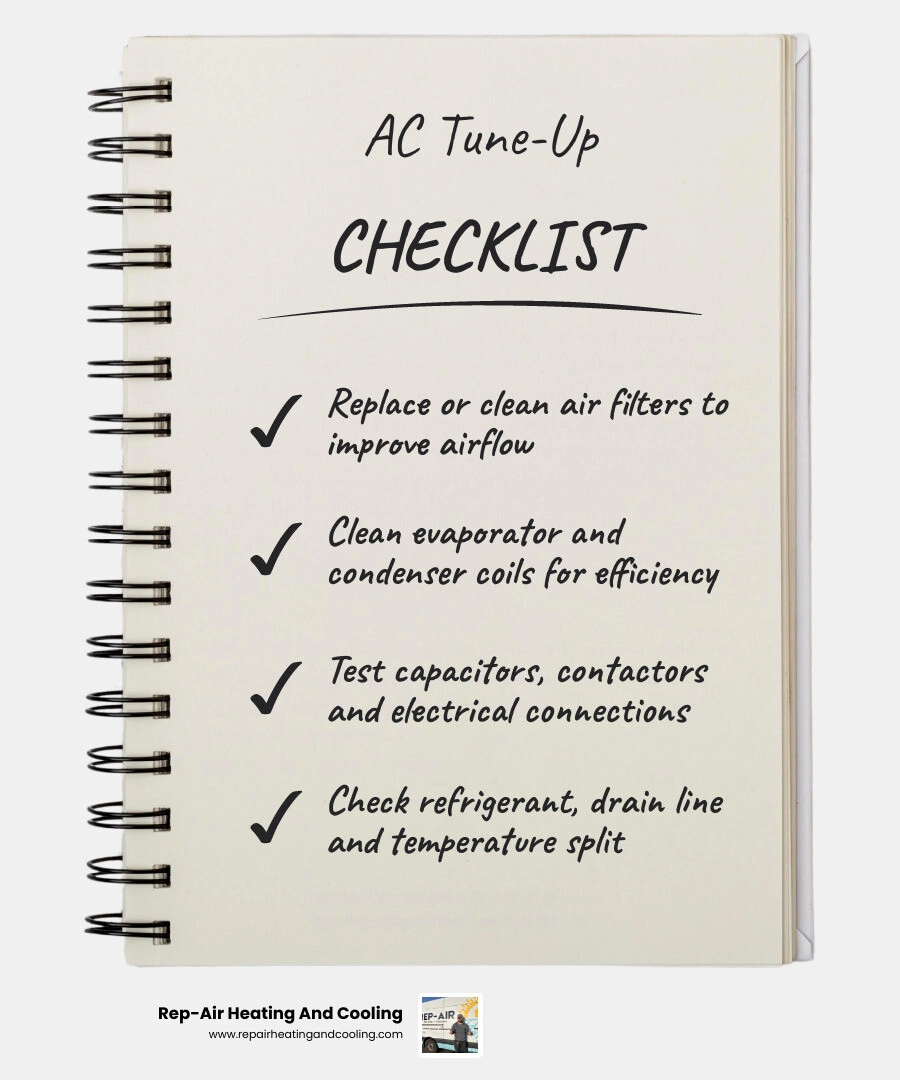
Knowing the ac tune up checklist what your technician should check can mean the difference between a system that runs strong all summer and one that fails on the hottest day of the year. Here is a quick overview of what a thorough tune-up should cover:
AC Tune-Up Checklist: What Your Technician Should Inspect
1. Air filter - inspect, clean, or replace
2. Evaporator coil - clean and check for ice or mold
3. Blower motor and wheel - measure amp draw, check for buildup
4. Condenser coil - clean and inspect for damage
5. Refrigerant levels - check pressures, inspect for leaks
6. Capacitors and contactors - test and inspect for wear
7. Electrical connections - tighten, measure voltage and amperage
8. Condensate drain line - flush and verify overflow switch
9. Thermostat - calibrate and test accuracy
10. Temperature split - measure supply vs. return air (ideal: 15-20°F difference)
11. Ductwork - visually inspect for leaks or damage
12. Disconnect box - verify proper rating and condition
Over 52% of a home's energy use goes to heating and cooling — and a neglected AC system can start failing well before its time. Homeowners across the Lower Mainland, BC know how important it is to have their cooling system ready before summer arrives. A proper tune-up is not just a quick filter swap. It is a thorough, documented inspection that protects your comfort, your equipment, and your energy bills.
The good news? When you know exactly what should be on the checklist, you can tell whether your technician is doing the job right — or cutting corners.
Why You Need an AC Tune Up Checklist: What Your Technician Should Check
An air conditioner is a major investment. When properly maintained, a residential cooling system can easily run for 15 to 20 years. However, when neglected, that same system often starts failing closer to the 10-year mark.
Skipping regular maintenance is a gamble that usually ends in expensive emergency repairs. Dust, dirt, and friction are silent killers for an air conditioner. Over time, a dirty system has to work much harder to cool your home, which drives up your monthly energy bills and places immense strain on its mechanical parts.
By utilizing a comprehensive ac tune up checklist what your technician should check, you ensure that small, hidden issues are caught before they turn into major system failures. Think of it as a preventative shield for your home's comfort. Regular maintenance keeps your manufacturer's warranty valid, optimizes energy efficiency, and prevents those dreaded mid-summer breakdowns. For more details on how preventive care keeps money in your pocket, check out our guide on AC Maintenance Benefits: Top 5 Ways to Save.
How Often to Schedule and What to Expect During a Visit
We highly recommend scheduling a professional AC tune-up once a year, ideally in the spring before the summer heat hits the Lower Mainland. This timing ensures your system is optimized and ready to run efficiently when you need it most.
When a professional technician from Rep-Air Heating And Cooling arrives at your home, a thorough tune-up should take anywhere from 60 to 90 minutes. If a technician shows up, swaps out your air filter, glances at your outdoor unit, and leaves within 15 to 20 minutes, they are cutting corners.
A real, high-value tune-up requires physical inspection, testing cycles, electrical measurements, and deep cleaning. To understand what a complete service entails across our local communities, read our comprehensive AC Service Best Guide Hope, BC.
Indoor Unit Inspection: Coils, Blower, and Airflow
The indoor portion of your air conditioning system is responsible for pulling warm air out of your living spaces, removing humidity, and distributing chilled air. If there is a bottleneck anywhere in this process, your comfort will suffer.
During the indoor inspection, your technician will focus on several critical components:
• The Evaporator Coil: This coil is where the actual heat exchange happens. Because it is cold and damp, it is a prime target for dust, mold, and mildew. If dust builds up on the evaporator coil, it acts as an insulator, preventing the refrigerant from absorbing heat efficiently. In worst-case scenarios, a dirty coil can cause the system to freeze up entirely.
• The Blower Motor and Wheel: The blower motor pushes the cooled air through your ductwork. Technicians must measure the motor's amp draw to ensure it is operating within the manufacturer's specifications. A dirty blower wheel can reduce airflow by 20% to 30%, forcing the motor to work harder, overheat, and eventually burn out.
• The Air Filter: A clogged air filter restricts airflow, putting massive strain on your blower motor. Replacing a dirty filter with a clean one can lower your system's energy consumption by 5% to 15%.
To learn more about the technical steps involved in these indoor checks, explore our article on What Does Professional AC Service Include.
Indoor AC Tune Up Checklist: What Your Technician Should Check for Airflow
Proper airflow is the lifeblood of your air conditioning system. When airflow is restricted, your home won't cool evenly, and your system will short-cycle (turn on and off too quickly).
During the airflow inspection, the technician should check:
• Static Pressure: This measures the resistance to airflow within your system. High static pressure indicates a blockage, dirty filters, or undersized ductwork.
• Ductwork Integrity: Leaky ducts are a massive source of energy waste. In fact, leaky ducts can waste 20% to 30% of conditioned air before it ever reaches your living spaces. The technician will perform a visual inspection of accessible ducts to look for loose joints or tears.
• Vents and Registers: They will ensure that air is flowing freely through your home's supply and return vents without obstruction.
For homeowners in Mission, keeping airflow optimized is key to managing indoor humidity. If you are experiencing airflow issues, scheduling an AC Service Mission, BC visit can quickly get your system back on track.
Outdoor Condenser Unit and Electrical Components
The outdoor unit, or condenser, is responsible for releasing the heat that was captured inside your home. Because it sits outdoors year-round, it is exposed to harsh weather, dirt, pollen, lawn clippings, and even pests.
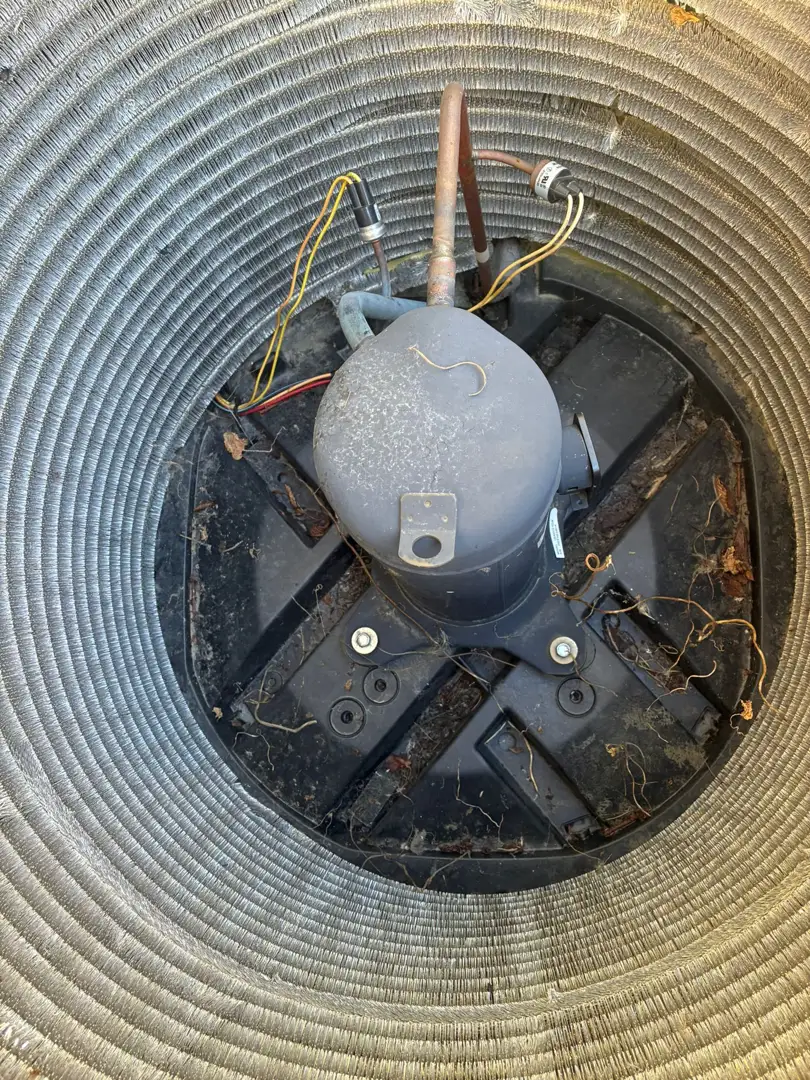
A dirty condenser coil cannot reject heat efficiently. If the coil is coated in grime, your system's energy consumption can increase by up to 30%. During a tune-up, the technician should thoroughly clean the condenser coil using a gentle water spray (never a pressure washer, which can bend the delicate aluminum fins). They will also inspect the fan motor and the compressor—the heart of your air conditioner. If you suspect your outdoor unit is struggling, read more about AC Condenser Unit Repair options.
Outdoor AC Tune Up Checklist: What Your Technician Should Check for Electrical Safety
Electrical failures are among the most common reasons for emergency service calls. An AC unit draws a significant amount of electricity, and loose or corroded connections can lead to unsafe operation or component failure.
Your technician's electrical checklist must include:
• Capacitors: These small, cylindrical devices store electrical energy to start and run the fan motor and compressor. Faulty capacitors are the number one cause of summer AC breakdowns. Technicians will test them with a multimeter to ensure they hold the correct microfarad charge.
• Contactors: The contactor is a switch that controls the flow of electricity to the compressor and fan. Over time, these contacts can become pitted, burned, or stuck, leading to system failure.
• Wiring and Connections: The technician will inspect all wiring for signs of fraying, overheating, or corrosion and tighten any loose terminals.
• The Disconnect Box: This safety switch allows the power to the outdoor unit to be shut off quickly. The technician must verify the box is clean, dry, and properly rated for your system.
If you live in South Langley, ensuring these electrical safety checks are performed annually is highly recommended. Learn more about local care options with AC Maintenance Campbell Valley, BC.
Refrigerant Levels, Leak Detection, and Safety Controls
Your air conditioner does not "use up" refrigerant. It is a sealed, hermetic system where refrigerant continuously circulates to transfer heat. If your system is low on refrigerant, it always indicates a leak.
Simply topping off the refrigerant without finding and fixing the leak is a waste of money and can cause permanent damage to your compressor. During a tune-up, the technician will measure the superheat and subcooling levels to verify the exact charge. If a leak is suspected, they will use specialized electronic leak detectors to find the source.
Additionally, safety controls must be tested:
• The Condensate Drain Line: As your AC cools the air, it removes moisture. This water drips into a drain pan and flows outside. If this line becomes clogged with algae or debris, water can back up, causing severe water damage to your ceilings or floors.
• The Overflow Safety Switch (Float Switch): This safety device automatically shuts down your AC if the drain line clogs and water begins to rise in the pan, preventing costly indoor flooding.
For professional assistance in identifying leaks or addressing water pooling around your system, our team is always ready to assist with expert AC Repair Richmond, BC services.
Frequently Asked Questions About AC Tune-Ups
How long does a professional AC tune-up take?
A thorough, professional AC tune-up typically takes 60 to 90 minutes per system. This timeframe allows the technician to perform a complete multi-point inspection, clean both the indoor and outdoor coils, test all electrical safety controls, measure refrigerant pressures, and run the system through a full operating cycle to verify performance.
What is a normal temperature split for a healthy AC?
A healthy, properly operating air conditioning system should have a temperature split of 15 to 20 degrees Fahrenheit (8 to 11 degrees Celsius). This is measured by comparing the temperature of the return air (the warm air entering the system) to the supply air (the cold air blowing out of your vents). A split lower than 15 degrees usually indicates an airflow issue or refrigerant problem.
Why is low refrigerant a major concern?
Because an AC is a sealed system, low refrigerant means there is a physical leak in the lines or coils. Running an AC with low refrigerant forces the compressor to work much harder and run hotter, which can quickly lead to complete compressor failure. Replacing a compressor is one of the most expensive repairs in HVAC, so catching and repairing leaks early is critical.
Conclusion
A professional air conditioning tune-up is the best way to ensure your home remains a cool, comfortable sanctuary all summer long. By understanding the ac tune up checklist what your technician should check, you can confidently protect your investment, lower your energy bills, and prevent unexpected breakdowns.
At Rep-Air Heating And Cooling, we pride ourselves on treating our Lower Mainland customers like family. Our expert technicians serve homeowners in Abbotsford, Mission, Langley, Richmond, and across the region with unmatched customer service.
Don't wait for the summer heat to arrive. Keep your system running at peak performance by signing up for our comprehensive maintenance-plan today!
hear what our satisfied clients have to say
Neighbourhoods in the Fraser Valley