Making the Big Spring Switch from Heating to Cooling
Why the Spring HVAC Transition from Heating to Cooling Matters for Lower Mainland Homeowners
The spring HVAC transition from heating to cooling is something every homeowner in the Lower Mainland needs to get right before the warm season arrives. It is not as simple as flipping a switch on your thermostat. Done properly, it protects your equipment, keeps your energy bills in check, and ensures your home stays comfortable from Surrey, BC to Chilliwack, BC and everywhere in between.
Here is a quick overview of what the spring transition involves:
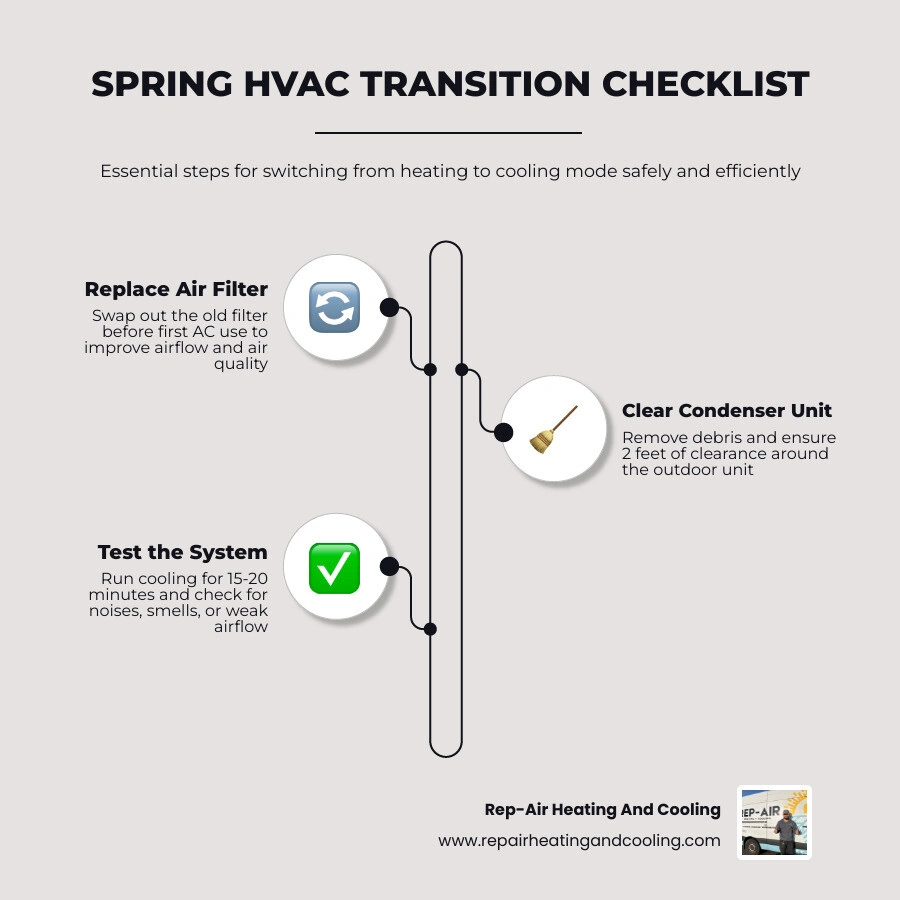
1. Replace your air filter - swap out the old filter before running your AC for the first time
2. Clear the outdoor condenser unit - remove debris and ensure at least two feet of clearance around the unit
3. Switch your thermostat to cooling mode - wait at least five minutes between switching modes to avoid strain on components
4. Test the system - run cooling for 15-20 minutes and listen for unusual noises or smells
5. Check for duct leaks - leaky ducts can waste up to 30% of the air passing through them
6. Schedule a professional tune-up - a trained technician catches issues before they become costly breakdowns
Spring in the Lower Mainland brings rising humidity, heavy pollen, and unpredictable temperatures that can swing between needing heat in the morning and AC by afternoon. Your HVAC system takes on a lot during this period. Getting ahead of potential problems now means fewer surprises when the real heat arrives.
When is the Best Time for the Spring HVAC Transition from Heating to Cooling?
Knowing exactly when to make the switch can be tricky in British Columbia. One day you're enjoying the cherry blossoms in Abbotsford, and the next, a damp breeze makes you want to crank the furnace back up. Generally, the best time to start thinking about the spring hvac transition from heating to cooling is when daytime highs consistently reach the mid-70s (around 24°C).
However, it isn't just about the heat. Humidity levels in the Lower Mainland begin to rise in April and May. Since your air conditioner acts as a dehumidifier, you might find yourself switching to "Cool" mode just to pull the moisture out of the air, even if the temperature isn't sweltering yet.
When you do decide to make the change, we recommend a gradual adjustment. Don't go from 21°C heating to 16°C cooling instantly. Start by setting the thermostat to a neutral temperature to see how the system reacts. A critical piece of advice we give all our neighbors in Mission and Langley is the 5-minute rule: always give your HVAC system at least a five-minute break when switching between heating and cooling. This prevents unnecessary strain on the compressor and avoids blowing fuses or tripping breakers. For more detailed timing tips, check out our guide on How to Get Your Home's HVAC Systems Ready for Spring.
Essential DIY Maintenance for a Smooth Switch
Before you ask your air conditioner to work hard for the next four months, it needs a little TLC. You wouldn't take a car on a cross-country road trip without checking the oil, and your HVAC system is no different!
Master the Air Filter
The single most important DIY task is checking your air filter. During the winter, your furnace filter has been trapping dust and pet dander. If it's clogged when you switch to cooling, your AC coils can actually freeze over because of restricted airflow.

For homes in areas like Maple Ridge or Chilliwack, where spring pollen can be intense, we suggest checking the filter monthly. If you have pets or allergies, you might need a higher MERV rating to catch smaller particles. You can find everything you need to know about sizing and types in our Furnace Filter Replacement Ultimate 2025 Guide.
Tending to the Outdoor Condenser
Your outdoor unit has likely spent the winter collecting dead leaves, twigs, and maybe even some wind-blown debris from the last Pacific storm. For your system to breathe, it needs at least two feet of clear space on all sides.
• Clear the Area: Trim back any shrubs or overhanging branches that grew over the winter.
• Clean the Fins: Use a garden hose (never a high-pressure washer!) to gently rinse away dirt and pollen from the exterior coils.
• Check for Damage: Look for frayed wires or bent fins. If you see something that looks "off," it's better to call us before turning the power on.
Vents and Registers
Walk through your home and ensure all supply registers and return vents are open and unobstructed. It's a common myth that closing vents in unused rooms saves energy; in reality, it creates pressure imbalances that can damage your ductwork or blower motor.
• Replace Air Filter — DIY Friendly?: Yes — Professional Recommended?: Included in Tune-up
• Clear Debris from Outdoor Unit — DIY Friendly?: Yes — Professional Recommended?: Yes
• Clean Condensate Drain Line — DIY Friendly?: Sometimes — Professional Recommended?: Yes
• Check Refrigerant Levels — DIY Friendly?: No — Professional Recommended?: Yes
• Inspect Electrical Components — DIY Friendly?: No — Professional Recommended?: Yes
• Seal Duct Leaks — DIY Friendly?: Minor leaks only — Professional Recommended?: Yes
Optimizing Efficiency and Indoor Air Quality
Once the system is physically ready, it's time to look at the "invisible" factors that affect your comfort and your wallet. In the Lower Mainland, efficiency is key to keeping those BC Hydro bills manageable.
The Hidden Cost of Leaky Ducts
Did you know that leaky ducts can lose up to 30% of the air that passes through them? That is air you've already paid to cool, escaping into your attic or crawlspace. If you notice uneven cooling or whistling sounds, these are common Signs Your HVAC System Needs Maintenance. Sealing these leaks with foil tape or mastic sealant can make a massive difference in your home's efficiency.
Managing Spring Allergens and Humidity
Spring in BC is beautiful, but the pollen count can be a nightmare for allergy sufferers. Your HVAC system is your first line of defense. Beyond changing filters, ensure your windows are closed on high-pollen days and that your AC's condensate drain is clear. If the drain is clogged, moisture stays in the system, leading to mold growth and "dirty sock syndrome" smells.
Smart Thermostat Settings
We often recommend that homeowners in places like Pitt Meadows and Coquitlam set their thermostats between 76–78°F (24–25°C) during the day when they are home. This provides a perfect balance of comfort and energy savings. Upgrading to a smart thermostat can help automate this, allowing the system to ramp up cooling just before you get home from work.
Special Considerations for Heat Pumps and System Testing
Many homes in the Lower Mainland utilize heat pumps, which are fantastic for our temperate climate. However, because they run year-round to provide both heat and cool, they require maintenance twice a year—once before each major season.
The Reversing Valve
The "magic" of a heat pump lies in the reversing valve, which changes the flow of refrigerant. During the spring hvac transition from heating to cooling, this valve has to move for the first time in months. If your heat pump is blowing warm air when set to "Cool," the reversing valve might be stuck. This is a technical repair that requires a professional touch.
The 15-Minute Test Run
Don't wait for the first 30°C day in July to find out your AC isn't working. In April or May, perform a test run:
1. Switch the thermostat to "Cool."
2. Set the temperature a few degrees below the current room temp.
3. Let it run for 15-20 minutes.
4. Check the air coming from the vents—it should be crisp and cold.
5. Listen for grinding, squealing, or clunking sounds.
If you hear anything unusual, it's time to look into Essential Tips for Effective Furnace Maintenance or schedule a cooling-specific inspection.
Frequently Asked Questions about Seasonal HVAC Care
How often should I change my air filters during the spring hvac transition from heating to cooling?
Ideally, you should check your filter once a month. Most standard pleated filters should be replaced every 1 to 3 months. However, if you live in a high-pollen area like the Fraser Valley or have pets that shed their winter coats in the spring, you'll likely need to change them every 30 days to maintain optimal airflow. For a deep dive into filter types, see our Furnace Filter Replacement Ultimate 2025 Guide.
What are the warning signs during a spring hvac transition from heating to cooling?
Watch out for the "Big Three":
• Noises: Banging, whistling, or grinding usually mean a mechanical failure is imminent.
• Smells: Musty odors suggest mold in the ducts or a clogged drain, while burning smells could be electrical.
• Weak Airflow: If the air is cold but barely blowing, you could have a clogged filter, a dying blower motor, or major duct leaks.If you notice these, refer to our guide on Signs Your HVAC System Needs Maintenance.
Can I switch between heat and cool on the same day?
Yes, you can, but you must be careful. In the Lower Mainland, it's common to have a 10°C morning and a 22°C afternoon. If you must switch back and forth, use the "Auto" setting on your thermostat if it has a "deadband" feature (which prevents the system from toggling too rapidly). If switching manually, always allow the system to finish its current cycle and give it a 5-minute break before starting the other mode. This protects the compressor from high-pressure starts. You can learn more about managing these swings in our post on How to Get Your Home's HVAC Systems Ready for Spring.
Ensure a Worry-Free Summer with Rep-Air Heating And Cooling
Making the spring hvac transition from heating to cooling doesn't have to be a stressful event. By following these DIY steps and understanding how your system operates in our unique British Columbia climate, you can extend the life of your equipment and keep your family comfortable all year long.
While DIY maintenance is a great start, nothing beats the peace of mind that comes with a professional inspection. At Rep-Air Heating And Cooling, we pride ourselves on treating our customers like family. Whether you are in Abbotsford, Surrey, or Port Coquitlam, our expert technicians are ready to ensure your system is primed for the summer heat. We check refrigerant levels, clean internal coils, and test safety controls that are often missed during a standard cleaning.
Don't wait for a breakdown to happen during the first heatwave of 2026. More info about HVAC services is just a click away. Let us help you make this seasonal switch the smoothest one yet!
hear what our satisfied clients have to say
Neighbourhoods in the Fraser Valley