Electrical in Town Centre, BC
Immediate Electrical Services: How Soon Is Now?
Facing unexpected electrical issues can be stressful, particularly during odd hours or severe weather conditions. You need quick, reliable electrical services that promise not only to resolve the problem but also to ensure safety and compliance. Contact us immediately to schedule a certified electrician for your home or business.
For residents in Town Centre, BC, electrical safety is paramount, especially given the region’s specific climate and housing infrastructure. Rep-Air Heating and Cooling provides the expertise required to diagnose and repair critical system failures swiftly:
- 24-hour emergency services available, ensuring help is always a call away.
- Comprehensive electrical assessments and repairs completed by certified electricians.
- Transparent pricing with no hidden fees, providing online estimates for all services.
All services fully licensed, bonded, and insured for your peace of mind.
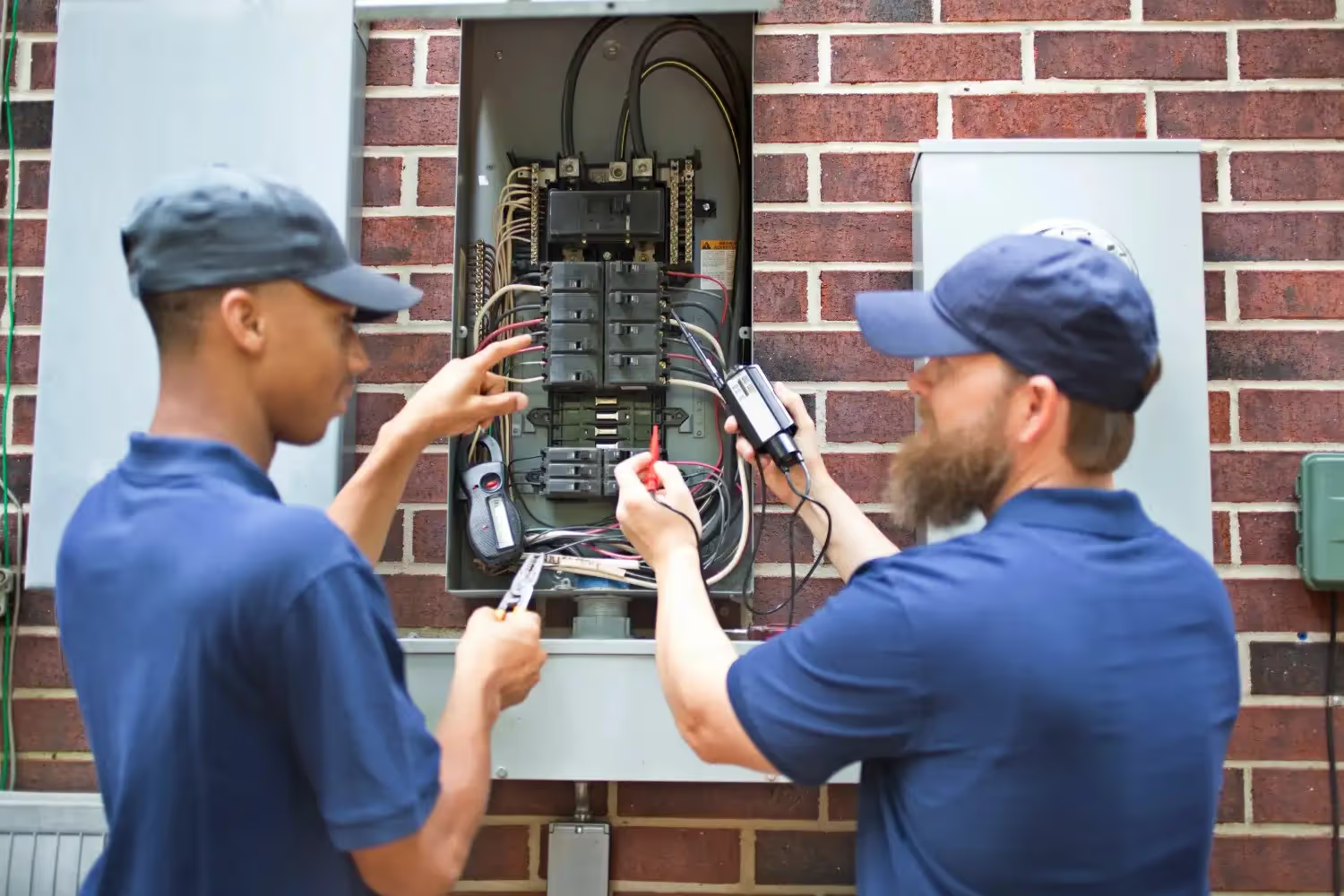
Emergency Electrical Failures: Swift, Safe Resolution
Electrical failures rarely happen at convenient times. When a circuit breaker refuses to reset, an outlet sparks, or a burning smell emanates from the walls, the immediate need is safety and restoration of power. Waiting is often not an option due to the potential fire hazards associated with degraded wiring or overloaded panels.
The primary goal during an electrical service call is to isolate the fault and prevent further damage to the property's infrastructure or connected appliances. Modern homes in British Columbia are burdened with high-demand electronics, EV chargers, and HVAC systems that older electrical systems struggle to support. When these systems fail, it indicates that the electrical load has exceeded safe limits or that physical components have degraded.
Technicians prioritize the following during an urgent response:
- Fault Isolation: Identifying exactly where the break in continuity or the short circuit has occurred within the walls or panel.
- Fire Prevention: Checking for signs of arcing, melting insulation, or scorched terminals that indicate immediate fire risks.
- Power Restoration: safely bypassing damaged circuits or replacing main breakers to restore light and heat to the home.
- Code Compliance Check: Ensuring that the immediate repair meets current Canadian Electrical Code standards to prevent recurrence.
What You Get Today: Scope, Timeline, and Inclusions
Engaging a professional electrical service means more than just a quick fix; it involves a comprehensive approach to energy management and safety. When a certified electrician arrives at a property in Town Centre, the scope of work is defined by a rigorous diagnostic process. The objective is to provide a permanent solution rather than a temporary patch.
The service timeline depends heavily on the complexity of the issue. A standard diagnostic visit typically yields answers within the first hour. Simple repairs, such as swapping out a faulty GFCI outlet or replacing a breaker, are often completed in the same visit. More complex projects, such as a panel upgrade or a partial rewire, require a scheduled timeline involving permit acquisition and utility coordination.
Homeowners can expect the following inclusions in a standard service call:
- System Diagnostics: Use of multimeters and circuit analyzers to read voltage, amperage, and resistance levels throughout the affected area.
- Load Calculation: An assessment of whether the current electrical panel can handle the existing appliances and any requested additions.
- Component Replacement: Removal of defective switches, outlets, fixtures, or breakers and installation of commercial-grade replacements.
- Safety Testing: Verification that all ground fault circuit interrupters (GFCIs) and arc fault circuit interrupters (AFCIs) are functioning correctly to protect against shock and fire.
The Installation and Replacement Process
Whether upgrading a service panel to 200 amps or rewiring a kitchen renovation, the installation process follows a strict protocol to ensure safety and regulatory compliance. Rep-Air Heating and Cooling adheres to a structured workflow that minimizes disruption while maximizing system reliability.
The process typically unfolds in these distinct stages:
- Initial Assessment and Load Calculation: The first step involves a thorough audit of the home’s current electrical usage. Technicians calculate the total load based on square footage, heating methods, and major appliances. This determines if the existing service mast and panel are sufficient or if an upgrade is required to support new installations like hot tubs or EV chargers.
- Permitting and Utility Coordination: Before any major wire is pulled, the necessary permits must be pulled from Technical Safety BC or the local municipality. If the project involves shutting off power at the street or upgrading the meter base, coordination with BC Hydro is initiated to schedule a disconnect and reconnect time.
- Rough-In and Execution: For renovations or new lines, technicians drill holes, run conduit, and pull wiring through the framing. This stage focuses on routing power safely away from plumbing and heat sources. Boxes for outlets and switches are mounted, and the wires are stripped and prepped for connection.
- Panel Termination and Bonding: All circuits are brought back to the main panel. Grounding and bonding systems are installed to ensure that in the event of a fault, the electricity has a safe path to the earth rather than through a person or appliance. Breakers are installed, and circuits are labeled clearly.
- Final Trim and Testing: Once walls are closed (if applicable), devices like switches, outlets, and light fixtures are installed. The system is energized, and rigorous testing is performed to ensure correct polarity, voltage drop limits, and grounding continuity.
- Inspection: A final inspection by a government safety officer is scheduled to verify that all work meets the Canadian Electrical Code. Only after this approval is the job considered complete.
Repair vs. Replacement: Making the Right Call
Deciding whether to repair an existing electrical component or upgrade it entirely is a common dilemma. While repairs are often cheaper upfront, retaining outdated technology can be more costly and dangerous in the long run. The decision usually comes down to the age of the system, the frequency of failures, and the safety features available in modern equipment:
When to Repair:
- Isolated Component Failure: If a single outlet stops working due to a loose wire or internal spring failure, but the wiring leading to it is in good condition, a simple replacement of the device is sufficient.
- Newer Systems: If the home was wired or upgraded within the last 20 years and meets modern grounding standards, minor issues are likely isolated incidents rather than systemic failures.
- Cosmetic Issues: Broken faceplates or loose switches can be repaired without touching the underlying infrastructure.
When to Replace:
- Obsolete Wiring Types: If the home contains knob-and-tube wiring (common in pre-1950s homes) or aluminum branch wiring (common in the 1960s and 70s), replacement is necessary. These materials pose significant fire risks and are often uninsurable.
- Undersized Panels: A 60-amp service is no longer sufficient for a modern household. If the panel is full, uses fuses instead of breakers, or is a brand known for failure (like Federal Pacific), a full service upgrade to 100 or 200 amps is required — apply for financing online.
- Lack of Grounding: Two-prong outlets indicate a lack of a ground wire. Simply replacing the outlet with a three-prong version without adding a ground or a GFCI breaker is code-compliant but does not provide equipment grounding. Rewiring is the superior solution.
- Recurring Trips: If a breaker trips constantly despite not being overloaded, the breaker itself may be worn out, or the wire insulation may be compromising the circuit.
Electrical Considerations for Town Centre Residents
Operating in Town Centre and the greater BC region introduces specific environmental and regulatory factors that influence electrical work. The local climate is a major variable. The temperate oceanic climate, characterized by wet winters and significant rainfall, demands robust moisture protection for all outdoor electrical systems:
- Moisture and Outdoor Electrical: Water ingress is the enemy of electrical safety. In this region, outdoor outlets must be protected by weather-resistant "in-use" covers that keep rain out even when a cord is plugged in. Underground wiring for landscape lighting or detached garages must use wires rated for direct burial or wet locations to prevent short circuits caused by soil saturation.
- Permits and Local Codes: Electrical work in British Columbia is highly regulated. Homeowners should be aware that almost all electrical work, beyond changing a light bulb or a faceplate, requires a permit. This includes adding a new outlet, upgrading a panel, or installing a hard-wired appliance. Unauthorized work can void home insurance policies and complicate future real estate transactions.
- Seismic Considerations: Given the region's location in a seismically active zone, heavy electrical equipment such as main distribution panels and transformers must be securely anchored. Professional electricians ensure that mounting hardware is sufficient to hold equipment in place during a seismic event to prevent fires or blocked exits.
- Energy Efficiency and Rebates: BC homeowners often have access to rebates for energy-efficient upgrades, such as installing heat pumps or EV chargers. These upgrades require specific electrical infrastructure. A professional assessment ensures that the home’s panel has the capacity to accept these high-load devices without triggering a main breaker trip.
Why Professional Execution Matters
The complexity of modern electrical systems makes DIY attempts dangerous and often illegal. Professional execution ensures that the invisible flow of energy in a home is managed safely, efficiently, and legally:
- Safety and Liability: The most critical differentiator is safety. Certified electricians understand the physics of electricity—how heat is generated at connection points, how arc faults occur, and how to prevent electrocution. Professional work shifts the liability from the homeowner to the contractor. If a fire occurs due to DIY work, insurance claims are frequently denied. When a licensed contractor performs the work, it is covered by their liability insurance and the bond.
- Code Compliance and Resale Value: Electrical codes change every few years to incorporate new safety technologies. Professionals stay updated on these changes. When selling a home, unpermitted or non-compliant electrical work is a major red flag for home inspectors. Having a paper trail of permits and inspections for all electrical work preserves the home’s value and facilitates smooth transactions.
- Diagnostic Accuracy: A tripping breaker is a symptom, not necessarily the root cause. A homeowner might keep resetting the breaker, unaware that the wire inside the wall is melting. A professional looks past the symptom to find the fault, using specialized tools to locate breaks or shorts without unnecessary drywall damage.
- Long-Term Reliability: Professional connections are tight, secure, and made with the correct materials. Anti-oxidants are used on aluminum connections, torque screwdrivers ensure breakers are tightened to spec, and wires are stapled to framing to prevent strain. These details ensure the system operates failure-free for decades, not just weeks.
Secure Your Home’s Electrical System
Electrical issues are not problems that can be ignored or deferred. They represent immediate safety risks and functional limitations for your property. Ensuring your wiring, panels, and fixtures are installed and maintained by certified professionals is the only way to guarantee the safety of your home and family.
From emergency repairs to full panel upgrades, the focus remains on delivering safe, code-compliant, and durable solutions. Don't leave your electrical safety to chance or untrained hands.
Contact Rep-Air Heating and Cooling today to schedule your comprehensive electrical assessment and resolve your power issues immediately.
hear what our satisfied clients have to say
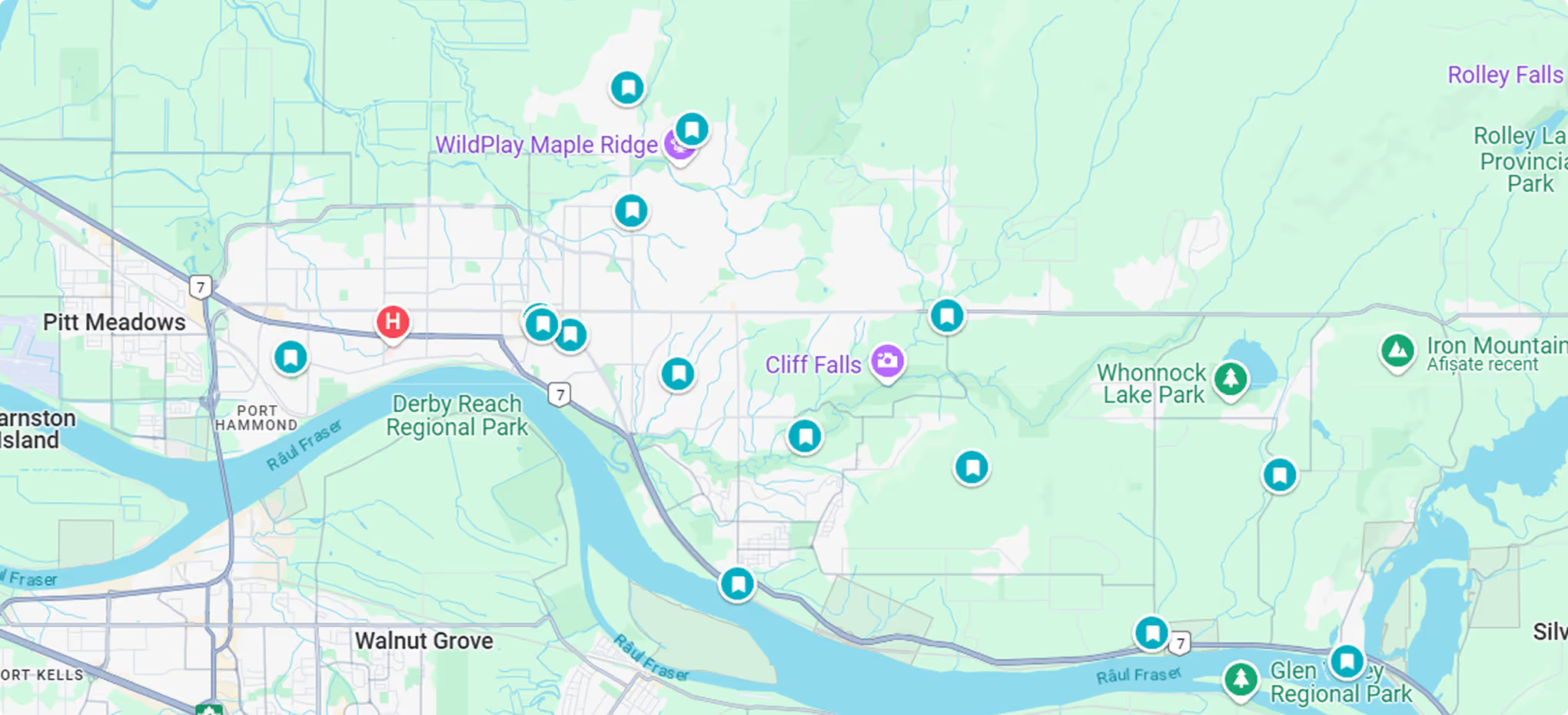
Neighbourhoods in the Fraser Valley