Heat Pump in Abbotsford, BC
Is Your Heat Pump Failing to Maintain Consistent Comfort?
If your heat pump is struggling to combat the damp chill typical of the Pacific Northwest, or you have noticed your energy bills spiking despite moderate usage, your system likely requires immediate professional attention. Rep-Air Heating and Cooling provides comprehensive diagnostic and repair services to restore your home's thermal regulation before the weather turns extreme. Contact us to schedule a technician or click here to apply for financing.
Homeowners in Abbotsford and the surrounding BC regions rely heavily on heat pumps for year-round climate control, making downtime a significant inconvenience. Whether you are dealing with a frozen outdoor unit, irregular cycling, or a complete system failure, our team identifies the root cause accurately to prevent recurring issues. We focus on restoring efficiency and reliability so your home remains comfortable through the heating season and the summer heat.
- Rapid response and repair services to restore warmth and efficiency quickly.
- Seasonal maintenance plans to extend the lifespan and performance of your heat pump.
- Expert guidance on upgrades and rebates to improve your home's energy efficiency.
- All services are fully licensed, with extended warranties and flexible financing available.

Immediate Heat Pump Solutions and Scope of Service
When you schedule a service visit, the objective is to move from diagnostics to resolution on the same day whenever possible. Heat pumps are complex systems that function as both heating and cooling units, relying on the transfer of thermal energy rather than fuel combustion. This dual functionality means that a failure in one component, such as the reversing valve, can compromise the entire system's ability to switch between seasons.
Our technicians arrive with stocked service vehicles containing common parts such as capacitors, contactors, fan motors, and control boards. This preparation minimizes the need for follow-up visits and reduces the time your home spends without climate control. Upon arrival, we perform a static pressure test to ensure airflow is unobstructed and check refrigerant levels to verify they meet the manufacturer’s specifications.
Diagnostic and Repair Capabilities
We address the specific mechanical and electrical failures that plague heat pumps in this region:
- Refrigerant Leak Detection: Low refrigerant levels drop the system's capacity to transfer heat. We locate leaks, repair the line set, and recharge the system to factory specifications.
- Defrost Control Board Repair: In high-humidity climates, the outdoor unit must periodically defrost to prevent ice buildup. If the control board fails, the unit freezes over, blocking airflow and stopping heat transfer.
- Compressor Analysis: The compressor is the heart of the system. We test winding resistance and amp draw to determine if the component is healthy or nearing failure.
- Auxiliary Heat Troubleshooting: If your heat pump is running constantly in "Emergency Heat" mode, your electricity bill will skyrocket. We repair the primary heat pump function to stop reliance on expensive backup electric strips.
- Thermostat Calibration: Incorrect wiring or calibration can cause short-cycling. We ensure the thermostat effectively communicates with the air handler and outdoor condenser.
The Installation and Replacement Process
A heat pump installation is a construction project that requires precise load calculation and integration with your home’s existing infrastructure. Simply swapping a unit for a like-for-like size often results in inefficiency if the original unit was not sized correctly. Our process ensures that the new system is optimized for the square footage, insulation values, and window exposure of your property.
- Load Calculation: First, we perform a heat load calculation. This determines exactly how many BTUs are required to heat and cool your space efficiently. Oversized units short-cycle, leading to humidity issues and wear, while undersized units run continuously without reaching the set temperature.
- Site Preparation: Next, we prepare the installation site. For the outdoor unit, this involves ensuring a level, stable pad that is elevated above the anticipated snow line to prevent burial during winter storms. Clearances are checked to ensure adequate airflow around the coil.
- Ductwork Modification: Then, we assess and modify the plenum and ductwork. Heat pumps require specific airflow rates (CFM) to operate correctly. We seal leaks and insulate accessible ductwork to prevent energy loss before the air reaches your living space.
- Line Set Installation: We run new copper refrigerant lines connecting the indoor and outdoor units. These lines are brazed under a nitrogen purge to prevent oxidation inside the pipe, which is a critical step for the longevity of modern HVAC systems.
- Electrical Integration: We verify that your electrical panel has sufficient amperage to support the new heat pump and auxiliary heat strips. New disconnect boxes and whips are installed to meet current electrical safety codes.
- System Commissioning: Finally, the system is vacuumed to remove moisture and non-condensables, then charged with refrigerant. We test the unit in both heating and cooling modes, verifying temperature splits and airflow before handing over the system.
Deciding Between Repair and Replacement
Determining whether to repair an aging heat pump or invest in a new system is a financial calculation based on age, condition, and future efficiency gains. While repairs are often the lower upfront cost, they can be more expensive over time if the unit is nearing the end of its service life or uses obsolete technology.
The 50% Rule and Asset Age
Industry standards suggest that if the cost of a repair approaches 50% of the value of a new system, replacement is the more prudent financial decision. This is particularly true for units over 10 years old. Heat pumps generally have a lifespan of 12 to 15 years. As they age, the compressor valves wear out and the coil surfaces corrode, leading to a natural decline in efficiency.
Refrigerant Considerations
Older systems often utilize R-22 refrigerant, which has been phased out due to environmental regulations. Obtaining R-22 is increasingly difficult and expensive. If your older unit develops a refrigerant leak, the cost to recharge it may outweigh the value of the equipment. Modern systems use R-410A or newer, eco-friendly refrigerants that are readily available and more efficient at transferring heat.
Efficiency Ratings (SEER and HSPF)
Newer heat pumps come with higher Seasonal Energy Efficiency Ratio (SEER) and Heating Seasonal Performance Factor (HSPF) ratings. Moving from a 10 SEER unit to a 16+ SEER unit can result in significant monthly energy savings.
- Frequent Breakdowns: If you have required multiple service calls in the last two years, the unit is likely becoming unreliable.
- Uneven Heating: If specific rooms are cold while others are hot, the compressor may no longer be able to modulate effectively.
- Noise Levels: Grinding or squealing noises often indicate internal mechanical failure that is costly to repair.
Navigating Local Requirements and Seasonality
Operating a heat pump in British Columbia requires specific attention to local climate patterns and regulations. The region’s unique weather—characterized by damp, hovering-above-freezing winters and increasingly hot summers—places distinct demands on HVAC equipment.
Permitting and Code Compliance
Any installation or significant alteration to an HVAC system in Abbotsford requires adherence to the BC Building Code and local municipal bylaws. This typically involves electrical permits for the high-voltage wiring and potentially gas permits if the system is a dual-fuel hybrid (paired with a gas furnace). Professional installation guarantees that all work passes inspection, ensuring your home insurance remains valid and your property value is protected.
Utility Rebates and Incentives
Governments and utility providers frequently offer rebates to encourage the adoption of high-efficiency heat pumps. Programs like CleanBC and federal grants can significantly offset the initial capital investment. Eligibility often depends on the specific HSPF rating of the new unit and the certification of the installer. We assist in identifying which equipment qualifies for current rebate tiers, ensuring you maximize available financial incentives.
Seasonality and The "Shoulder Season"
The most critical times for heat pump operation are the transition months, or "shoulder seasons." During late autumn, the humidity is high, but temperatures are not yet freezing. This is when the defrost cycle is most active. Ensuring your system is tuned up before November is vital. Conversely, before the summer "heat domes" arrive, checking the cooling charge is essential. A system that struggles to heat in winter will likely fail to cool effectively in summer.
Why Professional Service is Non-Negotiable
Heat pumps are sophisticated appliances that utilize advanced electronics, variable-speed motors, and high-pressure refrigerants. Attempting DIY repairs or relying on general handymen often leads to further damage, voided warranties, and safety hazards.
Specialized Training
Technicians trained specifically on heat pump technology understand the thermodynamics of the refrigeration cycle. They can distinguish between an airflow problem and a refrigerant problem, which often present with similar symptoms. Rep-Air Heating and Cooling ensures all personnel undergo continuous training to stay current with the latest inverter technology and smart thermostat integrations.
Warranty Preservation
Manufacturers strictly require that licensed professionals perform all repairs and maintenance. Failure to provide proof of professional service can result in a warranty claim being denied. We provide detailed documentation of all work performed, preserving your manufacturer's warranty coverage for parts and the compressor.
Safety and Electrical Standards
Heat pumps operate on 240-volt circuits and contain capacitors that store lethal electrical charges even when the power is off. Professional technicians follow strict lockout/tagout procedures and use insulated tools to work safely. Additionally, handling refrigerant requires environmental certification to prevent venting harmful gases into the atmosphere.
Optimizing Performance for the Long Term
To get the best return on your investment, proactive care is required. A heat pump that is neglected will lose approximately 5% of its efficiency for every year of operation without maintenance. This efficiency loss translates directly to higher utility bills.
- Filter Maintenance: The most common cause of system failure is a dirty air filter. We recommend checking filters monthly and replacing them at least every 90 days.
- Outdoor Unit Clearance: Keep vegetation, snow, and debris at least 24 inches away from the outdoor unit. Restricted airflow forces the fan to work harder and reduces heat exchange.
- Thermostat Settings: Avoid "setback" strategies used with gas furnaces. Heat pumps work best when left at a constant temperature, as they recover heat slowly and efficiently rather than in high-heat blasts.
Choosing the right partner for your HVAC needs ensures that your system operates at peak performance regardless of the weather outside. From emergency repairs during a cold snap to strategic replacements that lower your carbon footprint, we provide the technical expertise required for modern home comfort.
Ready to restore comfort to your home? Contact us today to schedule your service or request a quote for a new high-efficiency system.
Reliable Heat Pump Installations That Prioritize System Efficiency
When it comes to choosing a heat pump in Abbotsford, BC, performance and reliability go hand-in-hand. Rep-Air Heating and Cooling provides professional installation and service for energy-efficient systems that deliver consistent comfort across your space. Our team evaluates your home’s layout and heating needs to recommend the right unit—no upselling, just proven solutions. Every install is handled by certified techs who value precision.
Choose A Heat Pump Setup That’s Built For Long-Term Confidence
hear what our satisfied clients have to say
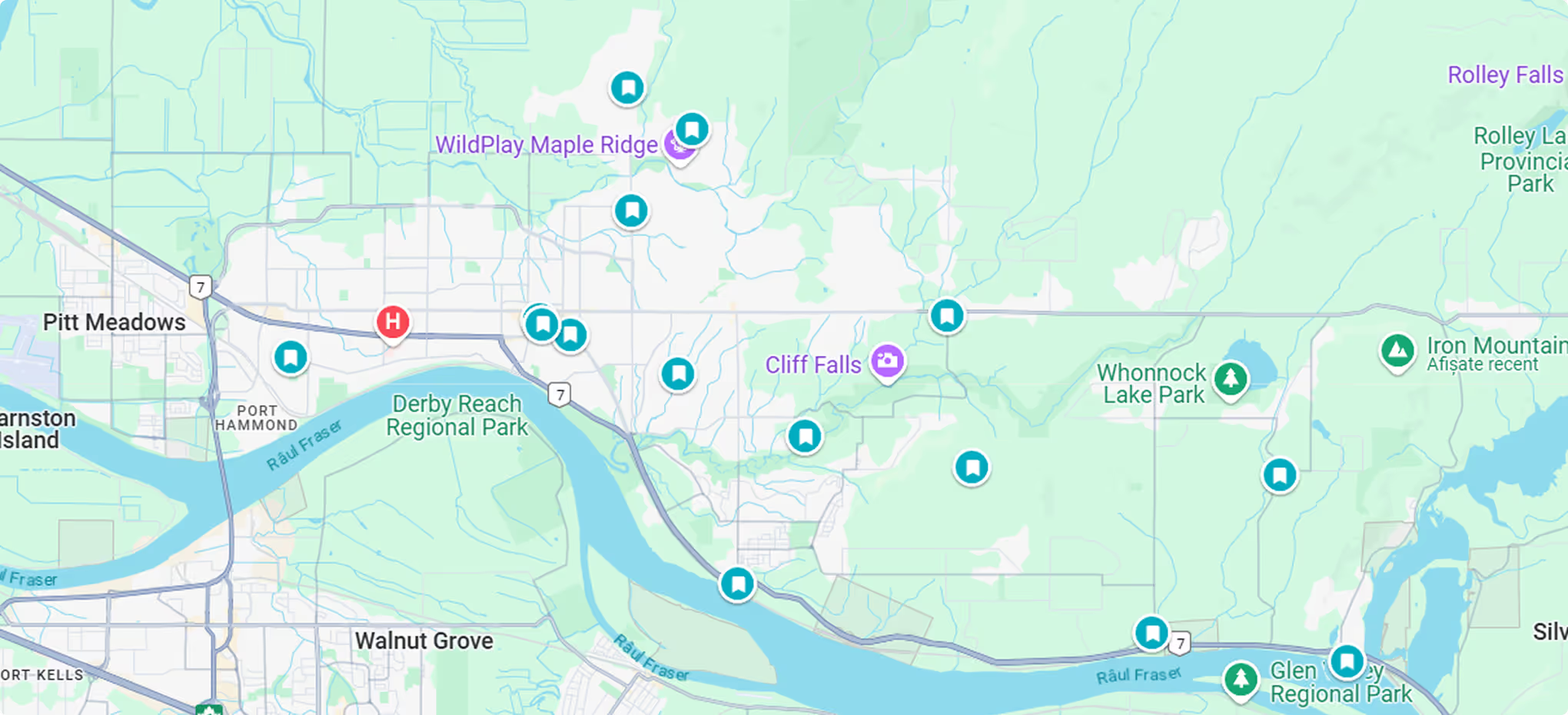
Neighbourhoods in the Fraser Valley