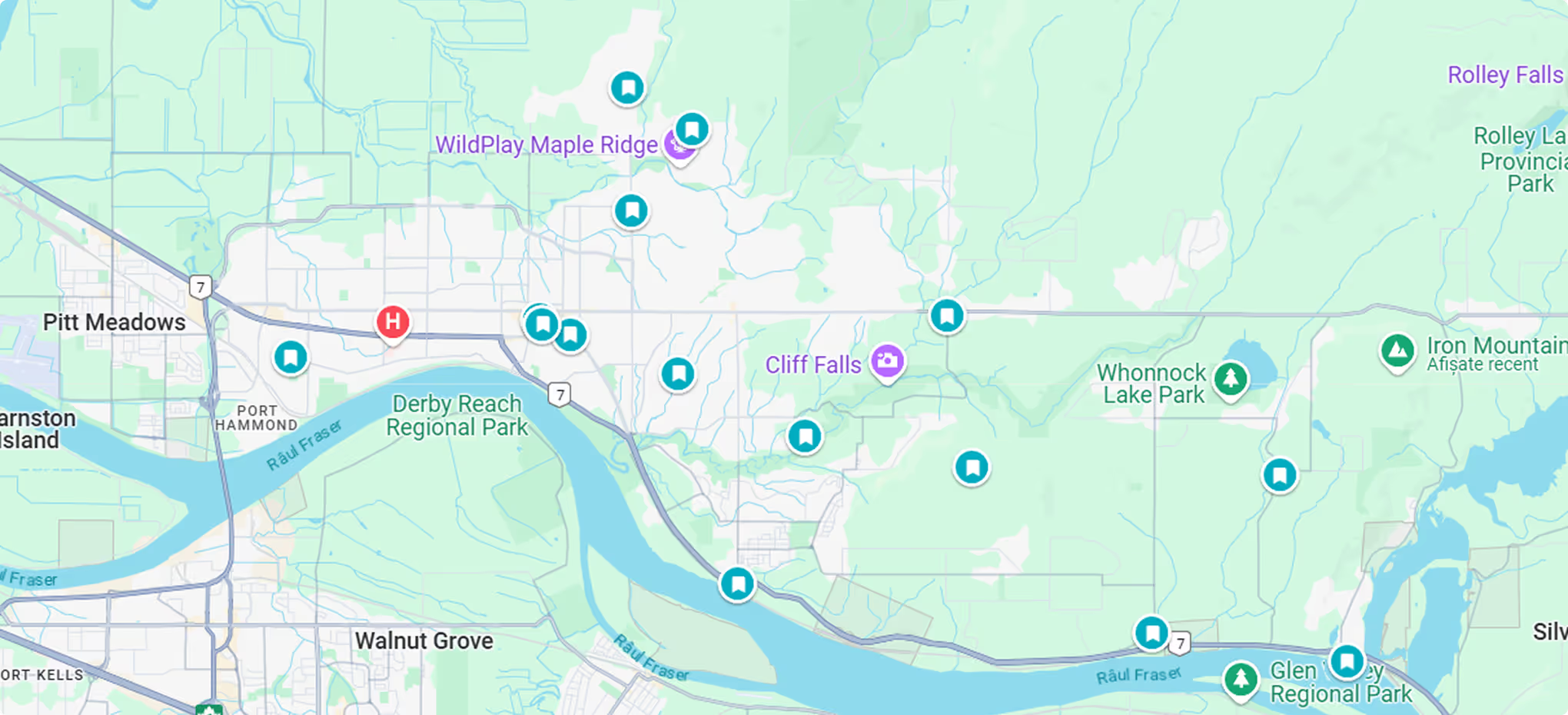
Heat Pump in East Townline, BC
Struggling with Inefficient Heating? Upgrade to a Reliable Heat Pump
Facing inconsistent temperatures at home? A quality heat pump installation can be your solution to a comfortable, energy-efficient home, regardless of the weather outside. Contact us today to schedule your assessment or discuss flexible financing options.
- Achieve stable indoor climate with advanced heat pump technology.
- Reduce your energy bills with an efficient and modern system.
- Enjoy peace of mind with same-day installation and comprehensive warranties.
All installations are compliant with BC safety codes, backed by extensive warranties, and available with flexible financing options.
Homeowners in East Townline often struggle with managing indoor comfort due to the region's specific climate mix: wet, freezing winters and summers that can spike up to 30°C with high humidity. Traditional furnaces may heat a home, but they lack the ability to cool, while older air conditioners often fail to handle the humidity load efficiently. A heat pump solves both problems simultaneously, transferring heat energy rather than generating it, which drastically lowers operational costs. Rep-Air Heating and Cooling provides precise load calculations and professional implementation to ensure your system handles the coastal influence and temperature swings effectively.

What to Expect From a Modern Heat Pump System
Investing in a heat pump is about more than just swapping out a box outside your home; it is an upgrade to your property’s entire thermal management system. When you move forward with an installation today, the focus is on immediate efficiency gains and long-term reliability.
The scope of a standard installation includes a comprehensive evaluation of your current ductwork and electrical capacity. Many older homes require minor modifications to accommodate the airflow requirements of high-efficiency units. You receive a system properly matched to your home's square footage and thermal envelope. This prevents "short-cycling," where a unit turns on and off too frequently, and ensures the unit runs long enough to effectively dehumidify the air during those damp winter months or humid summer days.
Modern systems come equipped with advanced variable-speed compressors. Unlike single-stage motors that run at 100% capacity or not at all, variable-speed units adjust their output in tiny increments to match the heating or cooling demand. This results in whisper-quiet operation and consistent temperatures without cold spots or overheating.
Additionally, the package typically includes:
- Removal and environmentally safe disposal of existing HVAC equipment.
- Installation of the outdoor condenser unit on a vibration-absorbing pad or snow stand to protect against winter precipitation.
- Connection of the indoor air handling unit or coil to existing ductwork.
- Integration of a smart thermostat capable of managing dual-fuel systems if a gas furnace is retained as backup.
- Complete commissioning, including refrigerant charge verification and airflow testing.
Step-by-Step Installation Process
A professional installation follows a rigid protocol to ensure the equipment performs according to the manufacturer's specifications. Shortcuts during this phase often lead to premature failure or reduced efficiency years down the line.
- Site Preparation and Protection: Technicians begin by preparing the workspace to protect your property. Drop cloths are laid down, and the electrical circuit serving the HVAC equipment is shut off for safety. If the outdoor unit requires a new location, the ground is leveled and prepared with a gravel base or concrete pad to ensure stability and proper drainage.
- Equipment Removal: The old air conditioner or heat pump is disconnected. Licensed professionals handle the recovery of old refrigerant, adhering to strict environmental regulations to prevent venting harmful gases into the atmosphere. The old unit is then hauled away.
- Indoor Unit Installation: For ducted systems, the indoor coil is installed on top of the furnace or inside the air handler. This component is the heat exchanger where the actual heating or cooling of the air occurs. The transition between the new coil and the existing ductwork is sealed with mastic or foil tape to prevent air leakage, which is critical for system efficiency.
- Outdoor Unit and Line Set Connection: The outdoor condenser is positioned. Copper refrigerant lines (the line set) are run from the indoor unit to the outdoor unit. These lines are brazed using nitrogen purging techniques to prevent oxidation inside the copper, which can damage the compressor.
- Electrical and Control Wiring: High-voltage wiring is connected to the disconnect box and the unit. Low-voltage control wiring is run to the thermostat and the furnace/air handler. This communication loop ensures the thermostat can accurately control the staging of heat and cool air.
- Vacuum and Pressure Testing: Before releasing the refrigerant, the system undergoes a pressure test with nitrogen to check for leaks. Following this, a deep vacuum is pulled to remove all moisture and non-condensable gases from the lines. Moisture inside the lines is a primary cause of compressor failure.
- System Startup and Commissioning: The refrigerant is released, and the system is powered on. Technicians measure static pressure, temperature rise/drop, and voltage amp draws to verify the system is operating within factory parameters.
When to Replace Your Current System Instead of Repairing
Deciding between another repair bill and a full replacement is a financial calculation based on system age, efficiency, and reliability. While repairs may seem cheaper upfront, an aging system is a liability that costs more to operate every month.
Consider replacement if the equipment is over 10 to 15 years old. Heat pump technology has advanced significantly in the last decade. A unit from 2010 likely operates at a much lower Seasonal Energy Efficiency Ratio (SEER) and Heating Seasonal Performance Factor (HSPF) than modern standards require. Upgrading can often reduce energy consumption by 30% to 50%.
Frequent breakdowns are a clear signal. If you have called for service more than twice in the last two years, the system is reaching the end of its viable life. The cost of parts and labor for a major component, such as a compressor or reversing valve, often approaches half the cost of a new unit. In these cases, investing that money into a new system with a warranty is the more prudent financial move.
Another critical factor is the refrigerant type. Older systems utilize R-22 (Freon), which has been phased out due to environmental regulations. Obtaining R-22 for a recharge is now exponentially expensive. Modern systems use R-410A or newer refrigerants, which are more efficient, environmentally friendly, and readily available.
- The 50% Rule: If the repair cost is 50% of the value of a new system, replacement is recommended.
- Rising Energy Bills: If usage hasn't changed but bills are climbing, the system is losing efficiency.
- Comfort Issues: Uneven heating, excessive noise, or an inability to maintain the set temperature indicates internal wear that repairs rarely fix permanently.
Local Considerations: Permits, Utilities, and Climate
Operating a heat pump in East Townline requires specific attention to local infrastructure and environmental factors. This region's specific weather patterns—mild but wet winters—make heat pumps an ideal choice, provided they are installed correctly.
- Electrical Service Upgrades: Many older homes in the area operate on 100-amp electrical panels. Switching from a gas-heavy heating system to an electric heat pump may require a panel upgrade or the installation of a "smart splitter" to handle the increased amperage load. A professional assessment identifies this need early to avoid delays.
- Rebate Eligibility: British Columbia offers substantial rebates for switching from fossil fuels to electric heat pumps. These programs are often administered in partnership with BC Hydro and require that the equipment be installed by a licensed contractor. Using qualified professionals ensures that the installed model meets the specific HSPF/SEER criteria needed to qualify for these financial incentives.
- Permitting and Codes: Installations must adhere to local municipal codes. This includes proper placement of the outdoor unit relative to property lines and noise bylaws. Electrical work requires a permit to ensure safety compliance. Professional installers handle the administrative burden of pulling these permits and scheduling the required inspections.
- Managing Humidity: Because of the coastal influence, the summers here are not just hot; they are humid. A heat pump acts as a powerful dehumidifier. Proper sizing is critical here. An oversized unit will cool the house too quickly and shut off before it has removed the moisture from the air, leaving the home feeling cold and clammy. Correct sizing ensures the unit runs long enough to pull moisture out, creating a truly comfortable environment.
- Winter Defrost Cycles: In temperatures around freezing with high moisture, frost can accumulate on the outdoor coil. Modern heat pumps have demand-defrost cycles that temporarily reverse operation to melt this ice. Residents should be aware that seeing steam rise from the outdoor unit in winter is a normal part of operation, not a malfunction.
Technical Differentiators and Performance Metrics
The performance of a heat pump is defined by two main metrics: SEER2 (Seasonal Energy Efficiency Ratio) for cooling and HSPF2 (Heating Seasonal Performance Factor) for heating. The "2" indicates the newer, more rigorous testing standards implemented recently.
Higher ratings translate to lower operating costs. For this region, prioritizing a high HSPF2 rating is often more beneficial due to the length of the heating season compared to the cooling season. Rep-Air Heating and Cooling focuses on recommending units that strike the best balance between upfront cost and long-term energy savings based on your specific usage patterns.
Furthermore, the quality of the installation directly impacts these ratings. A unit rated for 20 SEER2 will only perform at that level if the ductwork is sealed and the refrigerant charge is precise.
- Ductwork Modifications: Existing ductwork designed for high-temperature gas furnaces may not be optimal for the lower-temperature, constant airflow of a heat pump. Adjusting supply and return plenums ensures the system delivers air quietly and effectively.
- Cold Climate Models: Standard heat pumps lose efficiency as temperatures drop below freezing. For this region, "Cold Climate" models are often recommended. These units can maintain 100% heating capacity even when temperatures drop significantly, reducing the reliance on expensive electric resistance backup heat strips.
Ensuring Long-Term System Health
Once installed, a heat pump requires specific maintenance to sustain its efficiency. Unlike a gas furnace which creates heat through combustion, a heat pump relies on heat transfer through coils. If these coils become dirty or obstructed, performance plummets.
Homeowners should ensure the outdoor unit remains clear of debris, leaves, and snow drifts. Airflow must be unrestricted for the heat exchange process to work. Indoors, filter changes are paramount. A clogged filter increases static pressure, forcing the blower motor to work harder and reducing the lifespan of the equipment.
Professional maintenance should occur annually. This service includes cleaning the coils, checking refrigerant levels, inspecting electrical connections for tightness, and verifying the calibration of the thermostat. This proactive approach prevents emergency breakdowns during peak weather events.
Secure Your Comfort With Professional Installation
Upgrading to a heat pump represents a significant step toward energy independence and superior home comfort. It eliminates the safety risks associated with combustion appliances and provides a single, efficient solution for year-round temperature control. The key to maximizing this investment lies in the quality of the installation and the accuracy of the system sizing.
Whether you are looking to replace an aging furnace or require a complete system overhaul, the goal is a seamless transition to modern efficiency. Rep-Air Heating and Cooling delivers the technical expertise and local knowledge necessary to ensure your new system performs flawlessly for years to come.
Ready to improve your home’s energy efficiency? Contact us today to schedule your comprehensive heat pump consultation.
hear what our satisfied clients have to say
Neighbourhoods in the Fraser Valley