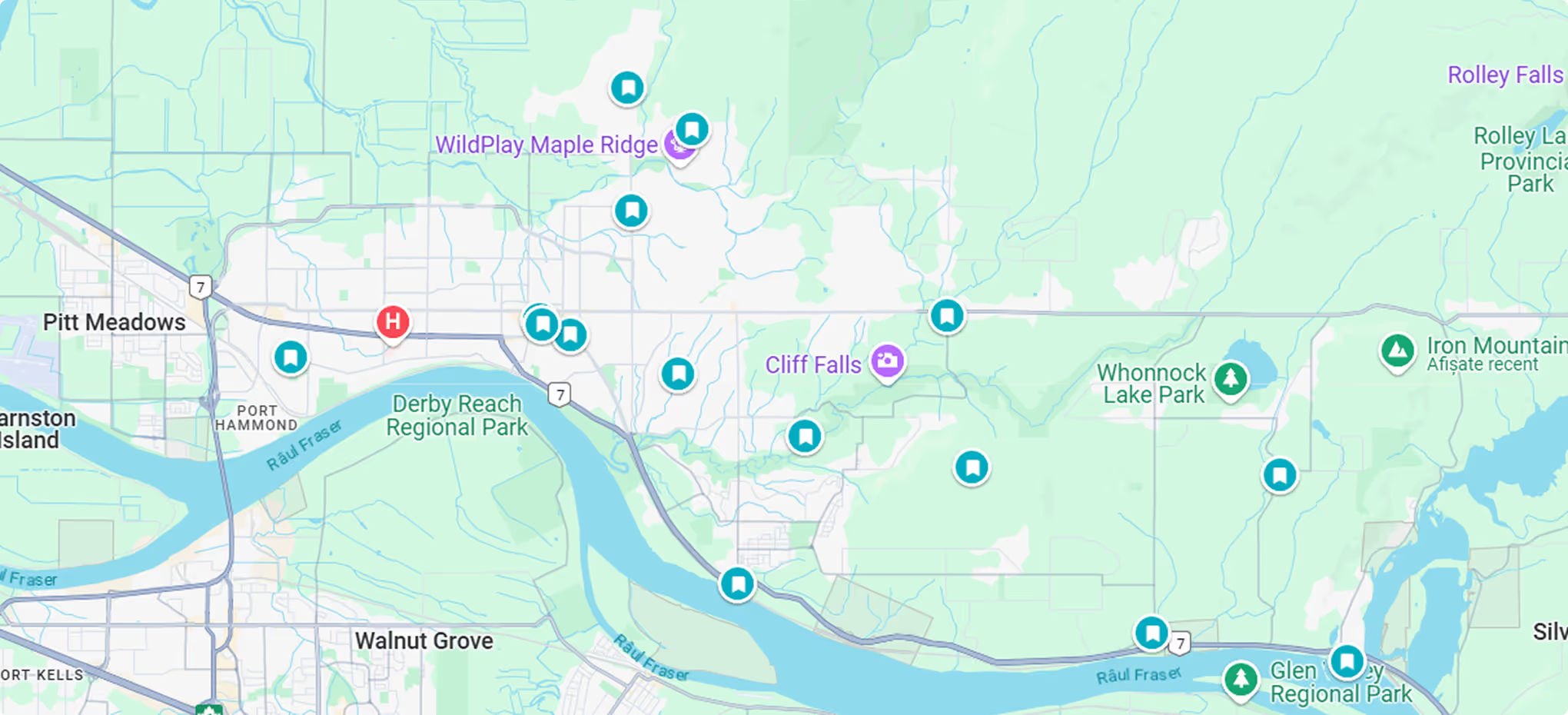
Heat Pump in Forest Knolls, BC
Eliminate Inefficient Heating and Lower Monthly Energy Costs
Managing indoor climate control in British Columbia requires a system capable of handling damp winters and increasingly warm summers without driving utility bills through the roof. Homeowners in Forest Knolls often face the challenge of upgrading outdated heating equipment that fails to deliver consistent comfort or qualifies for modern efficiency standards. A heat pump installation provides an immediate solution, offering superior thermal regulation and significantly lower operating costs compared to traditional resistance heating or fossil fuel furnaces. Contact us today or apply for financing to secure your installation.
Rep-Air Heating and Cooling specializes in transitioning homes to high-performance heat pump systems designed to withstand local weather patterns. By moving heat rather than generating it, these systems provide a dual-function solution that keeps your home warm in the winter and cool in the summer. Investing in this technology ensures you meet current energy codes while taking advantage of provincial incentives available to residents in the region.
- Reduce annual energy consumption by up to 40% with high-efficiency inverter technology.
- Complete installation services often finalized within 48 hours to minimize household disruption.
- Comprehensive warranties included on all parts and labour to ensure long-term reliability.
- Full assistance provided for municipal permitting and flexible financing options are available.

What to Expect: Process, Scope, and Installation Details
Transitioning to a heat pump is a significant infrastructure upgrade that improves the value and functionality of your property. The installation process involves more than simply swapping out a box unit; it requires a holistic assessment of your home’s thermal envelope and existing distribution systems. When you schedule a service, the focus is on sizing the unit correctly to match the specific heat load requirements of your square footage. Oversized units cycle too frequently, leading to premature wear, while undersized units run constantly without reaching the desired temperature.
Modern heat pump systems utilize inverter-driven compressors. Unlike older standard compressors that run at 100% capacity and then shut off, inverter systems ramp up and down to match the exact heating or cooling demand of the moment. This results in quieter operation and precise temperature maintenance. For homes in Forest Knolls with existing ductwork, central heat pumps can integrate directly into the current ventilation system. For homes relying on baseboard heating, ductless mini-split systems offer a way to introduce forced-air climate control without the need for major renovation.
The scope of work generally includes the removal and environmentally responsible disposal of old equipment. Technicians handle all necessary electrical upgrades to accommodate the new condenser unit, ensuring the panel can handle the amperage. Refrigerant lines are run with precision to prevent leaks and ensure optimal pressure. The goal is to leave the home with a fully operational, calibrated system that delivers immediate comfort.
- Load Calculation: Technical assessment of windows, insulation, and square footage to determine exact BTU requirements.
- Site Preparation: Leveling the ground for the outdoor condenser and clearing pathways for indoor air handlers.
- System Integration: Connecting the new heat pump to existing thermostats or installing smart control interfaces.
- Electrical Safety: upgrading circuit breakers and wiring to meet the manufacturer’s specifications and local safety codes.
- Debris Removal: Complete removal of old furnaces, boilers, or AC units and job site cleanup.
Your Installation Journey: From Assessment to Completion
A structured installation workflow ensures that no detail is overlooked and that the system performs according to its SEER (Seasonal Energy Efficiency Ratio) and HSPF (Heating Seasonal Performance Factor) ratings. The process is designed to be transparent, moving from the initial technical evaluation to the final system test.
- Technical Assessment: A licensed technician visits the property to inspect the current setup. This includes checking ductwork for leaks or insulation gaps that could hinder performance.
- System Selection: Based on the assessment, a specific model is recommended. This proposal outlines the efficiency ratings, projected savings, and specific installation requirements.
- Permitting and Approval: Before work begins, the necessary permits are acquired from local municipal offices. This step ensures all work complies with BC building codes.
- Installation Day: The crew arrives to disconnect the old system. Indoor air handlers and outdoor condensers are mounted. Refrigerant lines are connected and vacuum-tested to remove moisture and air.
- Pressure Testing: The system is pressure-tested with nitrogen to ensure the refrigerant lines are completely sealed. This prevents future leaks and ensures environmental compliance.
- System Startup and Calibration: The heat pump is powered on. Technicians adjust blower speeds and refrigerant levels to manufacturer specifications.
- Homeowner Walkthrough: The technician demonstrates how to operate the new thermostat, change filters, and explains the maintenance schedule required to keep the warranty valid.
Deciding Between Heat Pump Repair or Replacement
Homeowners frequently debate whether to repair an aging system or invest in a new installation. While repairs can resolve immediate issues, they often serve as a temporary patch for a system nearing the end of its useful life. Making the correct financial decision requires analyzing the age of the unit, the cost of the repair, and the efficiency of the current technology.
The "50% Rule" is a standard industry metric used to guide this decision. If the cost of the repair approaches 50% of the value of the system, or 50% of the cost of a new unit, replacement is generally the more improved financial path. Additionally, if the existing equipment is over 10 to 15 years old, it likely utilizes R-22 refrigerant, which has been phased out. Repairing leaks in R-22 systems is prohibitively expensive and environmentally harmful.
Another critical factor is operational efficiency. Older heat pumps may have a SEER rating of 10 to 12. Modern systems installed by Rep-Air Heating and Cooling frequently exceed SEER 18 or 20. The difference in monthly electrical consumption between these ratings is substantial. If a system requires frequent service calls, struggles to maintain temperature during extreme cold snaps, or produces excessive noise, it indicates internal component failure that a simple repair cannot permanently rectify.
- Age of Equipment: Systems over 12 years old have likely surpassed their peak efficiency and are prone to compressor failure.
- Rising Utility Bills: A sudden unexplained increase in energy costs suggests the heat pump is working harder to produce the same amount of heat.
- Frequent Breakdowns: If service calls are required multiple times a year, the cumulative cost of labour and parts will quickly exceed the cost of a new warranty-backed system.
- Uneven Heating/Cooling: Cold spots in the house or humidity issues indicate the compressor or blower motor is no longer functioning correctly.
- Refrigerant Type: Systems using phased-out refrigerants should be replaced rather than recharged to avoid high costs and regulatory issues.
Understanding BC's Climate and Heat Pump Efficiency
British Columbia presents a unique climatic profile that makes heat pumps an ideal solution, but specific considerations must be made for local installation. The region covering Forest Knolls experiences mild, wet winters and warm summers. Unlike regions that experience deep freezes for months on end, the temperatures here rarely drop below the operational threshold of modern cold-climate heat pumps. However, the high humidity levels in winter mean that the defrost cycle of the heat pump is critical.
A heat pump extracts heat from the outside air. Even when it is cold, there is thermal energy in the atmosphere. However, as the temperature drops and moisture is present, frost can form on the outdoor coil. A properly installed system will have an efficient defrost cycle that temporarily reverses operation to melt the ice, ensuring continuous heating. Systems not designed for the BC climate may struggle to keep up during these damp, near-freezing days.
Furthermore, provincial initiatives such as CleanBC and programs through BC Hydro heavily incentivize the switch from fossil fuels (oil, propane, or natural gas) to electric heat pumps. These rebates are substantial but require strict adherence to installation standards. The equipment must be on the qualified product list, and the installation must be performed by a certified contractor. Failing to meet these specific criteria can result in the forfeiture of thousands of dollars in rebates.
Local electrical capacity is another consideration. Many older homes in the area may require a panel upgrade to handle the electrical load of a heat pump, especially if switching from a gas furnace. Assessing the amperage and breaker space is a standard part of the pre-installation process to ensure the home is code-compliant.
- Defrost Performance: Ensuring the unit is elevated off the ground (often on a stand) to allow proper drainage of meltwater and prevent ice buildup during damp winters.
- HSPF Ratings: Focusing on the Heating Seasonal Performance Factor is crucial in BC; a higher HSPF means more efficient heating during the shoulder seasons.
- Rebate Eligibility: Verifying that the chosen model meets the specific Tier 1 or Tier 2 requirements set by CleanBC and BC Hydro.
- Backup Heating: Determining if electric heat strips are necessary for the rare days when temperatures drop significantly below freezing.
- Noise Bylaws: Adhering to local municipal noise restrictions regarding the placement of outdoor condensers near property lines.
Why Choose Us? Certifications and Technical Expertise
Selecting the right partner for heat pump installation ensures that the investment yields the promised energy savings and comfort levels. The technical complexity of refrigerant handling, high-voltage electrical connections, and airflow dynamics demands a high level of certification and experience.
Proper sizing is the most critical differentiator. Many contractors rely on "rule of thumb" estimates based solely on square footage, leading to poor performance. A professional approach involves calculating the thermal resistance of walls, window types, and insulation levels to prescribe the exact tonnage required. This precision prevents short-cycling, which destroys compressors, and ensures humidity control during the summer months.
Documentation and warranty registration are handled professionally. Manufacturers often require proof of professional installation to honor parts warranties. By ensuring all commissioning data is recorded and all permits are closed out correctly, the homeowner is protected against future liability and equipment failure.
- Certified Technicians: All installers hold necessary refrigeration and electrical certifications required by Technical Safety BC.
- Manufacturer Partnerships: Direct access to top-tier equipment ensures availability of parts and priority technical support.
- Code Compliance: Deep knowledge of local building codes in Forest Knolls ensures no issues arise during property sales or inspections.
- Transparent Quotes: Detailed breakdowns of labour, equipment, and permit fees with no hidden costs.
- Post-Install Support: Dedicated service teams available for annual maintenance to keep efficiency ratings high.
Securing a comfortable home environment year-round requires a heating and cooling solution built for efficiency and reliability. A modern heat pump system protects against rising energy costs while providing superior climate control. For professional installation and expert guidance on available rebates, contact Rep-Air Heating and Cooling to schedule your consultation.
Smart Heat Pump Installations That Prioritize Load Accuracy
Installing a heat pump in Forest Knolls, BC, without load testing often leads to energy waste. Rep-Air Heating and Cooling begins with a detailed evaluation of heat loss, airflow resistance, and duct structure. Our installations reflect these numbers, not estimates, for precision delivery and lower running costs.
Get A Heat Pump System That Performs Based On Verified Data
hear what our satisfied clients have to say
Neighbourhoods in the Fraser Valley