Heat Pump in Highland Park, BC
Is Your Heat Pump Failing to Keep Up With The Weather?
Is your current heating and cooling system unable to handle the shifting temperatures typical of Highland Park, BC, leaving your home uncomfortable and your energy bills unmanageable? You should not have to rely on space heaters or constant thermostat adjustments just to maintain a livable environment in your own home. Contact Rep-Air Heating and Cooling today to schedule a comprehensive system assessment or to apply for financing.
- Experience rapid installation and expert service, ensuring minimal downtime for your household.
- Enjoy enhanced comfort with a high-efficiency heat pump that significantly lowers your monthly energy bills.
- Take advantage of available rebates on energy-efficient models, making your upgrade much more affordable.
Rest assured with comprehensive warranties and flexible financing options tailored to your specific budgetary needs.

Comprehensive Heat Pump Installation Services
Upgrading your climate control system is a significant decision that impacts your daily comfort and long-term financial health. When you choose to move forward with a new installation, you are not just buying a piece of equipment; you are investing in a complete home comfort solution designed to perform efficiently year-round. Modern heat pumps are engineered to handle the specific atmospheric conditions of the region, providing robust heating during damp winters and efficient dehumidification and cooling during the dry summer months.
A standard installation service covers every aspect required to get your home running efficiently. This includes the professional removal and environmentally safe disposal of your existing unit, ensuring that all refrigerants are captured according to strict regulations. The service includes the delivery and placement of the new outdoor condenser and indoor air handler. Furthermore, technicians verify the integrity of your existing ductwork to ensure the new system delivers air effectively to every room.
You also receive updated control integration. Modern systems often require smart thermostats or proprietary control modules to communicate effectively with variable-speed compressors. This technology allows for precise temperature management, humidity control, and scheduling features that old analog thermostats simply cannot support. From the electrical disconnect to the drain line, every component is brought up to current safety codes to ensure reliable operation.
The Installation Process: What to Expect
A professional installation is a structured event designed to protect your property and ensure the longevity of the new equipment. Rather than a chaotic construction zone, the process follows a strict protocol to ensure safety and efficiency.
Site Evaluation and Load Calculation
The process begins with a technical assessment. Technicians perform a load calculation to determine exactly how much heating and cooling power your home requires. This is not a guess based on the size of the old unit; it is a calculation based on square footage, insulation levels, window exposure, and airflow requirements. Correct sizing is critical because an oversized unit will short-cycle and wear out prematurely, while an undersized unit will run constantly without achieving the desired temperature.
Preparation and Safety Setup
Before any heavy lifting occurs, the workspace is prepped to protect your flooring and surrounding property. Technicians disconnect the electrical supply and shut off gas lines if a hybrid system is involved. Safety gear is utilized to handle the extraction of the old unit, specifically focusing on the safe recovery of old refrigerant, which cannot be vented into the atmosphere.
System Positioning and Connection
The new outdoor unit is positioned on a level pad to ensure proper drainage and vibration isolation. Indoors, the air handler or furnace coil is secured and sealed to the plenum to prevent air leaks. Refrigerant lines—the copper tubes connecting the indoor and outdoor units—are either replaced or thoroughly flushed and brazed. A vacuum pump is then used to remove moisture and air from the lines before the new refrigerant is released.
Electrical and Control Integration
High-voltage wiring is connected to the disconnect box and the unit, adhering to all local electrical codes. Low-voltage wiring is run to the thermostat and control board. This step is vital for communication between the indoor and outdoor components, especially for multi-stage or variable-speed systems that adjust their output based on real-time demand.
Testing and Commissioning
Once physical installation is complete, the system is not just turned on; it is commissioned. Technicians measure static pressure in the ducts, check temperature differentials across the coil, and verify that the refrigerant charge is exact. The defrost cycle is tested to ensure the unit can handle freezing temperatures, and the emergency heat source is verified for backup protection.
Repair vs. Replace: Making the Financial Decision
Determining whether to sink more money into an aging unit or invest in a modern replacement is a common dilemma for homeowners. While repairs might seem cheaper in the short term, they often lead to higher cumulative costs when dealing with a system near the end of its service life.
The 50% Rule
A general guideline used in the industry is the 50% rule. If the cost of the repair approaches 50% of the value of a new system, replacement is usually the wiser financial choice. When you factor in the warranty coverage of a new unit versus the lack of warranty on an old unit, the math often favors replacement.
Frequency of Breakdowns
If you have required repairs more than once in the last two years, your system is signaling reliability issues. Heat pumps contain complex moving parts, including compressors and reversing valves. When one major component fails in an older unit, it often indicates that other components are also nearing failure. Continual service calls quickly erode the savings of deferring a replacement.
Efficiency and Energy Costs
Heat pump technology has advanced rapidly in the last decade. A unit installed 15 years ago likely has a SEER (Seasonal Energy Efficiency Ratio) and HSPF (Heating Seasonal Performance Factor) significantly lower than today’s minimum standards. Modern variable-speed inverters can reduce energy consumption by huge margins compared to single-stage units. If your energy bills are creeping up despite normal usage, the equipment’s declining efficiency is likely the culprit.
Refrigerant Type
Older systems often utilize R-22 refrigerant, which has been phased out due to environmental regulations. As supply dwindles, the cost of R-22 has skyrocketed. If your old system develops a leak, the cost to recharge it can be astronomical, making a total system upgrade to R-410A or newer, eco-friendly refrigerants a necessity rather than a luxury.
Regional Considerations for Highland Park
Installing a heat pump in this specific region requires attention to local climate patterns and regulations. The mild, wet winters and warm, dry summers create a unique demand profile for HVAC equipment.
Defrost Cycle Importance
Because the winters here are often damp with temperatures hovering near freezing, outdoor units are prone to frost accumulation. A high-quality heat pump must have a reliable, demand-based defrost board. This ensures the unit melts ice accumulation efficiently without wasting energy, maintaining heating capacity even on the dampest mornings.
Summer Dehumidification
While summers can be dry, peak heat waves require a system with sufficient cooling capacity. However, if a unit is oversized to handle the absolute hottest day, it may not run long enough to dehumidify effectively during milder, humid shoulder seasons. Proper sizing ensures the unit runs long enough to pull moisture out of the air, improving indoor air quality and comfort.
Permits and Rebates
Local municipalities and provincial programs in British Columbia often offer substantial rebates for switching from fossil fuels to electric heat pumps or upgrading to high-efficiency tier systems. Navigating these rebate requirements usually demands that the equipment is installed by a certified contractor and meets specific HSPF and SEER2 ratings. Furthermore, electrical permits are almost always required when installing a new unit to ensure the home’s panel can handle the load.
Understanding Inverter Technology and Efficiency
When shopping for a replacement, you will encounter terms like "single-stage," "two-stage," and "variable-speed" or "inverter-driven." Understanding these differences is key to knowing what you are paying for and what you will get in return.
Single-Stage Systems
These are the traditional units that operate at 100% capacity whenever they are on. They blast air until the thermostat is satisfied and then shut off. While less expensive upfront, they are less efficient and can lead to temperature swings and higher noise levels.
Variable-Speed (Inverter) Systems
Inverter technology allows the compressor to ramp up or down in tiny increments. Instead of shutting off, the system might run at 30% or 40% capacity to maintain a constant temperature. This "cruise control" approach consumes significantly less electricity, is much quieter, and provides superior humidity control and air filtration because the air is constantly being circulated through the filters.
Why Professional Installation is Non-Negotiable
The performance of a heat pump is more dependent on installation quality than perhaps any other home appliance. A top-tier brand installed poorly will perform worse than a budget brand installed perfectly. The complexities of refrigerant charge, airflow balance, and control wiring leave zero margin for error.
Rep-Air Heating and Cooling utilizes strict installation protocols to ensure that the theoretical efficiency rating on the box is the actual efficiency you experience in your home. Improperly brazed lines can lead to slow leaks that destroy compressors. Incorrectly sized ductwork can cause high static pressure, killing the blower motor and increasing noise. Professional technicians also have access to the specialized tools required for a correct install, such as micron gauges for vacuuming lines and static pressure manometers for airflow testing.
Furthermore, professional installation is the gateway to warranty validity. Manufacturers generally void warranties if the equipment is not installed by a licensed professional. By securing expert service, you protect your asset with both manufacturer parts warranties and labor guarantees from the installer.
Final Steps to Comfort: Call Us
Delaying the replacement of a failing system only increases the risk of a total breakdown during the peak of winter or the heat of summer. The technology available today offers quieter operation, smarter control, and significantly reduced carbon footprints compared to systems manufactured just a decade ago.
The transition to a modern heat pump provides immediate relief from inconsistent temperatures and long-term relief from high utility costs. By addressing the issue now, you ensure your home remains a sanctuary regardless of the weather outside.
Do not let an unreliable system dictate your comfort or your budget any longer. Take control of your home’s climate today.
Upgrade your home comfort and efficiency now—book your consultation.
hear what our satisfied clients have to say
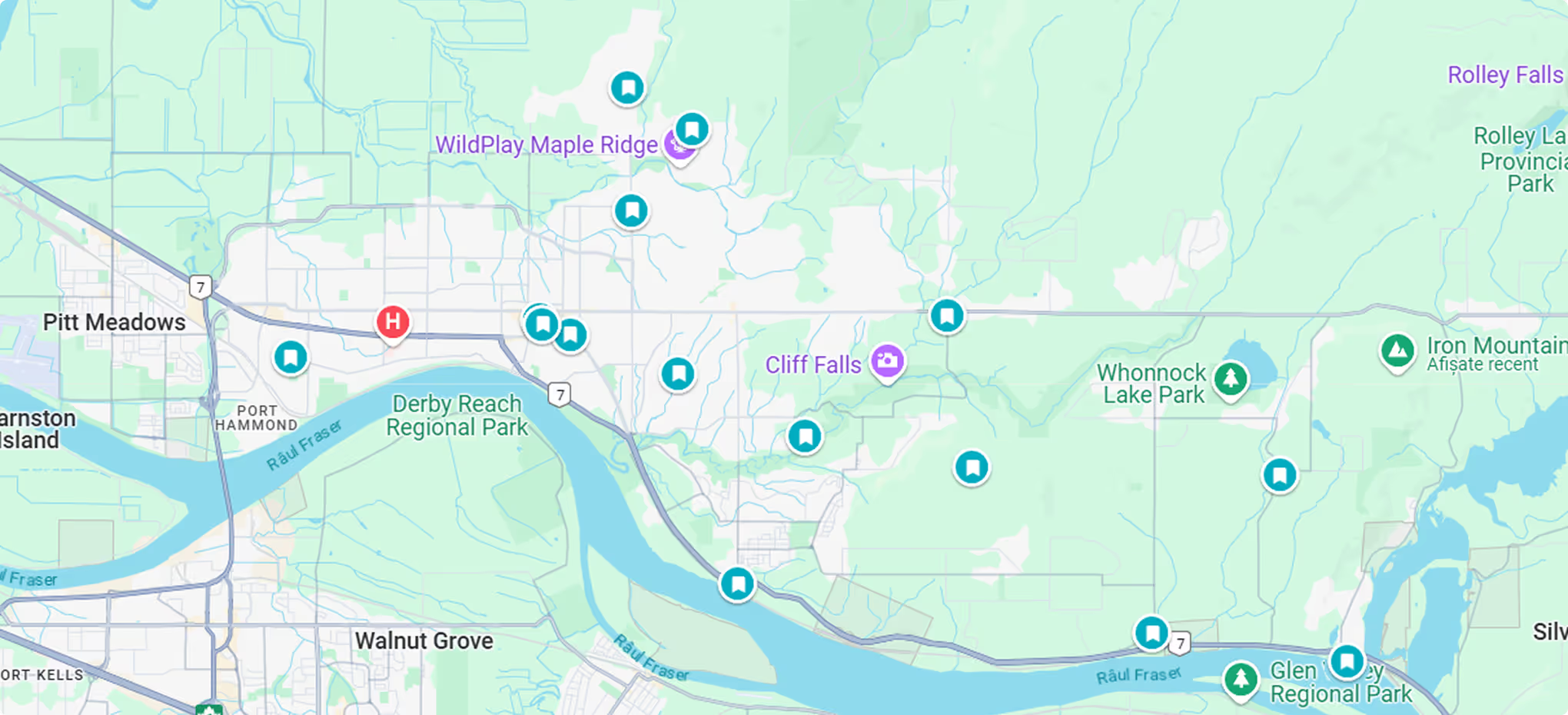
Neighbourhoods in the Fraser Valley