Heat Pump in Kanaka Creek, BC
Is Your Heating Bill Climbing While Comfort Drops?
Facing unexpected breakdowns or sky-high energy bills this season? You are not alone—many homeowners in Kanaka Creek contend with inefficient legacy systems that cost more to operate than they save in comfort. If your current system is failing to keep up with the damp chill or the summer heat, you need a solution that addresses both immediate reliability and long-term efficiency. Contact us today to discuss financing options or to schedule an assessment.
Old units often struggle to maintain consistent temperatures, leaving cold spots in the winter and humidity issues in the summer. A modern heat pump installation solves these thermal imbalances while significantly lowering your carbon footprint and monthly utility expenses.
- Get a new, energy-efficient heat pump installed within 48 hours to restore comfort immediately.
- Reduce your energy usage with the latest variable-speed technology and save on monthly utility bills.
- Access government rebates, such as CleanBC, to minimize your upfront investment costs.
Our certified installations include comprehensive labor warranties and flexible financing options to ensure your home remains comfortable without breaking the bank.

What You Get Today With A Modern Heat Pump
When you invest in a heat pump installation, you are purchasing more than just a piece of hardware; you are securing a comprehensive climate control solution designed for the specific weather patterns of British Columbia. The technology has evolved rapidly over the last decade. Unlike older, single-stage motors that run at full blast and then shut off, modern systems utilize inverter-driven compressors. This allows the unit to ramp up or down incrementally, maintaining a precise temperature within a fraction of a degree.
The scope of a professional installation covers every aspect of the transition. This includes the safe disconnection and disposal of your existing equipment, whether it is an aging air conditioner, a gas furnace, or an older heat pump model. We handle all environmental reclamation of refrigerants, ensuring strict adherence to local environmental regulations.
Your new system installation includes the outdoor condenser unit and the matching indoor coil or air handler, depending on your home’s existing ductwork configuration. If you are opting for a ductless configuration, this includes the wall-mounted heads. Essential components such as the refrigerant line set, communication wiring, and a new condensate drain system are installed to ensure longevity. Furthermore, we integrate a smart thermostat capable of managing the complex algorithms of a heat pump, allowing for remote access and humidity control.
How The Installation and Replacement Process Works
A proper installation is critical to the efficiency and lifespan of a heat pump. A unit that is installed incorrectly can lose up to 30% of its rated efficiency immediately. We follow a strict, standardized protocol to ensure every system operates at peak performance from day one.
Load Calculation and Sizing
The process begins with a manual J load calculation. We measure your home’s square footage, insulation levels, window efficiency, and orientation. This data ensures the unit is sized perfectly. An oversized unit will short-cycle, leading to premature wear, while an undersized unit will run constantly without reaching the set temperature.
Site Preparation and Protection
Technicians arrive and prepare the workspace, laying down floor protection to keep your home clean. We disconnect the electricity and gas lines safely. If your electrical panel requires an upgrade to handle the new heat pump load—common in older Kanaka Creek homes switching from gas—we assess this prior to installation.
Equipment Removal and Placement
The old equipment is removed. For the new outdoor unit, we prepare a level, snow-raised pad. Raising the unit is vital in our region to prevent snow accumulation from blocking airflow, which can freeze the coil and trigger emergency shutdowns.
Line Set and Electrical Connection
We install the copper refrigerant lines, connecting the indoor and outdoor components. These lines are brazed under a nitrogen purge to prevent oxidation inside the pipes, a critical step often skipped by budget installers that prevents future compressor failure. Electrical whips and disconnect boxes are mounted and wired to code.
Deep Vacuum and Charging
Once connected, we pull a deep vacuum on the lines to remove all moisture and air. Moisture in a heat pump system is fatal to the compressor. After verifying the vacuum holds, we release the factory refrigerant charge and fine-tune it based on the length of the line set.
System Commissioning and Walkthrough
The system is powered on and tested across all modes. We check static pressure in the ducts to ensure airflow is sufficient. Finally, we walk you through the new thermostat interface, explaining how to set schedules and maximize energy savings.
When Replacement Beats Repair
Homeowners often struggle with the decision to repair a failing unit or invest in a new one. While repairs can be cheaper in the short term, they are often a poor financial decision for aging systems. Heat pumps generally have a lifespan of 12 to 15 years. If your unit is approaching this age, putting money into repairs is often throwing good money after bad.
You should opt for replacement if the repair cost equals 50% or more of the value of a new system. This "50% rule" is a standard industry metric. Additionally, if you have required repairs more than twice in the last two years, the system has likely entered its failure phase. Components usually fail in sequence; a blown capacitor today might be followed by a seized fan motor next month.
Consider the refrigerant type as well. Older systems use R-22 (Freon), which has been phased out. R-22 is now incredibly expensive and difficult to source. If your older unit has a refrigerant leak, replacement is almost always the only viable option.
Newer systems installed by Rep-Air Heating and Cooling also offer efficiency ratings (SEER2 and HSPF2) that are drastically higher than units from just a decade ago. The energy savings alone can often offset the monthly cost of financing a new unit, essentially paying for the upgrade over time through lower utility bills.
Local Installation Factors: Permits and Seasonality
Installing a heat pump in the Kanaka Creek area requires specific attention to local building codes and environmental factors. Unlike a simple appliance swap, this is a construction project that alters your home’s mechanical infrastructure.
Permitting and Inspections
In British Columbia, electrical permits are mandatory for heat pump installations. If you are switching from a fossil fuel source or adding a new circuit, this must be filed with the technical safety authority. We handle the acquisition of all necessary permits and coordinate the final inspection, ensuring your home insurance remains valid and your warranty is honored.
Electrical Service Upgrades
Many older homes in the area operate on 100-amp service. Modern heat pumps, especially those with electric resistance backup heating strips for extreme cold, can draw significant power. We evaluate your main electrical panel to ensure it can support the additional load. If a panel upgrade to 200 amps is required, this is identified during the initial audit.
Climate-Specific Accessories
Our local climate is characterized by high humidity and temperatures that hover around freezing in the winter. This is the "danger zone" for heat pumps, as it causes rapid frost buildup on the outdoor coil. We install units with advanced demand-defrost boards rather than timed defrost boards. This ensures the unit only stops heating to melt ice when absolutely necessary, improving efficiency. We also recommend and install stand legs to keep the unit above the snowline.
Rebate Eligibility
The rebate landscape in BC is robust but complex. Programs like CleanBC and federal grants offer substantial financial incentives for switching from fossil fuels to electric heat pumps. To qualify, equipment must meet specific efficiency tiers and be installed by certified contractors. We ensure the selected model numbers match the qualified product lists exactly so your rebate application is not rejected.
Dual Fuel and Hybrid Solutions
For homeowners concerned about relying solely on electricity during deep freezes, a hybrid system is a powerful alternative. This setup pairs an electric heat pump with a gas furnace. In this configuration, the heat pump handles the heating load for the vast majority of the year (usually down to about -5°C or lower).
When the temperature drops below the balance point—the outdoor temperature at which the heat pump can no longer efficiently heat the home—the system automatically switches to the gas furnace. This switchover happens seamlessly. You get the efficiency of electricity for 90% of the winter and the raw power of gas for the coldest days.
This approach is popular in Kanaka Creek for homes with existing gas connections. It allows for a tiered approach to electrification, reducing gas consumption significantly without requiring a full disconnection from the gas grid or potentially expensive electrical panel upgrades.
Understanding Inverter Technology Benefits
The most significant differentiator in modern heat pumps is the compressor technology. Traditional systems operate on an all-or-nothing basis. When the thermostat calls for heat, the unit turns on at 100% capacity. It runs until the target temperature is reached and then shuts off. This cycle repeats, causing temperature swings and high energy spikes at startup.
Inverter-driven heat pumps function like a dimmer switch. They can ramp up to 100% to heat a cold home quickly, but once the temperature is reached, they throttle down to maintain it, running at as little as 20% capacity.
Consistent Comfort
Because the unit runs longer at lower speeds, it eliminates the "blast of hot air" followed by a drafty cool-down period. The temperature in your home stays constant.
Better Dehumidification
In the summer, the longer run times allow the system to pull more moisture out of the air. This is vital in our region, where high humidity can make a home feel warmer than it actually is. Lower humidity means you can set the thermostat higher while feeling just as cool, saving energy.
Noise Reduction
Running at lower speeds means the fan and compressor are significantly quieter. You will often not even realize the system is running, a stark contrast to the loud startup clunk of older HVAC units.
Prioritizing Proper Airflow and Ductwork
A high-end heat pump connected to poor ductwork will never perform to its potential. Ductwork issues are the silent killers of HVAC efficiency. Leaky ducts can lose conditioned air into attics or crawlspaces, while undersized ducts restrict airflow, causing the heat pump to work harder than necessary.
During the replacement process, we inspect the accessible ductwork. We seal visible leaks and verify that the return air drop is sized correctly for the new system's airflow requirements. Modern heat pumps require higher airflow volume than older gas furnaces. If this is not addressed, the system may suffer from high static pressure, which reduces efficiency and strains the blower motor.
If your home does not have ductwork, we offer ductless mini-split configurations. These systems place individual air handling heads in specific zones of the house, connected to a single outdoor unit. This allows for room-by-room temperature control and eliminates duct energy losses entirely.
Why Professional Certification Matters
The HVAC industry is regulated, but the quality of workmanship varies wildly. Heat pumps are more complex than simple furnaces. They rely on precise refrigerant charges, complex electronic controls, and accurate airflow setup.
We employ Red Seal certified technicians who undergo continuous training on the latest manufacturer protocols. We are not just general installers; we are specialists in heat pump technology. Our team understands the nuances of the local climate and how to configure settings such as defrost cycles and auxiliary heat lockouts to match the specific weather patterns of the region.
Schedule Your Service Now
When you choose a verified contractor, you are also protecting your equipment warranty. Manufacturers can void warranties if the equipment was not installed by a licensed professional or if the registration was not filed correctly. We handle the product registration on your behalf, ensuring you have full coverage for parts and compressor failures for the duration of the warranty term.
Your home comfort system is the most expensive appliance in your house and vital for your safety and comfort. Don't leave its installation to chance. Ensure your home stays warm through the winter and cool through the summer with a professionally installed, high-efficiency system.
Ready to upgrade your comfort and lower your bills? Contact Rep-Air Heating and Cooling today to schedule your consultation.
hear what our satisfied clients have to say
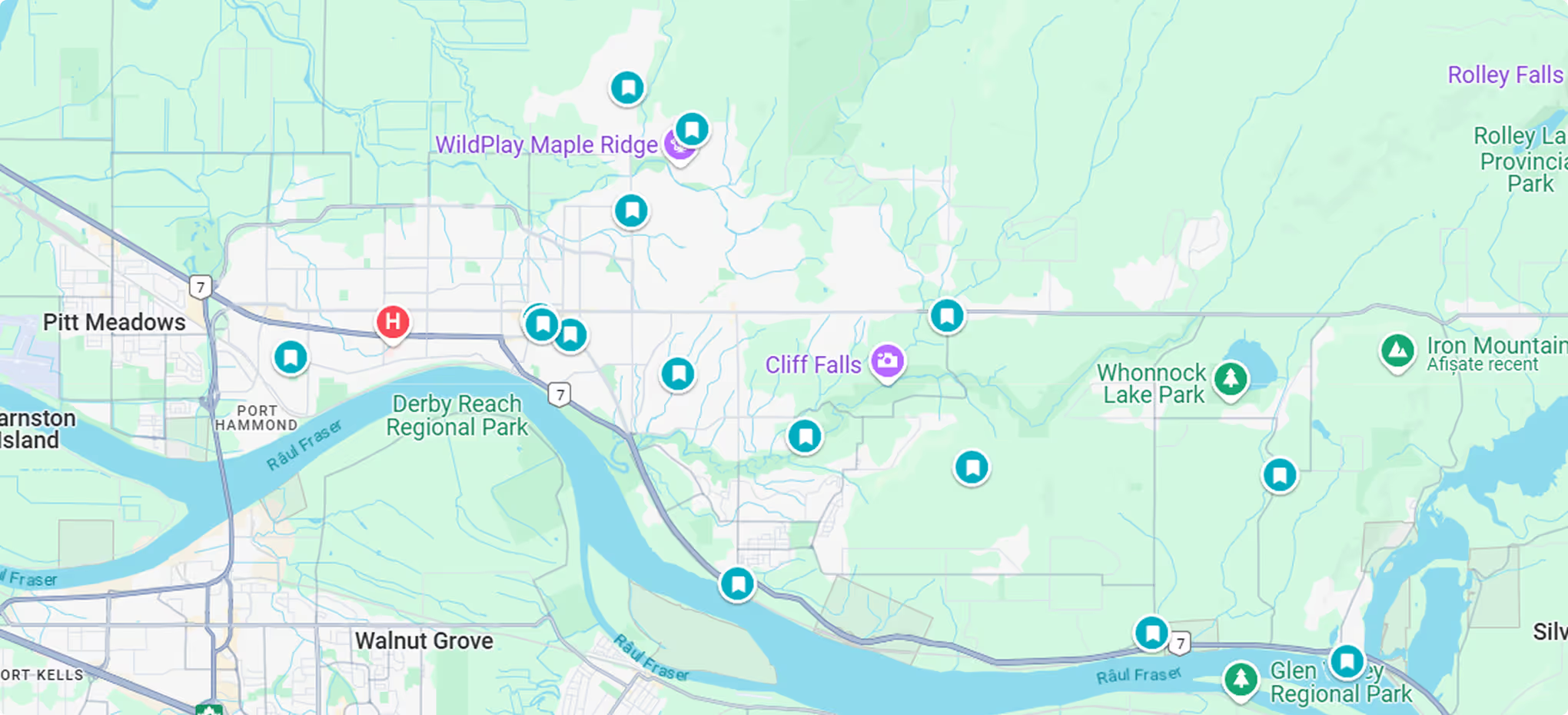
Neighbourhoods in the Fraser Valley