Heat Pump in Matsqui, BC
Eliminate Uneven Temperatures and High Energy Bills Today
Living in Matsqui requires a heating and cooling system capable of handling distinct seasonal shifts, yet many homeowners find themselves battling outdated equipment that fails to maintain consistent comfort. An inefficient system not only leaves cold spots in your home during winter and humidity issues in summer but also results in continuously rising utility costs. Rep-Air Heating and Cooling resolves these issues immediately with high-performance heat pump installations designed for the specific climate demands of British Columbia. Call us immediately to book your installation or click here to apply for financing.
- Expert installation services often completed within 24 hours to restore your home's comfort.
- High-efficiency heat pumps engineered to lower monthly heating and cooling bills by up to 50%.
- Access to up to $3,000 in government rebates through provincial incentive programs.
All installations are fully licensed, come with a comprehensive warranty, and are supported by available financing options.

What to Expect: Installation Process, Timeline, and Inclusions
Installing a heat pump is a significant upgrade to your property’s infrastructure, shifting how you manage indoor climate control. This process involves more than simply swapping out a box; it requires precise load calculations, electrical integration, and airflow management. When you schedule a service in Matsqui, the objective is to transition your home to a more energy-efficient state with minimal disruption to your daily routine.
Modern heat pump systems function differently than traditional furnaces. They transfer heat rather than generating it through combustion, which requires specific setup configurations to ensure efficiency at lower ambient temperatures. The scope of work typically covers the removal and environmentally safe disposal of existing equipment, preparation of the installation site (including pad leveling for outdoor units), and the fabrication of any necessary transitions to existing ductwork.
Timeline expectations should be clear from the start. A standard change-out in a residential setting usually takes between one to two days. However, if the project involves switching from a fossil fuel source—such as oil or propane—to an electric heat pump, additional electrical upgrades may be required, which can extend the timeline slightly.
The installation package generally includes:
- Professional removal and disposal of the old heating or cooling unit.
- Delivery and placement of the new indoor and outdoor heat pump components.
- Connection to existing ductwork or installation of ductless heads for mini-split systems.
- High-voltage and low-voltage electrical wiring connections.
- Installation of a new smart thermostat or control interface.
- Complete system start-up, including refrigerant charge verification and airflow balancing.
Your Installation Journey: Step-by-Step Guide
A structured approach ensures that the heat pump operates at its rated efficiency (SEER and HSPF) from day one. Skipping steps in the planning or execution phase can lead to "short cycling," where the unit turns on and off too frequently, wearing out components and wasting electricity.
Site Assessment and Load Calculation:
The first step determines the exact heating and cooling load of the building. Technicians measure square footage, insulation levels, window efficiency, and orientation. This data is used to perform a Manual J load calculation. This ensures the unit is not undersized (leaving you cold) or oversized (causing humidity issues and short cycling).
System Selection:
Based on the load calculation, the correct system is selected. This involves choosing between a central ducted system, which uses existing vents, or a ductless mini-split system, which allows for zoned temperature control in different rooms.
Preparation and Safety Checks:
Technicians prepare the workspace to protect flooring and furniture. Safety checks are conducted on the electrical panel to ensure it can handle the amperage requirements of the new heat pump. If necessary, a sub-panel or breaker upgrade is identified at this stage.
Outdoor Unit Installation:
The condenser unit is positioned outside on a composite pad or wall bracket. It must be leveled and placed with sufficient clearance for airflow. In areas like Matsqui, elevation is often necessary to keep the unit above anticipated snow lines to prevent ice buildup from blocking air intake.
Indoor Unit and Coil Installation:
For ducted systems, the indoor coil is matched to the furnace or air handler. For ductless systems, the wall-mounted heads are secured and connected via line sets. This step requires precision to ensure condensate drains flow correctly to prevent water damage.
Refrigerant Line Connection and Evacuation:
Copper refrigerant lines connect the indoor and outdoor units. Once connected, the technician performs a nitrogen pressure test to check for leaks. This is followed by a deep vacuum evacuation to remove moisture and air from the lines before releasing the refrigerant.
Final Commissioning:
The system is powered on and tested in both heating and cooling modes. Technicians verify static pressure, temperature split (the difference in air temperature entering and leaving the unit), and amperage draw. The homeowner is then walked through the operation of the new thermostat and maintenance requirements.
Deciding to Repair or Replace: A Helpful Guide
Homeowners often struggle with the decision of whether to invest in a repair for an aging system or to opt for a full replacement. While repairs can offer a short-term fix, they are often less economical in the long run if the system is nearing the end of its service life.
Age is the primary indicator. Heat pumps generally last between 10 and 15 years. If a unit is over 10 years old and requires a major repair—such as a compressor replacement or a leaking coil—replacement is usually the more prudent financial decision. As technology advances, newer units offer significantly higher efficiency ratings, meaning the monthly savings on utility bills can help offset the cost of the new installation.
Consider the "50% Rule." If the cost of the repair approaches 50% of the value of a new system, replacement is recommended. Putting money into an old system is often referred to as "throwing good money after bad," as one major failure is often followed by another.
Key factors indicating it is time to replace:
- Frequent Breakdowns: If the system requires service calls multiple times a year, reliability has been compromised.
- Rising Energy Bills: A steady increase in energy usage without a change in weather or habits suggests the unit is losing efficiency and working harder to maintain the same temperature.
- Uneven Comfort: If some rooms are freezing while others are hot, or if the unit runs constantly without reaching the set temperature, the compressor or blower motor may be failing.
- Noise Levels: Grinding, squealing, or excessive vibration indicates internal mechanical failure.
- Refrigerant Type: Older systems use R-22 refrigerant, which is phased out and extremely expensive to replace. If an R-22 system develops a leak, replacement is almost always necessary.
Understanding Your Local Climate Needs and Rebates
The climate in British Columbia presents unique challenges for HVAC systems. While winters are generally milder compared to other Canadian provinces, dampness and occasional dips below freezing require a heat pump with a high Heating Seasonal Performance Factor (HSPF). Standard heat pumps may struggle when temperatures drop significantly, but "cold climate" models are designed to maintain 100% efficiency even at very low temperatures.
In Matsqui, humidity control is just as important as temperature control. A properly sized heat pump acts as a dehumidifier in the summer, removing moisture from the air to create a cooler, more comfortable environment without over-cooling the space.
Regional incentives play a massive role in the decision-making process. Entities like BC Hydro and FortisBC, in conjunction with the CleanBC Better Homes Program, offer substantial rebates to encourage the switch from fossil fuels to electric heat pumps.
CleanBC Better Homes Rebates:
Homeowners switching from oil, natural gas, or propane to an electric heat pump can qualify for thousands of dollars in rebates. These programs aim to reduce the province's carbon footprint.
Federal Grants:
The Canada Greener Homes Grant (or its successor programs) often stacks with provincial rebates, providing further financial relief for energy-efficient upgrades.
Eligibility Requirements:
To qualify, equipment must meet specific SEER and HSPF ratings and must be installed by a licensed contractor. Rep-Air Heating and Cooling ensures that every unit recommended meets these strict efficiency criteria so that homeowners do not miss out on available funding.
Permitting and Code Compliance:
Local municipalities require permits for HVAC installations to ensure safety and code compliance. This includes electrical permits for the new circuit and mechanical permits for the unit installation. Professional installers handle the permit application and inspection coordination, removing this administrative burden from the homeowner.
Why Choose Us: Certifications and Performance
Selecting the right contractor is as critical as selecting the brand of the equipment. A heat pump installed incorrectly will never achieve its rated efficiency and will likely suffer from premature component failure.
Technical proficiency is the baseline. Technicians must hold Red Seal certification and appropriate gas and refrigeration tickets to work on these complex systems. Beyond basic licensing, ongoing training is essential. Heat pump technology evolves rapidly, with new inverter-driven compressors and smart diagnostic tools becoming standard. Installers must be up-to-date on these technologies to program the systems correctly.
Trust is built on transparency and reliability. Homeowners require a service provider that offers clear, upfront assessments without hidden fees. The focus is on finding a solution that fits the specific thermal envelope of the house, not just selling the most expensive unit available.
Guaranteed Workmanship:
Labor warranties should accompany manufacturer parts warranties. This ensures that if an issue arises due to the installation process, it is rectified at no cost to the homeowner.
Post-Installation Support:
The relationship does not end when the truck drives away. Reliable providers offer ongoing maintenance plans to clean coils, check refrigerant levels, and ensure the warranty remains valid.
Local Expertise:
Understanding the local grid requirements, the specific climatic loads of the region, and the nuances of local building codes ensures a compliant and safe installation.
Call Us Today
When the temperature drops or the heat wave hits, you need a system that performs without hesitation. Secure your home’s comfort and efficiency with a professional installation today.
Ready to upgrade your comfort and lower your energy bills? Contact us now to schedule your heat pump consultation.
hear what our satisfied clients have to say
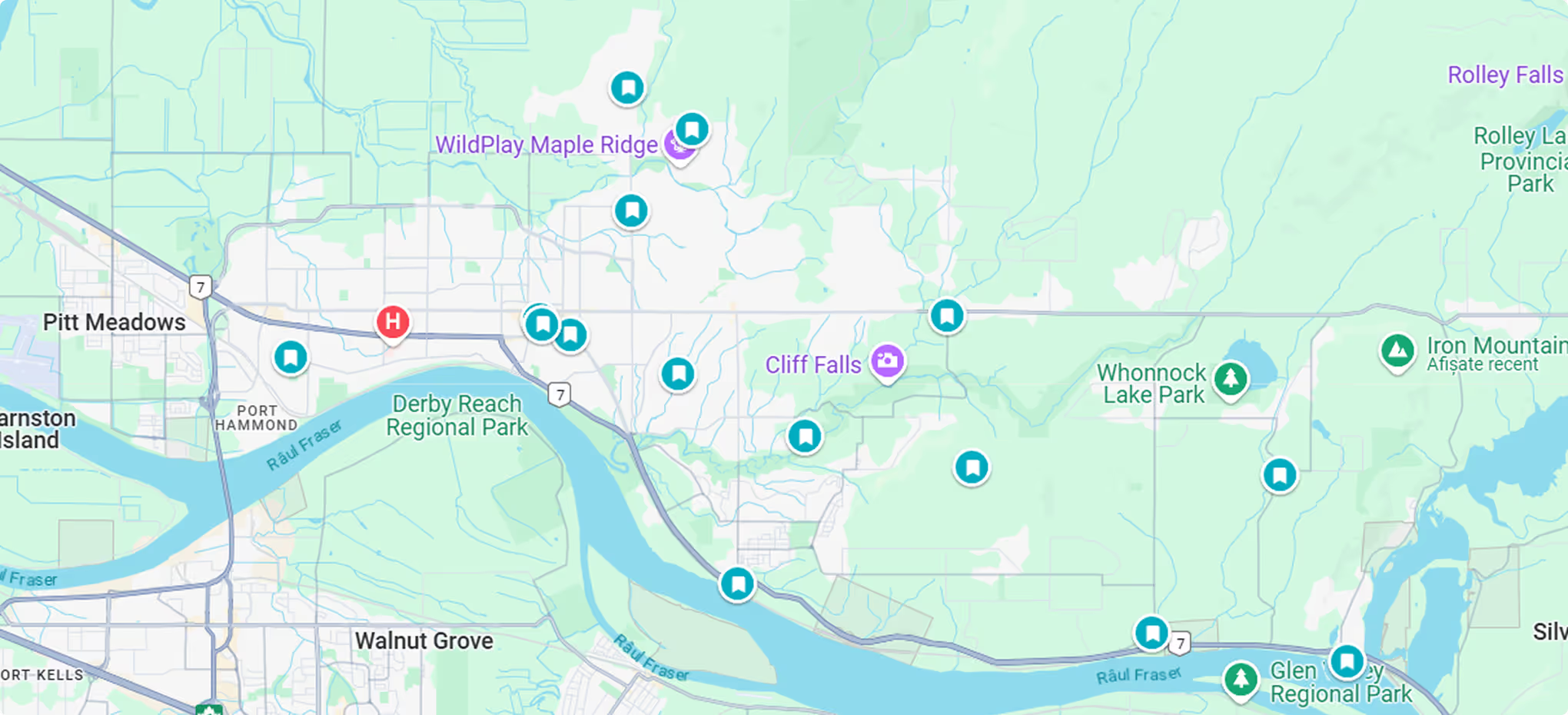
Neighbourhoods in the Fraser Valley