Heat Pump in McMillan, BC
Combat Rising Energy Bills with High-Efficiency Heating
Facing unpredictable weather and rising energy bills in British Columbia requires a heating solution that works harder for your money. Homeowners in McMillan often find that traditional furnaces struggle to maintain consistent comfort without causing utility costs to spike, which is why upgrading to a modern heat pump is a financial and comfort-based necessity. Rep-Air Heating and Cooling provides expert installation services designed to optimize your home’s energy usage while ensuring you stay warm in the winter and cool in the summer. Contact us today to discuss financing options or to schedule an on-site estimate for your home.
- Slash your monthly utility expenses with advanced, energy-efficient heat pump technology.
- Experience a seamless, professional installation process that prioritizes your schedule and property.
- Gain total peace of mind with robust manufacturer warranties and access to local rebate programs.
All installations are fully licensed, strictly adhere to local building codes, and include comprehensive warranty coverage for your protection.

Comprehensive Heat Pump Installation Services
When you invest in a new climate control system, you are purchasing more than just a piece of equipment; you are securing a complete comfort solution for your property. A modern heat pump serves as a dual-function system, capable of pulling heat from the outside air to warm your home during the winter and reversing the process to act as an air conditioner during the summer. This versatility eliminates the need for separate heating and cooling units, streamlining your home maintenance requirements.
Our installation service covers every aspect required to get your system running at peak performance immediately. We do not simply drop off a unit; we handle the complete lifecycle of the installation. This includes a full assessment of your current ductwork to ensure it can handle the airflow requirements of a high-efficiency system. If you are opting for a ductless mini-split system, we map out the optimal head placement to ensure even air distribution throughout the living space.
The scope of work generally includes the careful removal and environmentally responsible disposal of your old furnace or air conditioner. We handle the transition of refrigerant lines, electrical connections, and drainage systems. Furthermore, modern heat pumps often require specific thermostat integration to modulate fan speeds and compressor output efficiently. We include the setup of these smart controls, ensuring you have full command over your indoor climate from day one. You receive a turnkey solution where the hardware, labor, calibration, and cleanup are all managed by certified professionals.
The Installation Process: What to Expect
Installing a heat pump is a technical process that requires precision to ensure the unit achieves its rated efficiency (SEER and HSPF). A poor installation can reduce efficiency by up to 30%, which is why we follow a rigorous, step-by-step protocol. We prioritize transparency so you know exactly what is happening in your McMillan home at every stage of the project.
Site Assessment and Load Calculation:
The process begins with a Manual J load calculation. We measure your home’s square footage, insulation levels, window types, and orientation. This data ensures we size the unit correctly. An undersized unit will run constantly and fail to heat the home, while an oversized unit will short-cycle, leading to premature wear and humidity issues.
Site Preparation and Safety Checks:
Technicians prepare the installation site, laying down drop cloths to protect your flooring. We disconnect gas lines (if replacing a furnace) and shut off electrical circuits to ensure safety. For outdoor units, we prepare a level pad—often concrete or composite—to keep the unit off the ground, protecting it from snow accumulation and debris.
Equipment Placement and Connection:
The indoor and outdoor units are positioned. Technicians run the line set—copper tubing that carries refrigerant—between the two components. This stage involves precise brazing or flaring of copper lines to create a sealed system that will not leak. Electrical wiring is updated to meet the specific amperage requirements of the heat pump.
Vacuum and Charge:
Once connected, the system is pressure-tested with nitrogen to check for leaks. Afterward, a vacuum pump removes all moisture and air from the lines. This is critical because moisture inside the lines can freeze and damage the compressor. Finally, the system is charged with the precise amount of refrigerant specified by the manufacturer.
Testing and Walkthrough:
The system is powered on and tested in both heating and cooling modes. We measure airflow and temperature differentials to verify performance. Finally, we walk you through the operation of your new thermostat, explain filter maintenance, and review the warranty documentation.
Is It Time to Repair or Replace Your System?
Deciding between repairing an existing heating system or investing in a new heat pump is a common dilemma for homeowners. While repairs might seem cheaper upfront, they often act as a temporary bandage on a declining asset. Understanding the tipping point where replacement becomes the more improved financial decision is key to long-term savings.
The 50% Rule:
A general industry standard is the 50% rule. If the cost of the repair approaches 50% of the value of the system, or 50% of the cost of a new unit, replacement is usually the better option. Putting significant money into an old system rarely yields a return on investment, whereas a new system immediately begins paying you back in energy savings.
Age of Equipment:
Most heat pumps and air conditioners have a lifespan of 10 to 15 years. If your unit is over 12 years old and requires a major component replacement—like a compressor or a blower motor—it is often time to upgrade. Older units operate on phased-out refrigerants (like R-22) which are expensive and difficult to source, making repairs disproportionately costly.
Rising Energy Bills:
If your usage hasn't changed but your bills keep climbing, your system’s efficiency has degraded. As internal components wear out, the motor and compressor must work harder to produce the same amount of thermal energy. Upgrading to a modern heat pump can lower electricity usage significantly, offsetting the monthly cost of a new installation.
Comfort and Noise Issues:
Uneven heating, cold spots in specific rooms, or excessive noise during operation are signs of a failing system. If your current unit struggles to keep up during a cold snap in McMillan, it is likely undersized or nearing the end of its life. New heat pumps offer variable-speed compressors that run quietly and maintain precise temperatures within a fraction of a degree.
Local Considerations: Permits, Rebates, and Climate
Installing a heat pump in British Columbia involves specific regional considerations that differ from other parts of the country. The local climate and regulatory environment heavily influence the type of equipment you need and the financial incentives available to you.
Climate-Specific Efficiency:
The weather in this region is characterized by damp winters and increasingly warm summers. Standard heat pumps work well, but for maximum efficiency, we often recommend "Cold Climate" heat pumps. These units are designed to maintain 100% heating capacity even when outdoor temperatures drop significantly below freezing, reducing the reliance on expensive electric backup strips.
CleanBC and Federal Rebates:
British Columbia offers some of the most aggressive green energy rebates in North America. Programs like CleanBC and the Canada Greener Homes Grant provide substantial financial rebates for homeowners who switch from fossil fuel heating (oil, propane, or natural gas) to electric heat pumps. To qualify, equipment must meet specific HSPF and SEER ratings, and the installation must be performed by a licensed contractor. We assist in ensuring your selected equipment meets these strict eligibility criteria.
Electrical and Permit Requirements:
Transitioning to a heat pump often requires an electrical permit. If you are switching from a gas furnace to an electric heat pump, your home’s electrical panel may need an assessment to ensure it can handle the increased amperage load. Older homes with 100-amp service may require a panel upgrade or the installation of a load management device. Our team handles the permitting process with the local municipality to ensure all work is code-compliant and recognized by insurance providers.
Why Professional Installation Matters
While the hardware is important, the quality of the installation is the single biggest factor determining the longevity and efficiency of your heat pump. Rep-Air Heating and Cooling utilizes industry-best practices to ensure your system performs exactly as the manufacturer intended. We focus on the technical details that others might overlook, such as proper line set insulation, vibration isolation to reduce noise, and correct drainage setup to prevent water damage.
Proper Sizing and Duct Assessment:
Many contractors skip the load calculation and simply install a unit of the same size as the previous one. If the original unit was the wrong size, this mistake is repeated. We perform a fresh assessment of your home’s thermal envelope. We also inspect ductwork for leaks; pushing high-efficiency air through leaky ducts defeats the purpose of the upgrade. We seal and modify ductwork as necessary to ensure delivery of conditioned air to every room.
Refrigerant Handling Expertise:
Handling refrigerant requires EPA certification and strict adherence to environmental protocols. Improper charging is a leading cause of compressor failure. An undercharged system freezes up, while an overcharged system runs at dangerously high pressures. Our technicians use digital gauges and micron gauges to ensure the system is sealed and charged to factory specifications within a strict tolerance.
Post-Installation Support:
We believe in building relationships that last longer than the installation day. Professional installation comes with the assurance of labor warranties and responsiveness. If an issue arises, you have a direct line to a team that knows your system history. We also offer maintenance plans to keep your warranty valid, as most manufacturers require proof of annual maintenance to honor parts warranties.
Book Your Service With Us
Upgrading your home’s heating and cooling infrastructure is a significant decision that impacts your daily comfort and financial health. By choosing a high-performance heat pump, you are investing in a system that handles the specific weather challenges of the McMillan area while taking advantage of government initiatives to lower your carbon footprint.
Don't let another season pass with high bills and inconsistent temperatures. Secure your comfort and savings today by reaching out to our team to start your consultation.
hear what our satisfied clients have to say
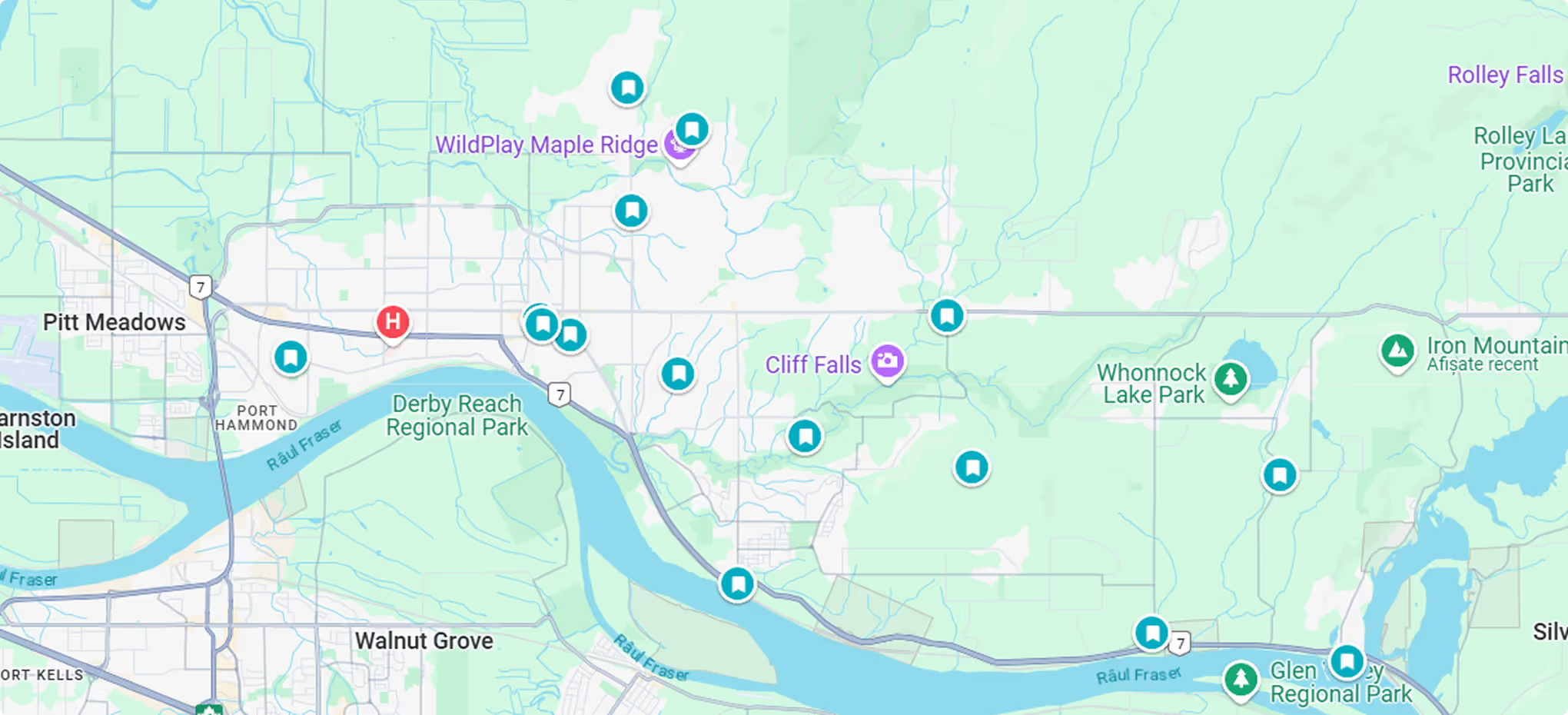
Neighbourhoods in the Fraser Valley