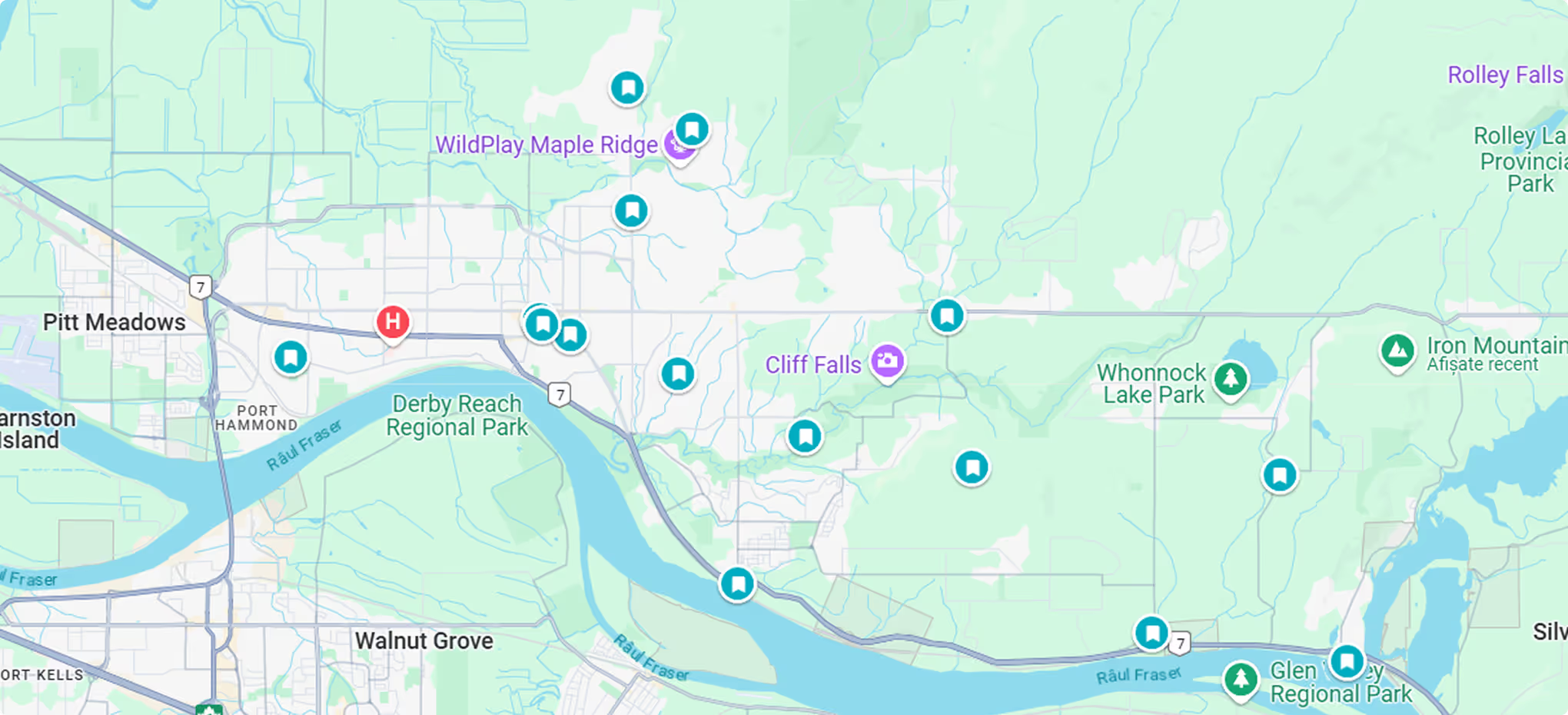
Heat Pump in Milner, BC
Is Your Heat Pump Ready for the Harsh Winter?
Facing irregular heating or unexpected breakdowns creates unnecessary stress when temperatures drop and your home comfort is compromised. Ensure your home in Milner stays warm this winter by contacting us immediately to schedule a comprehensive assessment or installation.
- Rapid response team available 24/7 for urgent installations and repairs.
- Clear, upfront pricing with no hidden fees – know what you’re paying for.
- High-quality installations by licensed professionals, ensuring peak performance.
All installations are fully insured, guaranteed, and eligible for local rebates.

Ensure Year-Round Comfort with Reliable Heat Pump Installation
Homeowners in British Columbia face a unique set of climate challenges that dictate the need for versatile and robust HVAC systems. The winters can be long, damp, and freezing, while summer temperatures are steadily climbing, creating a demand for efficient cooling. Relying on outdated heating methods often leads to skyrocketing utility bills and inconsistent indoor temperatures. A modern heat pump system solves these issues by transferring heat rather than generating it, providing an energy-efficient solution for both heating and cooling.
Rep-Air Heating and Cooling specializes in high-performance heat pump installations designed to handle the specific weather patterns found in Milner. Unlike traditional furnaces that only provide heat, a heat pump acts as a dual-function system. During the colder months, it extracts thermal energy from the outside air—even in freezing temperatures—and moves it indoors. Conversely, during the summer, it reverses the process to expel heat from your home, maintaining a cool and comfortable environment.
Switching to a heat pump is not just about temperature control; it is a financial and environmental decision. Modern systems are significantly more efficient than electric baseboards or fossil fuel furnaces. However, the efficiency of these systems relies heavily on correct sizing and professional installation. An improperly installed unit will struggle to reach the desired temperature, cycle on and off too frequently, and wear out prematurely. Securing a professional installation ensures that the equipment operates at its rated efficiency (HSPF and SEER ratings), protecting your investment for years to come.
What to Expect: Process, Timeline, and Inclusion in Your Heat Pump Setup
Investing in a new heating and cooling system involves several logistical steps. Understanding the scope of work helps homeowners prepare for the installation and eliminates surprises on the day of service. A professional installation is a comprehensive service that goes beyond simply dropping a unit in place. It involves load calculations, ductwork analysis, and electrical integration.
When you commit to a new system, the process generally follows a structured timeline designed to minimize disruption to your daily routine while ensuring strict adherence to safety codes.
- Site Assessment and Load Calculation: Technicians perform a detailed Manual J load calculation. This determines the exact heating and cooling requirements of your specific floor plan, insulation levels, and window exposure. This step is critical to avoid oversizing or undersizing the unit.
- Equipment Selection: Based on the assessment, you receive recommendations for cold-climate heat pumps suitable for the region. This includes selecting between ducted systems, ductless mini-splits, or hybrid dual-fuel systems.
- Site Preparation: The installation team prepares the designated area. This may involve pouring a concrete pad or mounting brackets for the outdoor unit to keep it above the snowline, a crucial detail for winters in Milner.
- System Installation: This includes the physical placement of indoor and outdoor units, running refrigerant lines, and connecting electrical components.
- Removal of Old Equipment: The service typically includes the safe disconnection, removal, and environmentally responsible disposal of your existing furnace or AC unit.
- Commissioning and Testing: Once installed, the system is not just turned on; it is commissioned. Technicians measure airflow, check refrigerant pressures, and verify thermostat calibration to ensure the system is running according to manufacturer specifications.
Installation Steps: What Happens from Start to Finish
A high-quality installation is methodical. Skipping steps or rushing the process often leads to refrigerant leaks or electrical failures down the road. Here is the technical workflow you can expect during the installation day.
- Protecting the Workspace: Technicians begin by laying down drop cloths and floor protectors to ensure your home remains clean throughout the process.
- Disconnecting Existing Utilities: Power and gas lines (if applicable) are safely shut off and disconnected from the old unit.
- Positioning the Outdoor Unit: The compressor unit is leveled on a composite pad or mounted on stand-offs. Proper clearance is established to ensure adequate airflow and accessibility for future maintenance.
- Installing the Indoor Evaporator Coil or Air Handler: For ducted systems, the new coil is sealed into the existing plenum. For ductless systems, the head units are mounted securely to interior walls.
- Running Line Sets: Insulated copper refrigerant lines are routed from the outdoor unit to the indoor components. These lines are protected with line set covers to prevent damage from UV rays or pests.
- Electrical Connections: A dedicated circuit is connected to the unit. This often requires checking the breaker panel to ensure it can handle the amperage of the heat pump, specifically for the backup electric heat strips if installed.
- Evacuating the System: A vacuum pump is used to remove moisture and air from the refrigerant lines. This is a non-negotiable step; moisture in the lines leads to acid formation and compressor failure.
- Releasing Charge and Startup: The factory refrigerant charge is released, and the system is powered up.
- User Training: Finally, the technician walks you through the operation of the new thermostat, explaining how to set schedules and manage emergency heat settings.
Deciding Between Heat Pump Repair and Replacement: A Quick Guide
Homeowners often face the dilemma of whether to pour more money into an aging system or invest in a replacement. While repairs can be a quick fix, they are not always the most improved financial decision in the long run. Making the right choice depends on analyzing the age, condition, and performance of your current unit.
- The 50% Rule: If the cost of the repair approaches 50% of the value of the system, replacement is generally the better option. Major failures like a blown compressor or a cracked heat exchanger usually fall into this category.
- System Age: Heat pumps typically last between 10 and 15 years. If your unit is over 12 years old and requires a significant repair, technology has likely advanced enough that a new unit will offer immediate savings on monthly utility bills.
- Frequency of Breakdowns: If you have required multiple service calls in the last two years, the system is likely nearing the end of its reliable lifespan. Constant repairs add up quickly and often exceed the monthly financing cost of a new system.
- Comfort and Humidity Issues: If some rooms are freezing while others are hot, or if the unit struggles to maintain humidity levels, the system may be undersized or the compressor may be failing. A replacement solves these comfort issues fundamentally.
- Efficiency Ratings: Older units often utilize R-22 refrigerant, which is phased out and expensive to replace. New systems use eco-friendly refrigerants and boast higher SEER and HSPF ratings, drastically reducing energy consumption.
Understanding Local Climate Challenges and Rebates for Your Heat Pump
Installing a heat pump in Milner requires specific attention to regional factors. The local climate involves high humidity during winter, which can cause frost to build up on outdoor units more frequently than in drier climates. Rep-Air Heating and Cooling ensures that every installation includes proper defrost control settings and snow-leg stands to prevent ice accumulation from blocking airflow.
Furthermore, British Columbia offers some of the most aggressive rebate programs in North America to encourage the switch to electric heating.
- CleanBC Better Homes Rebates: Homeowners switching from fossil fuels (oil, natural gas, or propane) to electric heat pumps often qualify for significant rebates.
- Federal Greener Homes Initiative: Grants and loans are frequently available for retrofits that improve energy efficiency.
- Eligibility Requirements: To qualify for these rebates, the equipment must be installed by a licensed contractor and meet specific efficiency tiers. The system often needs to be a "Cold Climate" designated model.
- Permitting and Electrical Upgrades: Local codes may require electrical permits, especially if your panel needs an upgrade to support the new heat pump load. A professional service handles the permit application process to ensure the installation is legal and code-compliant.
Why Professional Sizing and Commissioning is Critical
The most common cause of dissatisfaction with heat pumps is not the equipment itself, but the installation. A unit that is too large for the home will "short cycle," turning on and off rapidly. This prevents the system from dehumidifying the air properly and places immense strain on the compressor. Conversely, a unit that is too small will run continuously without ever reaching the set temperature, driving up electric bills.
- Manual J Calculation: This is the industry standard for sizing. It accounts for square footage, insulation R-values, window efficiency, and local climate data.
- Ductwork Assessment: Putting a high-efficiency heat pump on leaky, undersized ductwork defeats the purpose. Professional installers test static pressure to ensure the ducts can handle the airflow required by the new system.
- Warranty Protection: Manufacturers like Mitsubishi, Daikin, and Carrier often require proof of professional installation to honor their warranties. DIY or handyman installations can void these warranties instantly.
- Refrigerant Handling: Handling refrigerant requires EPA certification. Improper levels can damage the compressor and reduce efficiency by up to 20%.
Technical Considerations for Cold Climate Performance
Standard heat pumps begin to lose efficiency when temperatures drop near freezing. However, for residents in this region, "Cold Climate" Air Source Heat Pumps (ccASHPs) are the standard recommendation. These systems utilize advanced inverter-driven compressors and flash-injection technology to maintain 100% heating capacity even when outdoor temperatures drop as low as -15°C to -25°C.
- Inverter Technology: Unlike standard compressors that are either 100% on or 100% off, inverter compressors modulate their speed. They ramp up or down to match the exact heating demand of the home, providing precise temperature control and utilizing less energy.
- Defrost Cycles: In damp winter climates, the outdoor coil will freeze. Advanced systems have demand-defrost controls that only activate when necessary, rather than on a fixed timer, preserving energy and indoor comfort.
- Backup Heating: For extreme cold snaps, systems are equipped with auxiliary electric heat strips. These kick in automatically to supplement the heat pump only when absolutely necessary.
Maintenance Requirements for Longevity
Once your heat pump is installed, maintaining it is essential to keep the warranty active and the efficiency high. While heat pumps are durable, they run year-round for both heating and cooling, leading to more wear and tear than a furnace that only runs in winter.
- Filter Changes: Clogged filters restrict airflow, which is the number one cause of system failure. Filters should be checked monthly and replaced every 3 months.
- Outdoor Unit Clearance: Keep vegetation, snow, and debris at least 18 inches away from the outdoor unit to ensure proper airflow.
- Coil Cleaning: Dirty coils reduce the system's ability to transfer heat. Professional maintenance includes chemical cleaning of both indoor and outdoor coils.
- Drain Line Flushing: The condensate drain removes moisture from your home during summer. If this line clogs, it can cause water damage. Regular flushing prevents blockages.
Contact Us Today
Transitioning to a heat pump is a significant decision that impacts your home’s comfort, energy footprint, and monthly expenses. It requires a strategic approach to sizing, brand selection, and installation execution. By choosing a dedicated service provider, you ensure that your system is optimized for the local climate and fully compliant with all rebate requirements.
Rep-Air Heating and Cooling is committed to delivering precision installations that stand the test of time. Don't wait for your current system to fail in the middle of a cold snap. Secure your comfort and take advantage of energy-efficient technology today.
Ready to upgrade your home comfort? Contact us now to schedule your heat pump consultation and secure your installation.
hear what our satisfied clients have to say
Neighbourhoods in the Fraser Valley