Heat Pump in Mission, BC
Inconsistent Indoor Temperatures and Spiking Energy Costs?
As the damp cold settles into Mission, BC, an unreliable heating system turns from a minor nuisance into a genuine emergency that threatens your home’s safety and comfort. You do not have time to wait for parts to ship or for technicians to fit you into a schedule weeks from now; you need a solution that restores warmth and lowers those escalating hydro bills immediately. Contact us immediately to secure a priority consultation or inquire about our flexible financing options.
Modern heat pump technology offers a dual-fuel solution perfect for the Fraser Valley climate, managing humidity in the summer and delivering efficient heat even when temperatures drop below freezing.
- Experience rapid, professional installation ensuring consistent warmth throughout the winter months.
- Reduce your monthly energy consumption significantly by upgrading to the latest inverter-driven heat pump technology.
- Gain peace of mind with comprehensive labour warranties and reliable aftercare that protects your investment for up to 10 years.
All installations comply strictly with local municipal codes, complete with manufacturer warranties and eligibility for current efficiency rebates.

Immediate Solutions for Heating and Cooling Efficiency
When you decide to move forward with a heat pump installation, you are purchasing more than just a piece of hardware; you are investing in a comprehensive climate control solution designed to operate efficiently for decades. The focus is on immediate mobilization. The goal is to transition your home from an inefficient or broken system to a high-performance unit with minimal disruption to your daily life.
Rep-Air Heating and Cooling prioritizes speed and accuracy. Upon arrival, the focus is on a thorough heat load calculation. This step is critical because an improperly sized unit—whether too large or too small—will lead to "short cycling," increased wear on components, and a failure to dehumidify the home properly. The service includes the safe removal and disposal of your existing furnace or air handler, ensuring that no hazardous materials or clutter are left on your property.
Current heat pump systems offer distinct advantages over traditional forced-air furnaces. Because they transfer heat rather than generate it through combustion, they are remarkably efficient. You receive a complete system overhaul, which includes the outdoor condenser unit, the indoor air handler or coil, a new smart thermostat for precise control, and any necessary modifications to your existing ductwork to accommodate the new airflow requirements.
The Installation and Replacement Process
A heat pump installation is a technical process that requires certification in refrigeration, electrical work, and airflow dynamics. The procedure is methodical, ensuring that every connection is sealed, and every volt is accounted for.
Site Assessment and Load Calculation
Technicians begin by performing a Manual J load calculation. This engineering standard accounts for the square footage of your home, the insulation levels in your attic and walls, the quality of your windows, and the orientation of the house relative to the sun. This ensures the unit selected can handle the specific thermal demands of your property in Mission without wasting energy.
Existing System Removal
The crew disconnects the gas or electrical lines safely and recovers any existing refrigerant from your old air conditioner or heat pump according to environmental regulations. The old equipment is removed from the premises, leaving a clear workspace for the new installation.
Indoor and Outdoor Unit Placement
The outdoor unit (the condenser) is positioned on a composite pad or wall bracket to keep it level and above the anticipated snow line. Inside, the evaporator coil or air handler is fitted to your plenum. The positioning is strategic to minimize noise and maximize airflow efficiency.
Refrigerant Line Set Installation
Copper refrigerant lines are run between the indoor and outdoor units. These lines are brazed with nitrogen to prevent oxidation inside the pipes, a crucial step that ensures the long-term health of the compressor. The lines are then pressure-tested to ensure there are no leaks before being evacuated with a vacuum pump to remove moisture and non-condensables.
Electrical and Control Wiring
High-voltage wiring is connected to a dedicated disconnect box for safety. Low-voltage control wires are run to the thermostat and between the units. Modern communicating systems require precise wiring to allow the thermostat to modulate the fan and compressor speeds for maximum efficiency.
System Commissioning and Calibration
Once the system is charged with the correct amount of refrigerant, it is powered on. Technicians measure the static pressure in the ductwork, check the temperature rise and drop across the coils, and verify that the auxiliary heat strips engage correctly during defrost cycles.
Final Walkthrough and Education
The process concludes with a demonstration of the new thermostat interface. You will learn how to set schedules, change filters, and understand what the system sounds like during normal operation versus defrost mode.
Determining When to Replace vs. Repair
Homeowners often struggle with the financial decision of whether to patch up an aging system or invest in a new one. While repairs can resolve immediate issues, there is a mathematical tipping point where replacement becomes the only logical financial choice.
The 50% Rule
If the cost of the repair approaches 50% of the value of a new system, replacement is generally the smarter option. Investing thousands into a compressor for a 12-year-old unit is rarely cost-effective, as other components are likely to fail shortly after.
System Age and R-22 Refrigerant
Heat pumps generally last between 10 and 15 years. If your system is over 12 years old and requires a major component like a reversing valve or compressor, it is time to upgrade. Furthermore, older systems utilize R-22 (Freon), a refrigerant that has been phased out. Repairing leaks in R-22 systems is exorbitantly expensive and environmentally irresponsible compared to installing a system that uses eco-friendly R-410A or R-32.
Frequency of Breakdowns
If you have required service calls more than twice in the last two years, your system is signaling the end of its lifespan. Constant repairs—even small ones like capacitors or contactors—add up quickly and indicate that the internal electrical components are degrading.
Efficiency and Utility Costs
Older heat pumps may have a SEER rating of 10 or 12. Modern units start at 14 SEER and can go upwards of 20 SEER. Upgrading can lower your heating and cooling costs by 20% to 40% instantly. If your hydro bills have been creeping up despite normal usage, the equipment’s efficiency has degraded.
Comfort Issues
If some rooms are freezing while others are hot, or if the unit runs constantly without reaching the set temperature, the compressor is losing compression or the coils are hopelessly impacted. A new system corrects these airflow and capacity issues.
Regional Considerations and Requirements
Operating a heat pump in the Fraser Valley requires specific attention to local climate patterns and municipal regulations. The moderate maritime climate of Mission, BC, is actually ideal for heat pump technology, but specific factors must be managed to ensure longevity and compliance.
Defrost Cycles and Humidity
Winters in this region are wet. High humidity around the freezing point (0°C to 4°C) causes frost to build up on the outdoor coil more frequently than in dry, colder climates. Your system must be calibrated with a functioning defrost board and auxiliary heat strips. This ensures that when the unit reverses to melt the ice, you do not feel a blast of cold air inside the house.
Electrical Service Upgrades
Many older homes in the area operate on 100-amp service panels. Modern high-efficiency heat pumps, especially those with electric backup heating elements, may require a panel upgrade to 200 amps to handle the load safely. Professional installers assess your panel capacity immediately to avoid tripping breakers or fire hazards.
Permitting and Compliance
Installation of a heat pump triggers the need for electrical permits and, in some cases, municipal building permits depending on the placement of the outdoor unit relative to property lines. Adherence to noise bylaws is also mandatory. Rep-Air Heating and Cooling manages the administrative burden of these permits, ensuring that the installation passes final inspection by the safety authority.
Rebates and Incentives
British Columbia offers some of the most aggressive energy rebates in North America. Programs like CleanBC and federal initiatives often provide substantial financial incentives for switching from fossil fuel heating (natural gas or oil) to electric heat pumps. To qualify, the equipment must meet specific HSPF (Heating Seasonal Performance Factor) and SEER ratings, and the installation must be performed by a licensed contractor.
Backup Heating Solutions
While modern heat pumps are efficient down to -25°C, the "balance point"—the temperature at which the heat pump needs help—varies by home insulation quality. In this region, having a properly sized electric heat strip or a dual-fuel setup (keeping a gas furnace as the backup) is often recommended to ensure comfort during the rare cold snaps that hit the valley.
Technical Expertise and Differentiators
Choosing the right contractor is just as important as choosing the brand of the equipment. A heat pump is a complex loop of thermodynamics; if the refrigerant charge is off by even a few ounces, the system’s efficiency plummets and component life is shortened.
Refrigeration Certification
Technicians must hold valid Red Seal refrigeration certification. This ensures they understand the physics of phase change, superheat, and subcooling—metrics that dictate how well your system heats and cools. This is not general handyman work; it is specialized trade work.
Proprietary Sizing Protocols
Guesswork is eliminated through the use of industry-standard Manual J and Manual D calculations. This ensures the ductwork can handle the airflow of the new system. Many failures in new systems are due to high static pressure caused by connecting powerful new blowers to undersized, old ductwork.
Warranty Registration and Stewardship
Manufacturers require proof of professional installation to honor warranties. The service includes registering the equipment on your behalf and providing a digital paper trail of the commissioning report. This documentation is vital should you ever need to file a claim in the future.
Inventory Availability
Supply chain issues can delay projects. Working with a provider that maintains a local stock of popular models and repair parts means your installation happens on your timeline, not a shipping container’s timeline.
Securing Your Home Comfort
Delaying the replacement of a failing heating system puts your home at risk of frozen pipes and uncomfortable living conditions. A modern heat pump provides a streamlined, energy-efficient solution that handles both the damp chill of winter and the heat of summer. By addressing the installation with technical precision and adhering to local codes, you ensure that your investment pays dividends in lower energy bills and reliable performance for years to come. Rep-Air Heating and Cooling is ready to help you navigate these decisions and execute a flawless installation — schedule service today.
Take control of your home’s climate today by scheduling your comprehensive assessment.
hear what our satisfied clients have to say
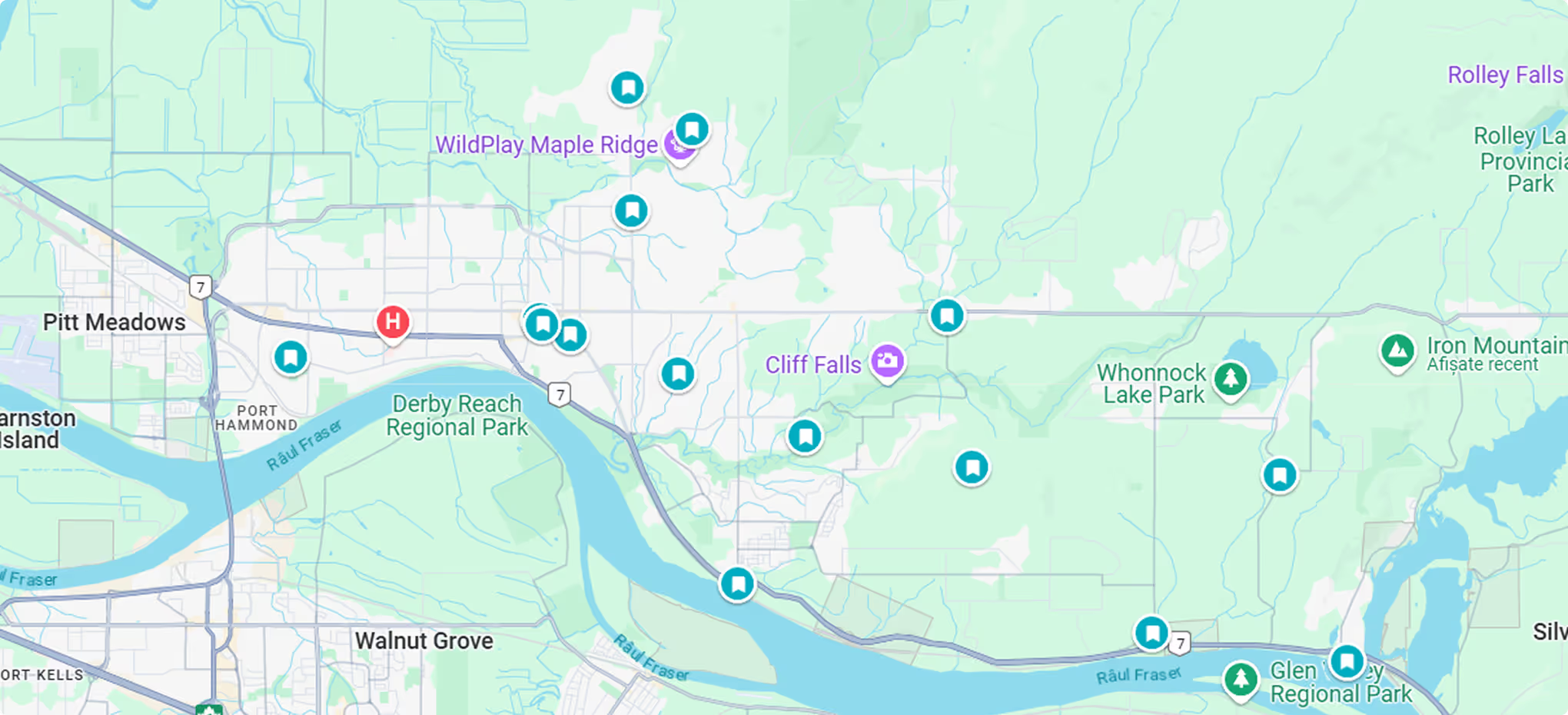
Neighbourhoods in the Fraser Valley