Heat Pump in Mount Lehman, BC
Eliminate Unpredictable Heating Costs With High-Efficiency Heat Pumps
Facing the damp chill of a Mount Lehman winter without a reliable heating system creates unnecessary stress for homeowners and risks freezing pipes. Secure your home’s comfort and efficiency today by scheduling a comprehensive assessment with our team or by inquiring about our financing options.
Rep-Air Heating and Cooling specializes in transitioning homes from outdated furnaces or baseboards to modern, high-performance heat pump systems. We understand that local residents require consistent temperature control that can handle the unique humidity of the region while keeping electricity bills manageable.
- Quick installation timelines are available to restore your home’s comfort immediately.
- Energy-efficient products are selected specifically to reduce long-term heating costs and eliminate fossil fuel dependency.
- Attractive financing options and guidance through CleanBC rebates make upgrades accessible.
All installations are fully compliant with local municipal codes and are backed by comprehensive labor and equipment warranties for your peace of mind.

What You Get With a Modern Heat Pump Installation
When you invest in a new heat pump system, you are purchasing more than just a piece of equipment; you are securing year-round climate control. Unlike traditional furnaces that only provide heat, a heat pump acts as a dual-purpose system, moving heat indoors during the winter and reversing the process to act as an air conditioner during the summer. This versatility eliminates the need to maintain two separate systems, streamlining your maintenance schedule and freeing up space in your mechanical room.
The scope of a standard installation involves a complete overhaul of how your home processes energy. The primary deliverable is the heat pump unit itself, which sits outside the home and manages thermal exchange. Inside, we install an air handler or utilize your existing compatible furnace as a backup (in dual-fuel hybrid systems) to distribute the conditioned air through your ductwork. For homes without ductwork, ductless mini-split heads are mounted in strategic zones to provide targeted comfort.
Beyond the hardware, the service includes the reconfiguration of your electrical connections to support the new load, the installation of a new specialized thermostat capable of managing complex heat pump stages, and the safe disposal of your old equipment. We ensure the work area is left clean and that the new system is fully integrated into your home’s infrastructure. The result is a quiet, consistent heating source that does not suffer from the "blast and drift" temperature swings common with older gas furnaces.
The Installation Process: From Assessment to Airflow
A professional installation follows a rigorous protocol to ensure the longevity of the system and the validity of manufacturer warranties. We do not rely on guesswork; every step is calculated based on the specific thermal properties of your home.
Load Calculation and Sizing
The process begins with a Manual J load calculation or equivalent assessment. This determines the exact amount of heating and cooling your home requires based on square footage, insulation levels, window quality, and orientation. Proper sizing is critical; a unit that is too big will short-cycle, leading to premature wear, while a unit that is too small will run continuously and fail to reach the set temperature.
Site Preparation and Removal
Technicians isolate the existing electrical and fuel lines before disconnecting and removing the old heating unit. In Mount Lehman, where ground moisture can be an issue, we prepare a level, elevated pad or mount specifically designed to keep the outdoor unit above the anticipated snow line and free from debris.
System Placement and Connection
The outdoor condenser and indoor air handler are set in place. Technicians run refrigerant lines (line sets) between the two units, ensuring they are insulated and sealed to prevent energy loss. Electrical wiring is updated to meet current safety codes, ensuring the system has a dedicated circuit that can handle the startup amperage.
Vacuum and Charge
Once connected, the refrigerant lines are pressure-tested with nitrogen to check for leaks. A vacuum pump then removes all moisture and air from the lines—a crucial step, as any remaining moisture can turn into acid inside the compressor. The system is then charged with the precise amount of refrigerant required by the manufacturer.
Testing and Commissioning
The system is powered on and tested in both heating and cooling modes. Technicians measure static pressure in the ducts, check temperature differentials (delta T) between supply and return air, and calibrate the thermostat. This ensures the system is operating at its rated efficiency (HSPF and SEER) before the team leaves the site.
When Replacement Beats Repair
Homeowners often grapple with the decision to repair an aging unit or invest in a new system. While repairs can offer a short-term fix, there comes a tipping point where replacement is the only financially sound decision. Understanding the lifecycle of HVAC equipment helps you avoid throwing money at a failing asset.
The 50% Rule
If the cost of a necessary repair approaches 50% of the value of a new system, replacement is generally the better option. Major failures, such as a blown compressor or a cracked heat exchanger, often fall into this category. Investing thousands into an old unit essentially buys you a little time but resets no warranties.
Equipment Age and R-22 Availability
Heat pumps generally last 10 to 15 years. If your system is over 12 years old and requires a significant repair, it is nearing the end of its useful life. Furthermore, older systems often use R-22 refrigerant, which has been phased out due to environmental regulations. Obtaining R-22 is becoming prohibitively expensive and difficult, making repair of these older units impractical.
Rising Energy Bills
As heat pump components wear, they lose efficiency. You may notice your electricity usage creeping up year over year, even if your habits haven’t changed. New inverter-driven heat pumps modulate their speed to match demand, rather than running at 100% capacity all the time. Replacing a fixed-speed unit with a variable-speed inverter system can result in significant monthly savings, effectively subsidizing the cost of the installation over time.
Comfort and Noise Issues
If your current system struggles to maintain a consistent temperature, leaves certain rooms cold, or operates loudly, it is a sign of internal mechanical degradation. Modern systems are designed for whisper-quiet operation and superior zoning capabilities, solving comfort issues that repairs cannot address.
Climate Considerations, Permits, and Rebates
Installing a heat pump in this region requires specific knowledge of the local climate and regulatory environment. The temperate, humid conditions common in the area present different challenges than those found in the dry interior or the frozen north.
Managing Defrost Cycles
In environments where temperatures hover around freezing with high humidity, heat pumps are prone to frost buildup on the outdoor coil. Rep-Air Heating and Cooling installs units with advanced demand-defrost controls. These systems sense exactly when frost impairs performance and run a quick defrost cycle, rather than running on a timed timer which wastes energy. This is essential for maintaining efficiency during damp winters.
Local Permitting and Codes
Any modification to your home’s heating and electrical systems requires permits from the city or regional district. This ensures that the electrical panel can support the heat pump and that the installation meets fire and safety codes. We handle the permit application process, ensuring that all work passes municipal inspections. Unpermitted work can complicate future home sales and may void home insurance policies.
Navigating CleanBC and Federal Rebates
British Columbia offers some of the most aggressive heat pump rebates in North America through the CleanBC program, often combined with federal Greener Homes initiatives. However, qualifying for these rebates requires strict adherence to specific criteria. The equipment must meet high efficiency ratings (HSPF/SEER), and the installation must be performed by a registered contractor. We provide the necessary documentation and invoices detailing the model numbers and AHRI reference numbers required to process your rebate claims smoothly.
Electrical Service Upgrades
Many older homes in Mount Lehman operate on 100-amp service, which may be insufficient for a modern heat pump, especially if the home also has an EV charger or a hot tub. Part of our assessment involves checking your panel capacity. If a service upgrade is required, we coordinate with BC Hydro and licensed electricians to upgrade your service to 200 amps, ensuring your home has the power it needs.
Technical Expertise and Service Differentiators
Choosing the right contractor is as important as choosing the right brand of equipment. The Department of Energy estimates that improper installation can reduce a heat pump's efficiency by up to 30%. Our approach focuses on technical precision to ensure you get the performance you paid for.
Ductwork Modifications
A heat pump moves a higher volume of air at a slightly lower temperature compared to a gas furnace. If the existing ductwork is too small or restricted, the system will be noisy and inefficient. We analyze static pressure and fabricate custom sheet metal transitions when necessary to ensure optimal airflow and reduce strain on the blower motor.
Refrigerant Handling Certification
Our technicians hold valid ODS (Ozone Depleting Substances) certificates, mandatory for handling refrigerants in BC. We follow strict evacuation and recovery protocols to protect the environment and ensure your system operates at the correct pressure. Incorrect refrigerant charge is a leading cause of compressor failure; we verify charge by weight and subcooling metrics to guarantee accuracy.
Comprehensive Warranty Support
We register all equipment warranties on your behalf. Standard manufacturer warranties often cover parts for 10 years, but only if the unit is registered within 60 days of installation. We ensure this paperwork is filed correctly. Additionally, we stand behind our workmanship, offering guarantees on the installation quality itself so you are never left paying for a callback due to an installation error.
Brand Agnostic Solutions
We are not tied to a single manufacturer, allowing us to recommend the equipment that best fits your specific home and budget. Whether you need a high-end variable-capacity system for maximum efficiency or a reliable single-stage unit for a rental property, we source equipment with the best track record for reliability in the Pacific Northwest climate.
Secure Your Comfort and Efficiency Today
The transition to a heat pump represents a significant upgrade in home comfort and energy management. By addressing heating and cooling in a single efficient system, you eliminate the safety risks of combustion heating and the high costs of resistance heating.
Don't wait for your current system to fail in the middle of a cold snap. Proactive replacement allows you to take advantage of available rebates and choose the system that is exactly right for your home. Rep-Air Heating and Cooling is ready to help you navigate the options, handle the permits, and deliver a flawless installation.
Take control of your home’s climate and utility bills now. Contact us to schedule your consultation and free estimate.
hear what our satisfied clients have to say
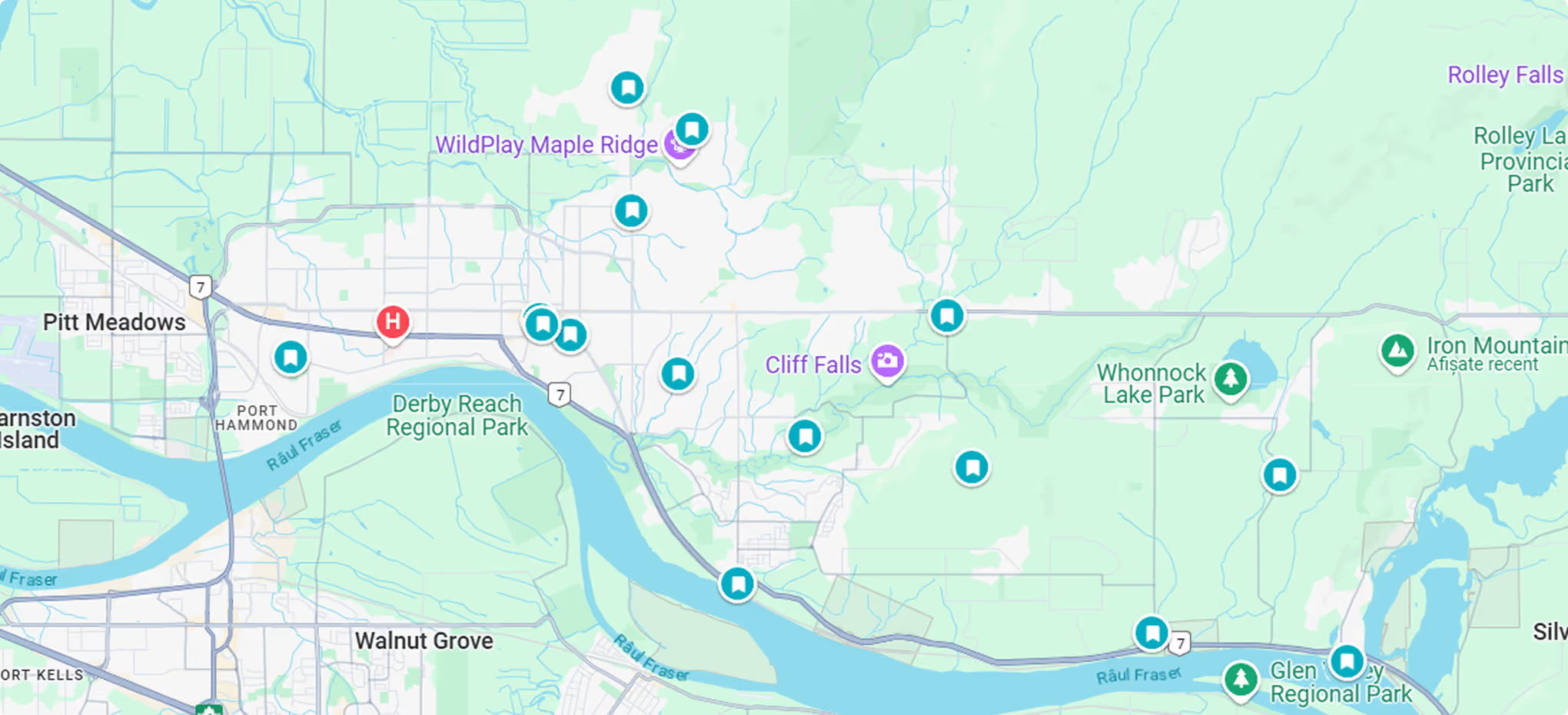
Neighbourhoods in the Fraser Valley