Heat Pump in Murrayville, BC
Stay Warm This Winter without the High Costs
Inconsistent heating or rising energy bills signal that your current system is no longer up to the task of handling the wet, chilly winters in Murrayville, BC. Contact us today to schedule a comprehensive assessment or apply for our flexible financing options.
Homeowners frequently face the dilemma of sinking money into endless repairs for an aging unit or investing in a modern, reliable solution. Continuing to operate a failing system not only compromises comfort but often leads to significantly higher utility costs and the risk of total failure during a cold snap.
- Quick, professional installations ensuring minimal disruption to your daily routine.
- Energy-efficient heat pumps that significantly lower monthly electrical bills.
- Extended warranties and flexible financing options available to protect your investment.
Fully licensed and insured, we provide easy financing options to ensure your home comfort fits your budget.

Immediate Comfort with Rapid Heat Pump Installation
When your heating system fails or underperforms, waiting days for a solution is not an option. The climate in this region demands a system that can switch seamlessly between handling damp, cold winters and warm, dry summers. Upgrading to a modern heat pump provides immediate relief from inconsistent temperatures and drafts.
Modern heat pump technology has evolved significantly, offering superior performance even when temperatures drop near freezing. Unlike older resistance heaters or inefficient furnaces, today's units move heat rather than generating it, providing a more consistent and comfortable indoor environment. Residents in Murrayville need a system that responds quickly to thermostat adjustments, ensuring that you are not left waiting for the house to warm up after a long day.
Rep-Air Heating and Cooling focuses on minimizing the downtime associated with HVAC upgrades. The goal is to restore your home’s comfort levels as efficiently as possible, removing the stress associated with emergency heating situations. By choosing a dedicated installation service, you gain access to equipment that is properly sized for your specific square footage and insulation levels, preventing issues like short-cycling or humidity imbalances.
What to Expect: Our Process & Installation Timeline
Replacing or installing a new heat pump is a significant home improvement project that requires precise planning and execution. Understanding the workflow helps eliminate anxiety and prepares your home for the upgrade. A structured approach ensures that every safety code is met and that the unit performs at its peak efficiency from day one.
Initial Assessment and Load Calculation
The first step involves a detailed evaluation of your home’s thermal characteristics. This is not a guessing game; it requires a scientific approach to determine the exact heating and cooling load needed.
- Technicians measure windows, insulation levels, and floor space.
- A Manual J load calculation is performed to ensure the unit is neither undersized (which fails to heat) nor oversized (which wastes energy).
- Existing ductwork is inspected for leaks or obstructions that could hamper airflow.
- Electrical capacity is checked to ensure your panel can support the new equipment without upgrades.
Removal and Site Preparation
Once the correct system is selected, the physical work begins. Protecting your property during this phase is a priority.
- Old furnaces, air conditioners, or heat pumps are disconnected and safely removed.
- Refrigerant from old units is recovered according to environmental regulations.
- The installation site, whether a side yard or a specific indoor room, is cleared and prepped.
- Drop cloths and floor protectors are used to keep your home clean throughout the process.
Installation and Connection
This phase involves the technical connection of the indoor and outdoor components.
- The outdoor condenser unit is placed on a stable, raised pad to keep it clear of snow accumulation and debris.
- Refrigerant lines are run between the indoor and outdoor units, sealed tightly to prevent leaks.
- Electrical connections are hardwired, and a disconnect switch is installed for safety and maintenance.
- If opting for a ductless system, the indoor heads are mounted securely to walls; for ducted systems, the air handler is connected to your existing ventilation network.
Testing and Commissioning
The job is not complete until the system is proven to work.
- The system is pressure-tested to ensure there are no refrigerant leaks.
- A vacuum is pulled on the lines to remove moisture and air before releasing the refrigerant.
- Technicians run the system through a full heating and cooling cycle to verify performance.
- The thermostat is calibrated and programmed to your preferences.
- You receive a walkthrough of the controls and maintenance requirements before the team departs.
Heat Pump Efficiency and Your Home Energy Savings
The primary driver for switching to a heat pump in British Columbia is energy efficiency. Traditional heating methods, such as baseboard heaters or oil furnaces, often consume more energy than they deliver in heat. In contrast, a well-maintained heat pump can deliver up to three times more heat energy than the electrical energy it consumes. This efficiency is measured by the Heating Seasonal Performance Factor (HSPF) and the Seasonal Energy Efficiency Ratio (SEER).
Higher ratings in these categories translate directly to lower monthly utility bills. Because heat pumps transfer heat rather than burn fuel to create it, they are incredibly effective in the mild-to-moderate climate typical of Murrayville. This efficiency does not just save money; it reduces the carbon footprint of the home, aligning with provincial goals for greener living.
Leveraging Rebates and Incentives
To encourage the adoption of energy-efficient technology, various programs are often available to homeowners.
- BC Hydro and CleanBC often offer substantial rebates for switching from fossil fuel-based systems to electric heat pumps.
- Federal grants may be available for systems that meet specific tier ratings for energy efficiency.
- Qualifying for these rebates usually requires installation by a certified professional and the selection of equipment from an approved list.
- Documentation such as invoices and technical specifications must be submitted promptly to claim these financial incentives.
Investing in a high-efficiency system often pays for itself over time through reduced operational costs and available rebates. It moves the home away from fluctuating gas prices and utilizes the stable hydroelectric power grid available in the region.
Troubleshooting Common Heat Pump Issues
Even the best systems can encounter issues, particularly during extreme weather shifts. Knowing what to look for can help you decide whether you need a simple maintenance visit or an emergency repair. Early detection of problems often prevents catastrophic failure and expensive part replacements.
The Unit is Not Heating
If the air coming from your vents feels lukewarm or cool, several factors could be at play.
- The thermostat may be set incorrectly or require new batteries.
- The air filter might be clogged, restricting airflow and preventing the heat exchange process.
- The outdoor unit could be blocked by debris, leaves, or snow drifts.
- Low refrigerant levels due to a leak can significantly reduce heating capacity.
The Outdoor Unit is Frozen
In the damp climate of the Pacific Northwest, some frost on the outdoor coil is normal. However, a unit encased in solid ice indicates a problem.
- A malfunctioning defrost board may prevent the unit from entering its regular defrost cycle.
- Bad sensors might fail to tell the system when ice has built up.
- A failing fan motor can prevent air from moving across the coils, leading to rapid freezing.
- Never chip ice away with sharp objects, as this can puncture the coils; professional defrosting is required.
Strange Noises
Heat pumps operate relatively quietly. Sudden changes in sound profiles are red flags.
- Grinding or metal-on-metal sounds usually suggest a motor bearing failure or a fan blade issue.
- Hissing or bubbling noises often point to a refrigerant leak.
- Rattling or vibrating can indicate loose panels or mounting hardware that needs tightening.
- Clicking that does not result in the unit starting may indicate a failing capacitor or electrical relay.
Repair vs. Replace Decisions
Homeowners often struggle with the decision to repair an existing unit or invest in a new one.
- If the unit is over 10 to 12 years old and requires a major repair (like a compressor), replacement is usually more economical.
- If the cost of the repair approaches 50% of the value of a new system, investing in a new unit with a warranty is the smarter financial move.
- Frequent breakdowns that require multiple service calls in a single season suggest the unit has reached the end of its reliable lifespan.
Local Climate Considerations for Residents
The specific microclimate in Murrayville dictates how HVAC systems should be configured and maintained. While winters are generally mild compared to the rest of Canada, the high humidity and precipitation levels from October to March present unique challenges for outdoor mechanical equipment.
Managing Humidity and Defrost Cycles
Heat pumps working in temperatures between 0°C and 5°C with high humidity are prone to frost accumulation. This is the "danger zone" for icing.
- Systems installed in this region must have reliable defrost controls.
- The outdoor unit should be elevated at least 6 to 12 inches off the ground to allow meltwater to drain away and prevent refreezing at the base.
- Overhead protection, such as a dedicated shelter or roof overhang, can prevent excessive snow and freezing rain from burying the fan, provided it does not restrict airflow.
Summer Cooling Needs
While heating is the primary concern, summers are becoming warmer and drier.
- A heat pump serves as a fully functional air conditioner during the summer months.
- Proper sizing is critical to ensure the unit can dehumidify the home effectively while cooling.
- If a system is oversized for heating, it may cool the house too quickly in summer without removing moisture, leading to a clammy indoor feeling.
Corrosion Protection
Moisture is a constant factor in British Columbia.
- Regular cleaning of the outdoor coils is necessary to remove dirt and organic matter that holds moisture against the metal.
- Inspecting the unit for rust and corrosion on electrical contacts helps prevent premature board failures.
- Ensuring the area around the unit is free of wet vegetation promotes better air circulation and drying.
Verified Certifications and Professional Standards
When selecting a provider for heat pump services, credentials matter more than low initial quotes. The complexity of modern HVAC systems requires technicians who are trained in high-voltage electricity, pressurized refrigerants, and thermodynamics.
Licensing and Insurance
Working with a licensed contractor protects the homeowner from liability.
- Technical Safety BC requires specific certifications for gas and refrigeration work.
- Liability insurance ensures that any accidental damage to your property during installation is covered.
- Worker’s compensation coverage protects you from lawsuits if a technician is injured on your site.
Manufacturer Certifications
Leading brands like Mitsubishi, Trane, and Daikin offer specific training to installation companies.
- Certified dealers have access to proprietary diagnostic tools and technical support.
- Warranties on equipment are often contingent on installation by a recognized professional.
- Ongoing training ensures technicians are up to date on the latest inverter technology and smart home integrations.
Building Codes and Permits
A legitimate installation requires adherence to local building codes.
- Permits must be pulled for new installations or significant alterations to mechanical systems.
- Municipal inspections may be required to verify that the installation meets safety standards.
- Selling your home in the future can be complicated if you cannot prove that HVAC work was done with proper permits.
Rep-Air Heating and Cooling adheres to these rigorous standards to ensure every installation is safe, legal, and built to last. Quality workmanship minimizes the risk of future breakdowns and ensures the manufacturer's warranty remains valid.
Take the Next Step for Home Comfort
Do not let another season pass with an unreliable heating system. Upgrading to a high-efficiency heat pump improves comfort, lowers energy bills, and increases the value of your home. Whether you need an emergency repair or a complete system replacement, professional assistance is available to guide you through the process.
Ensure your home stays comfortable year-round. Contact us today to discuss your heat pump options.
hear what our satisfied clients have to say
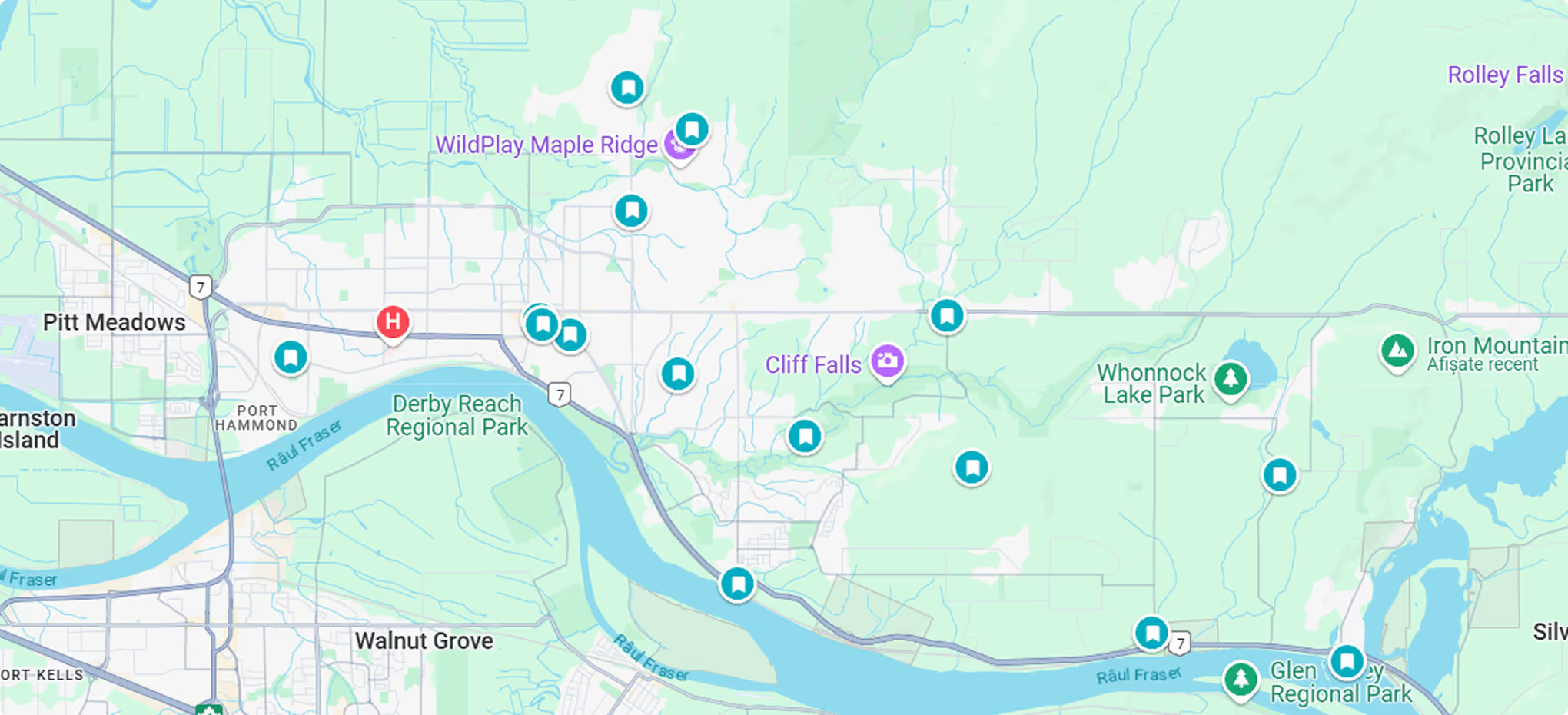
Neighbourhoods in the Fraser Valley