Heat Pump in Thornhill, BC
Sudden Heat Pump Failures? We Provide Quick, Reliable Solutions!
When your heat pump fails, especially during a cold snap or an unexpected heat wave, the need for a fast resolution is critical. At Rep-Air Heating and Cooling, we offer quick diagnostic and repair services that restore your comfort without delay, servicing homeowners across Thornhill and the surrounding region. If your system is down or underperforming, contact us immediately or ask about our flexible financing options to get your system back online.
We prioritize restoring your home’s climate control through:
- Rapid on-site response, often with same-day service availability to minimize downtime.
- Comprehensive warranty coverage for all new installations and repairs to protect your investment.
- Access to rebate programs like CleanBC to make your upgrade or replacement more affordable.
Fully licensed and insured, with easy financing options available.

What You Can Expect From Professional Heat Pump Service
Modern heat pumps are sophisticated pieces of technology that require precise handling to function correctly in British Columbia’s variable climate. When you schedule a service visit, the focus is immediately on diagnosing the root cause of efficiency loss or mechanical failure. A heat pump that struggles to maintain temperature often points to refrigerant leaks, sensor malfunctions, or airflow restrictions that require professional tooling to identify.
Service begins with a comprehensive system audit. Technicians examine the indoor air handler and the outdoor compressor unit to ensure communication between the two is seamless. For homes in Thornhill, where humidity and freezing temperatures interact, checking the defrost control board is standard procedure. If the unit cannot effectively melt ice buildup on the outdoor coils, the system will eventually lock out, leaving the home without heat.
Beyond immediate repairs, professional service includes verifying that the system is optimized for energy efficiency. This involves checking the static pressure of the ductwork and measuring the temperature rise/drop across the coil. Adjustments made during these visits often result in lower monthly utility bills, as the system no longer has to overwork to meet the thermostat’s demand.
Comprehensive Installation and Replacement Process
Installing a new heat pump or replacing an aging unit is a multi-step construction project that integrates with your home's electrical and ventilation systems. The process is designed to ensure the equipment is sized correctly for your specific square footage and insulation levels.
Assessment and Sizing
The process starts with a Manual J load calculation. This engineering calculation determines the exact heating and cooling load of the building. Guessing the size based on the old unit is a recipe for failure; an oversized unit will short-cycle, leading to humidity issues and premature wear, while an undersized unit will run continuously without reaching the set temperature.
Site Preparation and Removal
Technicians protect the workspace with drop cloths before disconnecting the existing equipment. Refrigerant from the old unit is reclaimed according to environmental regulations, ensuring no harmful gases are vented into the atmosphere. The outdoor pad is leveled and, crucially for our region, elevated on snow legs or a stand to prevent snow accumulation from blocking airflow during winter — view our project gallery.
Mechanical Installation
The indoor unit (air handler or mini-split head) is mounted and secured. The outdoor condenser is placed on the prepared stand. A new copper line set, which carries the refrigerant between the two units, is installed. This line set is insulated to prevent energy loss and condensation damage.
Electrical and Control Wiring
High-voltage wiring is connected from the panel to a disconnect box near the outdoor unit, adhering to strict electrical codes. Low-voltage control wires are run to the thermostat. In many cases, this is the stage where smart thermostats are integrated to allow for remote monitoring and better zone control.
Vacuum and Charge
Once mechanical connections are tight, a vacuum pump removes all moisture and air from the refrigerant lines. This step is non-negotiable; moisture inside the lines turns into acid that destroys the compressor. After achieving a deep vacuum, the factory-specified amount of refrigerant is weighed in.
Final Commissioning and Testing
The system is powered on and put through a full operational cycle. Technicians measure airflow, check amperage draw on the compressor, and verify that the heating and cooling outputs match manufacturer specifications. This ensures the unit is ready to handle extreme weather from day one.
Determining When Replacement Beats Repair
Homeowners often face a difficult choice when a heat pump breaks down: fix the immediate issue or invest in a new system. While repair is often the most cost-effective route for minor issues, there are specific thresholds where replacement becomes the smarter financial decision.
The 50% Rule
If the cost of the repair approaches 50% of the value of a new system, replacement is generally recommended. Major component failures, such as a blown compressor or a cracked coil out of warranty, often trigger this rule. Investing thousands into an old unit offers no guarantee that another component won't fail shortly after.
System Age and R-22 Refrigerant
Heat pumps over 10 to 15 years old likely use R-22 refrigerant (Freon), which has been phased out due to environmental regulations. Sourcing R-22 is incredibly expensive. If an older unit develops a leak, the cost to recharge it often rivals the down payment on a modern, high-efficiency system.
Short Cycling and Comfort Issues
If the current unit turns on and off frequently (short cycling) or leaves hot and cold spots throughout the house, it was likely never sized correctly or has suffered significant compressor damage. Repairing a component won't fix the underlying sizing issue. Replacement allows for the installation of a variable-speed inverter system that runs longer at lower speeds, providing consistent comfort and better dehumidification.
Efficiency Ratings (SEER2 and HSPF2)
Older units may have SEER ratings of 10 or 12. Modern systems can exceed SEER 20. The energy savings from upgrading to a high-efficiency unit can offset the monthly cost of financing the new equipment. In Rep-Air Heating and Cooling service calls, we can calculate the projected ROI based on your current usage patterns.
Local Considerations for Operation and Incentives
Operating a heat pump in this region requires attention to specific environmental and regulatory factors. The local climate presents a mix of damp cold and freezing temperatures that demands specific equipment capabilities.
Cold Climate Performance
Standard heat pumps lose significant heating capacity as temperatures drop below freezing. For this area, Cold Climate Air Source Heat Pumps (ccASHPs) are often necessary. These units can maintain 100% efficiency down to -15°C and continue operating effectively even at -25°C, reducing reliance on expensive backup electric strip heat.
Defrost Cycle Management
High humidity combined with near-freezing temperatures creates the perfect conditions for frost on the outdoor coil. Residents will notice their units entering "defrost mode" frequently. This is normal operation where the unit temporarily reverses to melt the ice. Proper drainage around the outdoor unit is essential to prevent this meltwater from refreezing into a slip hazard or blocking the unit base.
Electrical Panel Capacity
Many older homes looking to switch from fossil fuel heating (gas or oil) to electric heat pumps may need an electrical service upgrade. A heat pump requires a dedicated 240-volt circuit. Technicians assess the main panel amperage (100 amp vs. 200 amp) to ensure the home can support the new electrical load without tripping breakers.
CleanBC and Federal Rebates
British Columbia offers some of the most aggressive rebates in North America for switching to heat pumps. The CleanBC Better Homes and Home Renovation Rebate Programs provide significant financial incentives for installing qualifying high-efficiency systems. Eligibility often requires installation by a minimal-certified contractor and specific documentation of the old system's removal. Professional installers handle the technical documentation required to validate these claims.
Why Professional Execution Matters
Heat pumps are not "plug-and-play" appliances. The longevity and efficiency of the system are almost entirely dependent on the quality of the installation. A top-tier unit installed poorly will perform worse than a budget unit installed perfectly.
Refrigerant Handling Certification
Handling high-pressure refrigerants requires federal certification. Improper handling is not only illegal but dangerous. Certified technicians ensure the system is sealed tight, preventing leaks that damage the ozone layer and reduce system performance.
Airflow Balancing
Simply hooking up a heat pump to existing ductwork can lead to noise issues and poor performance if the ducts are undersized. Professionals measure static pressure and modify transitions or plenums to ensure the blower motor doesn't burn out fighting against restricted airflow.
Warranty Validation
Manufacturers of major HVAC brands strictly enforce warranty terms. They require proof of installation by licensed professionals. DIY or handyman installations typically void the parts and labor warranty immediately. Professional installation ensures that if a part fails in year five, the manufacturer covers the component cost.
Permitting and Code Compliance
Local municipalities require permits for HVAC modifications. This ensures safety standards are met regarding electrical connections and structural integrity. Professional services handle the permit application and inspection coordination, ensuring the homeowner is not liable for unpermitted work during a future home sale.
Call Us Today
Ensuring your home remains comfortable year-round requires a proactive approach to your heating and cooling infrastructure. Whether you are dealing with an emergency breakdown or planning a strategic upgrade to lower your energy footprint, professional intervention guarantees safety and performance. At Rep-Air Heating and Cooling, we are dedicated to delivering technical excellence and customer satisfaction.
Ready to upgrade your comfort or need an immediate repair? Contact us today to schedule your service.
hear what our satisfied clients have to say
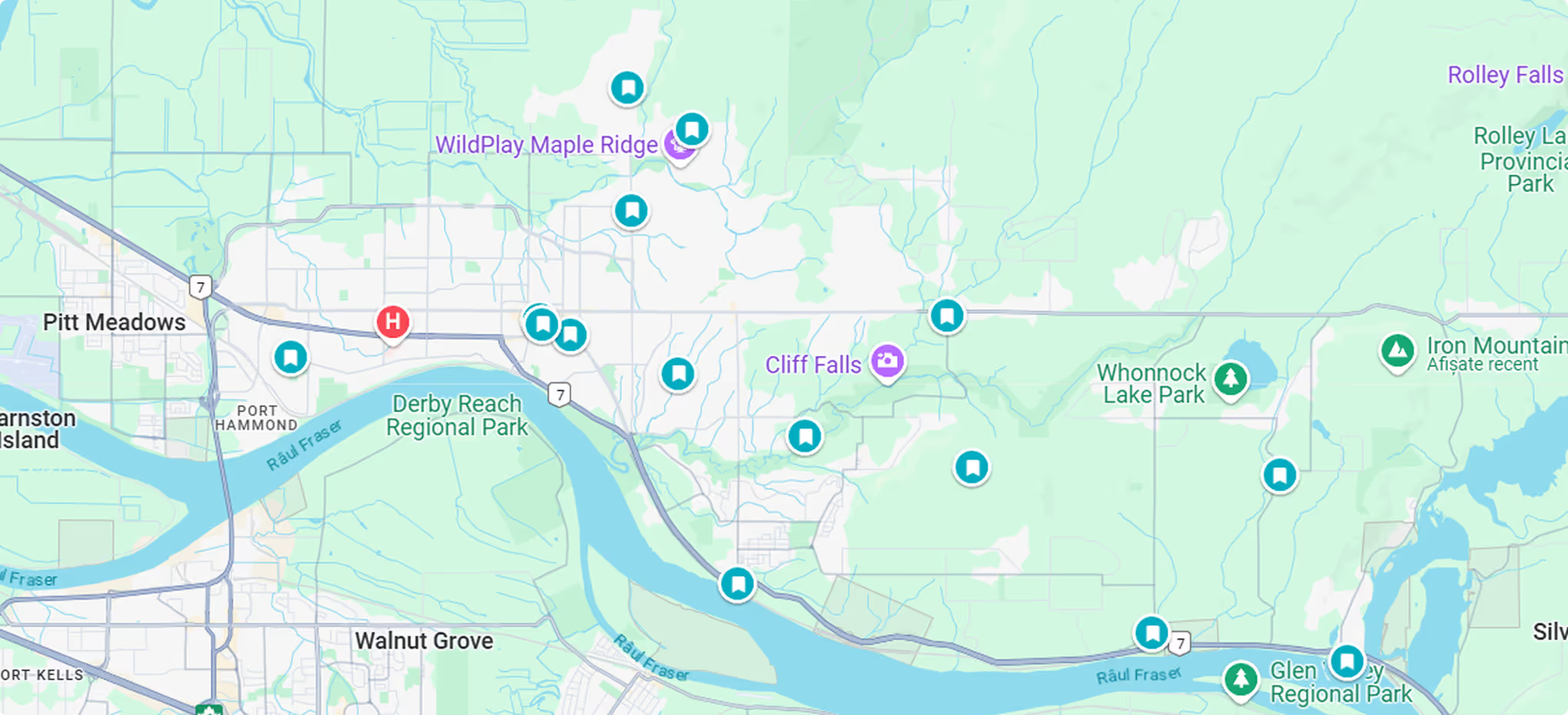
Neighbourhoods in the Fraser Valley