Heat Pump in Town Centre, BC
Reduce Your Energy Bills and Carbon Footprint with Our Heat Pump Installation
Struggling with high heating costs and concerned about your environmental impact while living in Town Centre? Discover how our heat pump installations can help save money and decrease greenhouse gas emissions, and contact us today to schedule your consultation or discuss our flexible financing options.
We understand that replacing a heating system is a significant decision for homeowners in British Columbia. The shift away from fossil fuels toward cleaner, electric-based heating is not just a trend but a necessary step for efficiency and environmental stewardship. By choosing a modern heat pump, you align your home with the region’s hydroelectric advantages.
- Up to 300% more energy efficiency with modern heat pump technology compared to traditional resistance heating.
- Possible reduction of heating costs by leveraging BC’s hydroelectric-powered grid rather than fluctuating gas prices.
- Access to substantial rebates and incentives via CleanBC and federal programs to lower initial costs.
All installations are fully licensed and include extensive warranties and flexible financing options.

How Heat Pumps Can Transform Your Home’s Heating
Heat pumps represent a fundamental shift in how you manage your home's climate. Unlike a furnace that burns fuel to create heat, a heat pump moves existing heat from one place to another. Even in the cooler temperatures common to Town Centre and the surrounding BC region, there is thermal energy in the outside air. A heat pump captures this energy, amplifies it, and transfers it inside your home. In the summer, the process reverses, acting just like an air conditioner to pull heat out of your home.
Rep-Air Heating and Cooling specializes in systems designed specifically for the coastal climate. The moderate winters in this area are the ideal operating environment for air-source heat pumps. Because the temperature rarely drops to the extreme lows seen in other parts of Canada, these units operate at peak coefficient of performance (COP) levels for the majority of the heating season. This means for every unit of electricity you pay for, you receive three to four units of heat energy in return.
This efficiency directly impacts your monthly utility expenses. By moving away from natural gas or inefficient electric baseboards, you reduce your exposure to volatile fuel markets. Furthermore, heat pumps provide consistent, even heating. They eliminate the "blast of hot air" associated with furnaces, providing a more comfortable, ambient temperature that maintains consistent humidity levels, which is crucial for comfort in our specific climate.
What You Get With Our Heat Pump Installation Services
When you commission a heat pump installation, you are purchasing a complete home comfort solution, not just a piece of hardware. We handle every aspect of the project to ensure the system performs exactly as the manufacturer intended. An improperly sized or installed unit will never achieve its rated efficiency, which is why our process is rigorous and data-driven.
- Load Calculation and Sizing: We do not guess based on the size of your old equipment. We perform a detailed load calculation that factors in your home’s square footage, insulation levels, window orientation, and local weather data for the Town Centre area. This ensures the unit is neither too small (which causes it to run constantly) nor too large (which causes short-cycling and humidity issues).
- Equipment Selection: We provide options from top-tier manufacturers with high SEER (Seasonal Energy Efficiency Ratio) and HSPF (Heating Seasonal Performance Factor) ratings. We prioritize cold-climate models capable of maintaining output even when temperatures dip below freezing.
- Ductwork Assessment and Modification: For ducted systems, existing ductwork must be compatible with the airflow requirements of a heat pump. We inspect your current ducts for leaks or restrictions and perform necessary modifications to ensure optimal static pressure.
- Electrical Infrastructure Review: Switching to a heat pump often requires a dedicated 240-volt circuit. We assess your electrical panel to ensure it can handle the load and coordinate any necessary upgrades.
- System Integration: We install smart thermostats compatible with the new heat pump, allowing for precise control, scheduling, and remote monitoring to maximize energy savings.
Step-by-Step Guide on Heat Pump Installation
A professional installation follows a strict protocol to ensure safety, longevity, and compliance with warranty requirements. We do not cut corners; every connection and setting is verified before we leave your property.
- Site Preparation and Protection: First, technicians arrive and prepare the workspace. Drop cloths are used to protect your flooring, and safety protocols are established. The electrical supply to the existing HVAC equipment is shut off and locked out for safety.
- Removal of Existing Equipment: Next, if you are replacing an old system, we disconnect and remove the existing furnace or air conditioner. Refrigerant from old AC units is recovered safely according to environmental regulations, not vented into the atmosphere. Old equipment is hauled away for proper recycling.
- Indoor Unit Installation: Then, the indoor coil or air handler is set into place. This component is responsible for distributing the conditioned air. It is leveled and sealed to the supply and return plenums to prevent air leakage.
- Outdoor Unit Placement: Simultaneously or immediately following, the outdoor compressor unit is positioned. It is placed on a composite pad or a snow stand to keep it elevated above anticipated snow levels, ensuring proper airflow and drainage during defrost cycles.
- Refrigerant Line Connection: Next, copper refrigerant lines (the line set) are run between the indoor and outdoor units. These lines are brazed (welded) using nitrogen purging to prevent oxidation inside the pipes, a critical step that prevents future compressor failure.
- Pressure Testing and Evacuation: Once connected, the system is pressurized with nitrogen to test for leaks. After verifying the system is sealed, a vacuum pump removes all moisture and air from the lines, achieving a deep vacuum measured in microns.
- Electrical and Control Wiring: Then, high-voltage wiring is connected to the disconnect box and the unit, and low-voltage control wires are run to the thermostat.
- Startup and Commissioning: Finally, the refrigerant charge is weighed in to the exact factory specifications. The system is powered on, and technicians measure airflow, temperature rise/drop, and static pressure to verify the system is operating within design parameters.
Evaluating When a Heat Pump Is a Smart Investment Over Repair
Homeowners often face the dilemma of whether to repair an aging heating system or invest in a new heat pump. While repairs may seem cheaper in the short term, they can be a sunken cost if the unit is nearing the end of its useful life. Making the switch to a heat pump is often a financial decision based on long-term return on investment (ROI).
- The 50% Rule: If the cost of the repair approaches 50% of the value of the system (or the cost of a new one), replacement is generally the smarter financial move.
- System Age: If your current furnace or air conditioner is over 12–15 years old, parts availability becomes scarce, and efficiency has likely degraded significantly. A new heat pump resets the clock on warranties and reliability.
- Rising Energy Bills: If you notice your energy bills climbing despite normal usage, your current system is likely losing efficiency. Replacing a 70% efficient gas furnace with a 300% efficient heat pump creates immediate monthly cash flow savings.
- Comfort Issues: Uneven heating, loud operation, or an inability to keep up with the thermostat set point are signs of mechanical failure. A new system solves these comfort deficits instantly.
- Environmental Goals: If reducing your carbon footprint is a priority, switching from fossil fuel combustion to an electric heat pump is the single most effective change a homeowner can make.
At Rep-Air Heating and Cooling, we provide honest assessments. If a repair is viable and extends the life of your unit significantly, we will tell you. However, if a new installation offers a better total cost of ownership, we will present those numbers clearly.
Adhering to BC’s Heat Pump Installation Regulations and Rebates
British Columbia has some of the most progressive energy codes and generous rebate programs in North America. Navigating these can be complex, but compliance is mandatory for safety and for qualifying for financial incentives.
- CleanBC Better Homes and Home Renovation Rebate Program: This program offers significant rebates for switching from fossil fuels (oil, natural gas, or propane) to an electric heat pump. To qualify, the equipment must be on the approved product list, and the installation must be performed by a registered contractor.
- Federal Greener Homes Initiative: Often stackable with provincial rebates, federal grants can further offset the cost of installation. These programs require pre- and post-retrofit energy audits.
- Permitting Requirements: In the Town Centre area and throughout the region, mechanical permits are required for HVAC alterations. This ensures the installation meets local building codes regarding noise, placement, and safety. We handle the application and inspection process on your behalf.
- Electrical Code Compliance: Heat pumps draw significant power. Technical Safety BC requires that all electrical work be performed by certified electricians and often requires a declaration of compliance. We ensure your panel has the capacity and that all wiring meets the current Canadian Electrical Code.
- Refrigerant Handling: Only certified technicians are legally allowed to handle refrigerants. Improper handling is an environmental hazard and a legal liability. Our team holds all necessary ODP (Ozone Depleting Substances) certificates.
Why Trust Us With Your Heat Pump Installation
Your heating system is critical infrastructure for your home. You need a partner who understands the technical demands of heat pump technology and the specific requirements of the BC building code. We distinguish ourselves through technical rigor and adherence to industry best practices.
- Licensed and Certified: We employ Red Seal certified refrigeration and air conditioning mechanics. This is the highest standard of trade certification in Canada, ensuring your installer has completed a four-year apprenticeship and rigorous testing.
- TECA Quality First: We are trained in TECA (Thermal Environmental Comfort Association) Quality First guidelines for forced air guidelines and ventilation. This ensures your system is designed correctly for airflow and ventilation requirements.
- Manufacturer Authorized Dealers: We are authorized dealers for major heat pump brands. This status allows us to offer extended warranties that are not available to unauthorized contractors. It also means we have direct access to manufacturer technical support and proprietary training.
- Liability and WCB Coverage: We carry full liability insurance and are in good standing with WorkSafeBC. This protects you from any liability in the unlikely event of an accident on your property.
- Warranty Support: We stand behind our workmanship. In addition to the manufacturer’s warranty on parts, we provide a labor warranty on our installation. If an issue arises related to how the unit was installed, we return to fix it.
Switching to a heat pump is an investment in your property value, your comfort, and the environment. By leveraging the mild climate of Town Centre and the clean power of the BC grid, you secure a future of lower bills and reliable heating. Rep-Air Heating and Cooling is ready to guide you through the transition, from the initial load calculation to the final rebate application.
Ready to upgrade your home comfort? Contact us today to book your heat pump assessment.
hear what our satisfied clients have to say
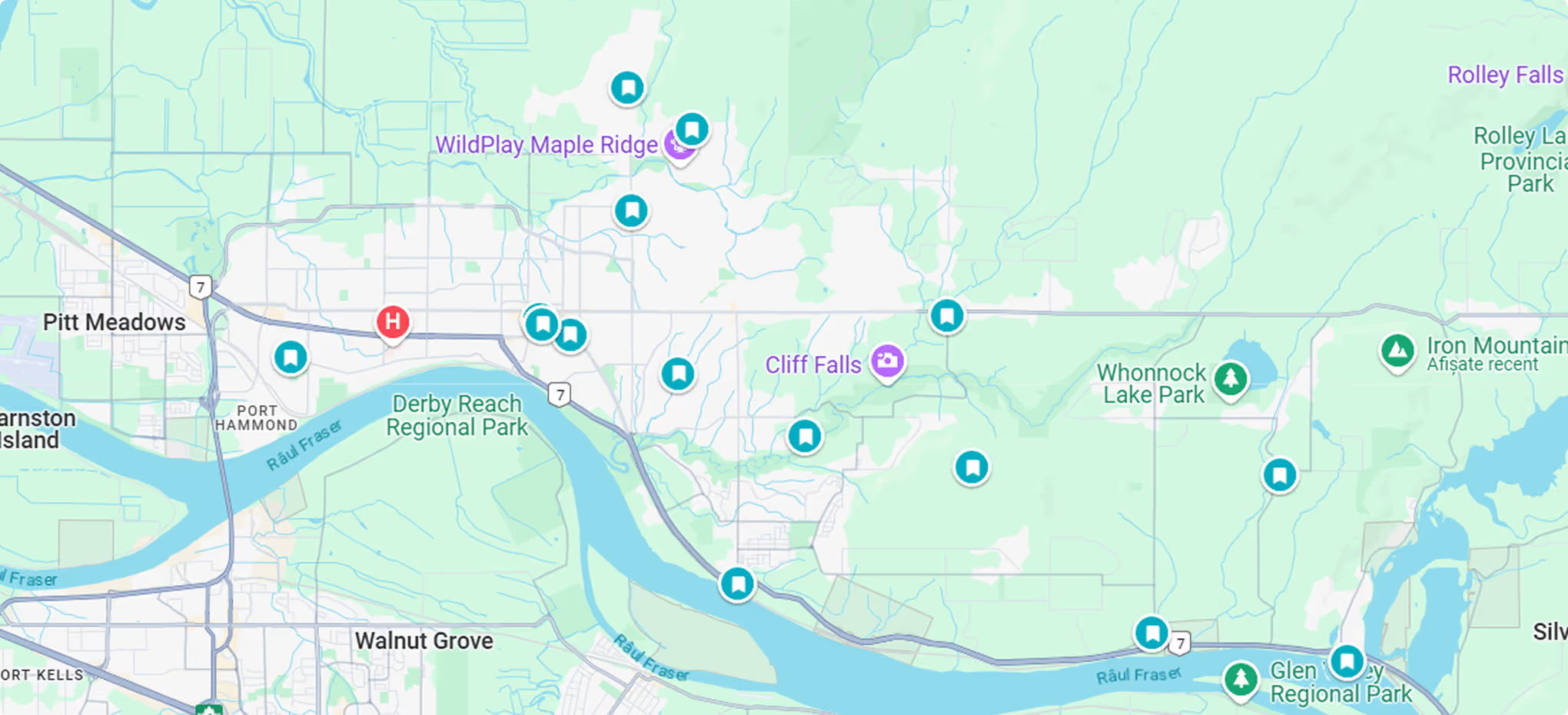
Neighbourhoods in the Fraser Valley