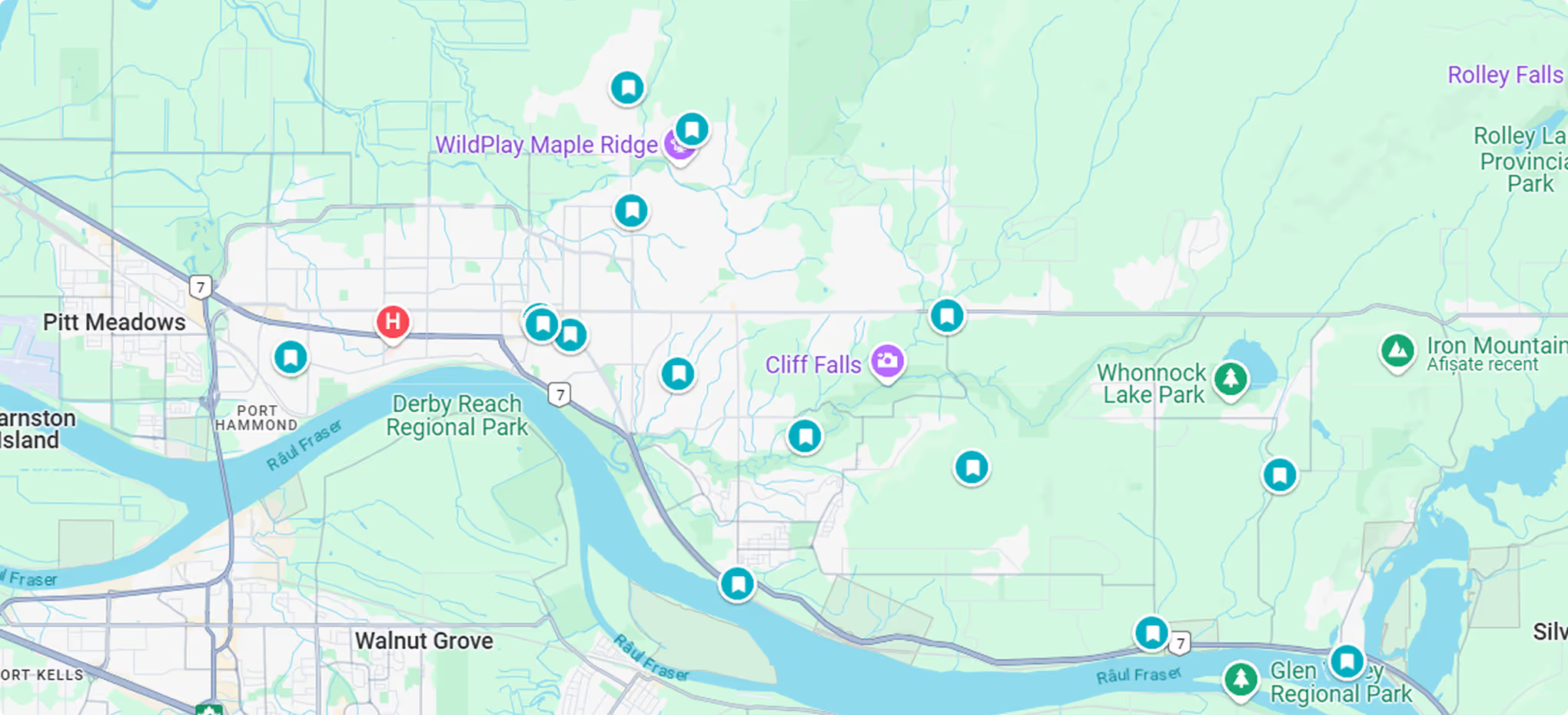
Heat Pump in Webster's Corners, BC
Is Your Home Losing Comfort and Efficiency Due to an Outdated Heating System?
Living in British Columbia requires a heating solution that can adapt to rapid weather changes, yet many homeowners find themselves battling inconsistent temperatures and skyrocketing energy bills due to failing equipment. If your current system is struggling to keep up with the demands of the season in Webster's Corners, our certified technicians are ready to provide a prompt, high-efficiency installation tailored to your specific home layout. Contact us immediately to schedule a comprehensive site assessment or to discuss our flexible financing options for a system upgrade.
When your heating system fails or operates inefficiently, you need a solution that resolves the immediate discomfort while securing long-term savings. We focus on delivering outcomes that matter to homeowners in this region:
- Immediate assessment and rapid installation protocols to restore safe temperatures to your home quickly.
- High-efficiency heat pumps engineered to drastically reduce monthly utility costs compared to traditional furnaces or baseboards.
- Direct access to and guidance on current provincial and federal rebates to make your energy upgrade significantly more affordable.
- Expert sizing and load calculations to ensure your new unit performs optimally without short-cycling.
All installations are fully licensed through Technical Safety BC, backed by extensive manufacturer warranties, and supported by flexible financing options to fit your budget.

Comprehensive Heat Pump Installation for Maximum Efficiency
Installing a heat pump is not merely swapping one box for another; it is a complete modernization of your home’s climate control infrastructure. In areas like Webster's Corners, where humidity levels and temperature fluctuations can be distinct from the dense city center, selecting the right equipment is critical. A heat pump works by transferring heat rather than generating it, which offers a dual benefit: efficient heating during the damp, cold winters and powerful dehumidification and cooling during the intensifying summer heat waves.
When you choose a professional installation, the scope of work goes beyond placing a unit outside. It involves a holistic review of your current ductwork, electrical capacity, and insulation levels. The goal is to create a sealed, pressurized system that delivers treated air to every corner of the home without energy leakage.
Modern systems are equipped with variable-speed compressors. Unlike older, single-stage units that blast at full capacity and then shut off, these advanced systems ramp up and down gently to maintain a constant temperature. This technology is particularly effective in our local climate, preventing the "cold blow" effect often associated with older models and ensuring that energy is strictly used to maintain comfort, not wasted on frequent startup spikes.
The Installation Process: Quick, Clean, and Professional
We understand that having technicians in your home can be disruptive, which is why our process is designed to be streamlined, transparent, and respectful of your property. We follow a strict protocol to ensure every installation meets manufacturer specifications and local building codes.
Site Evaluation and Load Calculation:
The process begins with a Manual J load calculation or equivalent. We measure square footage, window placement, insulation values, and orientation to determine the exact BTU capacity required. Guesswork here leads to inefficiency; accurate data leads to comfort.
System Selection and Design:
Based on the evaluation, we recommend specific models that qualify for BC Hydro rebates and federal grants. We design the placement of the outdoor compressor and indoor air handler to minimize noise and maximize airflow.
Removal and Disposal:
We safely disconnect and remove your old furnace or heat pump. This includes the proper recovery of any old refrigerant in accordance with environmental regulations, ensuring no hazardous materials are released.
Infrastructure Preparation:
Before the new unit goes in, we inspect and modify the plenum and ductwork connections to fit the new system. If electrical upgrades are required to handle the new amperage, these are identified and addressed.
Installation of Indoor and Outdoor Units:
The indoor coil or air handler is secured, and the outdoor compressor is mounted on a raised pad or bracket. Raising the unit is essential in our region to protect it from snow accumulation and ensure proper drainage during defrost cycles.
Line Set and Electrical Connection:
Refrigerant lines are run between the units, sealed, and vacuum-tested to ensure there are no leaks. A perfect vacuum is critical to prevent moisture from damaging the compressor. Electrical connections are finalized and safety switches are tested.
System Start-Up and Calibration:
The system is charged with the precise amount of refrigerant. We then calibrate the thermostat and configure the internal settings to match your home’s specific airflow requirements.
Final Walkthrough:
We demonstrate how to operate your new thermostat, explain filter maintenance, and review the warranty documentation with you.
Determining When to Replace Your Current Heating System
Deciding between another repair and a full replacement is a common dilemma for homeowners. While repairs can solve immediate issues, there is a tipping point where the cost of maintenance outweighs the value of the equipment. In the context of Webster's Corners weather patterns, reliability is paramount.
You should consider immediate replacement if you observe the following indicators:
- Age of the Unit: Heat pumps and central air systems typically last 10 to 15 years. If your unit is approaching or exceeding this age, efficiency degradation is likely costing you more in energy bills than a new monthly payment would.
- The 50% Rule: If the cost of a necessary repair approaches 50% of the value of a new system, investment in new equipment is the financially sound choice.
- Rising Energy Bills: A steady increase in utility costs without a change in usage habits indicates internal wear and loss of efficiency. Modern cold-climate heat pumps can be up to 300% efficient compared to the 95% efficiency of a gas furnace.
- Frequent Short-Cycling: If the unit turns on and off rapidly, it may be oversized or the compressor may be failing. This places immense strain on electrical components.
- Uneven Heating or Cooling: If some rooms are freezing while others are stuffy, the system lacks the static pressure or variable speed capability to distribute air effectively.
- Noise Levels: Grinding, squealing, or excessive vibration suggests critical mechanical failure is imminent.
Navigating Local Climate Needs, Permits, and Rebates
British Columbia’s heating requirements are unique. We do not experience the sub-zero extremes of the prairies constantly, but we deal with high humidity and hovering freezing points that create significant frost buildup on outdoor units. This makes the "defrost cycle" capability of a heat pump crucial. A properly installed system in this region must have functional drainage to prevent ice from re-freezing at the base of the unit, which can crush the coils.
Permits and Compliance:
Installation of heating equipment is a regulated trade. Rep-Air Heating and Cooling ensures all work is performed under the correct municipal and provincial permits. This is not just a formality; it is a requirement for your home insurance and future resale value. Unauthorized installations can void manufacturer warranties and leave you liable for safety infractions.
Maximizing Rebates:
The push for electrification in BC has led to substantial financial incentives. Programs from BC Hydro and the federal Greener Homes initiative offer thousands of dollars in rebates for switching from fossil fuels (oil or natural gas) to electric heat pumps. To qualify, equipment must be installed by a licensed contractor and meet specific HSPF (Heating Seasonal Performance Factor) and SEER (Seasonal Energy Efficiency Ratio) ratings. We guide you through this documentation to ensure you claim every dollar available to you.
Technical Specifications and Energy Efficiency Ratings
When evaluating a new system, understanding the technical metrics helps you make an informed investment. The two primary ratings you will encounter are SEER2 and HSPF2.
- SEER2 (Seasonal Energy Efficiency Ratio): This measures cooling efficiency. A higher number indicates better energy conservation during summer months. For our local summers, a rating of 16 or higher provides excellent balance between cost and performance.
- HSPF2 (Heating Seasonal Performance Factor): This is critical for our winters. It measures heating efficiency. In our climate zone, looking for an HSPF2 of 9 or higher ensures the unit remains efficient even as temperatures drop.
Cold Climate Heat Pumps:
Standard heat pumps lose efficiency as the thermometer dips below freezing. However, "Cold Climate" models are equipped with advanced inverter compressors and flash-injection technology. This allows them to maintain 100% heating capacity even at -15°C and operate effectively down to -25°C or lower. Given the occasional severe cold snaps we experience, investing in a cold-climate certified model is often the wisest decision for consistent comfort.
Inverter Technology:
Traditional systems are "all or nothing." Inverter-driven systems operate like a car accelerator, adjusting speed to meet the exact heating or cooling demand. This results in quieter operation, tighter temperature control (within 0.5 degrees), and significantly lower electricity consumption.
Types of Heat Pump Systems Available
Every home layout is different, and the "one size fits all" approach does not apply to HVAC. We analyze your specific architectural constraints to recommend the correct system type.
Central Ducted Systems:
If your home already has a furnace and ductwork, a central heat pump is the logical upgrade. It utilizes the existing infrastructure to distribute air. We often couple this with a "dual fuel" approach, keeping a gas furnace as a backup for extreme cold, though modern heat pumps rarely need this backup.
Ductless Mini-Splits:
For homes with baseboard heating, additions, or areas with poor airflow, ductless systems are the gold standard. They require no ductwork and allow for "zoning," meaning you can heat the living room without wasting energy on an empty guest room.
Ducted Mini-Splits:
A hybrid option where a compact air handler is hidden in an attic or crawlspace, feeding short runs of ductwork to specific rooms. This offers the aesthetic of a central system with the efficiency of a mini-split.
The Importance of Certified Installation
The longevity of your heat pump is determined on the day it is installed. Industry statistics suggest that a significant percentage of HVAC failures are due to improper installation rather than equipment defects.
Refrigerant Charge:
If a system is undercharged or overcharged by even 10%, efficiency can drop by 20% and compressor life can be cut in half. We use digital gauges to ensure precise charging.
Brazing and Sealed Systems:
Our technicians use nitrogen purging during the brazing process. This prevents oxidation inside the copper lines. Without this step, scale builds up inside the pipes and eventually clogs the fine valves in the compressor, leading to catastrophic failure years down the road.
Airflow Balancing:
A powerful heat pump connected to undersized ductwork will fail. We measure static pressure to ensure the blower motor is not overworking. If adjustments to the ductwork are necessary to handle the airflow, we identify this immediately.
Secure Your Home Comfort for the Long Term
Upgrading your heating and cooling infrastructure is a significant decision that impacts your daily life and financial health for the next decade. By choosing a high-performance heat pump, you are insulating yourself against rising fossil fuel costs and ensuring year-round comfort regardless of the weather outside. From the initial load calculation to the final assistance with rebate paperwork, the goal is a seamless transition to a better, more efficient home environment.
Rep-Air Heating and Cooling is dedicated to providing technical excellence and transparent service to the residents of Webster's Corners. Do not wait for a complete system failure during a deep freeze or a heat wave. Take control of your home’s climate today.
Contact our team now to book your professional consultation and start your journey toward a more comfortable, energy-efficient home.
hear what our satisfied clients have to say
Neighbourhoods in the Fraser Valley