Heating Repair & Service in Mission, BC
Is Your Heating System Failing to Keep Your Home Warm?
Is your furnace or heat pump failing to keep the damp Fraser Valley chill out of your Mission home? When your system cannot provide consistent warmth, your home quickly becomes uncomfortable, and minor mechanical issues can escalate into expensive complete failures. Rep-Air Heating and Cooling is ready to quickly diagnose and repair your heating system to restore your comfort.
.avif)
Signs Your Heating System Needs Professional Repair
The System Blows Cold or Lukewarm Air
The fan is running forcefully, but the air coming from your vents is entirely devoid of heat. You might notice your thermostat setting is completely ignored, and the ambient temperature inside your house simply continues to drop hour by hour. From a technician's perspective, this almost always points to a failure right at the heat source.
For a gas furnace, it could be a faulty ignitor, a flame sensor shutting the gas valve, or a main control board issue. For a heat pump, it might be a stuck reversing valve or a serious refrigerant problem. You are paying for the electricity to run a fan without getting any actual heat, indicating a critical internal component has failed.
Strange Noises: Grinding, Banging, or High-Pitched Squealing
You might suddenly hear a loud bang when the unit kicks on, a persistent high-pitched squeal, or a harsh metallic scraping sound coming from the utility room. Heating systems make a standard low hum when operating, so any new, aggressive noises are mechanical cries for help. A squealing noise usually indicates a problem with the blower motor belt or dried-out bearings.
Banging can point to a delayed ignition problem in a gas furnace, where gas builds up before finally catching a spark. Grinding means a motorized part is failing, creating severe friction inside the cabinet. Ignoring these sounds almost guarantees a complete component failure, turning a highly repairable issue into a full replacement of an expensive part.
Constant On-and-Off Cycling (Short Cycling)
Your heater turns on, runs for only a minute or two, shuts down abruptly, and then repeats the cycle indefinitely without ever reaching your target temperature. This rapid starting and stopping is known in the industry as short cycling. It is frequently caused by restricted airflow from a severely clogged filter, which makes the unit overheat and trip a high-limit safety switch.
It can also stem from a malfunctioning thermostat or a misplaced temperature sensor. Short cycling puts extreme wear and tear on your system's most vital components, especially the motors and heat exchanger. Over time, this drastically shortens the equipment lifespan while driving up your monthly energy bills.
A Yellow or Flickering Pilot Light
On older gas furnaces, the small pilot flame should always be a steady, crisp blue color. If you look into the burner compartment and notice that the flame is yellow, orange, or flickering wildly, this is a serious red flag. A yellow flame indicates poor combustion, meaning the fuel-to-air ratio is incorrect and the gas is not burning cleanly.
This is often caused by a dirty burner assembly or a cracked heat exchanger. Improper combustion can lead to the production of carbon monoxide, a colorless, odorless, and highly dangerous gas. This is a severe safety issue for your household that requires immediate professional intervention.
Why Heating Systems Fail in Mission Homes
Ignition System and Flame Sensor Failure
The ignitor or pilot assembly is the component responsible for safely lighting the gas in your furnace. These parts operate under intense heat, meaning that after thousands of cycles, they eventually wear out and fail to create a spark. The flame sensor can also become coated in carbon buildup over time, causing it to misread the flame and shut off the gas supply.
The long, damp heating season in Mission means these components cycle constantly, accelerating their normal wear. The ambient moisture in the air can also contribute to corrosion on delicate electrical connections. Our technician will test the component for electrical continuity and replace the failed part to restore reliable ignition.
Worn-Out Blower Motor or Capacitor
The blower motor is the heavy-duty fan that pushes the conditioned, warm air through your ductwork and into your living spaces. Over time, the internal bearings can wear out from constant friction. More commonly, the start capacitor fails, removing the initial electrical jolt the motor needs to get started.
Many established homes in the Fraser Valley have older heating systems that have been running for fifteen years or more. The motors in these older units are simply reaching the end of their mechanical service life. We test the capacitor first as an inexpensive fix, but if the motor itself has seized up, we will replace the entire motor assembly.
Clogged Filters Leading to Overheating
This is the single most preventable cause of a no-heat service call our technicians encounter. When a furnace air filter becomes completely choked with dust and debris, airflow is heavily restricted. This causes intense heat to build up inside the furnace cabinet until a safety limit switch shuts the whole system down.
While it sounds like a simple homeowner mistake, modern high-efficiency filters can restrict airflow even faster if not changed regularly. A system that has been shut down by its limit switch will not turn back on until it is properly inspected and reset. Scheduling routine Heating Maintenance ensures these simple filter changes happen before they cause a sudden breakdown.
What to Expect During Your Heating Repair Service Call
When a technician from Rep-Air Heating and Cooling arrives at your Mission home, we follow a clear diagnostic process. We start by listening to you describe exactly what you have been experiencing, how long the problem has been occurring, and any strange sounds you noticed. Then, we meticulously check everything from the thermostat communication signal to the safety sensors, electrical connections, and the ignition assembly.
Once we isolate the exact problem, we explain the issue to you in plain language and provide a clear, upfront price for the necessary repair. With your go-ahead, we complete the work efficiently using high-quality, durable replacement parts sourced from trusted manufacturers. After the new part is installed, we thoroughly test the system through a full heating cycle to ensure it is heating safely before we consider the job done.
When a Repair Is Not the Best Option
Our priority as technicians is always to find the most effective and economical repair to keep your current heating system running. However, for much older units that have required multiple recent repairs or are facing a catastrophic component failure, the math begins to change. If you are dealing with a cracked heat exchanger or a dead compressor, the cost of the repair can easily approach the value of the equipment itself.
In these cases, it is often much more sensible to consider a complete Heating Installation. A brand-new system offers significantly greater daily reliability, vastly improved energy efficiency, and the long-term protection of a comprehensive manufacturer warranty. We provide all the factual information you need to make an informed decision between repairing your current unit or investing in a replacement.
The Risks of Postponing Your Heating Repair
Ignoring a noticeable heating problem does much more than leave you shivering and uncomfortable in your own living room. A seemingly minor issue, such as a faulty temperature sensor, can cause a furnace to constantly short cycle. This puts immense, unnecessary strain on the blower motor and the primary heat exchanger, eventually leading to far more complex and costly damage.
From a strict safety perspective, underlying issues with combustion in a gas furnace can pose a silent carbon monoxide risk to your family. Furthermore, a struggling system is always working highly inefficiently, needlessly inflating your FortisBC or BC Hydro utility bills month after month. A complete system failure during a severe cold snap could even cause indoor temperatures to plummet, putting your home at serious risk of frozen pipes.
Reliable Heating Repair for Your Mission Home
Do not let a faulty heating system compromise your daily comfort or your family's safety. The experienced technicians at Rep-Air Heating and Cooling have the hands-on skill and technical knowledge to accurately diagnose and fix all makes and models of furnaces and heat pumps. If you are experiencing heating problems in your house, contact us today to schedule your professional repair service.
hear what our satisfied clients have to say
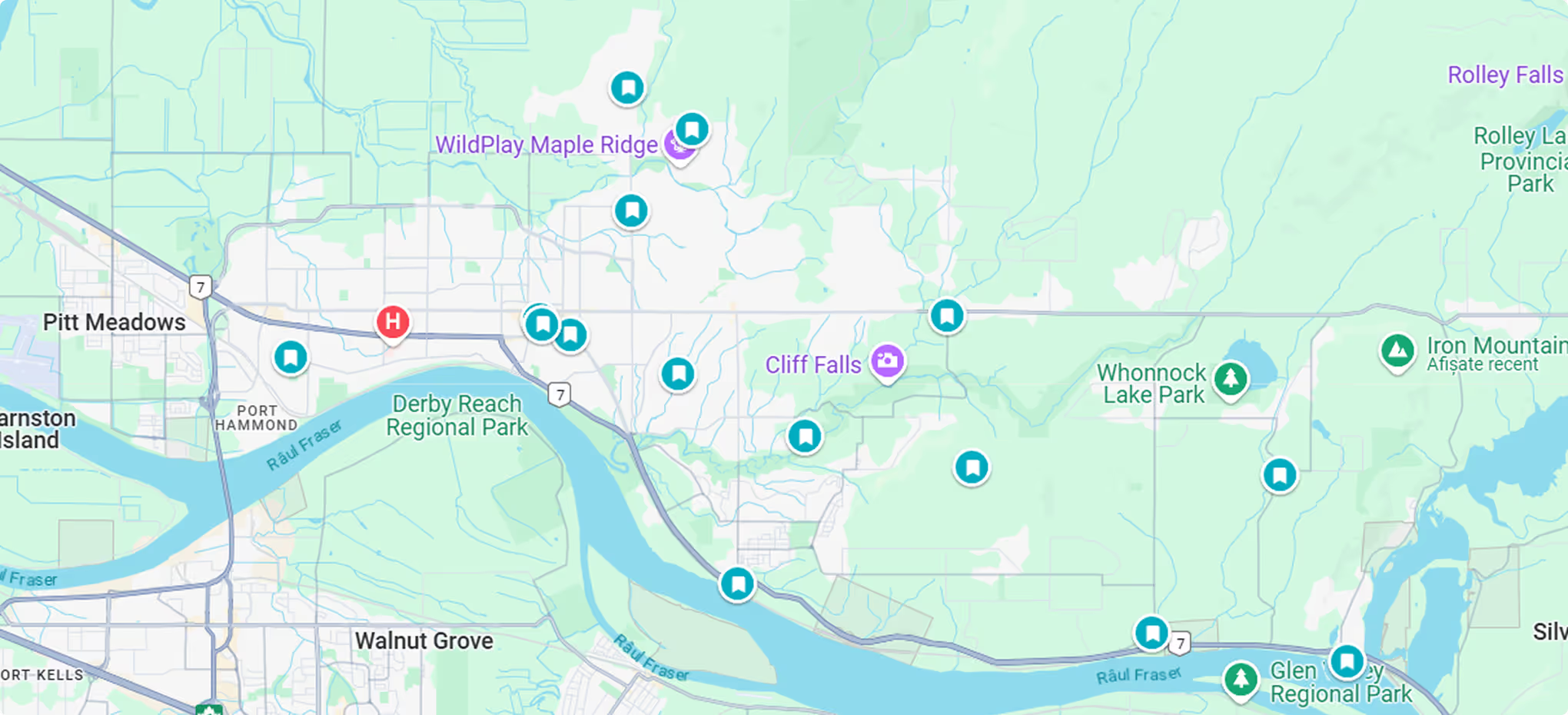
Neighbourhoods in the Fraser Valley