Heating in Highland Park, BC
Is Your Home Heating System Failing When You Need It Most?
As the chill of winter sets in across British Columbia, a reliable heating system isn't just about comfort—it's a strict necessity for the safety and well-being of your household. If your current unit is making strange noises, cycling on and off unpredictably, or simply failing to keep your home warm, waiting for a total breakdown is a risk you cannot afford to take. For homeowners in Highland Park, Rep-Air Heating and Cooling offers a professional solution to restore warmth and efficiency to your property immediately. Contact us today to schedule your assessment or discuss our flexible financing options.
When you engage professional services for your heating needs, you stop guessing about the temperature of your home and start relying on a system engineered for your specific floor plan. We prioritize getting your heat back on, often managing the entire transition from old equipment to a new, high-efficiency system with minimal disruption to your daily life.
- Maximize home comfort with efficient, expert-installed heating systems designed for the local climate.
- Receive a detailed, no-obligation estimate today—free of hidden charges or surprise fees.
- Benefit from our quick installations, often possible within the same day to prevent prolonged exposure to the cold.
Every installation is backed by full compliance with local codes, ensuring your peace of mind through warranties and verified options for financing.
What You Get With A Professional Heating Installation
Investing in a new heating system is about more than just purchasing a piece of equipment; it is about acquiring a fully integrated climate control solution. When you authorize a new installation, you are paying for a comprehensive service package that covers every technical aspect required to bring your home up to modern heating standards.
Comprehensive Load Calculation and Sizing
The most critical part of what you receive is a system correctly sized for your home. A unit that is too large will short-cycle, leading to wear and tear, while a unit that is too small will run continuously without ever reaching the set temperature. We perform a detailed load calculation that considers:
- The square footage of your Highland Park home.
- The quality and R-value of your insulation.
- The number and orientation of windows.
- The height of your ceilings.
- Ambient heat sources within the home.
Complete Removal and Disposal
You do not need to worry about the logistics of your obsolete equipment. The service includes the safe disconnection of gas lines or electrical circuits, the physical removal of the old furnace or heat pump, and the environmentally responsible disposal of the unit. This includes reclaiming any refrigerant if necessary, in accordance with environmental regulations.
System Integration and Ductwork Inspection
A new heater cannot function efficiently if it is connected to compromised infrastructure. The installation scope includes an inspection of the immediate ductwork specifically at the connection points (the plenum). We ensure that the supply and return air flows are balanced. If the new unit requires different venting—such as high-efficiency PVC venting for condensing furnaces—this material and labor are included in the scope.
Control Systems and Thermostats
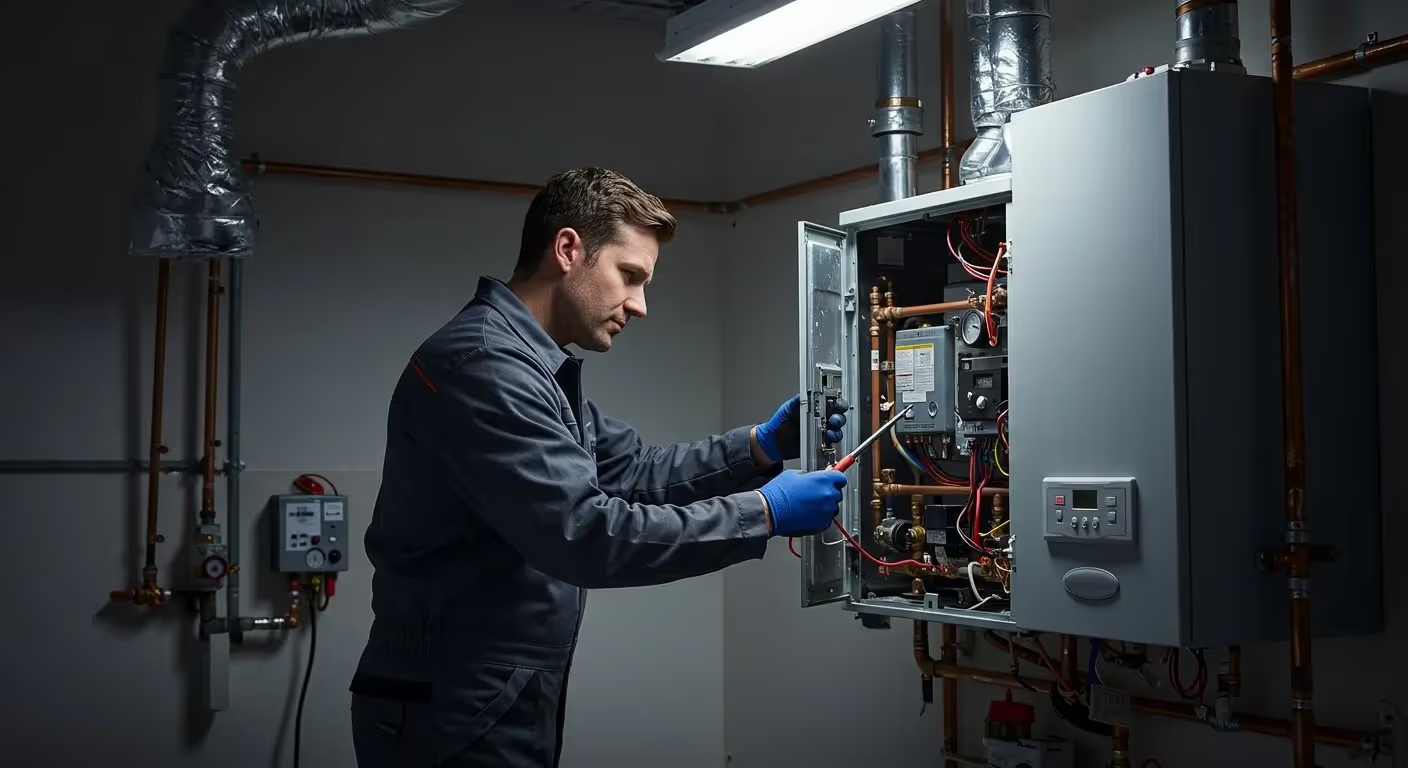
Modern heating technology often requires updated interfaces to communicate effectively. You receive proper integration with your existing thermostat or the installation of a new, smart-enabled thermostat that allows for better zoning and energy management. This ensures the hardware in the basement or utility closet communicates perfectly with the controls in your living space.
The Installation Process: From Assessment to Heat
Understanding the timeline and mechanics of installation helps homeowners prepare for the service. We operate with a strict protocol to ensure efficiency and safety. While every home in Highland Park has unique characteristics, the workflow generally follows a specific technical sequence.
Site Assessment and Preparation
- The process begins with a technician verifying the measurements and access points.
- Technicians lay down drop cloths and floor protectors to ensure your home remains clean throughout the heavy lifting.
- Safety checks are performed on existing gas lines and electrical panels to ensure they can support the new equipment.
Decommissioning the Old System
- Power and fuel sources are shut off at the source.
- The old unit is disconnected from the ductwork and venting.
- The unit is maneuvered out of the home, often requiring disassembly to fit through tight spaces or stairwells.
Positioning and Connection
- The new unit is brought in and leveled. Proper leveling is essential for the drainage of condensate in high-efficiency units and for the quiet operation of blower motors.
- The plenum (the box connecting the heater to the ductwork) is sealed to the new unit to prevent air leaks.
- Gas lines are reconnected using new fittings and sediment traps to protect the gas valve.
- Electrical connections are made, ensuring proper voltage and grounding.
Venting and Drainage
- For high-efficiency gas furnaces, technicians install two PVC pipes: one to draw fresh combustion air from outside and one to exhaust gases.
- Condensate drain lines are installed and routed to a floor drain or condensate pump, ensuring no water damage occurs during operation.
Commissioning and Testing
- The system is not simply turned on; it is commissioned.
- Technicians measure the static pressure in the ducts to ensure airflow is within the manufacturer’s specifications.
- Gas pressure is adjusted at the manifold to ensure the burn is clean and efficient.
- Temperature rise (the difference between air entering and leaving the unit) is measured to verify performance.
Final Walkthrough
- The technician explains the operation of the new system and thermostat.
- Maintenance requirements, such as filter changes, are demonstrated.
- Warranty registration information is provided.
When Replacement Beats Repair: A Decision Guide
Deciding between repairing an aging system and investing in a new one is a financial calculation. While a repair might seem cheaper upfront, the long-term math often favors replacement, especially given the energy costs in British Columbia. You should evaluate your current system against specific criteria to determine the most improved return on investment.
The 50% Rule
A standard industry benchmark is the 50% rule. If the cost of the repair approaches 50% of the cost of a new system, replacement is generally the smarter financial move. This is particularly true because a repair only fixes one component, leaving the rest of the old system vulnerable to future failure, whereas a replacement resets the clock on the entire mechanical system.
Equipment Age and Life Expectancy
- Furnaces: The average lifespan is 15 to 20 years. If your furnace is over 15 years old, even a minor repair may be throwing good money after bad. Heat exchangers can crack, and blower motors can seize as they approach the two-decade mark.
- Heat Pumps: These typically last 10 to 15 years. Because they run year-round for both heating and cooling, they experience more wear and tear. If your unit is in the double digits of age, efficiency losses are likely already costing you money on monthly utility bills.
Efficiency Ratings (AFUE and HSPF)
Older systems often operate at 60% to 70% Annual Fuel Utilization Efficiency (AFUE). This means 30 to 40 cents of every dollar you spend on heating is wasted. Modern systems standardly operate at 95% to 98% efficiency.
- If your current bills are escalating despite normal usage, the equipment is likely losing efficiency.
- Moving from an 80% furnace to a 98% furnace can result in substantial monthly savings that help offset the cost of installation.
Frequency of Breakdowns
If you have required repairs more than once in the last two years, your system has become unreliable. The "death spiral" of a heating system involves cascading failures where one part breaking puts stress on other parts. Reliability is a quantifiable value; the cost of emergency calls and the inconvenience of no heat should be factored into your decision.
Highland Park and Regional Considerations
Operating a heating system in British Columbia requires attention to specific local factors. The climate and regulatory environment in Highland Park influence what type of heating is best and how it must be installed.
Utility Infrastructure and Energy Sources
- Natural Gas: Many homes in the area rely on natural gas. If you are upgrading a gas furnace, you must ensure your venting complies with current safety codes, which have likely changed since your last installation.
- Electricity and Heat Pumps: There is a significant push towards electrification. Modern cold-climate heat pumps are incredibly effective even when temperatures drop below freezing. However, switching from gas to electric often requires an upgrade to your electrical panel to handle the increased amperage load.
Permitting and Code Compliance
- All new heating installations in the region require proper permitting. This is not optional; it is a safety requirement.
- The installation must meet current building codes regarding clearances, venting distances from windows, and gas piping methods.
- Rep-Air Heating and Cooling handles the permit application and coordinates the final inspection with local municipal authorities. This ensures that your home insurance remains valid and that the work is recognized as legal and safe.
Seasonality and Demand
- Heating demand peaks sharply during the winter months.
- Waiting until a deep freeze to replace a unit often results in longer wait times due to high demand.
- Proactive replacement during the shoulder seasons (fall) ensures you have your choice of installation dates and prevents the emergency premium often associated with mid-winter failures — view promotions.
Why Technical Expertise Matters in Heating
The most important day in the life of your heating system is the day it is installed. The brand of the equipment matters less than the skill of the hands installing it. A top-tier unit installed poorly will fail sooner and run less efficiently than a mid-range unit installed perfectly.
Licensing and Certification
We employ technicians who hold valid gas tickets and refrigeration certifications required by provincial safety authorities. This technical training ensures they understand the physics of airflow, the chemistry of combustion, and the electrical logic of modern control boards.
Warranty Protection
Manufacturers of heating equipment are strict about warranty claims. If a compressor fails or a heat exchanger cracks, they will require proof that the unit was installed by a licensed professional and maintained correctly. Professional installation activates these warranties, protecting your financial investment for up to 10 or 12 years depending on the model.
Safety First
Heating systems involve combustible gases, high-voltage electricity, and carbon monoxide. There is no margin for error. Professional installers utilize combustion analyzers to verify that carbon monoxide levels are safe and that the flame is burning correctly. They ensure that all safety switches (roll-out switches, limit switches) are functional before leaving your home.
Upgrade Your Comfort With a New Heating System
Whether you are looking to replace a dying furnace or upgrade to a high-efficiency heat pump, the goal is consistent, safe, and affordable warmth. Do not let a failing system compromise your comfort this season.
Ready to secure reliable heating for your home? Contact us today to schedule your consultation and get a precise quote on your new system.
hear what our satisfied clients have to say
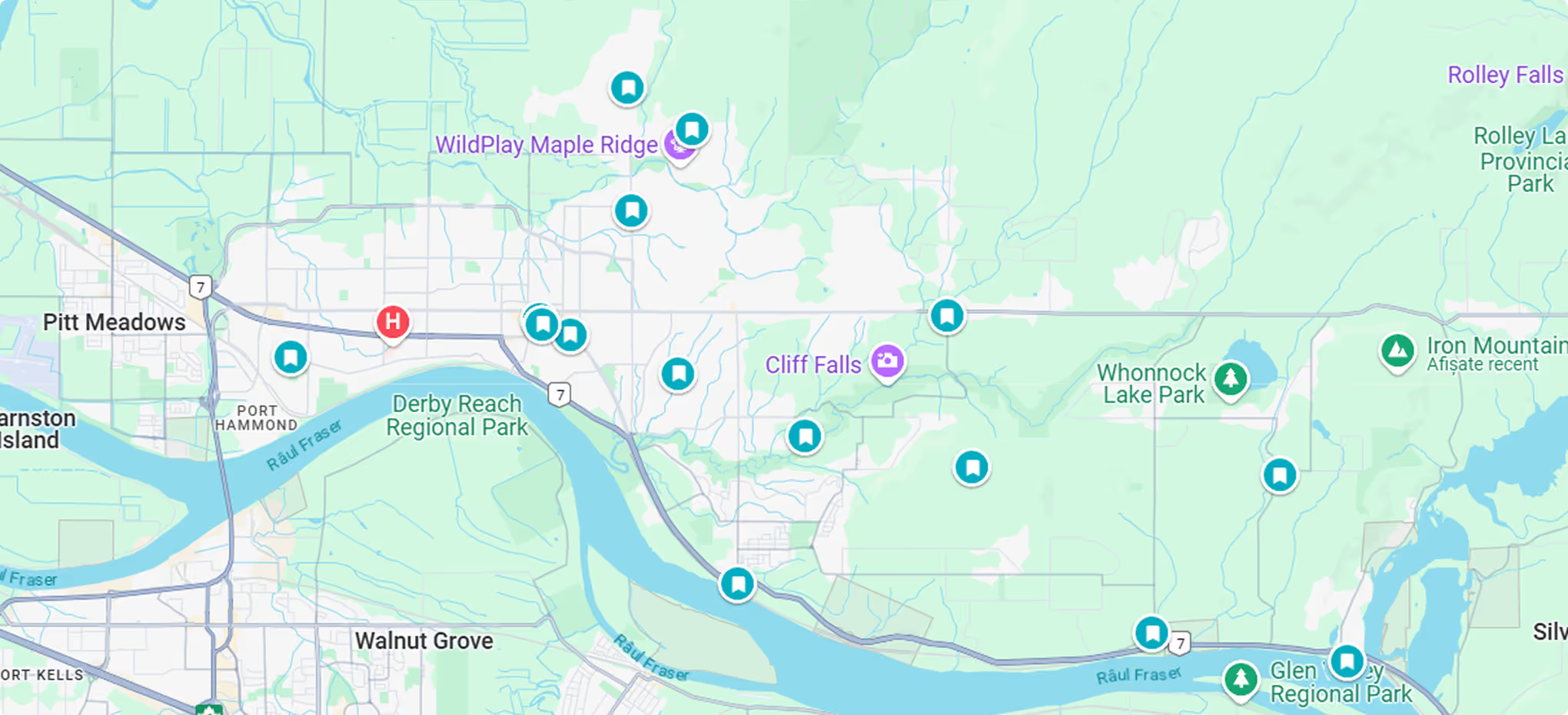
Neighbourhoods in the Fraser Valley