Heating in Pitt Boulder, BC
Restore Warmth Immediately with Professional Heating Repair
When winter chills creep into your home, staying warm is not just about comfort but a necessity. Discover prompt, professional heating services that restore warmth and safety to your home with one quick call to Rep-Air Heating and Cooling for emergency dispatch or flexible financing options.
A broken furnace or malfunctioning heat pump disrupts your life and puts your property at risk of frozen pipes and structural damage. We understand the urgency required when the temperature drops in Pitt Boulder, BC. Our approach prioritizes speed without sacrificing the technical accuracy required to ensure your system runs efficiently for the rest of the season.
- Same-day service ensures you aren’t left in the cold.
- Certified technicians skilled in quick fault diagnosis and efficient repair.
- Transparent pricing and no hidden fees—know what you’re paying upfront.
Fully licensed, complete with service warranties and flexible financing options.
Today’s Heating Services: What You Can Expect
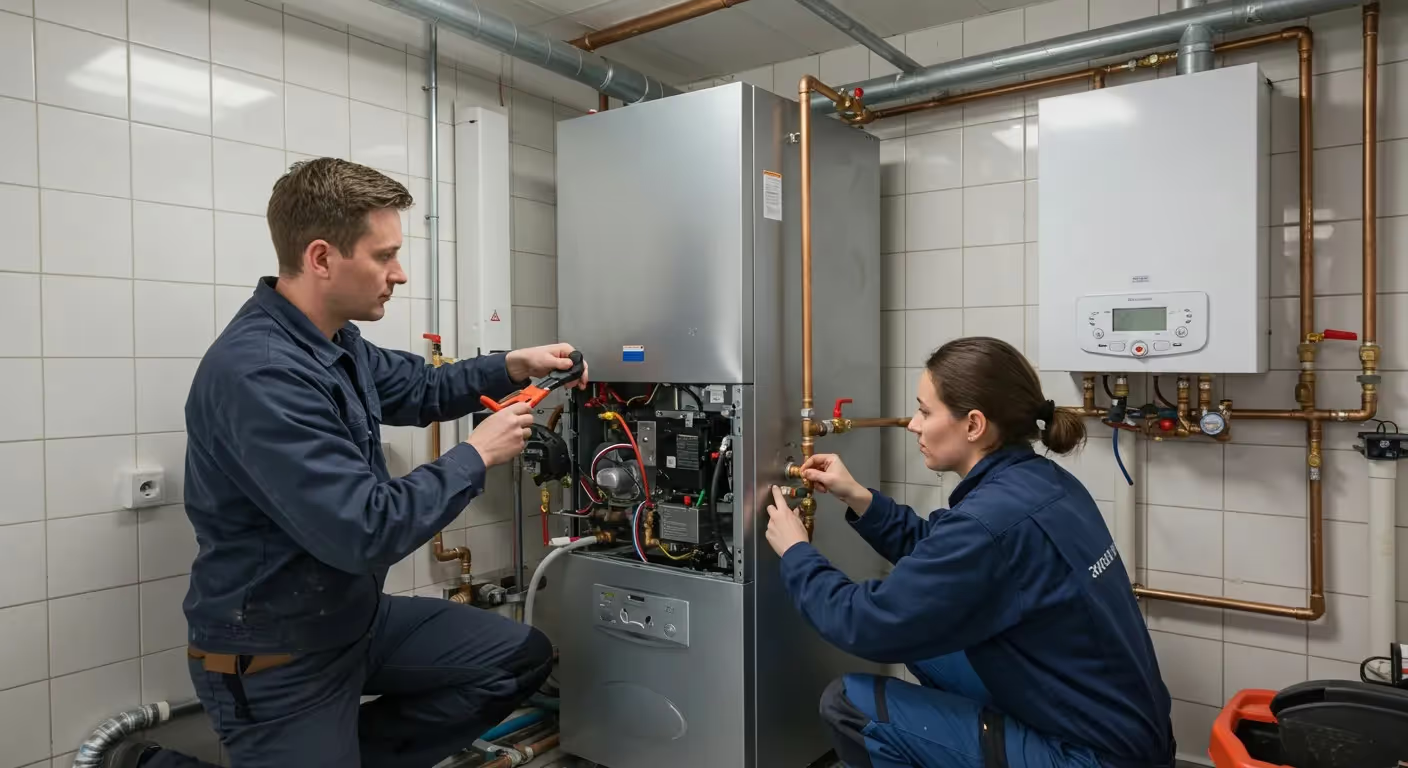
When you request service for a heating outage or performance issue, the goal is to minimize downtime. Modern heating service goes beyond a simple "fix-it" approach; it involves a comprehensive analysis of your HVAC infrastructure to identify the root cause of the failure.
Upon arrival, a technician performs a systematic diagnostic process. This includes testing the ignition system, verifying airflow, and checking safety switches. For gas furnaces, the heat exchanger is inspected for cracks to prevent carbon monoxide leaks. For heat pumps, refrigerant levels and compressor performance are analyzed. The objective is to provide a clear explanation of the failure and immediate options for rectification.
Residents in Pitt Boulder can expect a truck stocked with universal parts. This inventory strategy allows for the immediate replacement of common failure points, such as ignitors, flame sensors, blower motors, and capacitors, often in a single visit.
Comprehensive Diagnostic Checks
A thorough service call involves detailed checks to ensure the entire system operates safely.
- Thermostat Calibration: The technician verifies that the thermostat is reading indoor temperatures accurately and communicating correctly with the control board.
- Airflow Analysis: Static pressure tests are conducted to ensure the blower motor is moving enough air across the heat exchanger or coil. Restricted airflow is a primary cause of overheating and system failure.
- Electrical Safety Inspection: All wiring, connections, and capacitors are tested for wear or loose connections that could cause intermittent outages or fire hazards.
- Combustion Analysis: For gas units, technicians measure the efficiency of the burn and the venting of exhaust gases to ensure strict adherence to safety standards.

Types of Systems Serviced
The local climate demands versatility in heating technology. Service capabilities cover a wide spectrum of equipment.
- Forced Air Furnaces: These are the most common systems, requiring precise tuning of gas valves and burners.
- Heat Pumps: Given the temperate maritime climate, heat pumps are prevalent. Service includes troubleshooting defrost boards and reversing valves that are critical for winter operation.
- Boilers and Hydronic Systems: Repairing pumps, expansion tanks, and bleeding radiators to ensure even heat distribution.
- Ductless Mini-Splits: Cleaning filters and checking head units for proper communication with the outdoor condenser.
Your Step-by-Step Guide to Heating Installation
Installing a new heating system is a major construction project within your home that dictates your comfort for the next 15 to 20 years. The process requires precise calculation, fabrication, and integration with your home’s existing envelope. Unlike a simple appliance swap, a heating installation involves adapting gas lines, electrical circuits, and ventilation systems to meet current codes.
A successful installation begins with a proper load calculation. This engineering step determines the exact amount of British Thermal Units (BTUs) required to heat your specific square footage, accounting for window efficiency, insulation levels, and ceiling height. Oversized units cycle on and off too frequently, leading to premature wear, while undersized units run constantly without reaching the desired temperature.
The Installation Process Timeline
The physical installation follows a strict sequence to ensure safety and quality control.
- Site Preparation and Protection: Technicians lay down drop cloths and floor protectors. The gas and electrical supplies are shut off and tagged out for safety.
- Removal of Existing Equipment: The old unit is disconnected. Refrigerant is recovered from heat pumps according to environmental regulations. Old metal and components are hauled away for recycling.
- Modifications to Plenum and Ductwork: The existing ductwork often requires modification to fit the new, often larger, high-efficiency cabinets. Custom sheet metal transitions are fabricated to ensure an airtight seal.
- System Positioning and Leveling: The new furnace or air handler is set in place. It is leveled to ensure proper drainage of condensate, which is critical for high-efficiency condensing furnaces.
- Utility Connection: Gas lines are reconnected with new sediment traps and shut-off valves. Electrical wiring is updated to meet current amperage requirements. Venting pipes are installed, often requiring new PVC intake and exhaust lines for high-efficiency models.
- Commissioning and Testing: This is the most critical step. The system is fired up, and technicians measure gas pressure, temperature rise, and static pressure. They adjust blower speeds to match the ductwork.
- Final Walkthrough: The user interface or thermostat is programmed. You are shown how to change filters and operate the new system.
Assessing Heating System Replacement vs. Repair
Deciding between repairing an aging unit or investing in a replacement is a financial and logical calculation. Homeowners often face this decision during a breakdown, adding pressure to the situation. To make an informed choice, you must weigh the immediate cost of repair against the long-term efficiency and reliability of a new system.
The "50% Rule" is a standard industry benchmark. If the cost of the repair approaches 50% of the value of a new system, and the existing unit is out of warranty, replacement is generally the wiser financial move. However, other factors such as the frequency of recent repairs and future energy savings play a significant role.
Critical Decision Factors
Evaluate the condition of your current system using these specific criteria.
- Age of the Equipment: Furnaces typically last 15-20 years, while heat pumps may last 12-15 years. If your system is nearing the end of this window, a major repair is essentially putting a bandage on a failing asset.
- Repair Frequency: If you have required repairs in two consecutive seasons, the system is likely entering a phase of cascading failures. One replaced part often puts stress on older components, leading to subsequent breakdowns.
- Energy Efficiency Ratings (AFUE/HSPF): Older units often operate at 80% efficiency or lower. Modern systems can reach up to 98% efficiency. In a climate like Pitt Boulder, where heating runs for several months, the utility savings from an upgrade can offset the monthly cost of a new unit.
- Comfort Consistency: If your home has hot and cold spots, or if the unit is excessively noisy, these are signs that the system’s blower or heat exchanger is no longer performing to specification. Replacement allows for features like variable-speed blowers that resolve these comfort issues.
- Safety Concerns: If a heat exchanger shows signs of rust or micro-cracks, replacement is non-negotiable due to the risk of carbon monoxide poisoning.
Rep-Air Heating and Cooling technicians provide a clear breakdown of these factors, offering side-by-side comparisons of repair costs versus replacement scenarios so you can make the decision that fits your budget.
Local Regulations and Seasonal Notes on Heating Services
Heating in this region requires specific attention to the damp, maritime climate and local municipal codes. The high humidity levels during winter can affect how heat pumps operate, specifically regarding their defrost cycles. Systems here must be calibrated to handle temperatures that hover near freezing with high moisture content, which creates different stresses than dry, sub-zero climates.
Understanding Permitting and Compliance
All significant heating work, particularly involving gas lines and venting, requires adherence to provincial safety codes.
- Gas Permits: Replacing a gas furnace or altering gas piping requires a permit and inspection by a certified gas fitter. This ensures the system is leak-free and vented correctly.
- Venting Requirements: Modern building codes often require specific clearances for exhaust vents to prevent exhaust gas recirculation into the home. Upgrading to high-efficiency units may require running new PVC venting through side walls rather than using existing chimney liners.
- Electrical Upgrades: If switching from a gas furnace to a heat pump or dual-fuel system, the electrical panel may need an assessment to ensure it can handle the increased amperage load.
Seasonal Maintenance Rhythm
The demand for heating services follows a predictable pattern. Being proactive helps avoid the "emergency rush" when temperatures plummet — join our maintenance plan.
- Fall Tune-Up (September/October): This is the ideal time for service. Technicians clean burners, check heat exchangers, and test ignition systems before the heavy load begins.
- Mid-Winter Check: During peak cold snaps, ensure filters are changed monthly. A clogged filter is the number one cause of system overheating and shutdown during extreme cold.
- Spring Shutdown: As the weather warms, inspecting the system helps identify any parts that wore down during winter, allowing for repairs to be scheduled during the shoulder season when demand is lower.
Why Clients Trust Us: Proven Results and Service Commitment
The difference between a quick fix and a lasting solution lies in the expertise of the provider. We focus on technical precision and operational transparency. When a technician enters your home, they are there to solve a problem, not to sell unnecessary accessories.
Our commitment to quality is backed by rigorous training standards. Technicians undergo continuous education to stay updated on the latest control boards, inverter technologies, and smart home integrations. This expertise ensures that whether you have a vintage boiler or a cutting-edge variable-speed heat pump, the diagnosis is accurate the first time.
Our Service Guarantees
We build long-term relationships through reliability and clear communication.
- Workmanship Warranty: All installation and repair labor is backed by a guarantee. If the issue persists after a repair, we return to rectify it.
- Certified Expertise: Our team holds necessary provincial certifications for gas fitting and refrigeration, ensuring all work meets legal and safety standards.
- Respect for Property: Technicians use shoe covers and floor mats, leaving the workspace as clean as they found it.
- Inventory Readiness: Service vehicles are stocked with a high volume of parts to maximize the chances of a same-day repair, minimizing the time your home is without heat.
Take Control of Your Comfort: Book Your Heating Service Today
When you choose Rep-Air Heating and Cooling, you are choosing a partner dedicated to your comfort and safety. We navigate the complexities of modern HVAC systems so you can enjoy a warm, worry-free home.
Don't wait for a minor noise to turn into a complete system failure. Secure your home’s comfort today. Schedule your heating service or consultation now.
hear what our satisfied clients have to say
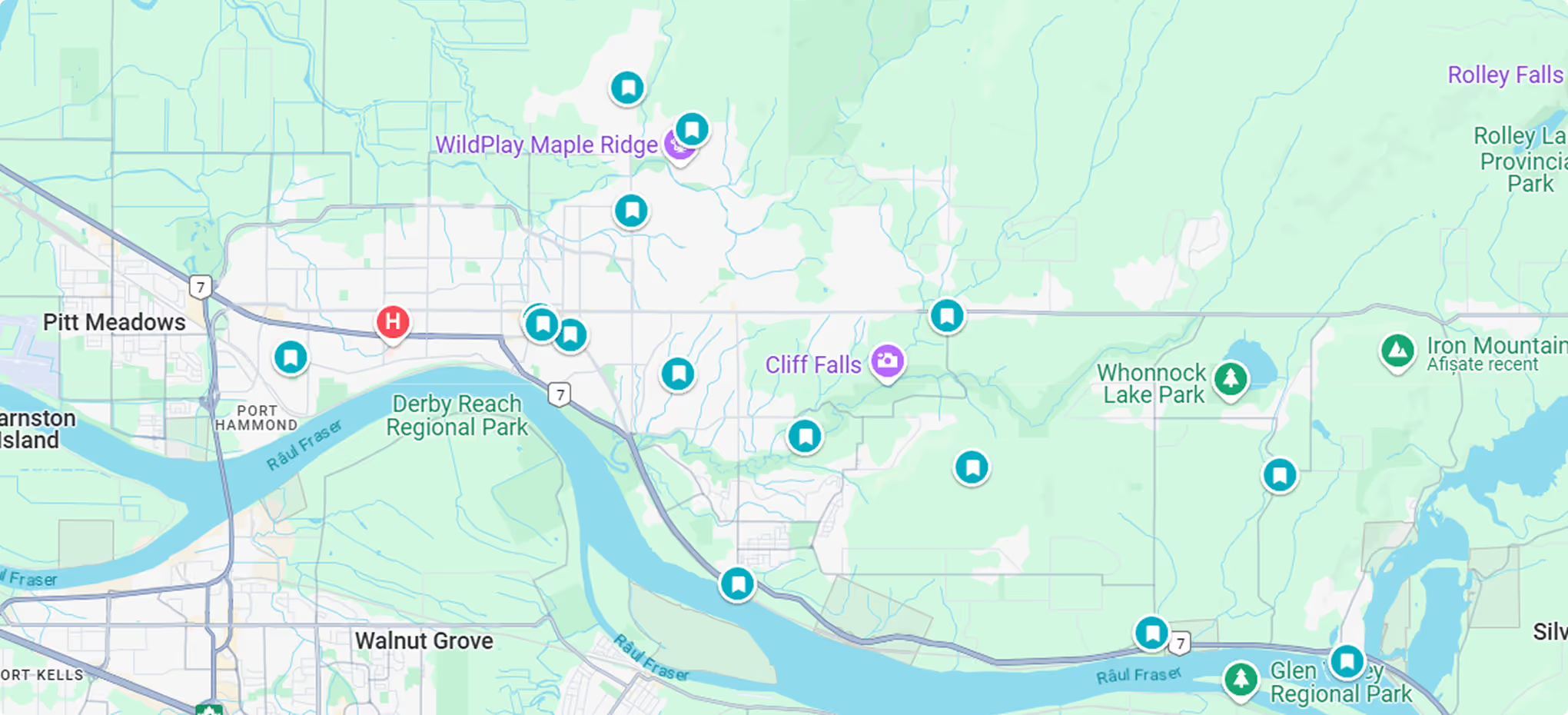
Neighbourhoods in the Fraser Valley