Heating in Rock Ridge, BC
Don’t Let a Broken Heater Compromise Your Comfort or Safety
Facing unexpected heating breakdowns can leave your home uncomfortably cold, especially during the damp, chilly months in Rock Ridge where temperatures frequently hover near freezing. Rep-Air Heating and Cooling offers prompt, professional heating services to restore your comfort swiftly and ensure your system operates safely. Contact us today to schedule your diagnostic visit or discuss financing options available for new installations.
- Quick dispatch and same-day service repairs to minimize downtime.
- Transparent pricing with no hidden costs so you know exactly what to expect.
- Long-term warranties for peace of mind on both parts and labor.
Fully licensed and insured, with flexible financing options available to fit your budget.
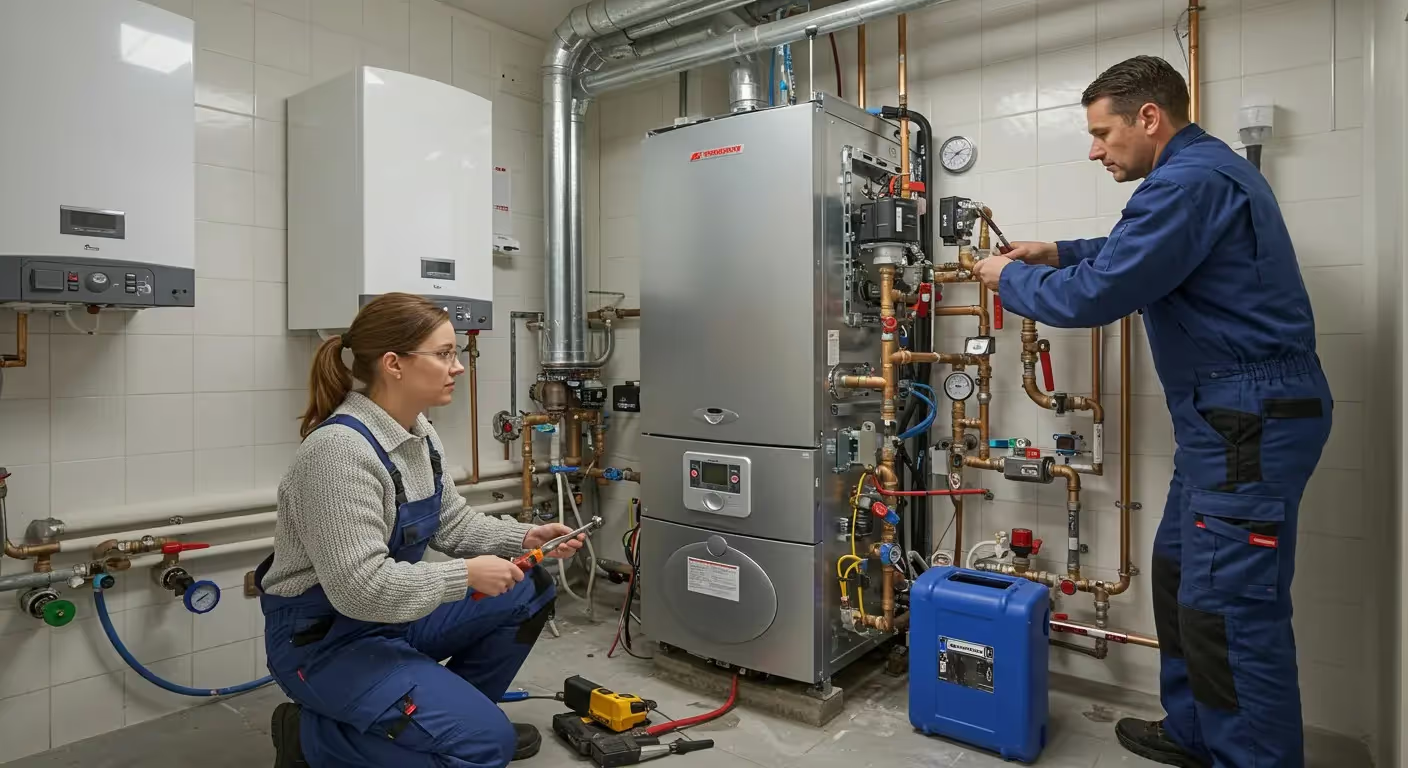
Comprehensive Heating Services Delivered to Your Doorstep
When your heating system fails, you need a solution that goes beyond a temporary patch. A reliable heating service focuses on identifying the root cause of the inefficiency or breakdown rather than just treating the symptom. Residents in Rock Ridge deal with high humidity levels and significant rainfall between October and March, which creates a specific set of challenges for HVAC equipment. Moisture can accelerate corrosion on outdoor units and impact the efficiency of gas furnaces if intake pipes are not properly protected.
Our service begins with a thorough assessment of your existing infrastructure. We do not operate on guesswork. Whether you are running a high-efficiency natural gas furnace, a boiler system, or a central heat pump, the goal is to restore the unit to manufacturer specifications.
You can expect a technician to arrive with a fully stocked vehicle, ready to address common issues immediately. We understand that heating issues rarely happen at convenient times. The initial visit includes a comprehensive safety check. This involves inspecting the heat exchanger for cracks—a critical safety step to prevent carbon monoxide leaks—testing the ignition system, and verifying that the thermostat is communicating correctly with the control board.
If the system requires a repair, we provide a clear explanation of the failure. For example, if a blower motor has seized, we explain whether it was due to age, lack of maintenance, or undersized ductwork causing excessive static pressure. This educational approach ensures you understand the "why" behind the repair, not just the cost.
The Installation and Replacement Process
Installing a new heating system is a significant investment in your property. A proper installation determines the efficiency, longevity, and noise levels of the unit for the next 15 to 20 years. We follow a rigorous protocol to ensure your new system is integrated perfectly with your home’s thermal envelope.
The process typically unfolds in these specific stages:
- Load Calculation and Sizing: We never assume the old unit was sized correctly. We perform a detailed heat load calculation that factors in square footage, insulation levels, window quality, and the specific climate data of Rock Ridge. An oversized unit will short-cycle, leading to wear and tear, while an undersized unit will run continuously without reaching the set temperature.
- Site Preparation and Protection: Before any heavy lifting begins, technicians prepare the workspace to protect your flooring and belongings. This involves laying down drop cloths and ensuring a clear path to the utility room or outdoor unit location. Safety switches and gas lines are shut off and verified before disconnection.
- System Removal and Disposal: The old equipment is disconnected from the gas supply, electrical lines, and ductwork. We safely remove the unit and handle the disposal in an environmentally responsible manner, ensuring that any refrigerants (in the case of heat pumps) are reclaimed according to environmental regulations.
- Infrastructure Inspection: With the old unit gone, we inspect the plenum and immediate ductwork. This is the ideal time to seal air leaks or modify the sheet metal to improve airflow. If the return air drop is too small for the new, high-efficiency blower, we modify it to reduce noise and improve static pressure.
- Equipment Installation: The new furnace, boiler, or heat pump is set in place. For gas furnaces, we install the flue piping, ensuring proper slope for condensation drainage—critical for high-efficiency condensing models. Electrical connections are tightened to torque specifications, and gas lines are pressure-tested to rule out leaks.
- Commissioning and Testing: Simply turning the unit on is not enough. We perform a full commissioning process. This includes measuring temperature rise (the difference between air entering and leaving the system), checking gas pressure at the manifold, and adjusting the blower speed to match the ductwork.
- Walkthrough and Education: Finally, we walk you through the operation of the new system. This includes how to operate the new thermostat, how to change the filter, and what maintenance sounds are normal versus what warrants a call.
Deciding When to Repair vs. When to Replace
Homeowners often struggle with the decision of whether to pour more money into an aging system or invest in a modern replacement. While every situation is unique, specific metrics can guide this decision objectively. Emotional attachment to an old appliance should not dictate your financial decisions; data should.
Consider replacement if the cost of the repair approaches 50% of the value of a new system. This "50% rule" is a standard industry benchmark. If you are facing a $1,500 repair on a unit that is 12 years old, the investment is likely better spent on a new system with a fresh warranty.
Age is the second primary factor. Most forced-air furnaces have a lifespan of 15 to 20 years. Heat pumps and boilers may vary, but efficiency drops significantly as components wear. A furnace installed in the early 2000s is likely operating at 70% to 80% AFUE (Annual Fuel Utilization Efficiency), meaning 20 to 30 cents of every dollar you spend on gas is wasted. Modern options can reach up to 98% efficiency.
Frequency of breakdowns is another indicator. If you have required repairs in two consecutive heating seasons, the system is becoming unreliable. In a climate where winter lows dip to freezing, reliability is a safety issue, not just a comfort issue.
You should also evaluate your utility bills. If your usage has spiked despite consistent weather patterns and thermostat settings, the internal components of your heater are likely failing. Heat exchangers may be fouled, or motors may be drawing excessive amperage to do the same amount of work.
Finally, consider the availability of parts. As systems age, manufacturers discontinue support for specific models. If a technician has to source a "universal" part or wait weeks for a specifically fabricated component, your home remains cold in the interim. Upgrading ensures that parts are readily available off the shelf.
Navigating Local Requirements and Climate Factors
Heating a home in British Columbia requires specific knowledge of local conditions and regulations. The region’s mild but damp winters create a different set of demands compared to the prairie provinces.
- Permitting and Safety Codes: Any significant alteration to a gas system or electrical circuit requires a permit. Professional contractors handle this paperwork on your behalf. In Rock Ridge, compliance with the BC Safety Authority and local municipal codes is mandatory. This ensures that venting distances from windows are correct and that combustion air requirements are met so that your furnace doesn't consume all the oxygen in your utility room.
- BC Hydro and Rebates: The province is actively encouraging a shift toward electrification and higher efficiency. Various rebate programs, such as those through CleanBC or BC Hydro, frequently change but often offer substantial financial incentives for switching from fossil fuel heating to electric heat pumps or hybrid systems. Navigating these rebates requires a contractor who understands the specific eligibility criteria, such as the required HSPF (Heating Seasonal Performance Factor) ratings for heat pumps in Zone 4 climate regions.
- Humidity and Heat Pumps: Because local winters are wet, heat pumps will enter "defrost mode" more frequently than they would in a dry climate. This is a normal operation where the unit melts frost accumulation on the outdoor coil. However, improper drainage setup during installation can lead to ice buildup on driveways or walkways. We ensure that outdoor units are elevated on stands (snow legs) to keep them above the snow line and allow for proper drainage, preventing ice dams that can damage the fan blades.
- Corrosion Protection: The salt air from the ocean, combined with high rainfall, can accelerate rust on outdoor cabinets and electrical contacts. We utilize equipment designed with heavy-gauge steel and powder-coated finishes to resist the elements. Regular maintenance in this region must include checking electrical connections for oxidation, which is a leading cause of premature board failure.
Why Technical Expertise Matters for Your Heating
The HVAC industry is flooded with options, but the difference in results lies in the technical application. A heating system is not a plug-and-play appliance like a refrigerator; it is a construction project installed inside your home. The quality of the installation accounts for roughly 75% of the system's future reliability and efficiency.
We differentiate our services by adhering to strict diagnostic protocols. We do not incentivize technicians to sell parts you don't need. Instead, we focus on accuracy. For example, before condemning a compressor, we verify that the capacitor and contactor are functioning correctly and that the refrigerant charge is accurate. This attention to detail saves homeowners money and prevents unnecessary waste.
Our team stays updated on the latest technology, including modulating gas valves and variable-speed blower motors. These technologies offer superior comfort by ramping heating output up and down to match the exact heat loss of the home, rather than blasting full hot air and then shutting off. However, they require sophisticated calibration during setup.
Rep-Air Heating and Cooling also emphasizes the importance of the distribution system—your ductwork. Even the best furnace cannot perform if the ducts are leaking or undersized. We view the heating unit and the ductwork as a single, holistic system. We check for static pressure issues that could strangle your new equipment and shorten its lifespan.
Furthermore, we stand behind our workmanship. While manufacturer warranties cover the equipment, our service guarantees cover the installation quality. If a fitting leaks or a wire comes loose due to installation error, we return to fix it. We believe in building relationships with our clients through accountability and consistent performance.
Secure Your Home Comfort: Schedule Service Today
When the temperature drops and your system falters, you need a partner who can respond with speed and technical precision. Do not wait until a minor noise turns into a catastrophic failure in the middle of the night. Secure your comfort and protect your home investment with professional intervention.
Schedule your heating service or system assessment today.
hear what our satisfied clients have to say
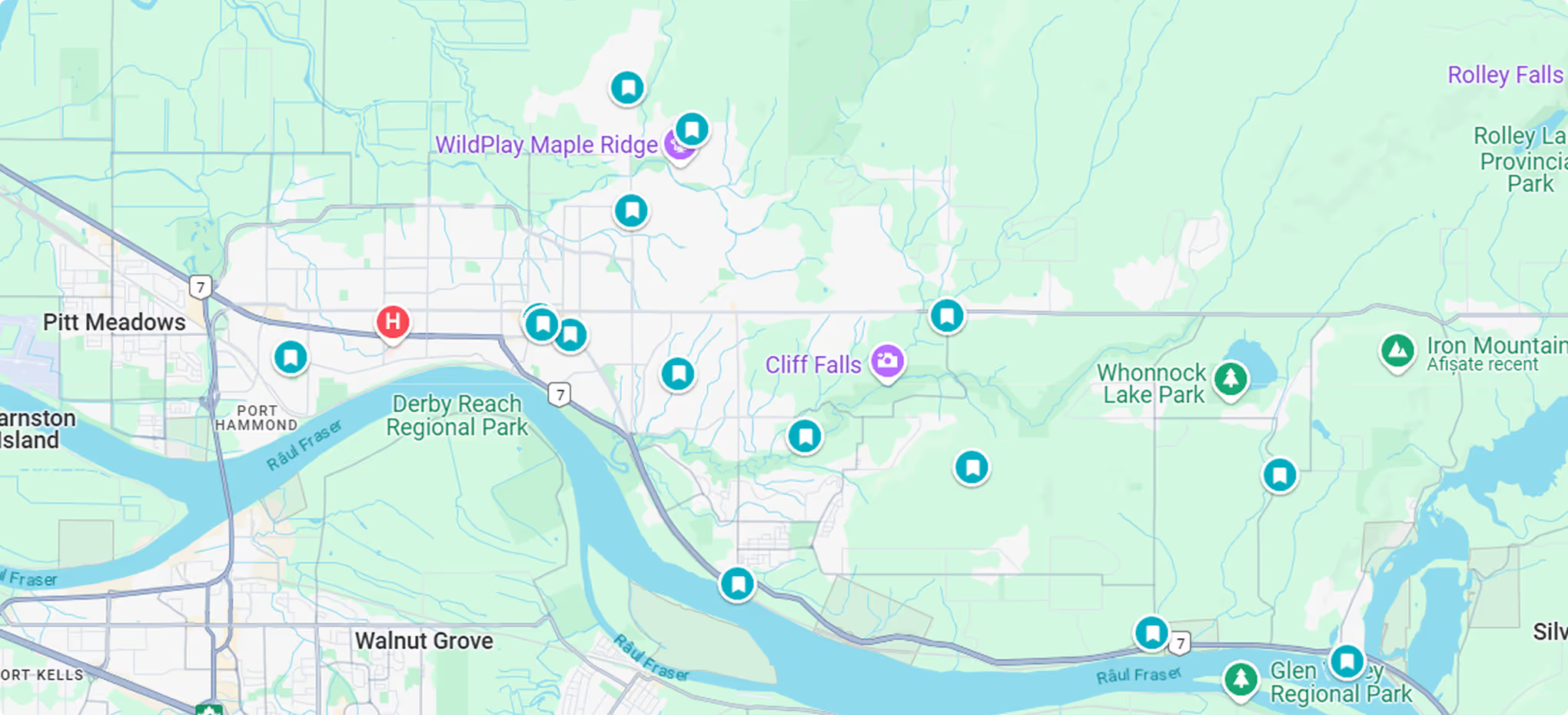
Neighbourhoods in the Fraser Valley