Heating in South Meadows, BC
Is Your Heating System Blowing Cold Air or Refusing to Start?
Is your heater failing to keep up with the chilly weather, leaving your family shivering in your own home? When the temperature drops and your system fails, you need a team that prioritizes safety and speed; contact us immediately to schedule a dispatch or inquire about our flexible financing options to restore your comfort today. In South Meadows, BC, reliable heating is not just a luxury; it is a necessity for protecting your property and your health during the cold, damp winter months. Rep-Air Heating and Cooling provides expert diagnostics and rapid repair services to get your system running efficiently again.
- Restore your heating quickly with our priority same-day service availability.
- Get peace of mind with transparent, upfront pricing and absolutely no hidden fees.
- Enjoy lasting comfort with our extensive warranty-backed repairs and installations.
All services are fully licensed, include extended warranties, and come with financing options to ease your mind and budget.
Fast Solutions to Common Heating Issues
When a furnace or heat pump malfunctions, the symptoms are often immediate and disruptive. You may notice distinct changes in how your home feels or sounds. Addressing these issues immediately prevents minor component failures from cascading into a total system breakdown that requires a complete replacement. Our technicians arrive equipped to troubleshoot the root cause of the failure rather than simply swapping out parts until the unit turns on.
Many homeowners experience uneven heating, where some rooms remain freezing while others are stiflingly hot. This often points to issues with the air distribution system, such as blocked ducts, dirty filters restricting airflow, or a failing blower motor that can no longer push air effectively against static pressure. If the airflow is weak coming from the vents, the heat exchanger may be overheating, causing the safety limit switch to trip and shut the system down prematurely.
Strange noises are another primary indicator of internal distress. A squealing sound usually indicates a slipped or worn belt, whereas a grinding or scraping noise often suggests the ball bearings in the blower motor have failed. If you hear a loud bang or boom when the furnace turns on, this is known as delayed ignition. It occurs when gas builds up in the combustion chamber before the igniter engages, creating a small explosion. This is a severe safety hazard that places stress on the heat exchanger and requires immediate professional attention.
Thermostat irregularities also plague many modern heating systems. If the device is powered but the furnace refuses to cycle on, the issue may lie within the low-voltage wiring or the control board itself. Intermittent cycling, where the unit turns on and off rapidly, puts immense strain on the compressor or heat exchanger, drastically reducing the lifespan of the equipment. Our diagnostic process isolates these electrical and mechanical faults to ensure a permanent fix.
Today's Heating Service: What to Expect
When you book a service appointment, the goal is to minimize downtime and restore normalcy to your routine. The process begins with clear communication regarding arrival windows. You will receive notification when a technician is en route to your South Meadows home, ensuring you are not stuck waiting all day without updates.
Upon arrival, the technician treats your home with respect, utilizing shoe covers and drop cloths to protect flooring and workspaces. The service visit starts with a comprehensive evaluation of the heating unit. This includes testing safety controls, analyzing combustion gases for efficiency and safety, checking refrigerant levels in heat pumps, and inspecting electrical connections for signs of wear or corrosion.
Once the diagnostic phase is complete, you receive a detailed explanation of the findings. You are presented with a straightforward report outlining the failed components, the necessary repairs, and the total cost. Work only begins after you have approved the scope of the service. There are no surprise billings or unauthorized repairs.
Most common repairs can be completed in a single visit. Service vehicles are stocked with a wide inventory of universal parts, including igniters, flame sensors, capacitors, contactors, and motors. If a specialized part is required, expedited ordering processes are used to obtain the component as quickly as possible. After the repair is finalized, the system is tested through a full heating cycle to verify performance, ensuring the thermostat satisfies the set temperature and the unit shuts down correctly.
Understanding Your Heating Installation Process
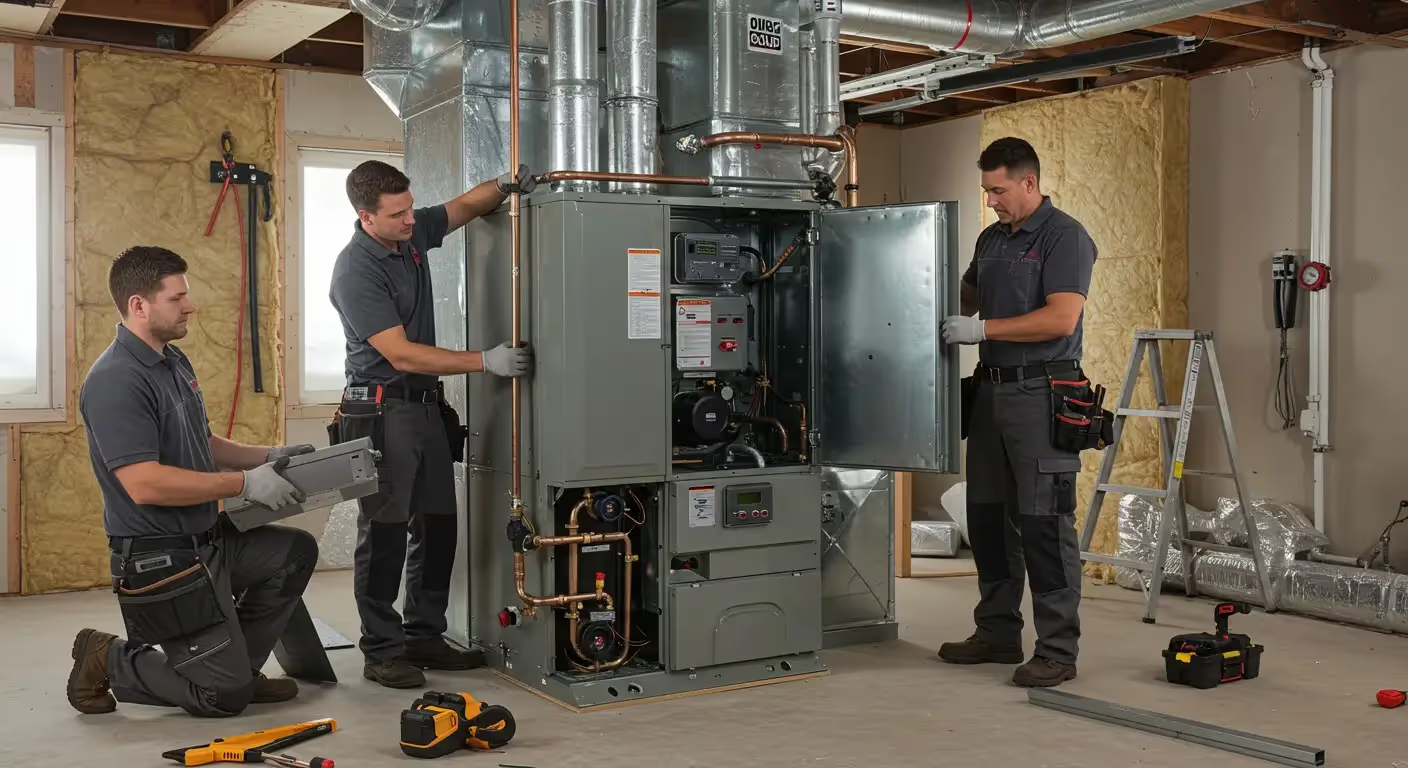
Installing a new heating system is a significant investment that requires precise engineering to ensure efficiency and longevity. The process is far more involved than simply removing a box and plugging in a new one. A high-quality installation sets the baseline for the equipment’s performance for the next 15 to 20 years.
- Load Calculation and Sizing: The most critical step happens before the installation day. A proper load calculation is performed to determine the exact heating requirements of your specific floor plan. This calculation takes into account square footage, insulation levels, window quality, and the directional orientation of the house. An oversized unit will short-cycle, wasting energy and failing to dehumidify the air, while an undersized unit will run continuously without ever reaching the desired temperature.
- Safe Removal and Disposal: On the day of installation, the area surrounding the old unit is prepped to prevent damage. The existing equipment is disconnected from gas lines, electrical supplies, and ventilation. The old unit is removed and hauled away for proper recycling and disposal, adhering to all environmental regulations regarding refrigerant recovery and metal recycling.
- System Placement and Connection: The new unit is leveled and secured. For gas furnaces, the venting system is meticulously inspected or replaced to ensure carbon monoxide is safely exhausted outside. PVC venting for high-efficiency units is sloped correctly to manage condensation drainage. For heat pumps, the refrigerant lines are brazed with nitrogen to prevent oxidation, then pressure-tested and evacuated to a deep vacuum to remove moisture before charging.
- Ductwork and Airflow adjustments: The connection to the existing ductwork is sealed to prevent air leaks, which can account for significant energy loss. If necessary, the plenum (the box connecting the furnace to the ducts) is modified to smooth out airflow and reduce static pressure. This ensures the blower motor operates within its design parameters, reducing noise and energy consumption.
- Final Commissioning: The final step is commissioning the system. Rep-Air Heating and Cooling technicians adjust gas pressure, fan speeds, and thermostat settings to manufacturer specifications. The system is run to measure temperature rise—the difference between the air entering the return and leaving the supply—to confirm it matches the unit’s rating.
Deciding Between Repair and Replacement: A Quick Guide
Homeowners often face the difficult decision of whether to sink more money into an aging system or invest in a modern replacement. While repairs are often the most cost-effective short-term solution, there is a tipping point where replacement becomes the smarter financial move.
- The 50% Rule: A general guideline used in the industry is the 50% rule. If the cost of the repair approaches or exceeds 50% of the value of a new system, replacement is usually recommended. Major failures, such as a cracked heat exchanger or a blown compressor, often carry repair costs that make investing in a new unit with a full warranty a more logical choice.
- Equipment Age: Heating systems have a finite lifespan. Gas furnaces typically last between 15 and 20 years, while heat pumps average 10 to 15 years. If your unit is nearing the end of this range and requires a repair, parts may be difficult to source, and other components are likely to fail soon. Replacing an aging unit proactively avoids the stress of an emergency replacement during a deep freeze.
- Energy Efficiency Improvements: Older systems often operate at 60% to 80% AFUE (Annual Fuel Utilization Efficiency), meaning up to 40 cents of every dollar you spend on gas is wasted. Modern high-efficiency furnaces can reach up to 98% AFUE. If your energy bills have been steadily climbing despite normal usage, upgrading to a high-efficiency model can result in monthly savings that help offset the installation cost over time.
- Safety Concerns: Safety is the ultimate deal-breaker. If a combustion analysis reveals that your furnace has a cracked heat exchanger, it poses a direct carbon monoxide threat to your household. In these instances, repair is rarely an option, and immediate replacement is necessary to ensure the safety of the occupants.
Important Local Heating Regulations and Seasonal Advice
Operating a heating system in South Meadows requires an understanding of the specific regional climate and regulatory landscape. The maritime climate brings distinct challenges that differ from the interior or northern regions.
The winters here are characterized by high humidity and temperatures that hover around freezing, often dipping lower during cold snaps. This damp cold cuts through insulation differently than dry cold, making humidity control a vital part of your heating strategy. Heat pumps are particularly popular and effective in this region because they move heat rather than generate it, working efficiently in the moderate temperature ranges typical of our winters. However, during deep freeze events, having a system with a reliable backup heat source, such as electric resistance or a dual-fuel gas furnace, is essential for maintaining comfort.
Regarding regulations, all gas appliance installations and modifications in BC must be performed by a licensed gas fitter under a permit. This is a non-negotiable requirement overseen by Technical Safety BC. Attempting DIY repairs or hiring unlicensed contractors not only voids manufacturer warranties but can also invalidate your home insurance policy in the event of a fire or accident. Professional providers handle the entire permitting process, ensuring the work meets current safety codes and passes inspection.
Furthermore, homeowners should be aware of available rebate programs. Organizations like FortisBC frequently offer rebates for upgrading to high-efficiency furnaces, boilers, and heat pumps. These incentives can significantly lower the net cost of a new system. To qualify, the equipment usually must be installed by a registered contractor, and the invoice must utilize specific coding and outcome data.
Why Choose Us? Our Commitments to You
Selecting a service provider is about trust and technical competence. You need to know that the technician entering your home is vetted, trained, and capable of solving the problem on the first visit.
- Technical Expertise: Technicians undergo rigorous training to stay updated on the latest HVAC technologies, from variable-speed motors to smart thermostat integration. This ensures that whether you have a vintage boiler or a cutting-edge heat pump, the diagnosis is accurate.
- Warranty Protection: Quality workmanship is backed by robust warranties. Repairs are covered by labor and parts guarantees, ensuring that if the same issue recurs, you are not charged twice. New installations come with extended manufacturer warranties and additional labor coverage to provide years of worry-free operation — join our maintenance plan.
- Availability and Responsiveness: Heating emergencies do not adhere to business hours. A dedicated team is available to respond when your system fails in the middle of the night or over a holiday weekend. The priority is always to restore heat to vulnerable households as quickly as possible.
- Respect for Your Property: The job is not finished until the workspace is clean. Drop cloths, vacuums, and protective gear are standard tools. The only evidence of the service visit should be a warm, comfortable home, not debris or dirt left behind.
Ready to Restore Warmth to Your Home?
When your heating system falters, you need a partner who delivers results, not excuses. From emergency repairs to strategic replacements, the focus remains on efficiency, safety, and your absolute satisfaction.
Don't let a broken heater compromise your comfort or safety. Click below to schedule your service now. Schedule your heating repair now!
hear what our satisfied clients have to say
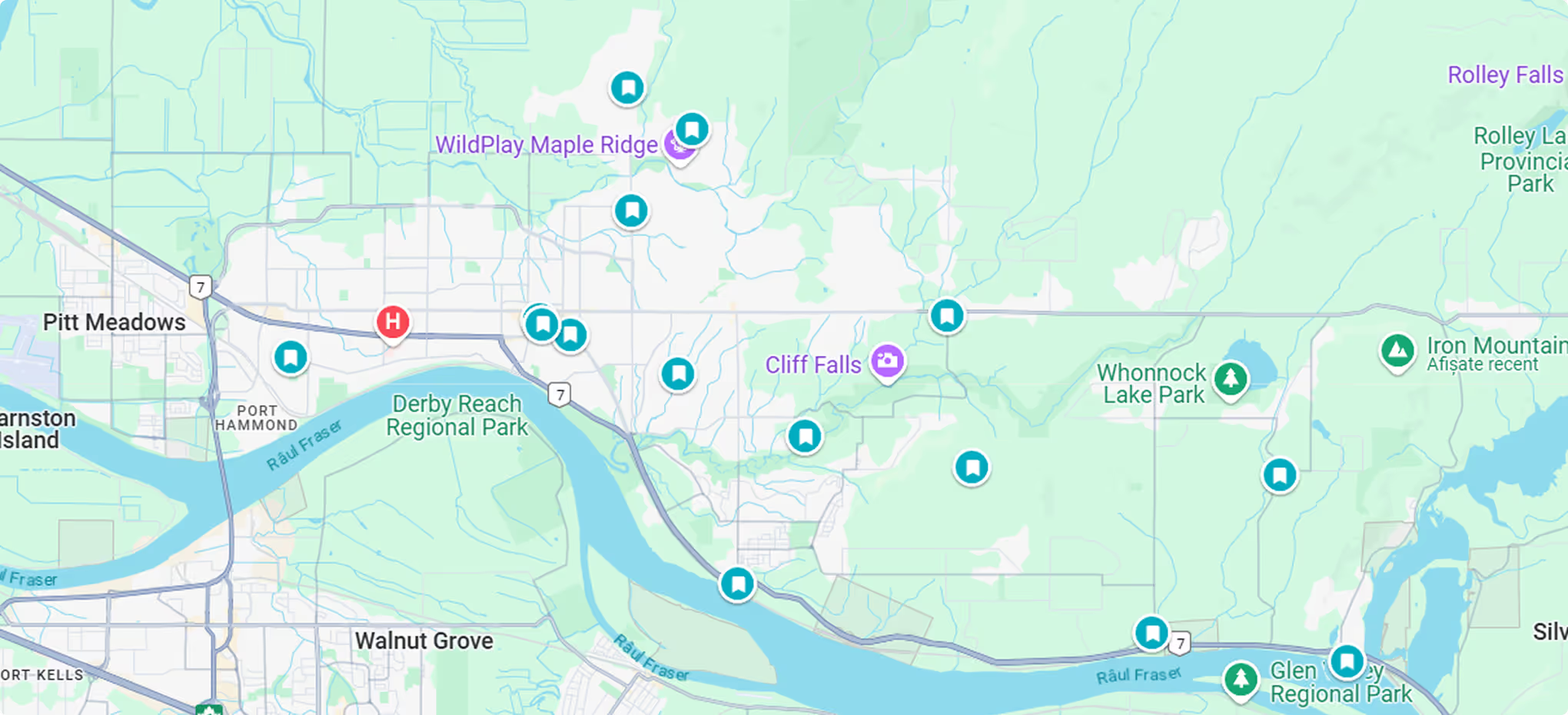
Neighbourhoods in the Fraser Valley