Indoor Air Quality in Blacklock, BC
Breathe Easier with Professional Indoor Air Quality Services
Struggling with allergies or worried about the air quality in your home? Our expert services assess and improve your indoor environment, ensuring health and comfort for you and your family. Contact us today to schedule your assessment or inquire about our flexible financing options for whole-home purification systems.
Residents in Blacklock often battle invisible indoor pollutants that standard HVAC filters simply cannot catch. Without proper intervention, trapped allergens, humidity issues, and chemical vapors can circulate indefinitely through your ductwork. We provide a definitive solution to these environmental concerns through advanced diagnostics and system integration.
- Identify and eliminate common indoor pollutants.
- Enhance overall air quality with cutting-edge solutions.
- Receive a comprehensive air quality report and personalized recommendations.
All services are performed by certified technicians with full warranty coverage and flexible financing options.

Comprehensive Air Quality Solutions for Your Home
Improving the air inside your home goes beyond opening a window; it requires a systematic approach to filtration, ventilation, and purification. Modern homes are built tighter to preserve energy, but this efficiency often traps contaminants inside. We provide a suite of services designed to integrate directly with your existing heating and cooling infrastructure to treat 100% of the air flowing through your system.
Advanced Filtration Systems
Standard fiberglass filters are designed primarily to protect your furnace, not your lungs. To capture microscopic particles, we install high-efficiency media air cleaners and HEPA filtration systems.
- Media Air Cleaners: These thick, pleated filters provide a significantly larger surface area than standard filters. They effectively trap dust, pollen, pet dander, and mold spores without restricting airflow to your furnace or air handler.
- HEPA Bypass Systems: For those with severe allergies or respiratory conditions, HEPA filtration captures 99.97% of particles down to 0.3 microns. These systems run in parallel with your HVAC equipment to scrub the air of ultra-fine particulate matter.
Whole-Home Ventilation
In Blacklock, managing airflow is critical. Stale air needs to be expelled, and fresh air needs to be brought in without compromising thermal efficiency.
- Heat Recovery Ventilators (HRV): Ideal for colder months, HRVs exchange stale indoor air for fresh outdoor air while transferring heat. This ensures you get fresh air without losing the warmth your furnace has generated.
- Energy Recovery Ventilators (ERV): These systems transfer both heat and moisture. They are particularly effective in balancing humidity levels while providing continuous ventilation, preventing the "stuffy" feeling common in sealed homes.
Humidity Control
Improper humidity levels are a primary driver of poor indoor air quality. Too much moisture encourages biological growth, while air that is too dry can irritate nasal passages and damage wood furnishings.
- Whole-Home Dehumidifiers: These units work independently or with your AC to remove excess moisture, specifically during the damp shoulder seasons typical of the region.
- Steam and Bypass Humidifiers: During heating cycles, indoor air can become incredibly dry. Integrated humidifiers automatically maintain optimal moisture levels, reducing static electricity and improving respiratory comfort.
Ultraviolet (UV) Air Purification
Filtration captures solids, but it does not eliminate biological contaminants. UV-C technology is used to neutralize living organisms within the HVAC system.
- Coil Sterilization: UV lights installed near the evaporator coil prevent the growth of mold and slime, which can thrive in the damp, dark environment of an AC unit.
- Air Stream Sterilization: High-intensity UV lamps installed in the supply ductwork deactivate airborne bacteria and viruses as they pass through the system, preventing them from recirculating into living spaces.
How the Indoor Air Quality Assessment Works
Before recommending equipment, we must understand the specific composition of the air in your home. We utilize industrial-grade diagnostic tools to measure particulate matter, chemical levels, and humidity patterns. This data-driven approach ensures that the solution we propose solves the actual problem rather than just masking symptoms.
- Initial Consultation and Visual Inspection: The process begins with a thorough walkthrough. Technicians inspect the HVAC system for visible signs of mold, dust buildup in ductwork, and drainage issues. We also examine the building envelope for potential infiltration points where outdoor pollutants may be entering.
- Digital Air Analysis: We deploy laser particle counters and specialized sensors to measure specific contaminants. This includes testing for Volatile Organic Compounds (VOCs), Carbon Dioxide (CO2) levels (which indicate poor ventilation), Carbon Monoxide (CO), and relative humidity percentages.
- Ductwork Evaluation: Leaky ducts can pull dirty air from attics or crawlspaces into the living environment. We assess the integrity of the return and supply plenums to ensure that the air circulating through the system is actually coming from the rooms, not the unconditioned spaces of the home.
- Report and Strategy Formulation: Once the data is collected, we compile a detailed report outlining the findings. If high VOCs are found, we prioritize ventilation. If biological growth is detected, we focus on UV purification and humidity control. You receive a clear, itemized plan for remediation.
- Implementation and Verification: After selecting the appropriate equipment, our team handles the installation. This involves cutting into the ductwork to install media cabinets, wiring UV systems into the HVAC control board, and plumbing humidifiers. Post-installation, we re-test the air to verify the improvement.
Retrofitting vs. Targeted Repairs
Homeowners often ask whether they need a complete overhaul of their air quality systems or if targeted repairs will suffice. The decision depends largely on the severity of the symptoms, the age of the home, and the existing HVAC infrastructure.
When to Upgrade to Whole-Home Systems
If you notice persistent issues throughout the entire house, spot solutions like portable air purifiers will likely be ineffective.
- Persistent Odors or Stale Air: If cooking smells linger for hours or the house feels stuffy despite a running system, this indicates a lack of ventilation. A dedicated HRV or ERV is required to mechanically exchange the air.
- Recurring Mold or Mildew: Visible growth on windowsills or in bathrooms, particularly during the rainy season, suggests a systemic humidity problem. A whole-home dehumidifier is necessary to control the moisture load that the standard AC cannot handle.
- Chronic Respiratory Issues: If family members experience relief immediately upon leaving the house, the indoor environment is the trigger. In this case, a combination of HEPA filtration and UV purification provides the clinical level of air cleaning required for health.
When Targeted Maintenance is Sufficient
Sometimes, poor air quality is a result of deferred maintenance rather than a lack of equipment.
- Sudden Dust Accumulation: If you recently noticed more dust than usual, it may be due to a breach in the return ductwork or a clogged filter. Sealing the ducts and upgrading to a higher MERV-rated filter usually resolves this without new equipment.
- Dryness During Cold Snaps: If the air is only dry during the coldest weeks of the year, checking the existing humidifier pad or solenoid valve for function is the first step. Repairing the existing unit is often more cost-effective than replacement — view our maintenance plan for reliable care.
- Localized Issues: If air quality issues are isolated to a single room (like a basement or a room above a garage), checking the insulation and sealing gaps in that specific area may be the solution rather than treating the entire home's air volume.
Local Considerations for Air Quality
Operating in Blacklock presents unique challenges due to the specific climate and housing stock. The maritime climate heavily influences how we approach indoor air quality. The region experiences significant rainfall in the fall and winter, creating high outdoor humidity. When this moisture infiltrates a home, it creates a breeding ground for dust mites and mold.
- Managing the "Shoulder Season": In spring and fall, the temperature is often mild enough that the air conditioner does not run, but the humidity remains high. Without an active cooling cycle to remove moisture, homes can become damp. We recommend dedicated dehumidification systems that operate independently of the thermostat’s temperature setting to keep indoor humidity below 50% year-round — check our promotions for system upgrades.
- Pollen and Seasonal Allergens: While winters are wet, summers can be warm and dry, leading to high pollen counts. Homeowners rely on their HVAC systems to filter out these outdoor irritants. We recommend higher MERV-rated filtration during these months to prevent outdoor allergens from settling on indoor surfaces.
- Building Codes and Tight Envelopes: Many renovated or newer homes in the area are built with excellent insulation and vapor barriers. While great for heating bills, this traps indoor pollutants like off-gassing from furniture and cooking fumes. Rep-Air Heating and Cooling ensures that ventilation solutions meet local building codes, ensuring sufficient air changes per hour (ACH) to maintain a healthy oxygen balance.
The Value of Professional Implementation
Achieving superior indoor air quality is a science that involves fluid dynamics and psychrometrics. It is not as simple as buying a product off the shelf and plugging it in. Professional installation ensures that the equipment is sized correctly for your specific square footage and duct configuration.
- Pressure Drop Management: High-efficiency filters are restrictive. If installed incorrectly, they can choke the furnace, causing it to overheat or freeze. We calculate the static pressure of your system to ensure that upgraded filtration does not compromise the lifespan of your heating and cooling equipment.
- Proper Sensor Calibration: Humidifiers and dehumidifiers rely on accurate readings. We position sensors in the optimal airstream locations to ensure the system responds accurately to changes in the environment, avoiding short-cycling or over-correction.
- Electrical Safety and Code Compliance: UV lights and ventilators require high-voltage connections and interlocks with the furnace blower. Our technicians ensure all wiring meets safety standards and that the air quality systems only operate when the blower is running, maximizing energy efficiency.
- Integrated Control: We aim to consolidate control. Instead of managing multiple knobs on different units, we integrate these systems into smart thermostats where possible, allowing you to monitor and adjust humidity and ventilation from a central interface or smartphone app.
Taking control of the air you breathe is an investment in long-term health and property protection. Whether you need to combat excessive moisture, filter out seasonal allergens, or ensure constant fresh air exchange, professional intervention delivers measurable results. Trust Rep-Air Heating and Cooling to design a custom strategy that transforms your home into a sanctuary of clean, healthy air.
Your Path to Cleaner, Healthier Air Starts Here
Take the next step toward a home that truly supports your comfort and well-being. With tailored air purification, ventilation, and humidity-control solutions, you can finally eliminate the pollutants and irritants that have been affecting your indoor environment. Contact us to learn more about how Rep-Air Heating and Cooling can craft a customized air quality plan that enhances every room in your home.
Ready to improve your home’s environment? Contact us today to book your comprehensive indoor air quality assessment.
hear what our satisfied clients have to say
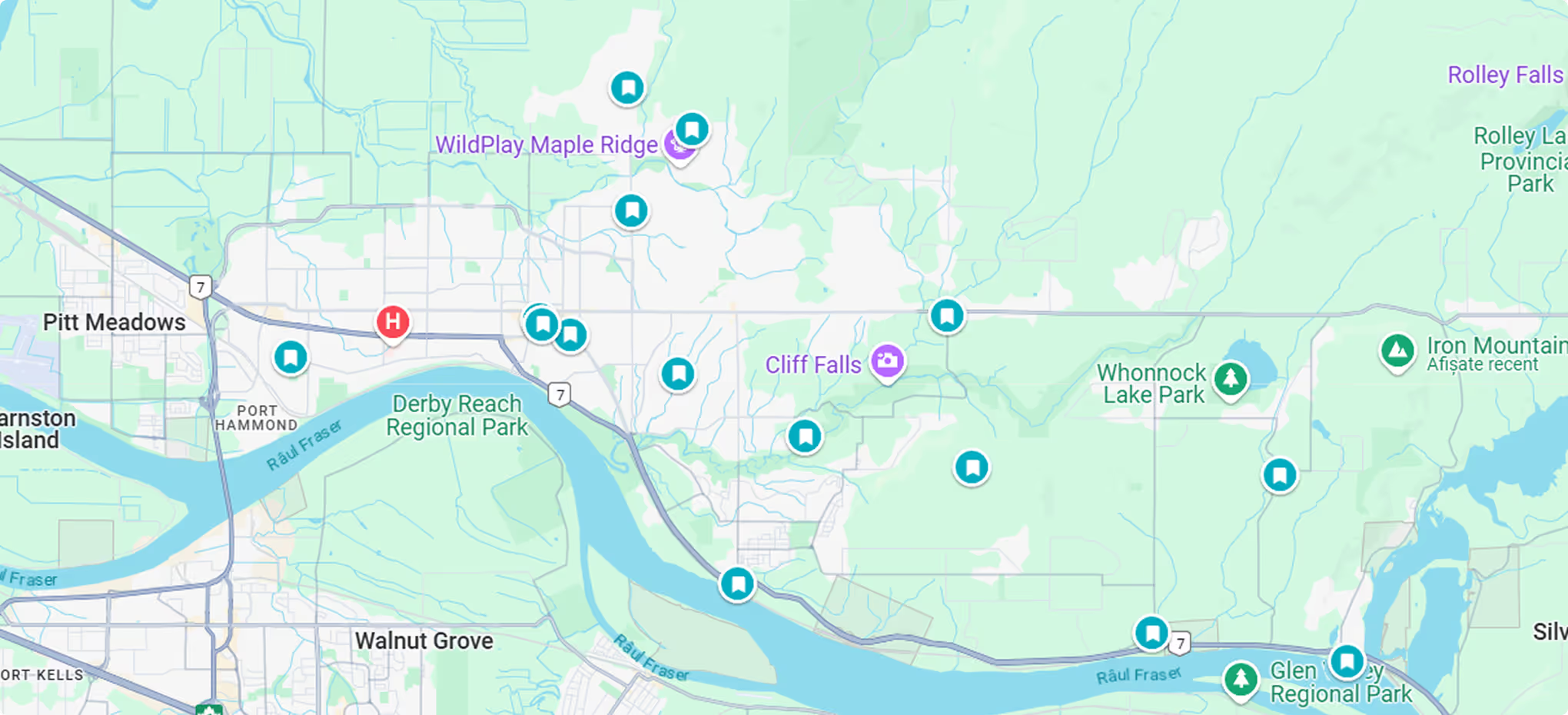
Neighbourhoods in the Fraser Valley