Indoor Air Quality in Campbell Valley, BC
Is Poor Indoor Air Quality Affecting Your Health?
Worried about how the air in your home may be affecting your family's health? You're not alone—many in Campbell Valley share these concerns, especially during seasonal changes involving high humidity or sudden dry spells. When you notice persistent allergies, lingering odors, or excessive dust, waiting is rarely the best option.
- Achieve cleaner, safer air with same-day testing and results.
- Tailored solutions to address mold, pollen, and pollution specific to BC's climate.
- Full compliance with local health and safety standards for peace of mind.
Backed by a comprehensive satisfaction guarantee and flexible financing options.
Contact us today or apply for financing to breathe easier tonight.
The Reality of Indoor Air in Campbell Valley
Many homeowners assume that their home is a safe haven from outdoor pollution. However, modern construction standards, while excellent for energy efficiency, often turn homes into sealed envelopes that trap contaminants inside. In Campbell Valley, the specific climate challenges—ranging from damp, wet winters to increasingly dry and dusty summers—create a unique environment where indoor air quality (IAQ) can degrade quickly.
Rep-Air Heating and Cooling understands that poor air quality is not just a comfort issue; it is a health priority. Pollutants such as volatile organic compounds (VOCs), mold spores, and particulate matter can circulate through your HVAC system effectively indefinitely unless removed. Addressing these issues requires more than opening a window, which may just introduce pollen or humidity; it requires a systematic approach to testing, filtration, and ventilation.
Identifying Your Indoor Air Quality Issues
Before a solution can be implemented, the specific contaminants in your home must be identified. Air quality issues often manifest physically before they are seen visually. Homeowners frequently report symptoms that mimic the common cold or seasonal allergies but persist year-round.
Physical Indicators
- Persistent Congestion and Headaches: If family members wake up congested every morning but feel better after leaving the house, the irritant is likely inside the home.
- Dryness or Irritation: Dry skin, scratchy throats, and irritated eyes often point to humidity imbalances or high levels of particulate matter.
- Fatigue: High levels of Carbon Dioxide (CO2) or VOCs can lead to feelings of lethargy and difficulty concentrating.
Structural and Environmental Indicators
- Condensation on Windows: In the damp climate typical of British Columbia, excess moisture is a primary enemy. Condensation inside windows indicates poor ventilation and high humidity, which fuels mold growth.
- Lingering Odors: Musty smells that do not go away with cleaning usually suggest mold or mildew in ductwork or hidden areas. Cooking smells that linger for days indicate that the air exchange rate in the home is too low.
- Excessive Dust: If you find yourself dusting surfaces constantly, it suggests that your current filtration system is failing to capture airborne particulates.
What You Get Today: Immediate Testing and Results
When you schedule a service visit, the priority is to move from guesswork to hard data. Decision-making regarding your home’s air should be based on accurate readings, not assumptions.
Comprehensive Air Analysis
Technicians arrive equipped with advanced diagnostic tools designed to detect invisible threats. This includes laser particle counters to measure dust and allergen levels, hygrometers to assess relative humidity throughout the home, and specialized detectors for VOCs and Carbon Monoxide.
Actionable Reporting
You receive a clear breakdown of exactly what is in your air. This report highlights:
- Current particulate levels compared to healthy standards.
- Areas where humidity is encouraging biological growth.
- The efficiency of your current HVAC filter system.
- Identification of "hot spots" where air circulation is stagnant.
This data allows for an immediate plan of action. Whether the data suggests a need for better filtration, humidity control, or fresh air intake, the recommendations are tailored to the specific readings found in your home.
How We Ensure Your Air is Clean
Improving indoor air quality is rarely about a single product; it is a multi-tiered strategy involving filtration, purification, and ventilation. Rep-Air Heating and Cooling implements a holistic process to ensure every cubic foot of air in your home is treated.
Step 1: Source Control and Ventilation
The most effective way to improve air quality is to dilute the concentration of pollutants. Simply recycling the same stale air contributes to "Sick Building Syndrome."
- Heat Recovery Ventilators (HRVs): For the cooler months in Campbell Valley, HRVs are essential. They exchange stale indoor air for fresh outdoor air while recovering the heat, ensuring you get fresh air without skyrocketing energy bills.
- Energy Recovery Ventilators (ERVs): These systems transfer both heat and moisture, helping to keep humidity levels balanced while providing continuous fresh air.
Step 2: Advanced Filtration
Standard furnace filters are designed to protect the equipment, not your lungs. To capture microscopic particles, higher-grade filtration is necessary.
- Media Air Cleaners: These thick, pleated filters trap significantly more dust, pollen, and pet dander than standard 1-inch filters, often without restricting airflow.
- HEPA Filtration: For those with severe asthma or allergies, High-Efficiency Particulate Air (HEPA) systems can remove 99.97% of particles, including bacteria and virus-sized microorganisms.
Step 3: Air Purification
While filters trap solids, purifiers neutralize biological and chemical threats.
- UV Germicidal Lights: Installed directly inside the ductwork or near the evaporator coil, these lights destroy the DNA of mold, bacteria, and viruses, preventing them from reproducing.
- Oxidation Systems: These active air purifiers send charged ions out into the living space to clump dust particles together (making them easier to filter) and neutralize surface contaminants.
Step 4: Humidity Management
Controlling moisture is critical in BC.
- Whole-Home Dehumidifiers: In the shoulder seasons and wet winters, keeping indoor humidity below 50% inhibits dust mite reproduction and mold growth.
- Steam Humidifiers: During cold snaps when the heating runs constantly, adding moisture prevents dry, cracked skin and protects wood furniture and flooring.
Choosing Between DIY Fixes and Professional Solutions
Homeowners often debate whether to buy portable units from a big-box store or invest in a whole-home solution. While portable units have their place, they are fundamentally limited in scope and efficiency compared to integrated systems.
Portable Units (The DIY Approach)
- Limited Coverage: A portable air purifier typically treats only the room it is placed in. To treat a whole house, you would need a unit in every room.
- Noise Levels: To be effective, portable units must run fans at high speeds, which can be intrusive in bedrooms or living areas.
- Maintenance Costs: Replacing filters on multiple portable units can become expensive quickly.
- Inconsistent Results: These units do not address the source of the air; they only treat air that happens to drift near the unit.
Integrated Whole-Home Systems (The Professional Approach)
- Total Coverage: By installing equipment directly into your central HVAC system, 100% of the air is treated every time it circulates through the ducts.
- Silent Operation: Because the equipment is located at the furnace or air handler, the operation is virtually silent in the living spaces.
- Efficiency: Integrated systems are designed to work with the airflow of your blower motor, creating less resistance and using less energy than running multiple portable devices.
- Value: While the upfront cost is higher, the long-term protection of your HVAC equipment and the health benefits provide a superior return on investment.
Local Regulations and Standards for Indoor Air Quality
Operating in Campbell Valley and the surrounding region requires adherence to specific codes and standards designed to protect homeowners. British Columbia typically has rigorous building codes concerning ventilation and energy efficiency, and any modifications to your home’s mechanical systems must comply with these regulations.
Permitting and Compliance
When installing whole-home ventilation systems (like HRVs) or significant ductwork modifications, permits may be required to ensure the work meets safety standards.
- Ventilation Codes: Modern building codes specify the required rate of air exchange to ensure adequate oxygen levels and pollutant removal.
- Electrical Safety: Hardwired IAQ equipment, such as UV lights or electronic air cleaners, must be installed by qualified professionals to meet the Canadian Electrical Code.
Warranty and Manufacturer Guidelines
Professional installation ensures that manufacturer warranties remain valid. Many high-end IAQ products require installation by a licensed HVAC contractor. DIY installation often voids these warranties, leaving the homeowner liable for malfunctions. Using a professional service ensures that all equipment is registered, warranted, and installed according to the strict specifications required for optimal performance.
Why Customers Trust Our Air Quality Services
Selecting a service provider for Indoor Air Quality is about trust and technical expertise. You are inviting technicians into your home to address invisible health hazards, and that requires a higher level of certification and care.
Certified Expertise
Technicians are not just generalists; they hold specific certifications relevant to air quality and HVAC systems. This includes training from organizations like NATE (North American Technician Excellence), ensuring they understand the physics of airflow and psychrometrics (the study of air and humidity).
Local Climate Knowledge
Understanding the microclimates within the region is crucial. A solution that works in a dry, desert climate will fail in the Campbell Valley, where moisture management is the primary concern. Local technicians know exactly how to balance ventilation with humidity control to prevent mold without drying out the home.
Transparent Pricing and Process
There are no hidden fees or surprise upcharges — view our promotions. The focus is on providing a clear diagnosis and a menu of solutions ranging from basic upgrades to hospital-grade air purification. You receive the information needed to make the right choice for your budget and health needs.
Long-Term Support
Indoor Air Quality is an ongoing commitment. Filters need changing, and UV bulbs need replacement. We provide ongoing maintenance plans to ensure your system continues to perform at peak efficiency year after year.
Breathing Easier Starts Now
Ignoring air quality issues can lead to long-term health complications and structural damage to your home from mold and moisture. The technology exists to turn your home into a sanctuary of clean, fresh air, regardless of the weather outside. From advanced filtration to humidity control, the right system transforms your living environment immediately.
Rep-Air Heating and Cooling is ready to help you assess your needs and implement a lasting solution. Don't let pollen, dust, or mold dictate your comfort at home — contact us today.
Take control of your indoor environment today. Contact us to schedule your comprehensive air quality assessment.
hear what our satisfied clients have to say
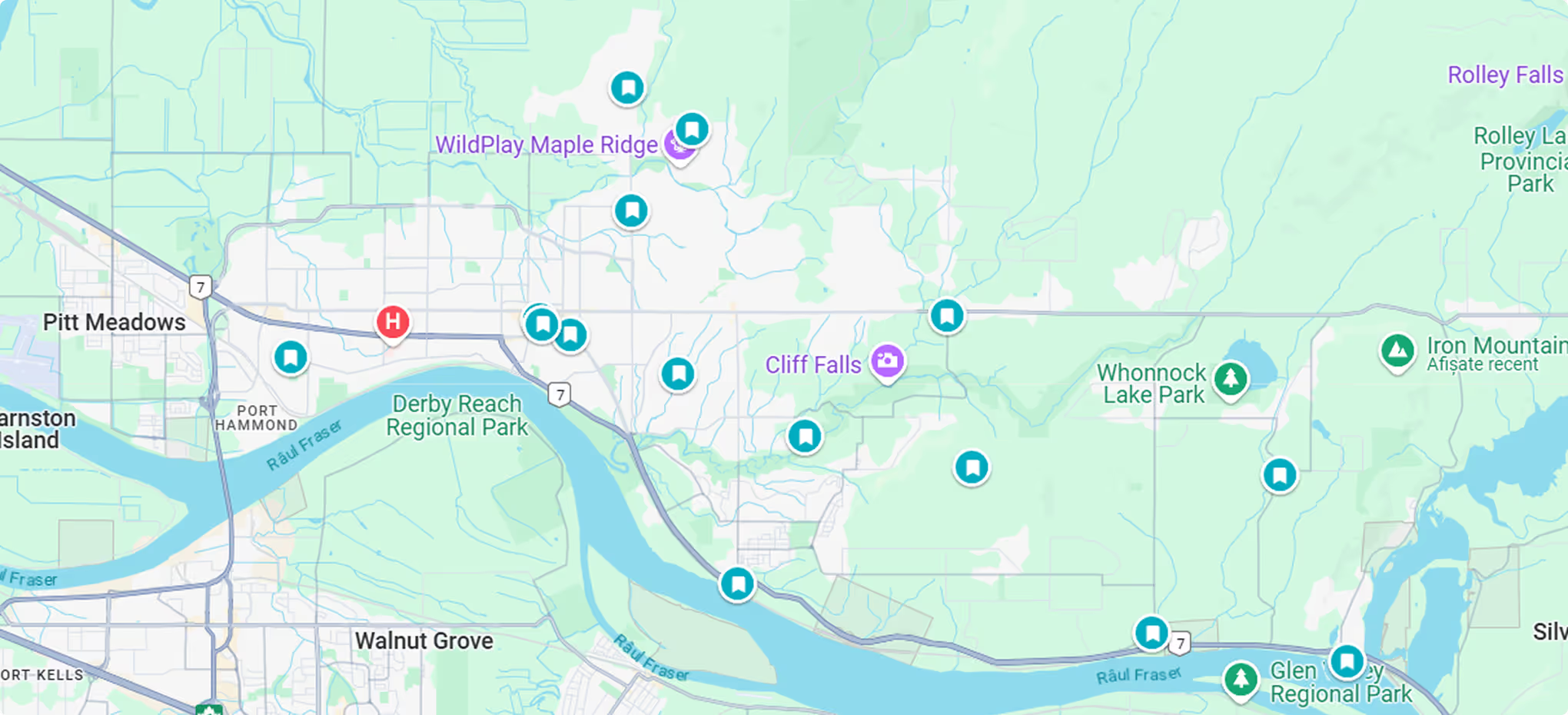
Neighbourhoods in the Fraser Valley