Indoor Air Quality in Iron Mountain, BC
Tackling Indoor Air Quality Concerns Head-On
Living in Iron Mountain, BC, means dealing with high humidity and potential indoor pollutants that affect your health and comfort, requiring immediate attention to your home's environment. If you suspect your home’s air is compromising your well-being or creating moisture issues, contact us today to schedule a comprehensive air quality assessment. Rep-Air Heating and Cooling provides targeted solutions to detect and eliminate contaminants effectively.
- Comprehensive testing for mold, volatile organic compounds (VOCs), radon, and other pollutants.
- Customized solutions tailored to your specific indoor environment and HVAC configuration.
- Fast response and thorough assessments from certified professionals using calibrated equipment.
All services are backed with industry-standard warranties and relevant municipal permits.

Assessing Your Home's Air Quality Profile
Understanding the invisible composition of the air inside your home is the critical first step toward a healthier living environment. In regions like Iron Mountain, where the maritime climate introduces significant moisture, the assessment process goes beyond simple dust checks. A professional evaluation provides a data-driven baseline of your indoor environment, identifying specific pathogens, chemical compounds, and ventilation deficiencies that off-the-shelf monitors often miss.
When you schedule a professional air quality service, the focus is on identifying the root causes of respiratory irritation and structural dampness. The assessment phase involves rigorous testing protocols designed to isolate variables such as humidity retention, particulate matter density, and chemical off-gassing. This is not a generalized inspection; it is a forensic approach to your home's atmosphere.
- Particulate Matter Analysis: Technicians measure the concentration of microscopic solids and liquid droplets suspended in the air. This includes dust, dirt, soot, and smoke, as well as biological contaminants like pollen and mold spores which thrive in damp climates.
- Chemical Pollutant Testing: Modern homes are tightly sealed, which can trap Volatile Organic Compounds (VOCs) emitted by paints, cleaning supplies, and furniture. Testing identifies these chemical concentrations that contribute to headaches and dizziness.
- Radon Detection: Given the geological variance in British Columbia, testing for radon—a colorless, odorless radioactive gas—is a standard safety protocol. Specialized equipment monitors levels over a specific period to ensure they remain below safety thresholds.
- Humidity and Dew Point Logging: Because excess moisture is a primary driver for mold growth, technicians map humidity levels across different zones of the house to identify areas with poor circulation or water intrusion.
- Carbon Dioxide and Carbon Monoxide Checks: Elevated CO2 levels indicate poor ventilation, while CO detection is a critical life-safety check for homes with fuel-burning appliances.
- Ventilation System Auditing: The assessment includes a physical inspection of ductwork, intake vents, and exhaust fans to ensure that stale air is being effectively removed and replaced with fresh, filtered air.
Comprehensive Air Quality Solutions and Installation
Once the specific contaminants and deficiencies are identified, the next phase involves implementing mechanical solutions designed to scrub, exchange, and condition the air. The goal is to integrate these systems seamlessly with your existing heating and cooling infrastructure. This approach ensures that every cubic foot of air circulating through your home is treated before it reaches your living spaces.
The installation process varies based on the specific equipment required, but the objective remains constant: achieving medical-grade air quality control. Whether the solution involves advanced filtration, ultraviolet purification, or mechanical ventilation, the installation is handled by licensed professionals who understand airflow dynamics and pressure balancing.
Whole-Home Filtration Systems
- Standard one-inch filters are often insufficient for capturing small particles. Technicians install high-efficiency media air cleaners directly into the return air duct.
- These units typically house MERV 11 to MERV 16 filters, capable of trapping bacteria, virus carriers, and fine allergens without restricting airflow to the furnace or air handler.
- The installation process involves modifying the ductwork to accommodate the larger filter cabinet, ensuring an airtight seal to prevent air bypass.
UV Germicidal Lights
- To combat biological growth such as mold and bacteria on HVAC coils, technicians mount powerful UV-C lamps inside the system.
- The installation is strategic; lights are positioned to irradiate the cooling coil and drain pan, areas where moisture naturally collects and bacteria breeds.
- Wiring is integrated into the HVAC control board so that the purification system operates automatically in tandem with the blower fan.
Heat and Energy Recovery Ventilators (HRVs and ERVs)
- In tight, energy-efficient homes, fresh air is essential. Installers mount HRV or ERV units to mechanically exchange stale indoor air with fresh outdoor air.
- The core of the unit transfers heat (and moisture in ERVs) from the outgoing air to the incoming air, minimizing energy loss.
- Ductwork is run to pull stale air from bathrooms and kitchens while supplying fresh air to bedrooms and living areas.
- Balancing the system is the final, crucial step, ensuring that the home remains at neutral pressure to prevent drafts or back-drafting of combustion appliances.
Whole-House Dehumidifiers
- For homes battling chronic high humidity, a dedicated dehumidifier is ducted into the HVAC system.
- Unlike portable units, these systems automatically sense moisture levels and operate independently of the air conditioner to maintain a set humidity percentage.
- Drainage lines are hard-piped into the home’s plumbing system, eliminating the need to manually empty water buckets.
Decision Guide: When to Upgrade Your Air Quality Systems
Determining when to move from passive solutions, like opening windows or using portable filters, to integrated whole-home systems is a decision based on health metrics, home efficiency, and persistent environmental issues. While minor dust issues can sometimes be managed with routine cleaning, structural air quality problems require mechanical intervention.
Homeowners often delay these upgrades because the air is invisible, but the signs of poor air quality eventually manifest in physical symptoms and home deterioration. Recognizing these signals early allows for proactive installation that preserves both health and property value — apply for financing today.
- Persistent Health Symptoms: If household members suffer from chronic allergies, asthma, sinus congestion, or frequent respiratory infections that improve when leaving the house, the indoor air is likely the culprit. Whole-home filtration and purification are necessary when health is actively being compromised.
- Visible Mold or Mildew Growth: The presence of mold on window sills, bathroom ceilings, or around vents indicates a failure in humidity control. Once mold is visible, the spores are already airborne. A dedicated dehumidification and ventilation strategy is required to stop the growth cycle.
- Condensation on Windows: Frequent fogging or water droplets on the inside of windows, particularly during cooler months, suggests that indoor humidity levels are too high. This excess moisture attacks drywall and framing. An HRV or whole-home dehumidifier is the corrective solution.
- Stale or Musty Odors: If the home smells musty immediately upon entering, it indicates a lack of fresh air exchange and the buildup of VOCs or biological contaminants. This signals the need for mechanical ventilation to dilute airborne pollutants.
- Excessive Dust Buildup: Needing to dust furniture daily or seeing dust particles floating in shafts of sunlight indicates that the current HVAC filter is ineffective. Upgrading to a high-capacity media filter significantly reduces airborne particulate matter.
- Recent Energy Efficiency Upgrades: If you have recently installed new windows, siding, or spray foam insulation, the home is likely "too tight." While good for energy bills, this traps pollutants inside. Mechanical ventilation becomes a mandatory upgrade to ensure occupant safety.
Navigating Local Climate and Regulatory Factors
Operating in Iron Mountain presents unique challenges due to the specific climate conditions. The region experiences significant annual rainfall, averaging between 2000 and 3000 mm, and mild winters. This temperate, maritime environment creates a permanent potential for dampness, making moisture management the single most important aspect of indoor air quality in the area.
Local building codes and municipal regulations in British Columbia increasingly emphasize the importance of mechanical ventilation. New construction and significant renovations often trigger requirements for HRVs (Heat Recovery Ventilators) to ensure adequate air changes per hour. Rep-Air Heating and Cooling ensures that all installations meet or exceed these local code requirements, safeguarding homeowners against compliance issues during future property transactions.
- Impact of Heavy Rainfall: The saturation of the ground and high ambient humidity means that outdoor air brought inside is often laden with moisture. Systems must be calibrated to manage this intake without overwhelming the home's internal relative humidity.
- Permitting and Compliance: Modifications to ductwork, electrical integration for purification systems, and venting for exhaust typically require adherence to local safety codes. Professional installers handle the permitting process to ensure all work is inspected and approved.
- Electrical Integration: Installing IAQ equipment often requires dedicated circuits or integration with the furnace’s low-voltage controls. Adhering to BC electrical codes is non-negotiable for safety and insurance validity.
- Utility Rebates and Incentives: Provincial programs often offer rebates for upgrading to energy-efficient ventilation systems that improve air quality while reducing heat loss. Professional contractors can guide homeowners toward eligible equipment that meets specific efficiency ratings.
The Importance of Professional Execution
Achieving superior indoor air quality is not a DIY task; it requires a scientific approach to airflow and contaminant removal. Improperly installed systems can restrict airflow to the furnace, causing the heat exchanger to overheat or the AC coil to freeze. Furthermore, an unbalanced ventilation system can depressurize the house, pulling dangerous sewer gases or carbon monoxide back into the living space.
Certified technicians utilize diagnostic tools such as manometers, flow hoods, and particle counters to verify that the equipment is performing exactly as designed. The placement of UV lights, the sizing of filter media, and the ducting of ventilators are calculated decisions based on the square footage and cubic volume of the home.
- Equipment Sizing: Units that are too small will run continuously without achieving results, while oversized units will short-cycle and fail to remove adequate moisture.
- Ductwork Fabrication: Proper transition fittings are custom-fabricated to ensure smooth airflow and prevent turbulence that adds noise and reduces efficiency.
- System Calibration: Post-installation commissioning involves setting the precise fan speeds and humidity set-points to match the home’s specific load requirements.
- Maintenance Protocols: Professional installation includes a roadmap for maintenance, ensuring that filters, bulbs, and cores are accessible and serviced at correct intervals to maintain air purity.
By choosing a professional service for your air quality needs, you ensure that the investment translates into tangible health benefits and long-term system reliability. Secure your home’s environment against the challenges of the local climate and breathe easier knowing the system is built to last.
Why Choose Us
Rep-Air Heating and Cooling stands apart by delivering science-driven indoor air quality solutions tailored to the unique climate challenges of Iron Mountain, BC. Our certified technicians use calibrated, industry-standard diagnostic tools to pinpoint the exact sources of contamination and moisture imbalance in your home—ensuring precision, safety, and long-term results. With strict adherence to local codes, transparent communication, premium-grade equipment, and comprehensive warranties, we provide solutions that protect both your health and your property. When you choose us, you’re choosing expertise, compliance, and reliable performance you can trust.
Call Us Now!
Click here to schedule your indoor air quality assessment now.
hear what our satisfied clients have to say
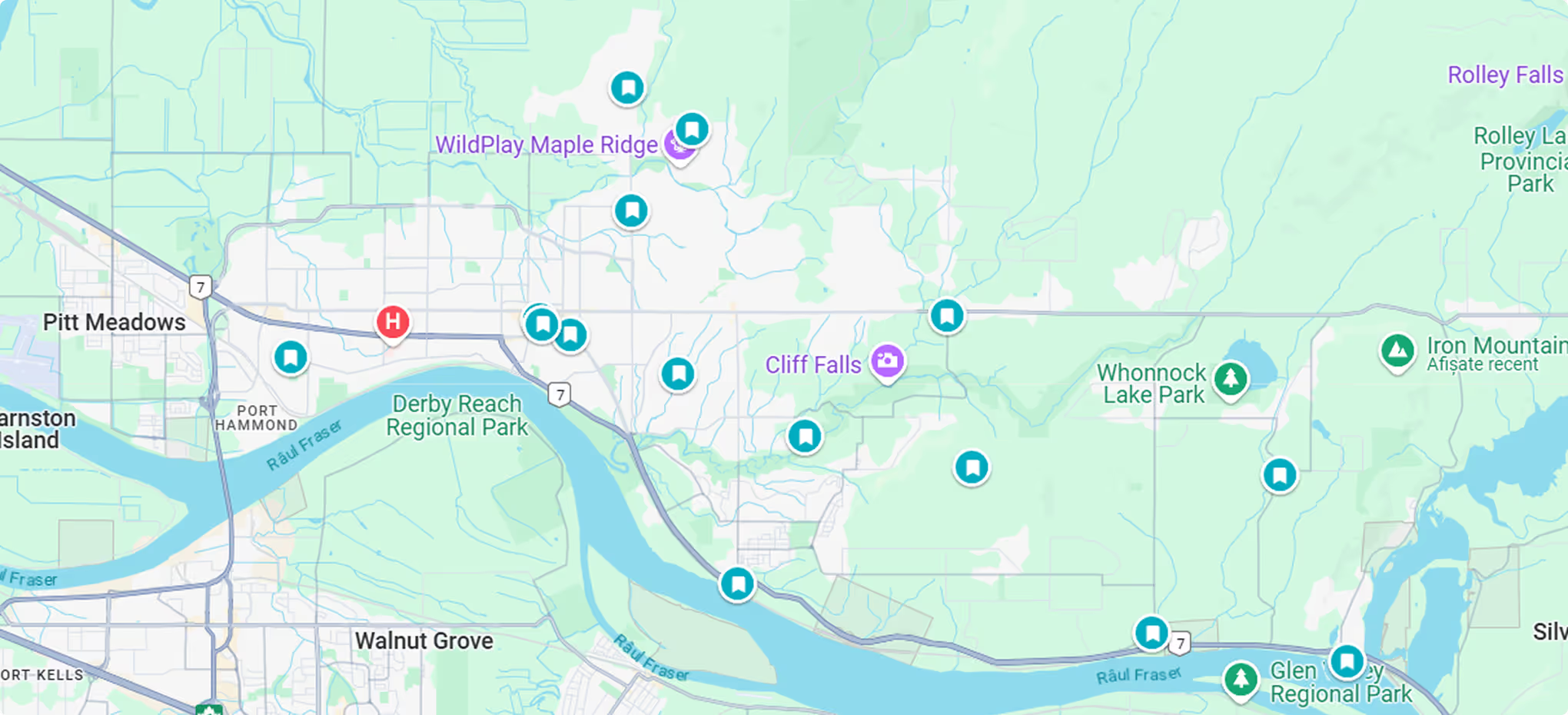
Neighbourhoods in the Fraser Valley