Indoor Air Quality in Kilgard, BC
Breathe Easier with Proven Indoor Air Quality Solutions
Struggling with persistent allergies, asthma flare-ups, or lingering bad odors inside your home? These issues often signal that your indoor environment is harboring invisible pollutants, making your living space less safe and comfortable; Contact us today or apply for financing to secure a comprehensive air quality assessment. While residents in Kilgard, BC enjoy beautiful surroundings, the local climate can trap humidity and allergens indoors, creating a breeding ground for mold and mildew if left unchecked. Rep-Air Heating and Cooling specializes in diagnosing and neutralizing these invisible threats to restore the health of your home.
- Immediate assessment and customized solutions specifically designed for your home's layout and airflow.
- Enhance your indoor environment with high-quality filtration and advanced purification systems.
- Reduce allergens, chemical odors, and harmful airborne particles effectively and efficiently.
All services are fully licensed, backed by extensive warranties, and include flexible financing options to ensure you do not have to compromise on health.

How We Improve Your Home's Air Quality
Improving the air inside your home requires a multi-layered strategy that goes beyond standard furnace filters. Modern homes are built to be airtight for energy efficiency, but this often results in trapped pollutants, humidity imbalances, and stale air. To combat this, we implement a combination of ventilation, filtration, and purification technologies that work in tandem with your existing HVAC infrastructure.
Advanced Filtration Technology
Standard filters are designed primarily to protect your furnace, not your lungs. To truly clean the air, we utilize high-efficiency media air cleaners. These systems have a significantly larger surface area and denser media than standard one-inch filters.
- Captures microscopic particles including dust mites, pollen, and pet dander.
- Extends the lifespan of your heating and cooling equipment by preventing debris buildup on sensitive components.
- Reduces the frequency of filter changes while maintaining superior airflow.
UV Light Purification
Biological contaminants thrive in the dark, damp environments often found within HVAC systems. Ultraviolet (UV) light purification systems are installed directly into your ductwork or over the evaporator coil.
- Neutralizes bacteria, viruses, and mold spores on contact.
- Prevents organic growth on cooling coils, ensuring the system runs efficiently.
- Eliminates the "dirty sock" syndrome often associated with bacterial buildup in heat pumps and air conditioners.
Humidity Control Solutions
In regions like Kilgard, controlling moisture is critical. High humidity in the summer encourages mold growth and dust mite proliferation, while low humidity in the winter can cause dry skin, static electricity, and increased susceptibility to respiratory infections.
- Whole-home dehumidifiers remove excess moisture during the damp months, reducing the load on your air conditioner and preventing mold.
- Steam or bypass humidifiers add necessary moisture during drier periods to protect wood flooring/furniture and improve respiratory comfort.
- Automated controls adjust humidity levels based on outdoor temperatures to prevent window condensation.
Ventilation Systems
Dilution is a key component of air quality. Heat Recovery Ventilators (HRVs) and Energy Recovery Ventilators (ERVs) replace stale indoor air with fresh outdoor air without wasting the energy used to heat or cool your home.
- Expels volatile organic compounds (VOCs), cooking odors, and chemical fumes.
- Recovers heat energy from outgoing air to precondition incoming fresh air.
- Balances indoor pressure to prevent the infiltration of soil gases or garage fumes.
Immediate Benefits of Professional Air Quality Service
Investing in professional indoor air quality (IAQ) solutions delivers tangible results from day one. Unlike generic portable units that only treat a single room, whole-home solutions integrate with your central heating and cooling system to treat 100% of the air circulating through your property. This comprehensive approach addresses both health concerns and the operational efficiency of your home.
Health and Respiratory Relief
The most immediate impact is often felt by those with respiratory sensitivities. By removing triggers such as pollen, mold spores, and pet dander, the indoor environment becomes a sanctuary rather than a source of irritation.
- Reduction in allergy symptoms like sneezing, watery eyes, and congestion.
- Decreased frequency of asthma attacks triggered by airborne irritants.
- Better sleep quality due to improved breathing and regulated humidity levels.
Protection Against Seasonal Threats
Local environmental factors, such as wildfire smoke during dry seasons or heavy pollen counts in spring, can severely degrade indoor air. Professional systems provide a robust barrier against these external threats.
- HEPA-grade filtration captures fine particulate matter (PM2.5) from smoke and smog.
- Positive pressure systems help prevent unfiltered outdoor air from seeping through cracks and crevices.
- Activated carbon filters absorb smoke odors and harmful gases before they permeate furniture and carpets.
Enhanced System Efficiency and Longevity
Air quality equipment does not just protect people; it protects your HVAC investment. Dust and debris are the leading causes of system failure and efficiency loss.
- Clean evaporator and condenser coils transfer heat more effectively, lowering energy bills.
- Reduced debris buildup prevents blower motor strain and overheating.
- Ductwork remains cleaner for longer, reducing the need for invasive cleaning services.
Step-by-Step Guide to Enhancing Your Indoor Air
Implementing an indoor air quality strategy is a systematic process. We do not guess at the problem; we measure and analyze to ensure the chosen solution effectively addresses the specific contaminants present in your home. Here is how the process works for homeowners in the Kilgard area.
Initial Assessment and Testing
- The process begins with a thorough evaluation of your current HVAC system and ductwork.
- Technicians use specialized tools like particle counters and hygrometers to measure dust levels, humidity, and airflow.
- Visual inspections identify potential pollutant sources, such as chemical storage areas, damp basements, or dirty coils.
Customized Solution Design
- Based on the data collected, a specific plan is developed to address identified issues.
- This may involve selecting the right MERV rating for filtration, sizing a humidifier, or positioning UV lights for maximum exposure.
- Options are presented based on the severity of the problem and the goals for the home.
Professional Installation
- Certified technicians integrate the new equipment into your existing ductwork and electrical systems.
- Safety protocols are followed strictly to ensure no gas lines or electrical connections are compromised.
- Ductwork modifications are made if necessary to accommodate larger filter cabinets or ventilation units.
Calibration and Integration
- Once installed, the equipment is calibrated to ensure it operates in sync with the furnace or heat pump.
- Thermostats and humidistats are programmed to maintain optimal levels automatically.
- Airflow is tested again to ensure the new components do not restrict static pressure within the system.
Final Walkthrough and Education
- The technician demonstrates how to operate the new controls and when to perform maintenance.
- Maintenance schedules, such as filter replacement intervals or UV bulb changes, are clearly explained.
- Warranty documentation is reviewed and provided for your records.
Deciding Between Air Quality Enhancement or Total Replacement
Homeowners often wonder if adding air quality components is enough, or if the underlying HVAC system requires replacement to achieve the desired results. This decision depends on the age of the current equipment, the design of the ductwork, and the severity of the air quality issues.
When to Enhance (Retrofit)
If your heating and cooling units are relatively new (under 10 years old) and functioning well, retrofitting air quality add-ons is usually the most cost-effective path.
- The blower motor is strong enough to handle the static pressure of high-efficiency filters.
- The ductwork is accessible and in good condition, allowing for the cut-in of new equipment.
- The issues are specific, such as seasonal dryness or specific allergies, rather than general system failure.
When to Replace (System Upgrade)
In some cases, the existing HVAC unit is the source of the problem or is incompatible with modern air quality standards.
- Older furnaces with standard blower motors may struggle to push air through dense media filters, leading to reduced airflow and comfort.
- If the system has a history of moisture issues or internal mold growth that cannot be fully remediated by cleaning.
- When the ductwork is undersized or leaking significantly, pulling in contaminants from attics or crawlspaces.
- If you are looking for variable-speed technology, which runs continuously at low levels to provide constant filtration and humidity control.
Evaluating Ductwork Integrity
Regardless of the equipment installed, the delivery system plays a massive role.
- Leaky ducts can pull in fiberglass, insulation dust, and vermin droppings.
- If ducts are unsealed, adding a purification system may be futile as contaminants re-enter downstream.
- A professional evaluation will determine if duct sealing or replacement is a prerequisite for improved air quality.
Understanding Your Local Air Quality Regulations
Operating in British Columbia requires adherence to specific building codes and environmental considerations that impact how air quality systems are installed. The local climate and construction standards in Kilgard influence the type of ventilation and filtration required for a compliant and safe home.
Ventilation Codes and Standards
Modern building codes in BC place a heavy emphasis on airtight construction to conserve energy. This makes mechanical ventilation mandatory in many renovation and new construction scenarios.
- Codes often require a dedicated fresh air intake or the installation of an HRV to ensure adequate air changes per hour (ACH).
- Combustion appliances (furnaces, water heaters) must have sufficient makeup air to prevent back-drafting of carbon monoxide.
- Bathroom and kitchen exhaust fans must meet specific airflow ratings (CFM) to effectively remove moisture and pollutants.
Electrical and Safety Permits
Installing hardwired indoor air quality equipment, such as UV lights or whole-home dehumidifiers, involves electrical work.
- All electrical connections must meet the Canadian Electrical Code.
- Permits may be required for significant alterations to the electrical panel or dedicated circuits for high-demand units.
- Professional installation ensures compliance with safety standards, avoiding insurance complications later.
Regional Climate Considerations
The specific environmental profile of the region dictates equipment settings and selection.
- Equipment must be calibrated to handle the high latent load (humidity) experienced during coastal summers.
- Filtration choices often account for regional forestry activity and the potential for wood smoke.
- Systems must be winterized to prevent freezing of condensate lines or fresh air intakes during cold snaps.
Certified Excellence in Air Quality Management
Achieving superior indoor air quality is not about buying a product off a shelf; it is about engineering a solution for a specific environment. Professional providers bring a level of expertise and accountability that ensures the safety and efficacy of the installed systems.
- Technical Expertise: Technicians undergo rigorous training to understand the physics of airflow, psychrometrics (the study of moist air), and pollutant dynamics.
- Safety Protocols: Handling UV-C light systems and ozone-generating equipment requires strict adherence to safety guidelines to protect occupants and installers.
- Measurement and Verification: Professional service includes the validation of results using industrial-grade testing equipment, proving that the air is cleaner and safer.
- Long-Term Support: Access to manufacturer-backed warranties and ongoing maintenance plans ensures the system continues to perform at peak efficiency for years.
Your home should be a safe haven, free from the invisible particulates and gases that compromise health and comfort. Whether you are dealing with high humidity, seasonal smoke, or persistent allergens, there is a proven engineering solution available. Rep-Air Heating and Cooling provides the expertise and technology necessary to transform your indoor environment into a clean, healthy space for you and your family.
Call Us Now!
Take control of the air you breathe today. Secure a professional assessment and discover the right air quality solution for your home — contact us today.
hear what our satisfied clients have to say
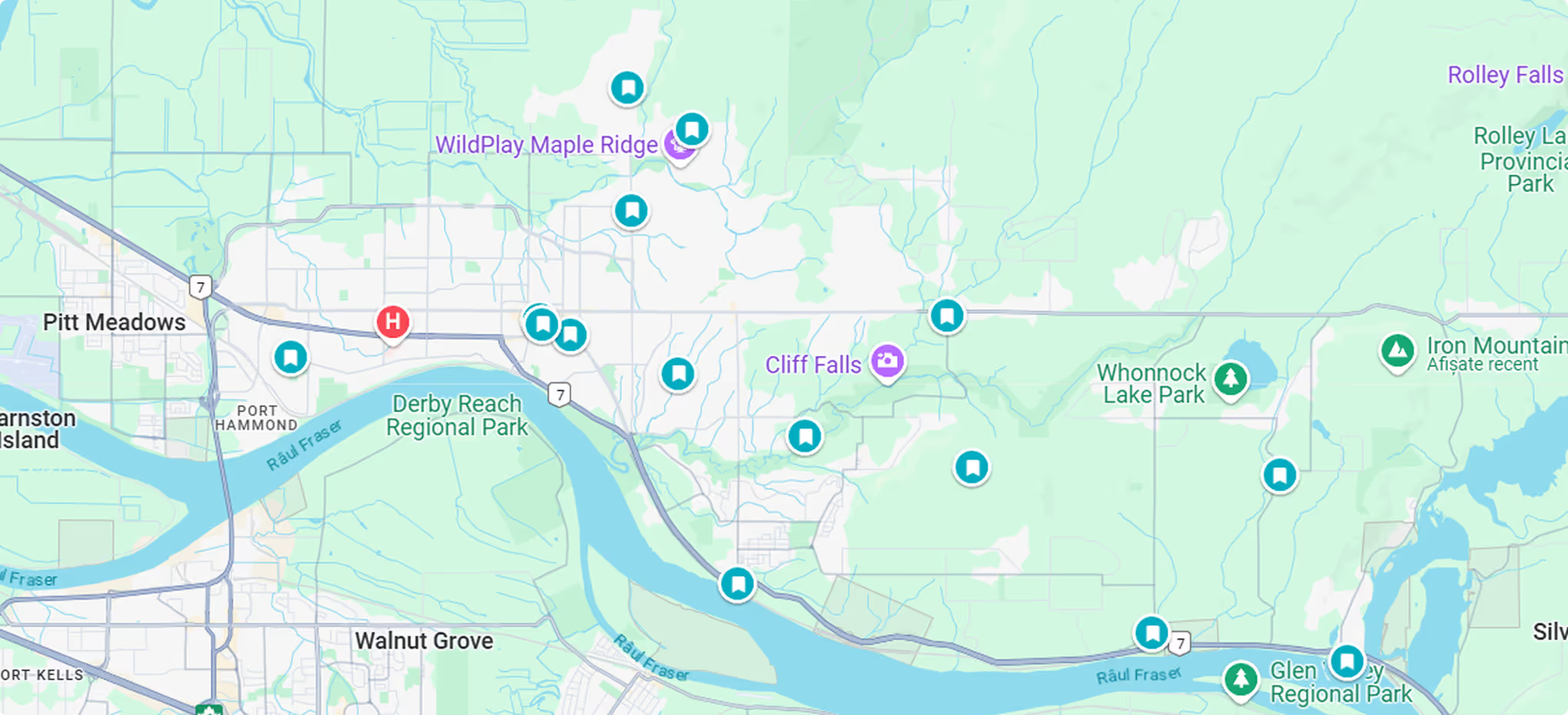
Neighbourhoods in the Fraser Valley